Why Do We Rush to See Clearly?
On Perception, Ambiguity, and the Ethics of Looking in Zhang Hongyu’s Formless, Imageless
When I first encountered Zhang Hongyu’s paintings, I found myself trying to extract a complete face from their entangled lines and layered colors. My eyes followed a curve in search of a forehead, looked for eyes between darkened marks, and attempted to connect broken contours into a nose and mouth. Whenever a figure seemed about to emerge, I instinctively moved closer. Yet proximity offered no clearer answer. The acts of covering, erasing, and layering became more visible, while the face I had just assembled began to disperse again. At that moment, seeing exceeded the simple reception of an image. As soon as the painting supplied a few marks resembling facial features, the brain began organizing them into a face and speculating about its identity, expression, and emotional state.
Zhang Hongyu’s solo exhibition Formless, Imageless is on view at L Gallery from August 3 to 19, 2026. Curated by Shuhan Zhang, the exhibition brings together the artist’s recent paintings and takes the dissolution of the human figure as a point of departure. It asks how perception takes shape through absence and how personal experience enters into our understanding of others.
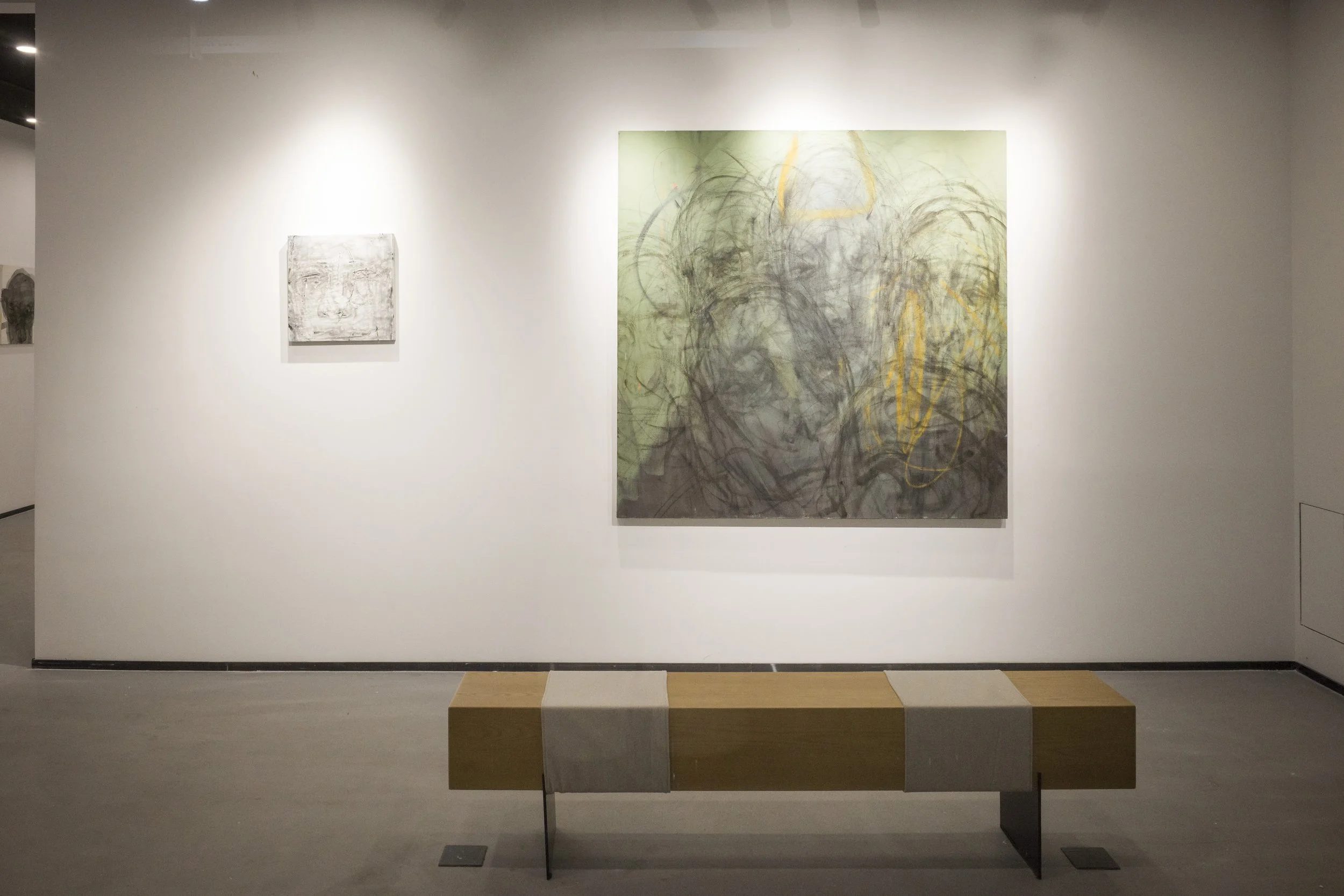
Installation view of Formless, Imageless. Courtesy of the artist and L Gallery.
Biologically, vision already contains a gap. At the point where the optic nerve leaves the eye, the retina has a blind spot that cannot register light, yet we rarely notice an empty space in our visual field. The visual system fills in what is missing by drawing on surrounding colors, textures, and structures. The continuous world we experience therefore comes not only from signals received by the eyes, but also from the brain’s inferences about absent information. The brain approaches ambiguous images in much the same way. Rather than waiting for every detail to arrive, it draws on memory and experience to predict what lies before it. The identity we assign to a blurred face may therefore be shaped by what we already expect to see. Perception always combines an external image with an internal history.
Zhang’s paintings occupy the point at which these two forms of information meet. He preserves just enough visual evidence for a figure to be recognized, while repeatedly preventing the image from closing into a stable whole. Lines cross faces and bodies, layers of color obscure earlier contours, and new brushstrokes introduce alternative directions from within the obstruction. The figure remains on the verge of appearing, yet always retains the possibility of withdrawing into the paint. The viewer first recognizes that “this is a person” and then begins searching for an emotion or a story. When the work withholds further clues, personal experience fills the gap: silence becomes pain, a lowered body becomes exhaustion, and an indistinct expression acquires sadness, fear, or loneliness. These interpretations seem to originate in the painting, but they also expose the memories, desires, and biases brought to it by the viewer.
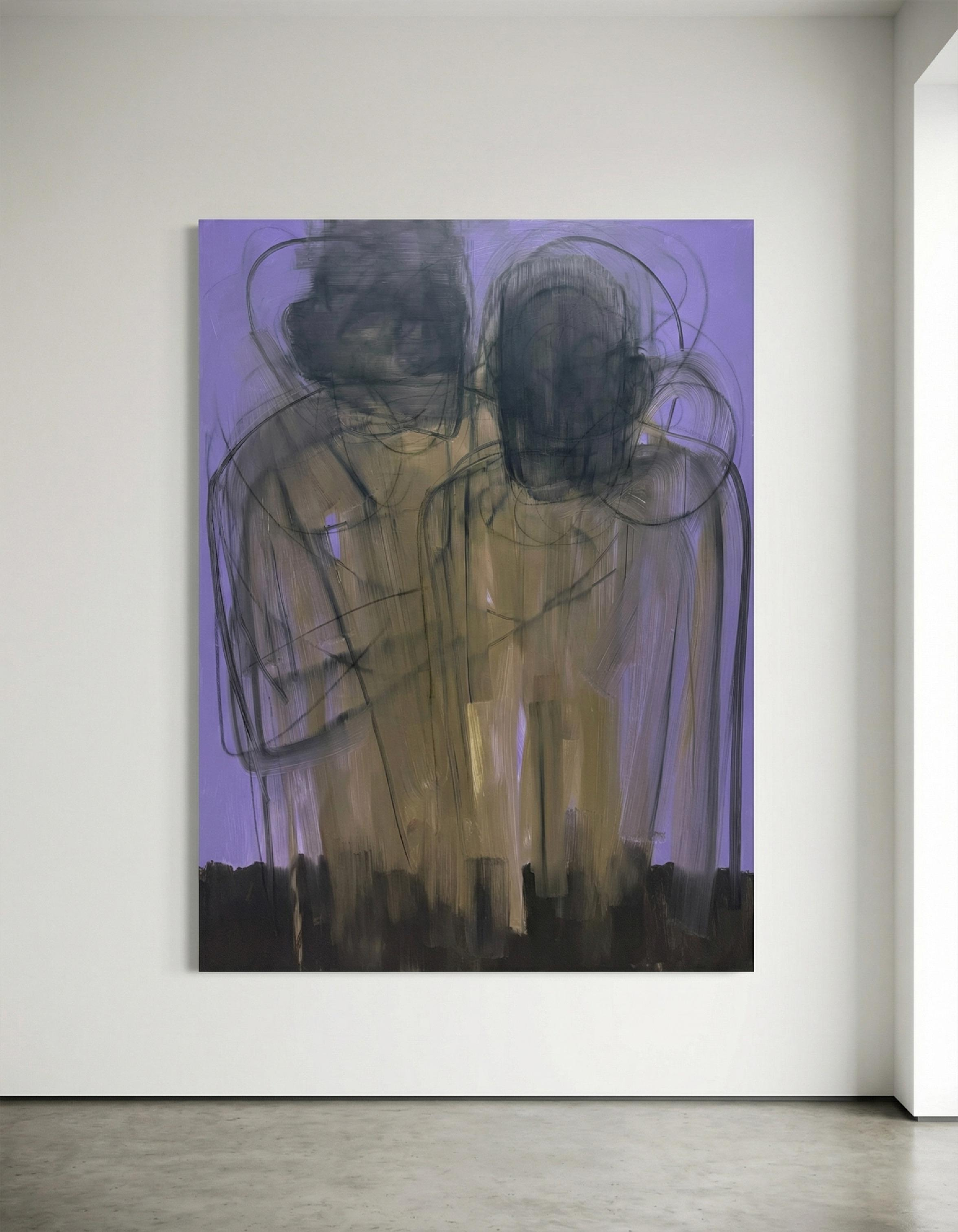
Zhang Hongyu, Wit and Happenstance, 2024. Oil painting on canvas, 162.8 x 125.7 cm. Courtesy of the artist.
We try to see another person clearly, only to discover ourselves in their place.
The title Formless, Imageless unfolds through this displacement. “Formless” refers to the loosening of contours as the figure moves away from a stable and complete shape. “Imageless” opens a distance between the visible figure and the meanings conventionally attached to it. Once a face is detached from a legible expression or identity, it also slips beyond familiar systems of classification. The viewer can no longer determine immediately who this person is, what they have experienced, or which emotion might explain them.
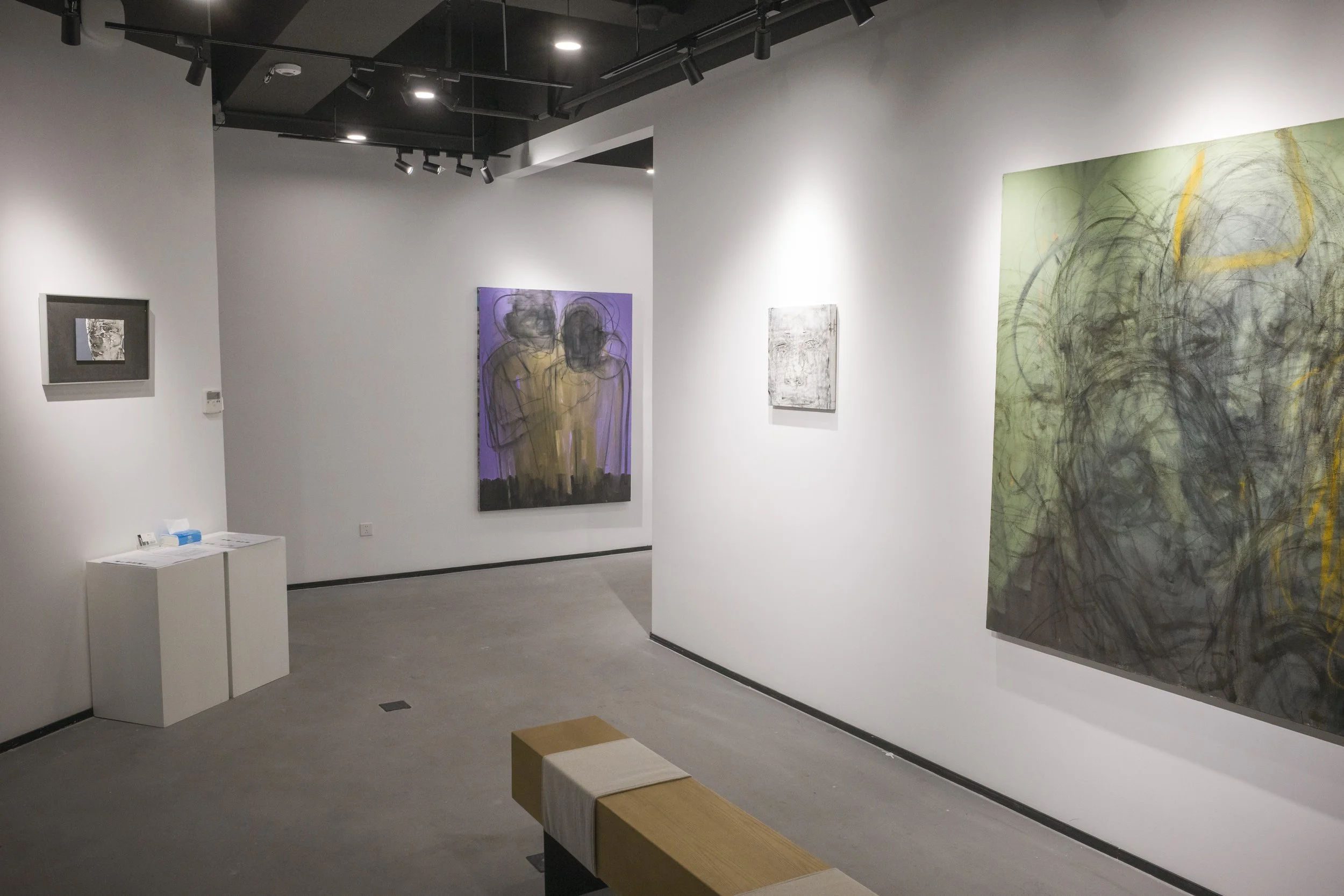
Installation view of Formless, Imageless. Courtesy of the artist and L Gallery.
The “compassion” that Zhang associates with his practice therefore does not depend on an explicit display of suffering. His figures rarely bear visible wounds or theatrical expressions, nor do they ask the viewer for sympathy. Compassion begins after recognition has been interrupted. When another person cannot be immediately explained, are we still willing to acknowledge their presence? When they refuse to become a complete and easily understood story, can we resist the impulse to write that story on their behalf? Such restraint shifts looking away from possession and toward sustained attention. Ambiguity preserves a necessary distance, preventing the figure from being exhausted by a single act of viewing. We may approach without fully entering; we may sense an emotion without claiming to understand it.
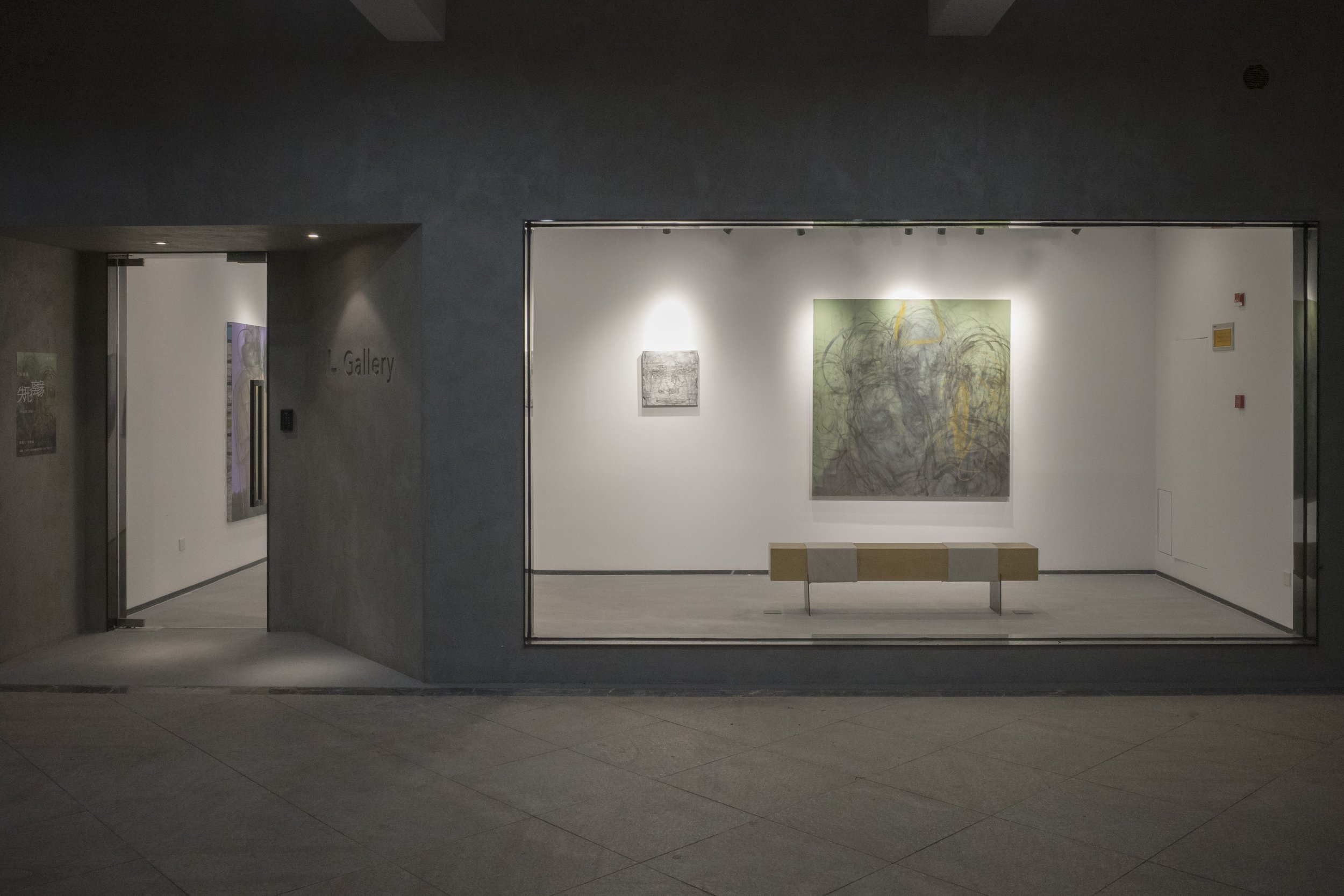
Installation view of Formless, Imageless. Courtesy of the artist and L Gallery.
Ultimately, Formless, Imageless reveals how clarity is produced through perception. Seeing clearly does not always mean receiving more truthful information; sometimes it simply means that the brain has completed a familiar interpretation. Zhang keeps the figure suspended before that interpretation can settle, allowing paint, body, and gaze to maintain a shared state of incompletion. We may leave the exhibition still unable to identify its figures, but this uncertainty is not a failure of vision. To acknowledge the limits of our gaze and allow another person to retain what has not yet been named may itself constitute a slower and more careful form of compassion.