Review: Refusing Structure, Language, and Containment
Exhibition Review of Temporary Storage at CAAC/Gallery 456 with ETA Gallery.
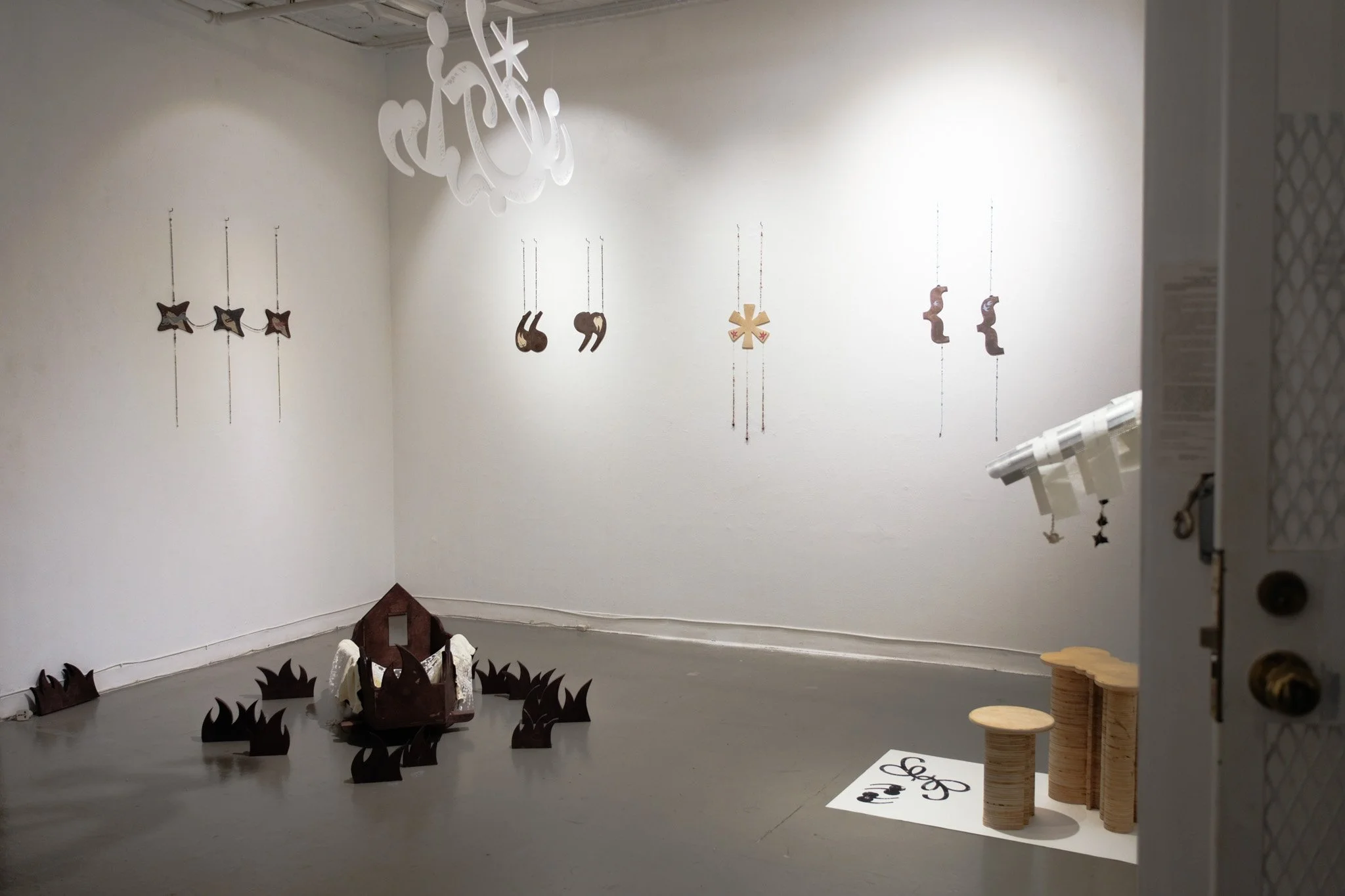
Installation view of the exhibition. Photo by the author.
Temporary Storage at CAAC Gallery 456, curated by Ariel He and Cicy Hu, harmoniously bridges work by artists Mi Chen and Yan Wang. The pieces demand to be seen as they are before interpretations are placed on them. Temporary Storage invites viewers to take their time before drawing any conclusions, making the experience both contemplative and meditative. At its core, the exhibition elucidates the theme of refusal. Both Chen and Wang remove symbols, glyphs, and materials from their usual environments—a comma torn from the sentence; a book stripped of its spine. To derive meaning, viewers are challenged and asked to adjust their normal modes of thinking.
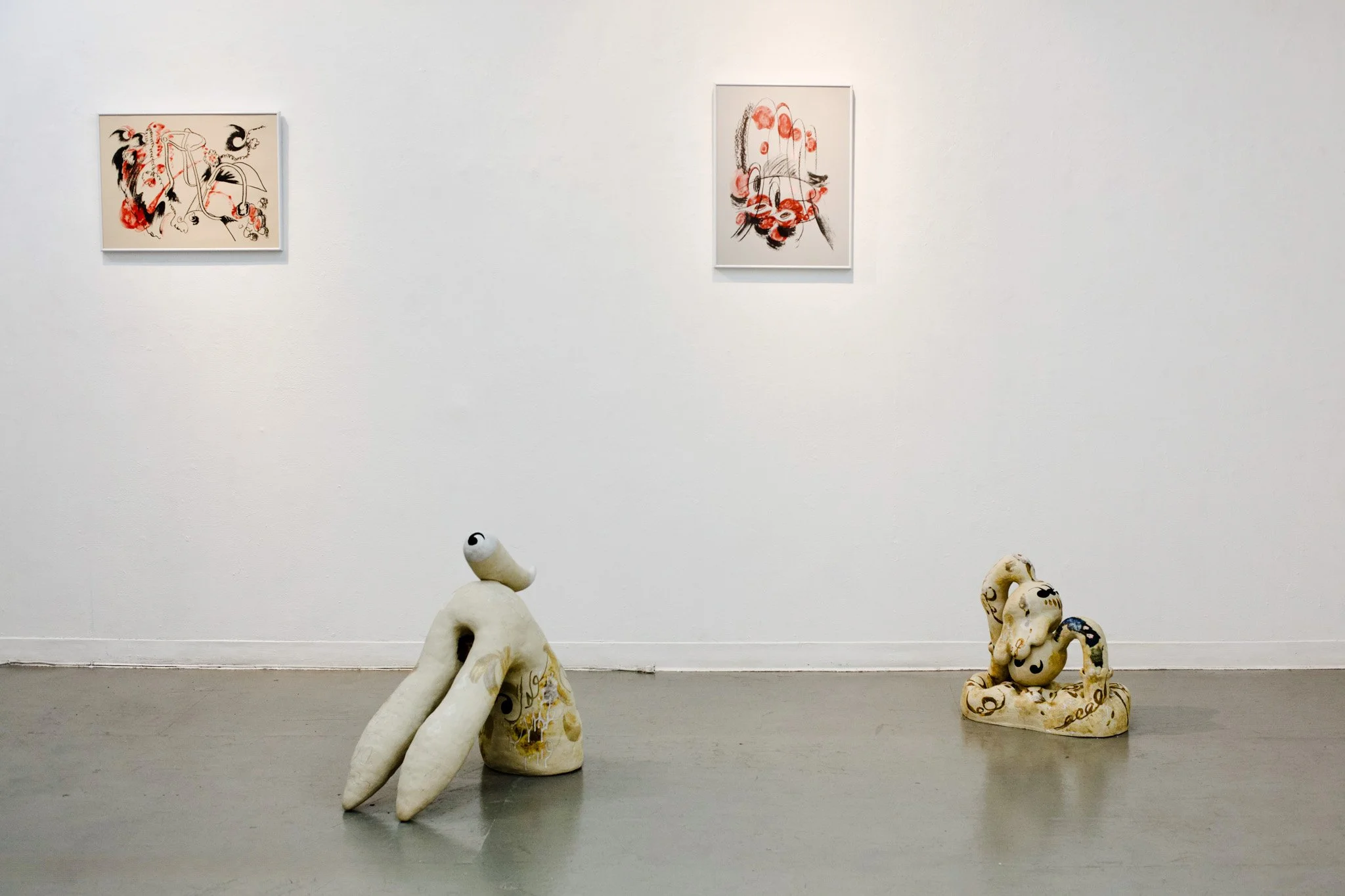
Installation view of the exhibition. On wall (left): Yan Wang, Playground III, 2026, lithograph on paper, 18 x 24 inches. On floor (left): Yan Wang, 骨肉 (I am her bones and flesh), 2026, stoneware, wash & glaze, print on mulberry, 29 x 13 x 30 inches. On wall (right): Yan Wang, Dew, 2026, lithograph on paper, 24 x 18 inches. On floor (right): Yan Wang, The Twins in Me, 2026, stoneware, wash & glaze, print on mulberry, 21 x 21 x 11 inches. Photo courtesy of Ariel He.
Lingering between Wang’s ongoing lithograph print series and the sculptures beneath them, one realizes that 骨肉 (I am her bones and flesh) and The Twins in Me seem to have jumped out of the constraints of a page. They’ve sprung to life from print to welcome viewers into a new world where glyphs and symbols are transformed. These sculptures amalgamate and interlock in one fluid, codependent system like kin.
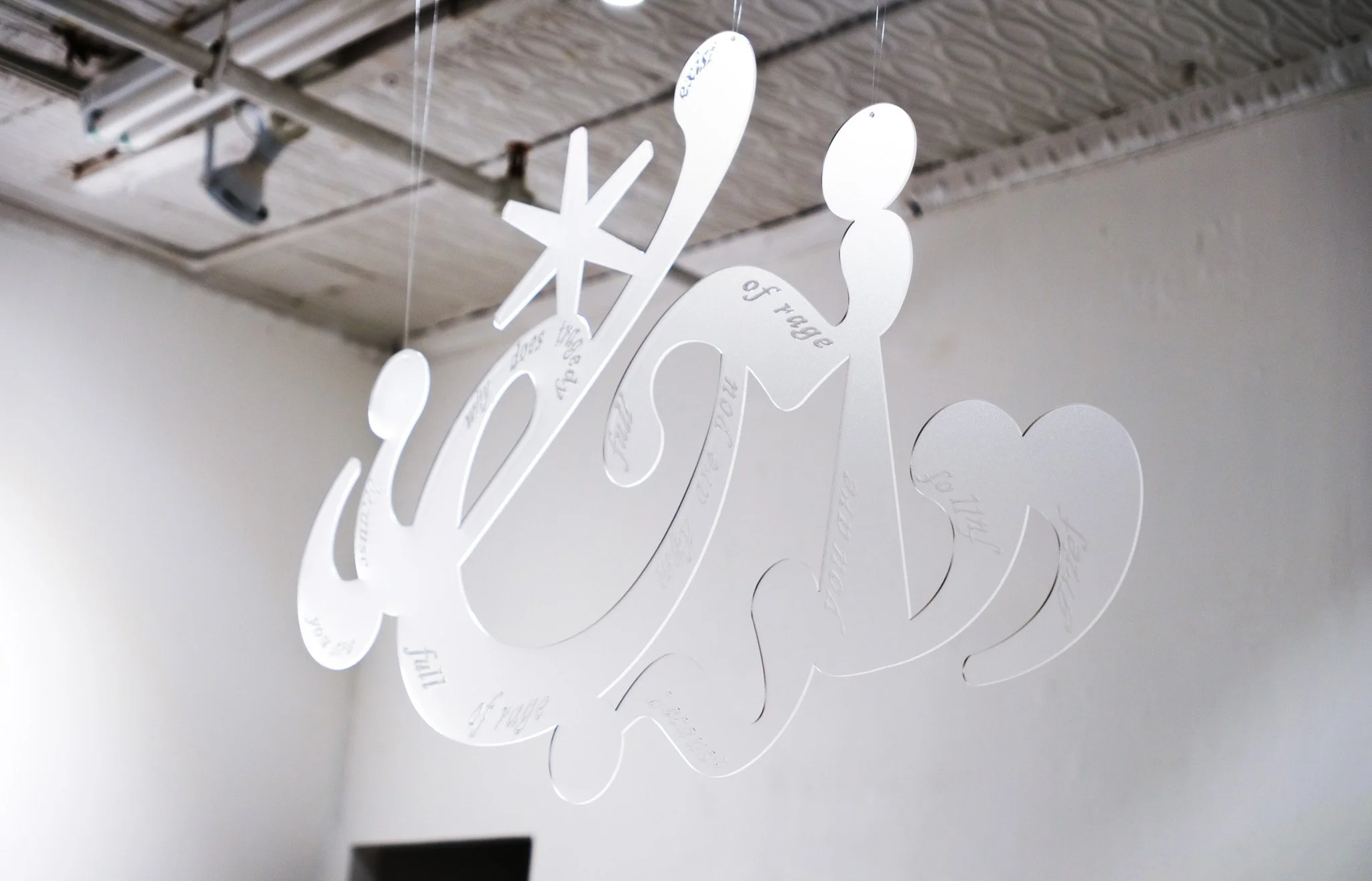
Mi Chen, Absence, 2026, acrylic, 24 x 35. Photo by the author.
Fluidity and gestural lines are visible threads between the two artists. Looking up towards the ceiling, a translucent acrylic cloud hangs over our heads. Upon closer inspection, the cloud is a mass of enlarged punctuation marks entangled together. In Absence, Chen engraves the words from Anne Carson’s opening poem in her book Grief Lessons: Four Plays by Euripides. As a graphic designer and artist, Chen is intrigued by blurring the lines between her practices by forcing design elements out of two-dimensional spaces and into our more tangible world. By removing typographic glyphs and text from their originally designed functions, Chen urges us to consider form before meaning. What are rage and grief when the page rematerializes into something hard and transparent like acrylic, and when the words have been fragmented apart?
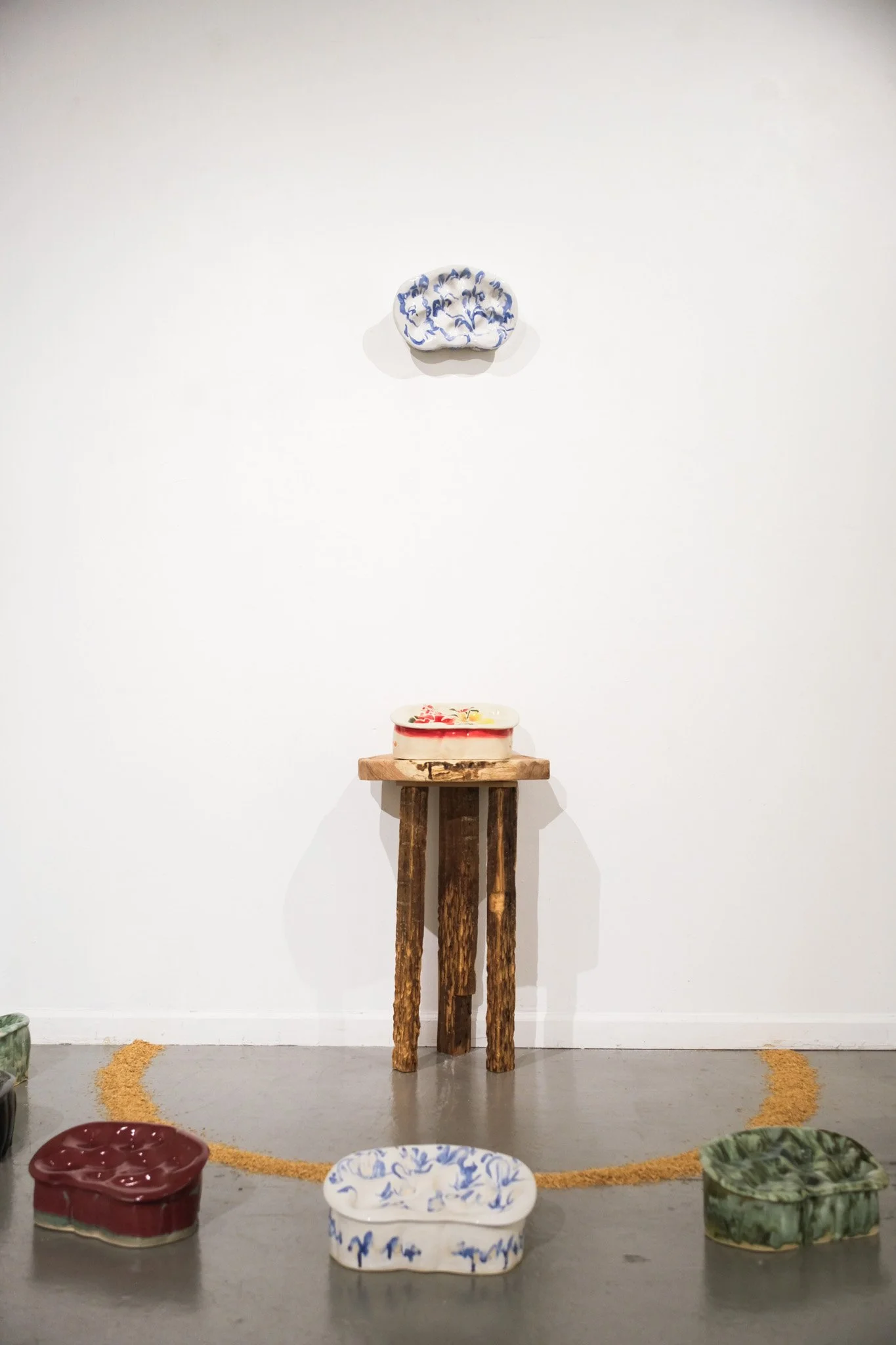
Memory is another persistent theme in both artists' work. Yan Wang arranges a set of her ceramic works—Pillow, Red Affair, and Cloud Head—in what appears to be an intimate shrine or ritual. Pillow is an arrangement of seven ceramic pillows of varying finishes in a semicircle. They surround Red Affair, which is a similar ceramic piece that sits on a wooden stool. The piece directly nods to a water bowl at Wang’s grandparents’ home, linking her ancestral past and her present. Suspended above them is Cloud Head, a glossy reflection of the central floor pillow that nods to Chinese porcelain practices. Altogether, the works play with contradictions and opposites. Past and present. Soft and hard. And in a gallery space, Wang teases the tension between inviting guests to lie on one of these pillows and the social reality that we are not allowed to touch such fragile objects.
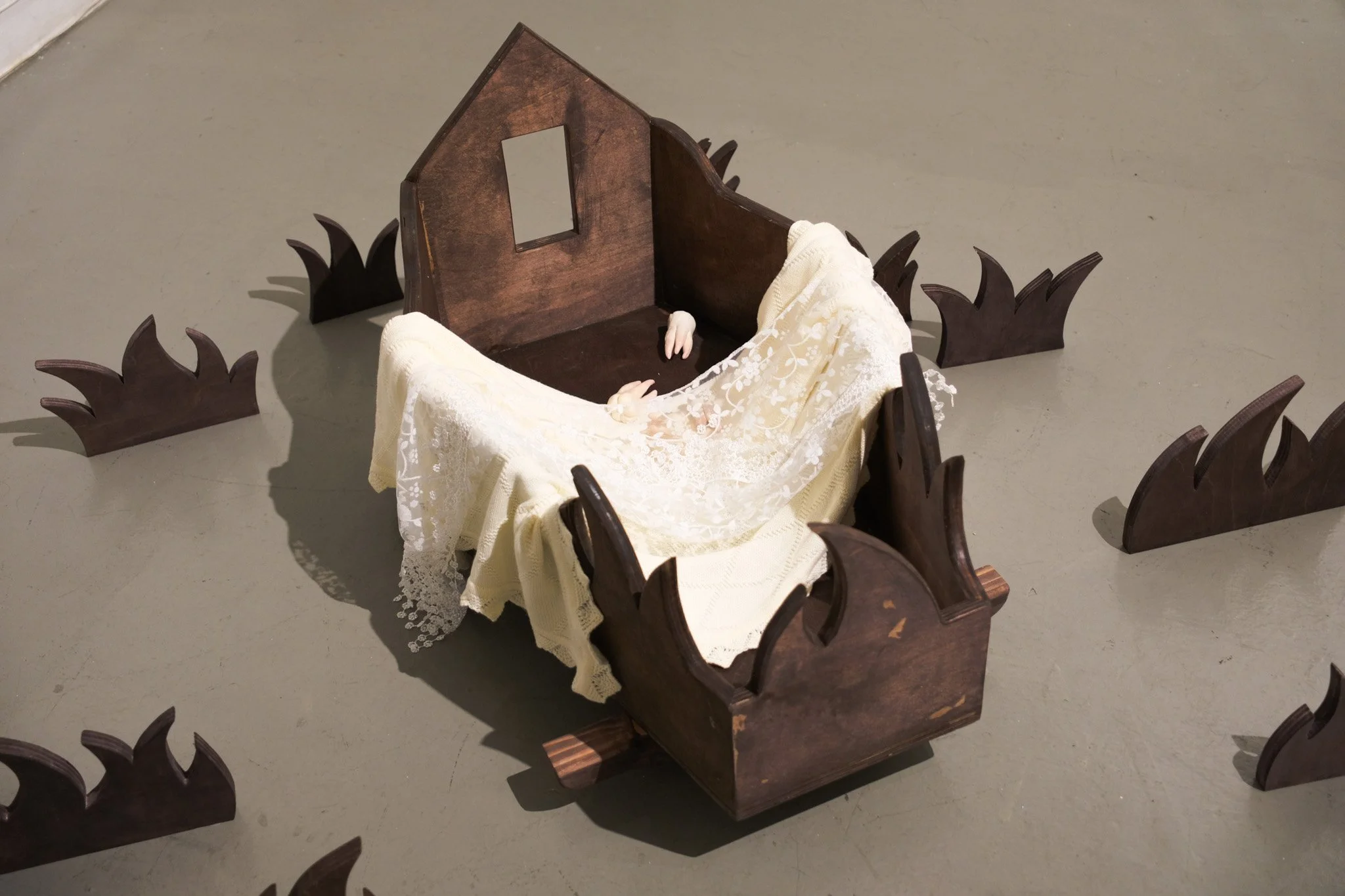
Mi Chen, The Cradle, 2026, wood and fabric, 19.5 x 20 x 13 inches. Photo by the author.
The Cradle sits on the floor like something out of a fever dream. It’s surrounded by wooden cutouts that can be seen as bunches of grass or little flames setting the cradle ablaze. Inside the cradle are oversized teeth and a lace blanket draped over the structure. Excitement and anxiety are felt here, like when your baby teeth are about to fall out, only to be replaced by new adult ones. It illuminates the unavoidable process of human transformation as we age. So, the cradle doubles as a coffin, acting as an oxymoron for both life and the inevitable loss of youth.
Each work made by each artist is a container. They physically embody shifting meaning contained in the temporary space of a gallery exhibition. None of these pieces are meant to remain static in interpretation. Chen and Wang reject the desire to assign a fixed meaning to their artwork. Instead, they acknowledge that perception of their work will naturally and inevitably change.