A Careful Observation of Analog and the Material as Meditation
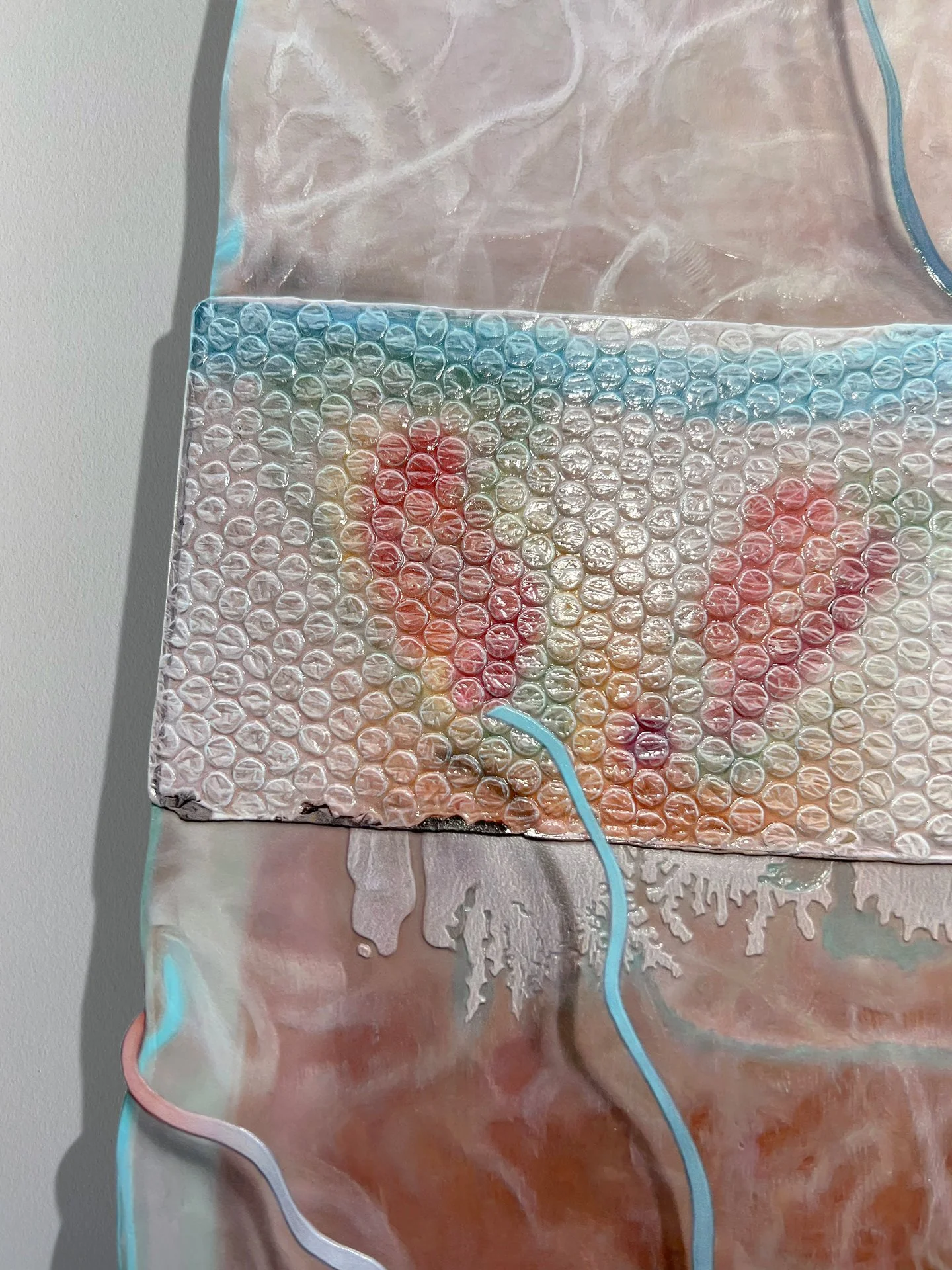
Closeup view of “02/22/2025” (2026) by Ziyi Zhang, Oil and mixed media, 18 × 24 × 1 inches
In the group exhibition titled, “Between the Breath of Objects” at Nguyen Wahed, curated by Jinyi Freya Xu and Shuhan Zhang, a clear vision of life and our intended experience emerges. Through the presentation of paintings and jewelry, the exhibition explores a philosophy of existence that is pertinent to our time. The works of the artists, including Kyung Kim, Luping Wang, Silvia Muleo, Xuemeng Li, and Ziyi Zhang, describe a perspective and a mode of existence that are materially based yet also spiritually sound. This philosophy is about keeping a lucid observation of the material world, to truly exist within it and to observe the breaths that manifest as a hazy field of moisture by the subway window as one stands close to it during the winter.
This may not be an entirely new way of thinking, but it is very relevant to a world in which people are constantly distracted by social media and the virtual worlds as opposed to the analog and the material. Companies engineer competition within society involving wealth and social connection through those virtual platforms from which there appears to be no escape.
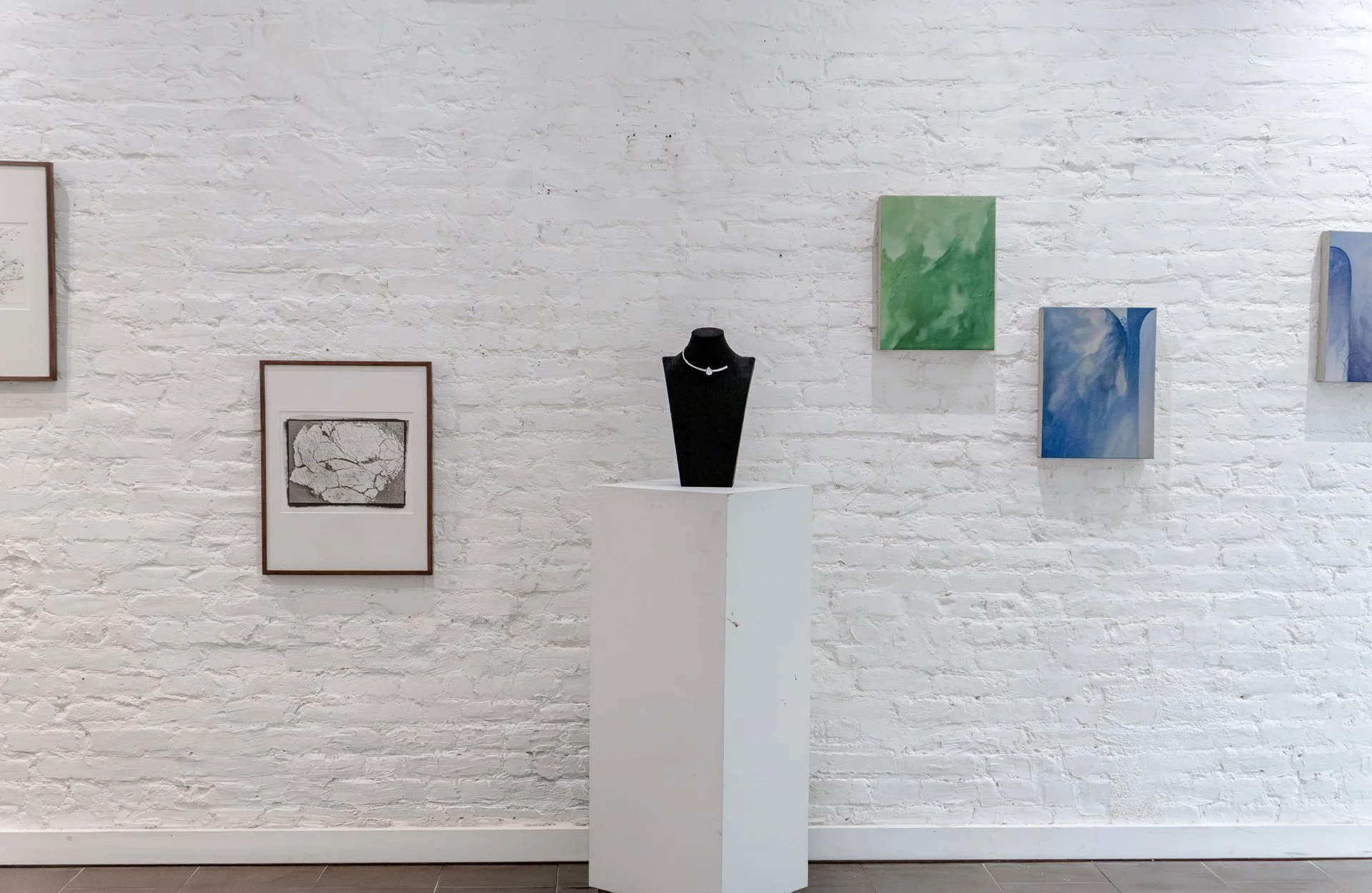
From Left to right:
1. Xuemeng Li - “Hibi” (2024) From series Contour of Mist, Platinum palladium print, walnut frame, 22.4 x 11.7 inches
2. Luping Wang - Resort High Jewelry: ”The Fluid Drop Choker“ (2026), platinum and 5.20-carat pear-shaped diamond
3. Kyung Kim - “Midsummer Rhapsody” (2025), Oil on linen, 16 x 12 inches
4. Kyung Kim - “Shadow’s Reverie” (2024), Oil on linen, 16 x 12 inches
There have been similar thoughts and teachings, such as Zen Buddhism and the various schools of meditation, which also focus on the importance of existing in the moment. How does this exhibition contribute to this existing line of thought?
Ziyi Zhang’s abstract yet realistic paintings defy easy categorization due to their engagement with materiality within an abstract composition, which simulates a collage or an assemblage. Zhang’s work is a digital archive of daily life and makes permanent the ephemeral and transitory forms and patterns, such as a plastic bubble wrap or the accumulation of marks on a subway metal door. The artist uses 3D printing and carves out the edge of painting into an irregular shape, even capturing details such as a foldable crease that separates the painting into two halves. The painting simulates the actual aesthetic and material logic of the objects that it is supposed to represent in a highly complex yet minimalistic composition. These works come from the artist’s experience of repeated daily ritual in existing purely in the moment and visually taking in every observable detail. This in effect turns the artist away from the virtual to the analog and the material.
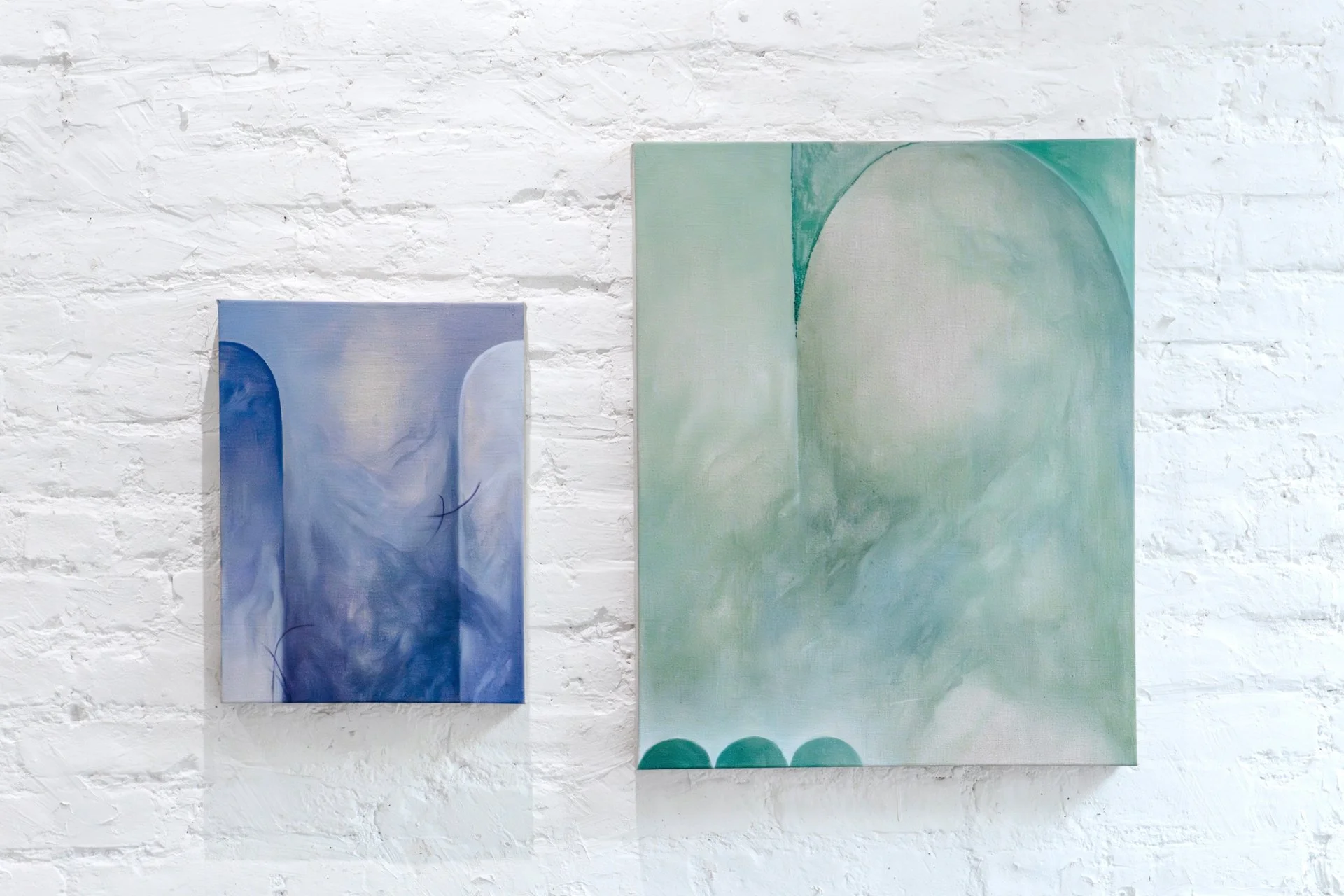
From left to right:
1. Kyung Kim - “The Hidden Moon” (2024), Oil on linen, 16 x 12 inches
2. Kyung Kim - “Dawnlit Woods” (2025), Oil on linen, 28 x 24 inches
In a parallel vein, Silvia Muleo questions if a discernible boundary exists between the virtual and the analog. She observes how late at night the reflected light from construction sites or subway advertisements similarly render discernible forms and information just like the digital displays on our phones and computers. Thus, electrical lights that exist externally in the physical world can interact or merge with material objects and analog information, and, in turn, they can be confused with the electronic lights that emanate from digital devices. Her paintings involve the reflections from a brightly lit subway advertisement onto a pavement on the ground or the wall, as seen during the nighttime. The erasure of all other elements in the paintings, such as a garbage bin or the passerby’s, give greater focus and attention to the fragmented forms within this grid-like array of reflected light. Thus, she plays with the idea of how light can illuminate and provide information but also conceal and erase information when it is aimed in a certain way - and this is true of both digital and analog light.
Kyung Kim’s paintings hint at a physical reality yet immerse the viewer in an abstract, evanescent experience of witnessing a fog in a forest. The architectural and minimalist arches give a sense of order and contrast to the organic and centerless forms that comprise the abstract fields within the paintings. The subtle sensation of this abstract phenomena heightens our sense of being and imbues our psyche with beauty and elegance that can only be described by poetry.
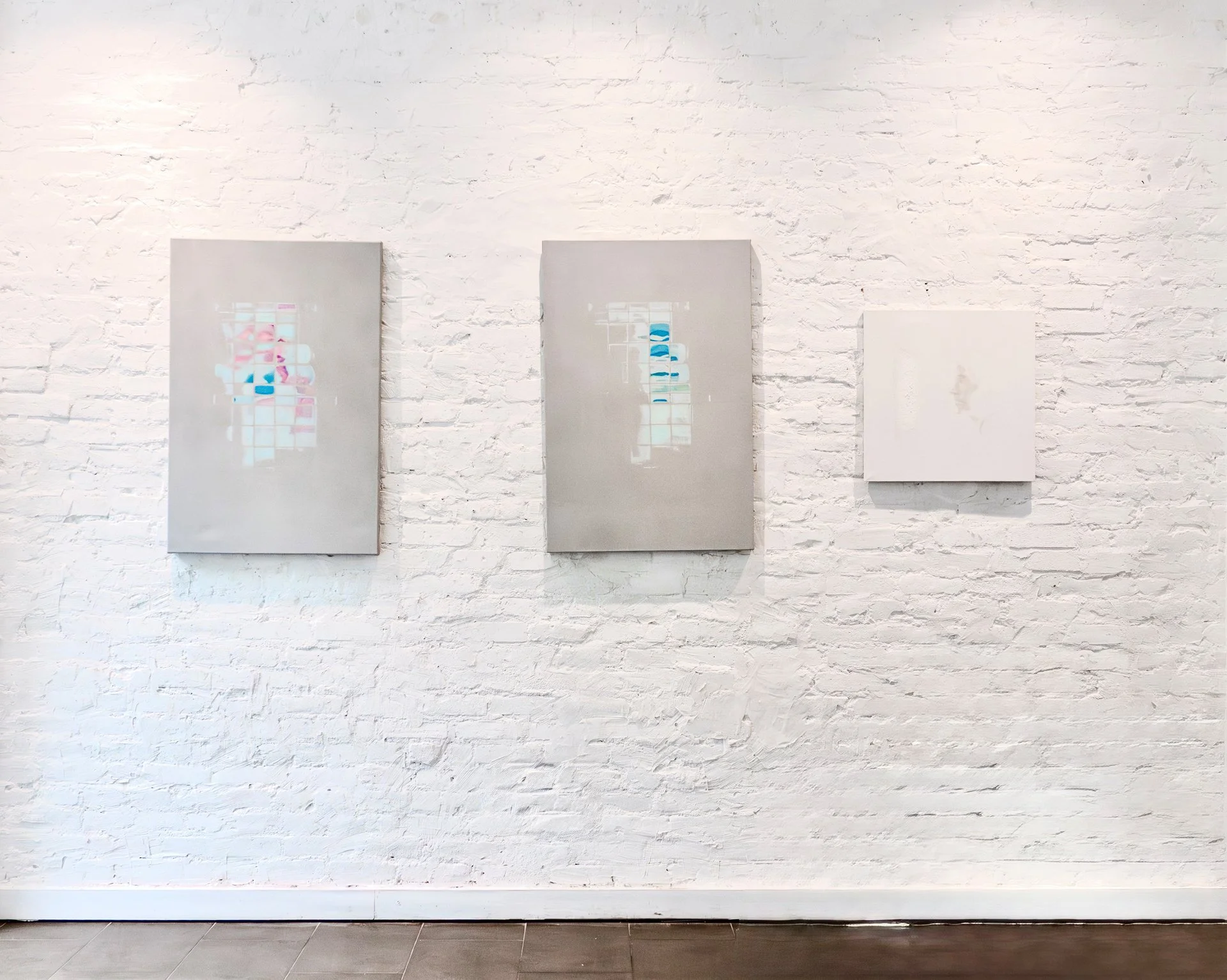
From left to right:
1. Silvia Muleo - “Echo #1” (2025), Oil and oil pastels on canvas, 36 x 24 inches
2. Silvia Muleo - “Echo #2” (2025), Oil and oil pastels on canvas, 36 x 24 inches
3. Silvia Muleo - “White on White (concrete light)” (2025), Oil and oil stick on canvas, 20 x 20 inches
Xuemeng Li produces two works that relate to one another, including a photograph of a cracked concrete slab and an ink drawing that represents the abstract associations and patterns of the concrete slab in the photograph. The goal of the photograph might be to detail the surface, while the goal of the ink drawing might be to outline the core relations of what goes on at the surface level. While the photograph is most likely a digital image produced by a camera with a digital sensor, it is printed in analog form, and the abstract relations in the image are then preserved and made concrete via an ink drawing. What Li’s work illustrates is that any object or case of material reality can deliver enough density of information to trigger an aesthetic experience that art like a painting or sculpture can provide, if we observe and focus hard enough in the moment.
And this might be the conclusive thought behind this group show: the aim of life and existence, when we interpret the message carefully, is to attain a thoughtful and observant state of mind and being, not to chase after the big things while dismissing the smaller things or taking them for granted. The conundrum of life is that nothing is perfect because even a perfect circle is not perfect (because it is predictable and boring as a result). When we look at Luping Wang's necklace, we see that the ring is an incomplete circle because the imperfection, ironically, makes it perfect. Even when we carefully study something as basic and rudimentary as a concrete slab, we find aesthetic relations arising in our consciousness as we achieve a density of information and experience by elevating and finetuning the degree and depth of our observing mind.
Such a philosophy might be termed “Existential Materiality,” which can serve as a catalyst towards attaining spirituality and mindfulness. This is also in line with the idea that less is more because more would clutter the moment of now, more is required from us to appreciate less, or simplicity is superior to maximalism. Existential Materiality, which is maximalist in terms of attention and minimalist in terms of the need for material perfection, can help guide us towards a greater level of spiritual soundness and attainment through the appreciation of modest forms and imperfect details.
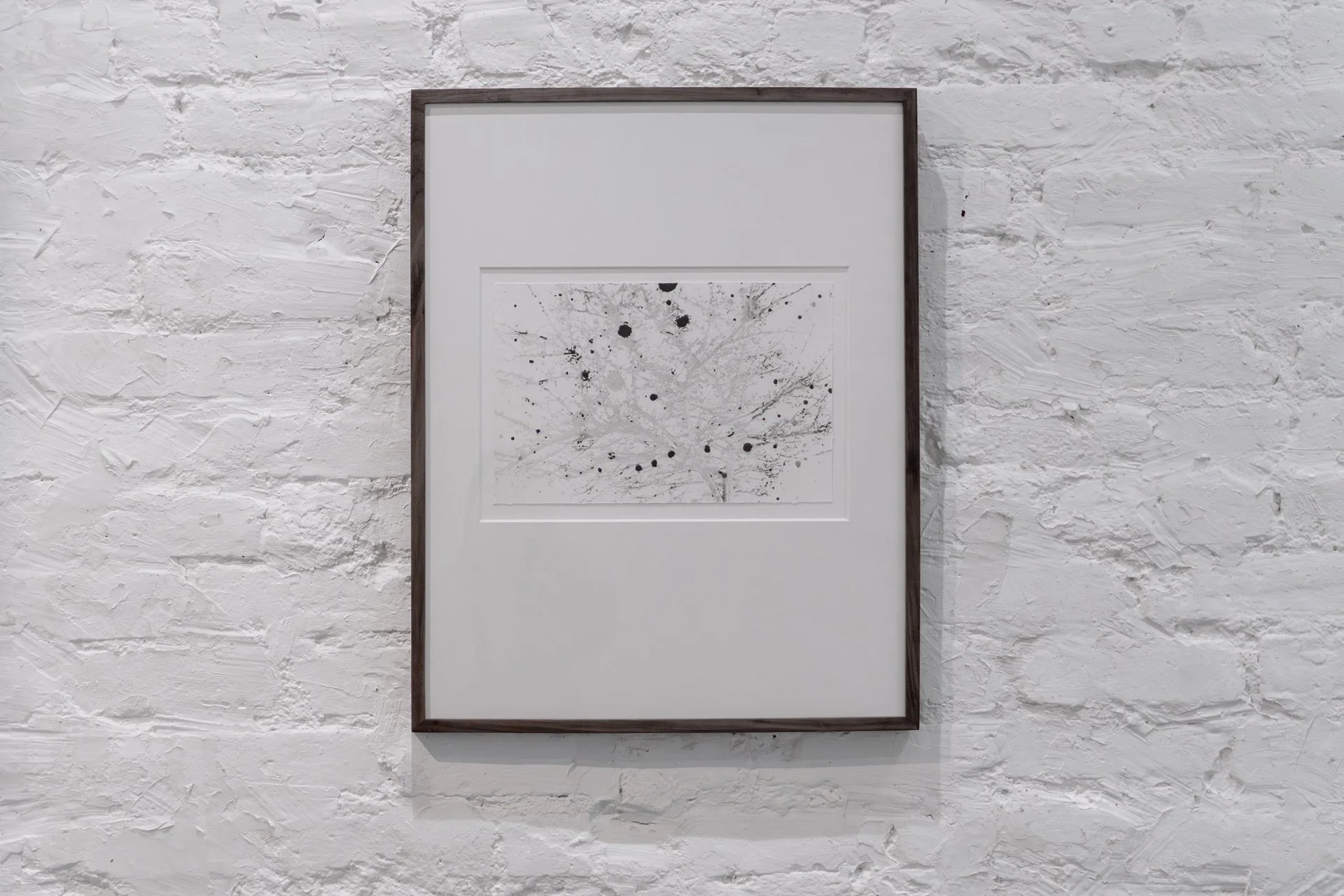
Xuemeng Li - “Untitled” (2024) From series Contour of Mist, Platinum palladium print, walnut frame, 22.4 x 11.7 inches