It’s Getting Through
Where Boundaries Soften and Meaning Begins to Seep
In the group exhibition Osmosis, curated by Jinyi Freya Xu and Luman Jiang, “cultural exchange” is not framed as a visible encounter or a clear process of integration, but as something slower, more concealed, and continuously unfolding: a state of permeation. Drawing on the biological mechanism of osmosis, the exhibition constructs a framework for viewing that centers on perception and boundaries. The individual does not come into direct contact with the world; instead, one is always enclosed within an invisible “membrane.” It is through the filtering, refraction, and selection of this membrane that external experience is reorganized and meaning takes shape.
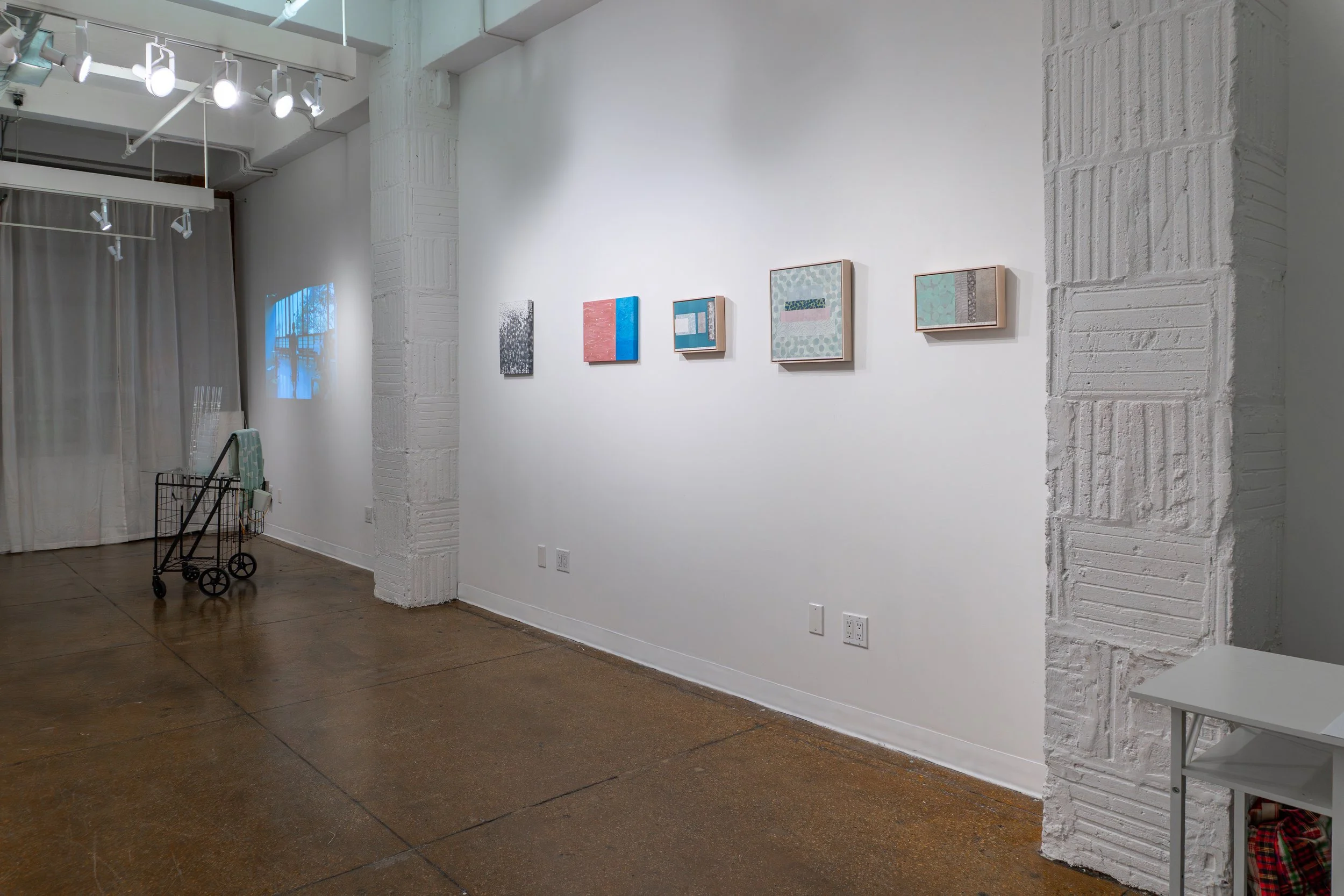
Installation view of Osmosis. Photo by Photo by Echo Xu. Courtesy of the artist and Symora Art.
This structure of the “membrane” gradually reveals itself through subtle shifts across different media. In Guo Tongtong’s paper-based works, printed traces and hand-drawn lines overlap and interweave. Transparency appears to be present, yet it can never be fully penetrated; the image opens itself to the viewer while simultaneously producing new surfaces of resistance. A similar tension emerges in Xingze Li’s aluminum works. Surfaces that would normally remain in the background, walls, and light are translated into materially weighted planes, carrying a sense of duration and passage. What is usually overlooked becomes unavoidable, pushing the act of viewing into hesitation. Here, the “membrane” is no longer merely metaphorical but becomes a material experience: it connects, yet it also separates.
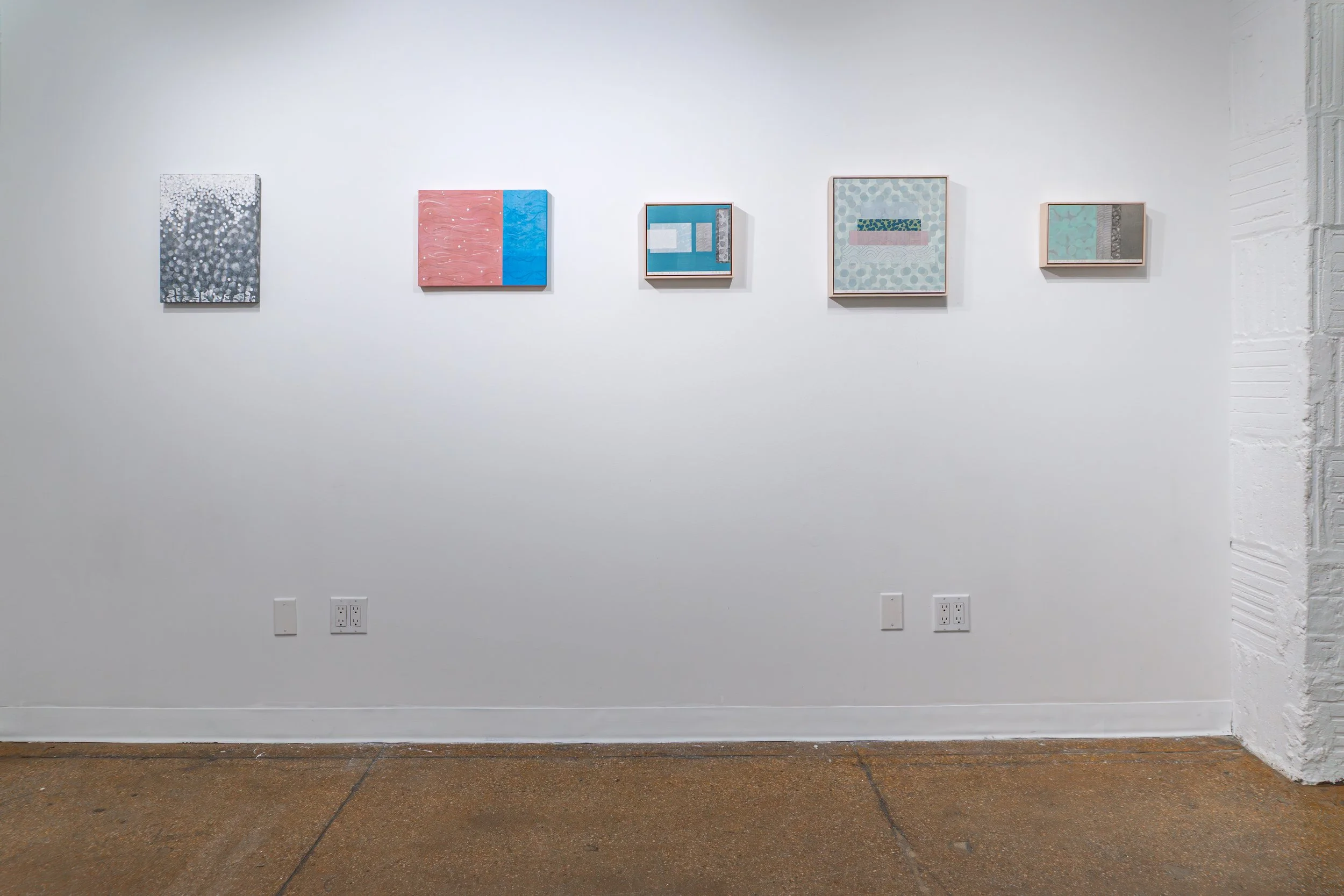
Installation view of Osmosis. Photo by Photo by Echo Xu. Courtesy of the artist and Symora Art.
In Joy Li’s installation Our Ephemeral Eternity: Our Love, Our Ordinary Battlefield, this logic of permeation is further transformed into a spatial structure of intimacy. Constructed from everyday objects, the environment feels both familiar and slightly off-balance, where intimacy and conflict intertwine without clear distinction. Upon entering this space, the viewer struggles to maintain a stable external position: we are at once observers and participants, drawn into a relation that resists clear articulation. Permeation here becomes embodied, a process of continuously adjusting distance, position, and affect.
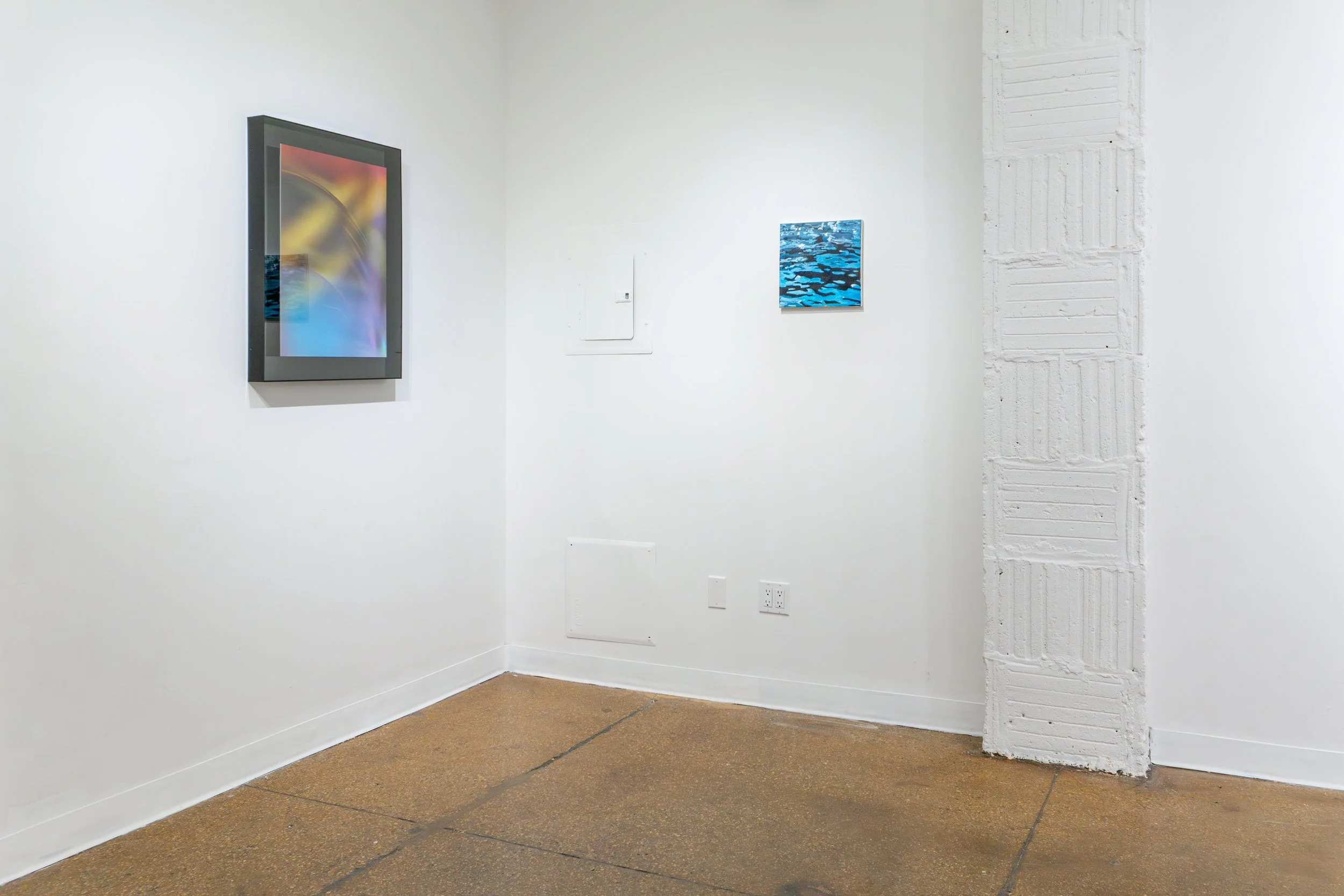
Installation view of Osmosis. Photo by Photo by Echo Xu. Courtesy of the artist and Symora Art.
If we turn to Édouard Glissant’s notion of the “right to opacity,” this form of permeation does not seek transparency or full comprehension, but unfolds through relations that remain partially untranslatable. The works in the exhibition sustain their differences within their own perceptual and experiential logics, while allowing for a subtle, often imperceptible exchange. Yu Ruo-Jie’s photographic and video works mobilize the figure of the bubble, both transparent and distorting, to render uncertainty visible. Meanwhile, the paintings of Kyung Kim and Bingyi Zhang translate natural perception into fluid conditions of time, temperature, and light, resisting fixed form. Rather than defining clear boundaries, these practices generate a perceptual zone in which the distinction between inside and outside is continually unsettled.
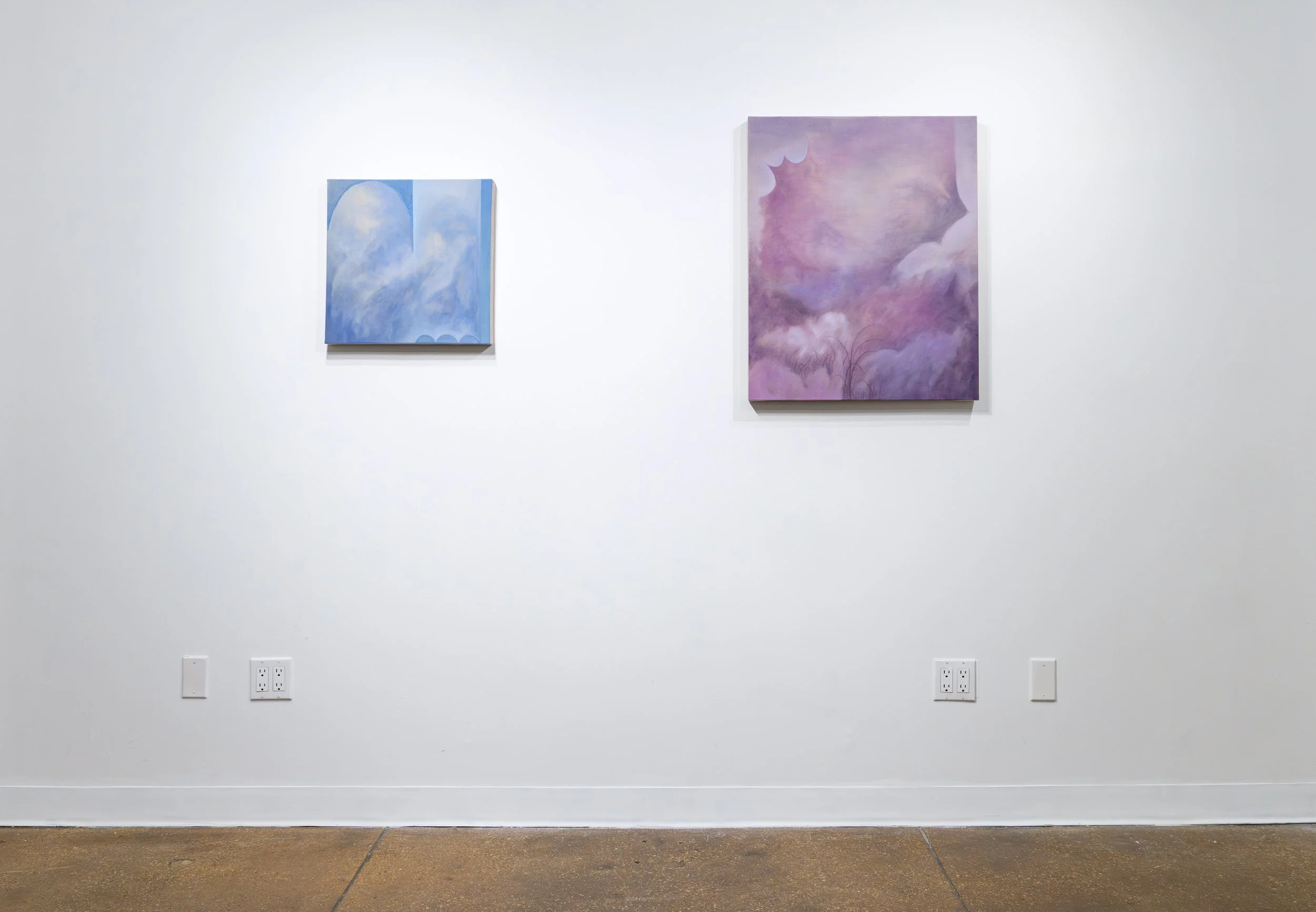
Installation view of Osmosis. Photo by Photo by Echo Xu. Courtesy of the artist and Symora Art.
Ultimately, Osmosis is less concerned with how the “other” can be understood than with how understanding itself begins to shift. When the membrane thins, neither the outside fully enters, nor the inside completely opens. Instead, something more elusive takes place: a subtle change, a foreign warmth beginning to seep through, quietly altering the density of what was once familiar. In this process, the viewer becomes aware that perception is never neutral, but constantly shaped and reshaped. What we encounter, then, is not only the works themselves, but the ever-shifting distance between ourselves and the world.