Between Visual Seduction and Physical Unease
Freja Jiahui Ye on bodies, materials and the fragile systems that hold them together
The first thing I noticed in Freja Jiahui Ye’s portfolio was colour. Not colour as decoration, but colour as something physical: the pale translucency of resin, the white surface of crystal and the reddish-brown of rust. Her works are visually rich, full of small details that seem to ask for more time than a quick look can offer.
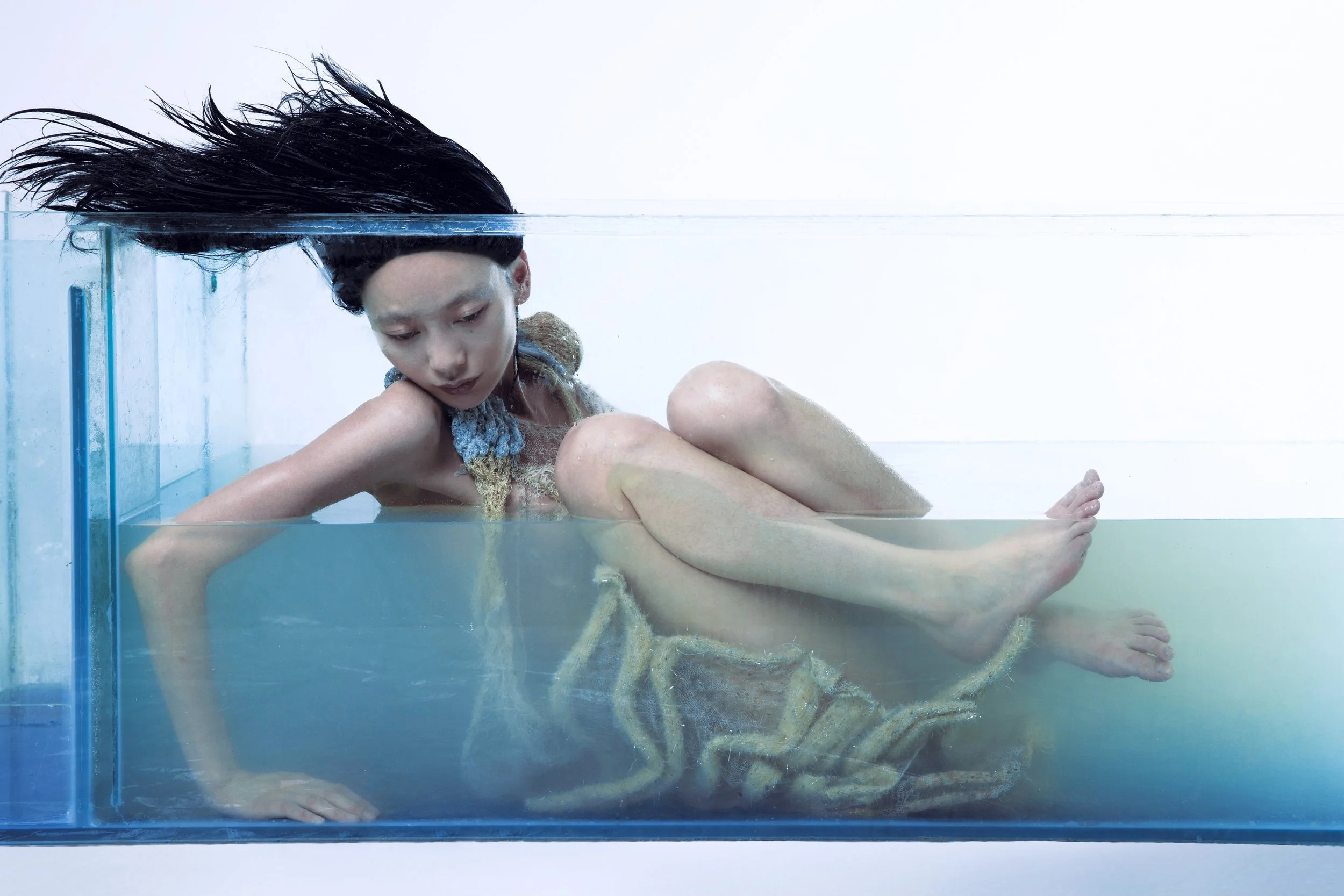
Freja Jiahui Ye. Amor Fati, 2021. Performance with crystallised wearable sculptures; photographic documentation. Performer: YIN YIN. Courtesy of Jia Ling Hoo (@jialinghuphoto).
I have not seen Freja’s works in person. I have encountered them through photographs and videos, which means that I am also aware of what I am missing. The images cannot communicate the temperature of a space, its smell or sound, the weight of a sculpture or the feeling of standing close to a material that might cut, dissolve or move. She herself is careful about this distinction. For her, documentation is not a replacement for the work, but another kind of encounter.
Still, even through images, her works make it difficult to remain a distant observer. They are made of materials that seem to be constantly changing, and they often suggest a body caught inside a process it cannot fully control.
Amor Fati
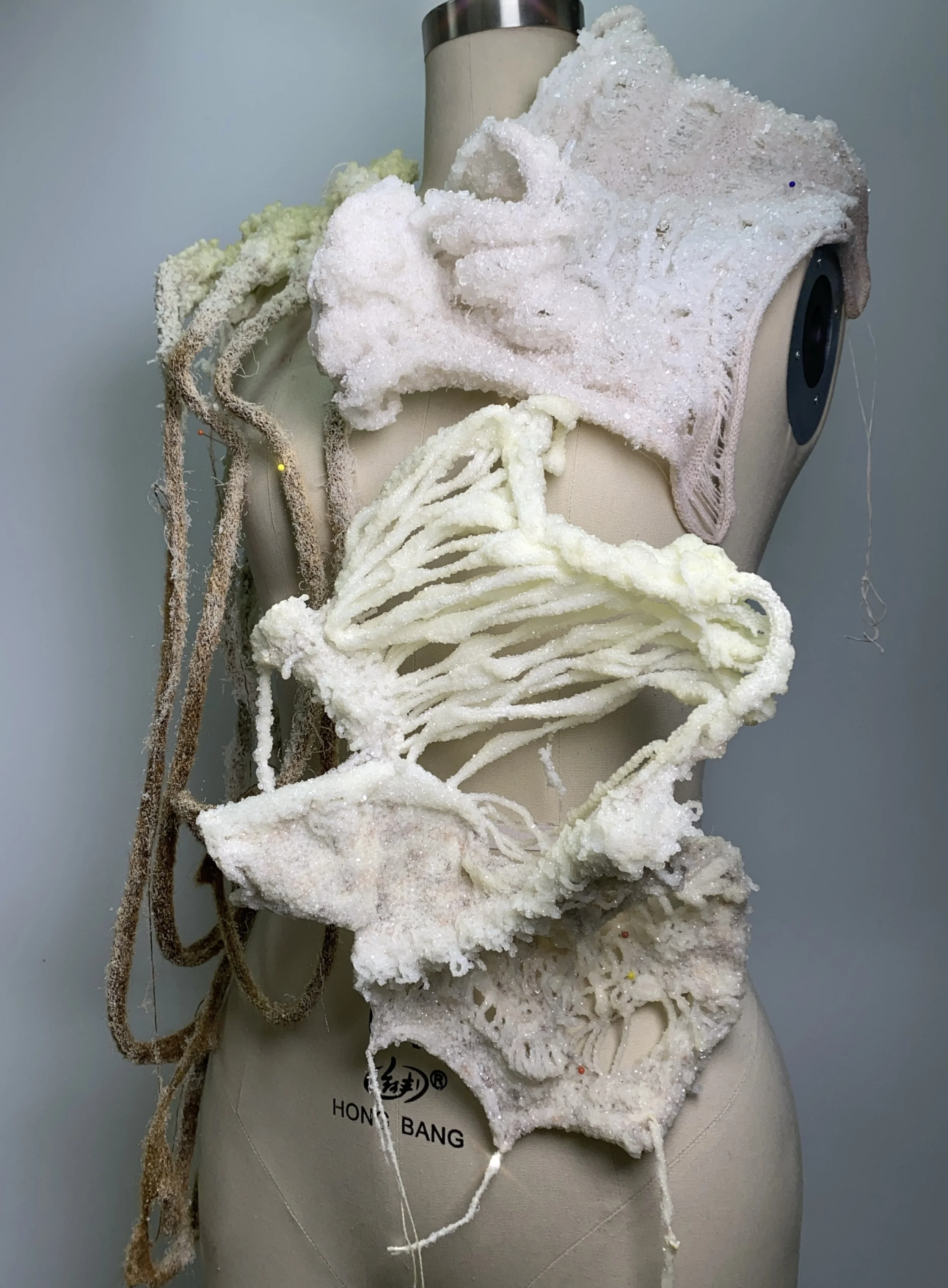
In Amor Fati (2021), knitted fabric is transformed through chemical crystallisation. Over six months, crystals gradually grew across the material until it began to resemble something mineral rather than textile. Freja describes the process as less a matter of sculpting than of creating the right conditions and allowing the material to respond.
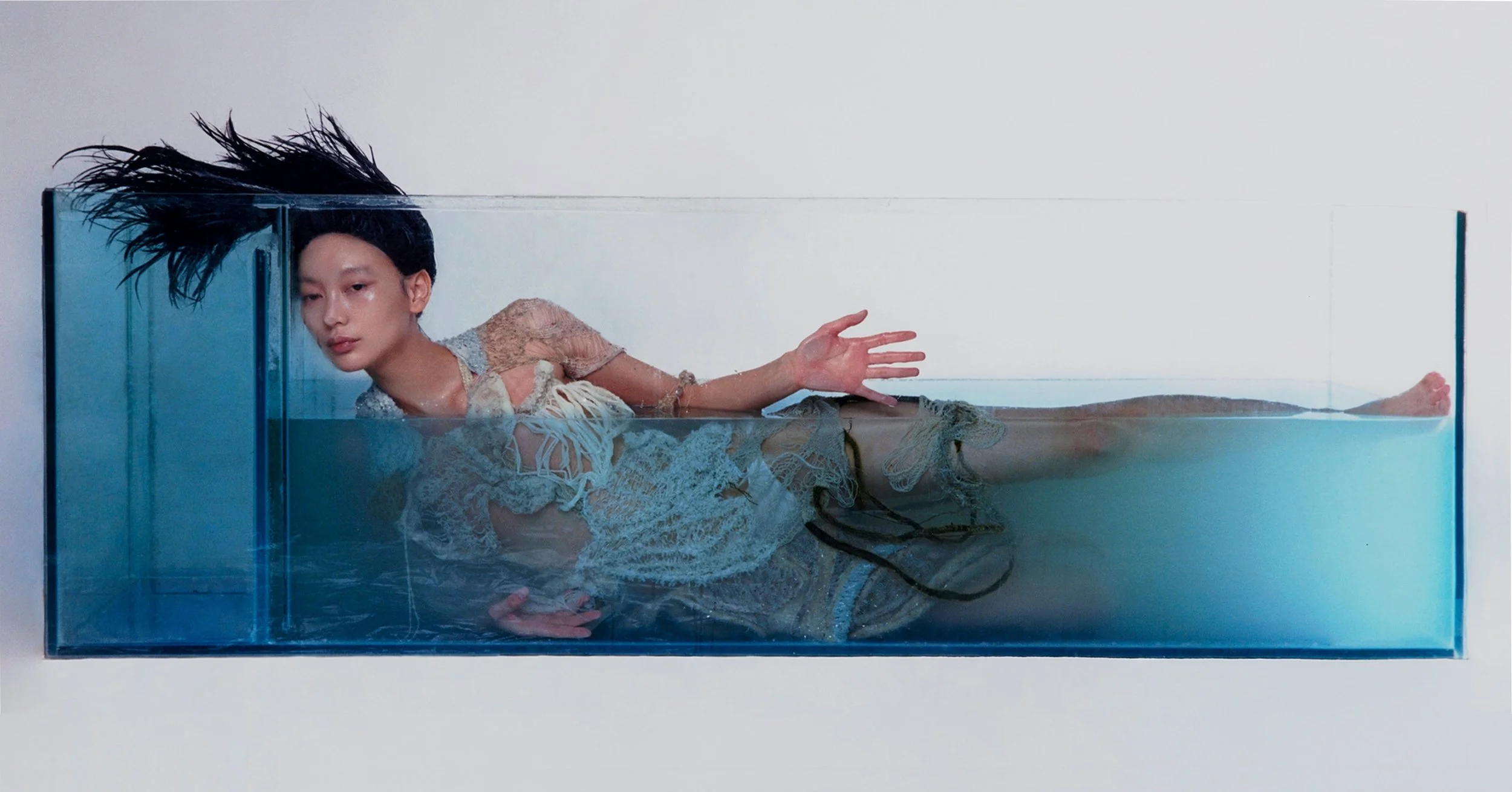
Freja Jiahui Ye. Amor Fati, 2021. Performance with crystallised wearable sculptures; photographic documentation. Performer: YIN YIN. Courtesy of Jia Ling Hoo (@jialinghuphoto).
The result became a wearable sculpture. It looks beautiful in the photos, but there is also something uncomfortable about it. The garment is heavy and sharp, and it restricts the performer’s movement. Walking, turning and breathing become deliberate actions.
“Each gesture has to be found first, weighed, then committed to,” Freja says, “because the wrong one draws blood.”
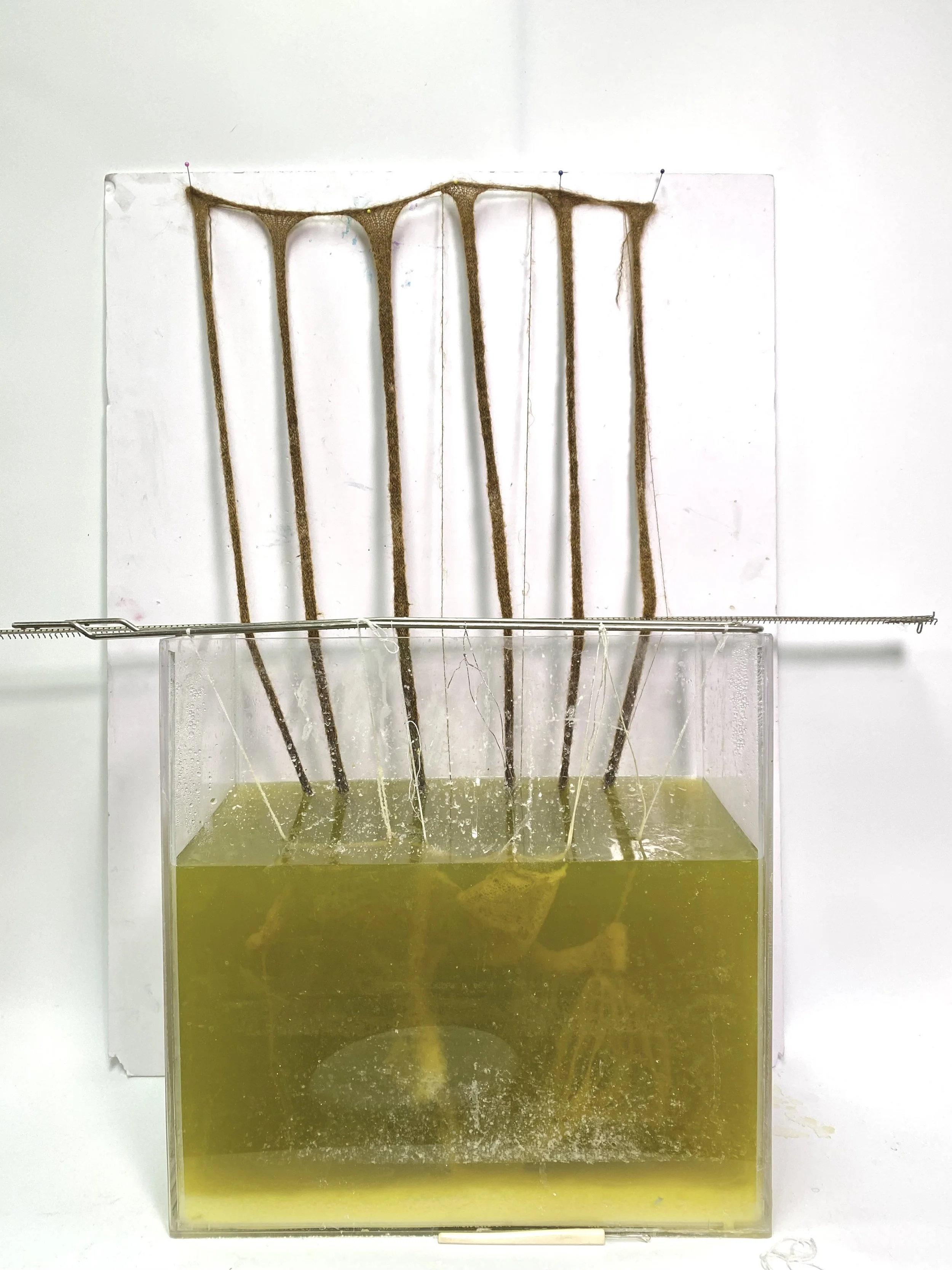
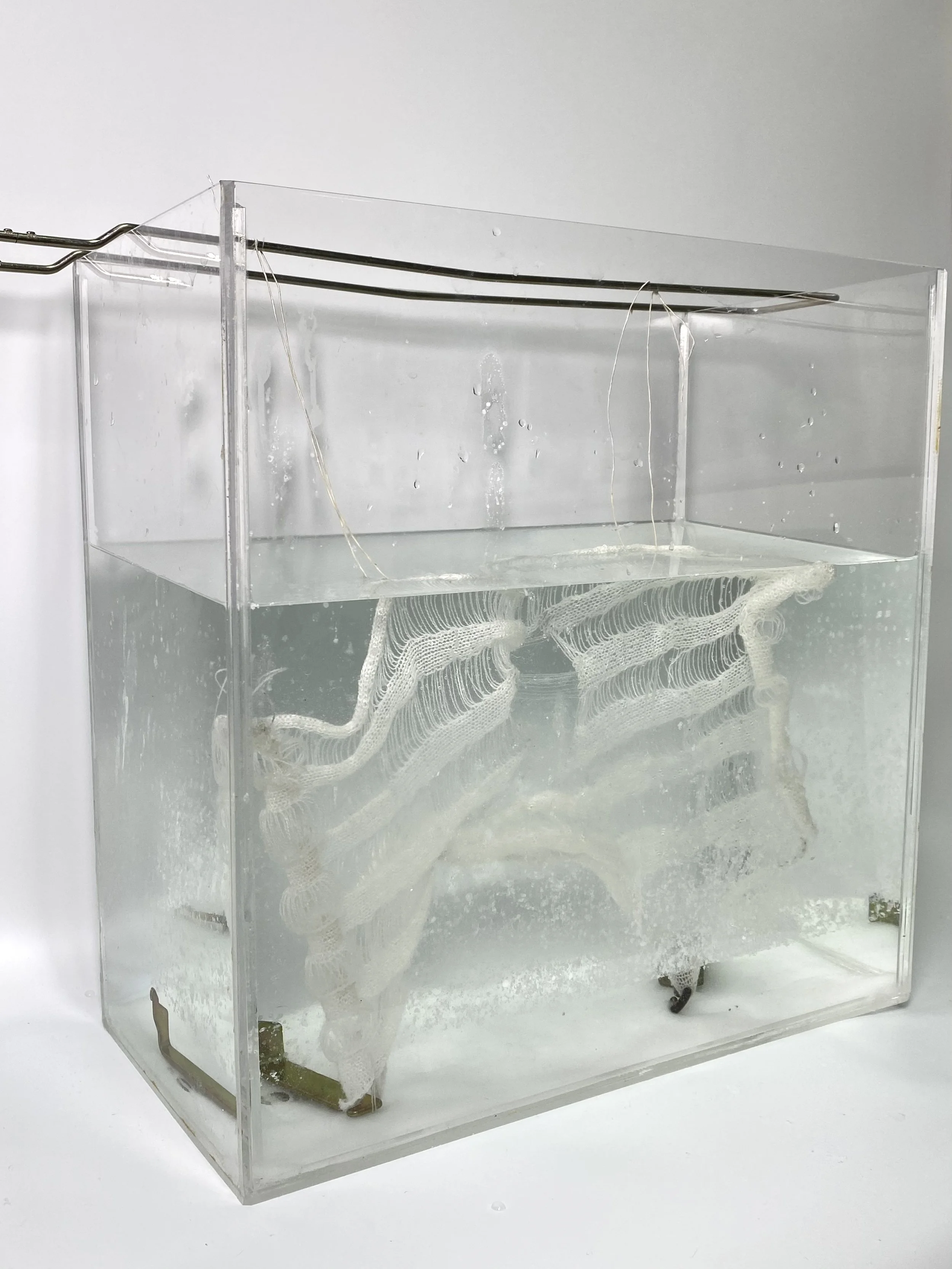
There is also a private moment that Freja shared with me. Before the performance that was never documented the performer itself had to take off her clothes and struggle into the cold, heavy garment backstage. Freja remembers the body shaking and the difficulty of standing and moving inside the suit. This detail adds another layer to the work, but not because it provides dramatic behind-the-scenes information. It shows that the performance actually began before the audience could see it.
At the end, the crystal garment was dissolved in water. Six months of growth disappeared within minutes. Freja compares this process to the creation of a Tibetan sand mandala, where the time and discipline involved in making something are inseparable from the decision to destroy it.
A bit out of context, but I particularly like that the images of the project include the process of making as well as the finished performance and installation. Seeing the work develop makes its apparent lightness less convincing.
So, the photo cannot give us that experience, but at least it can keep a trace of it.
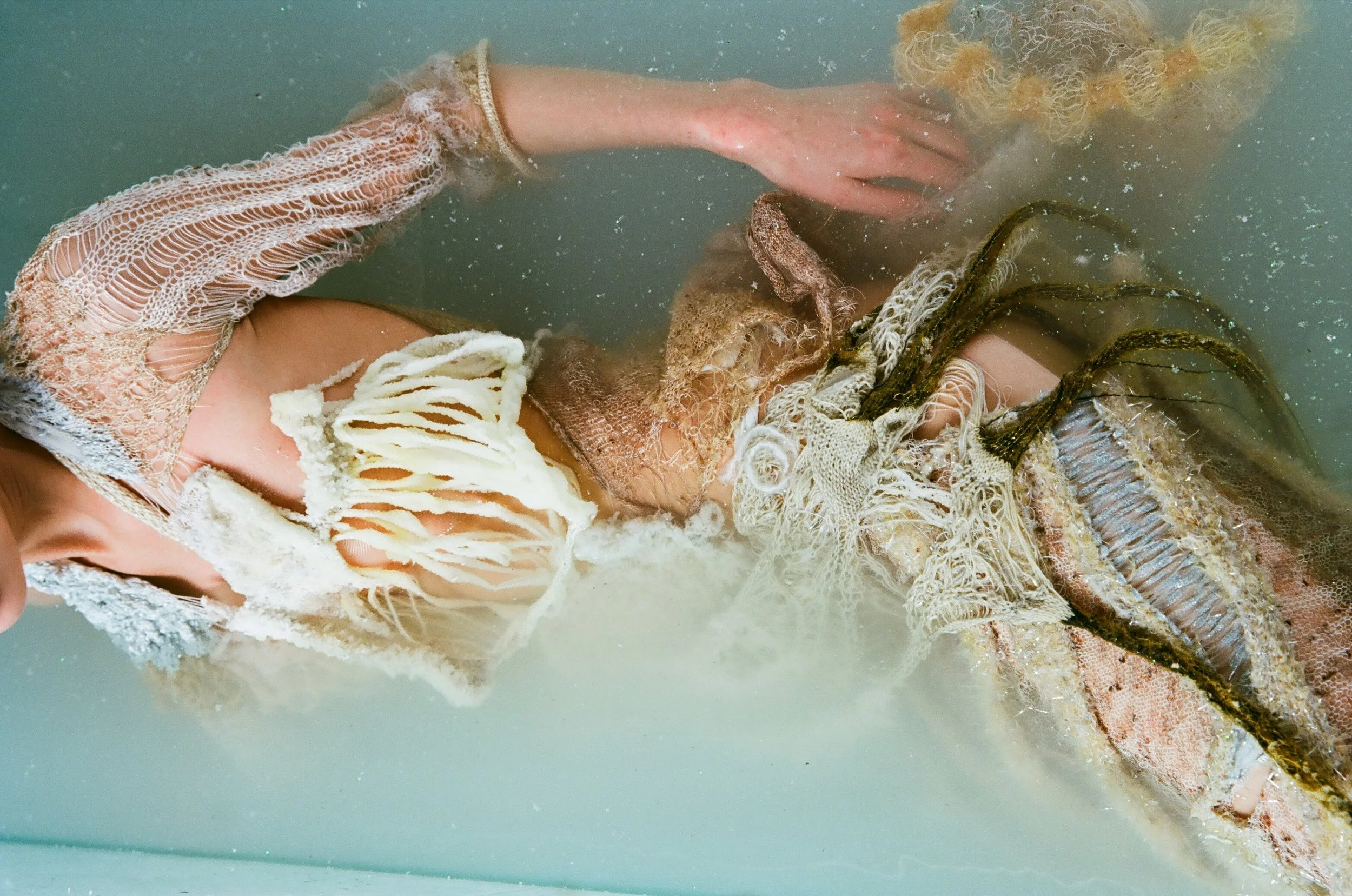
Freja Jiahui Ye, Amor Fati, 2021. Performance with crystallised wearable sculptures; photographic documentation. Performer: YIN YIN. Courtesy of Jia Ling Hoo (@jialinghuphoto).
Condensation: A Held Breath (2026)
In this art installation Freja works with resin, fibreglass, ceramic, rusted metal, lace, stone and antique bells.
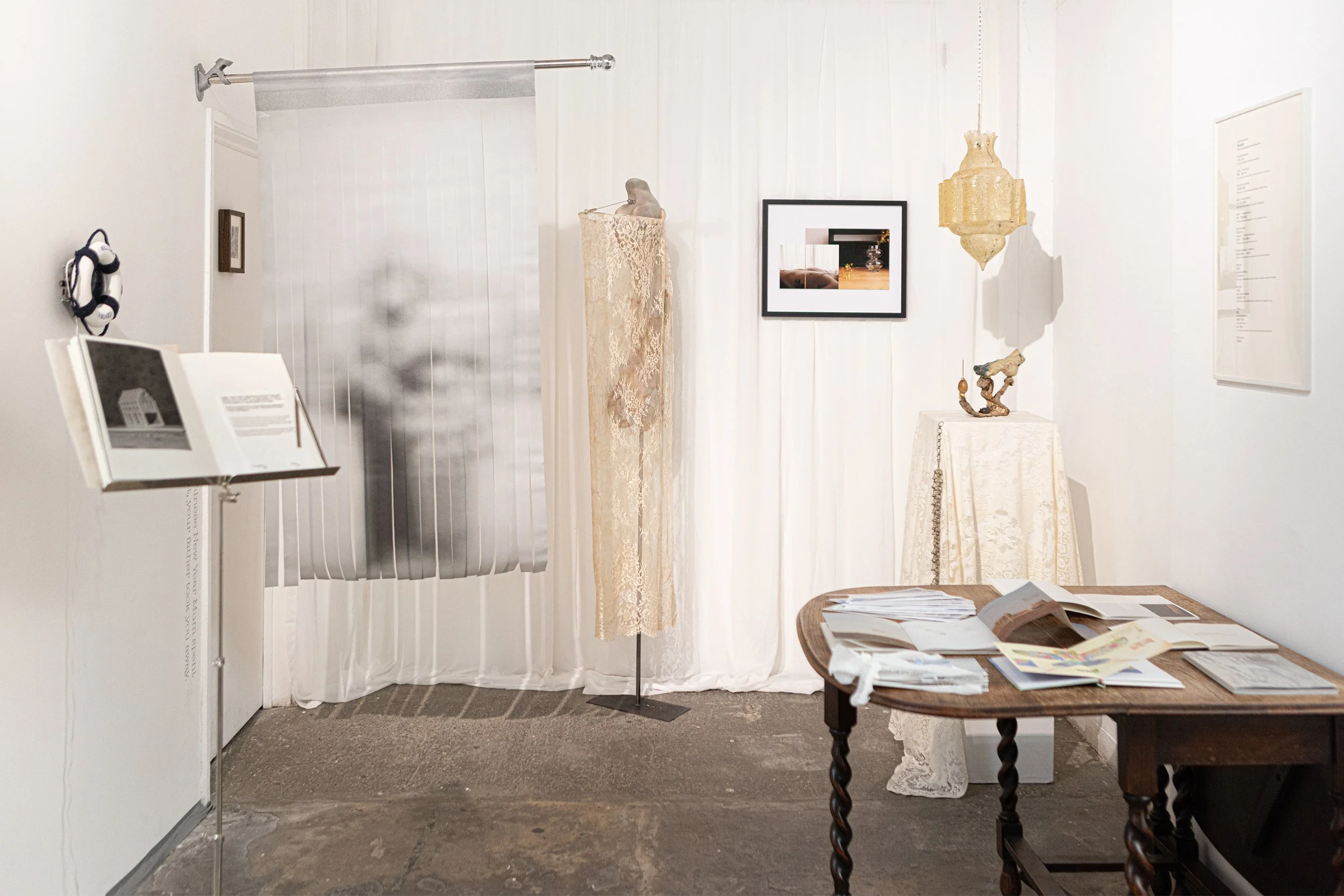
Freja Jiahui Ye. Condensation: A Held Breath, 2026. Installation; resin, fibreglass, ceramic, rusted metal, screws, lace, stone. Courtesy of Jialin Yan (@keykeyyan).
The resin object (the foot) reminded me of Berlinde de Bruyckere’s wax bodies, which I saw on San Giorgio Island in Venice two years ago. The resemblance is not direct, but both artists make materials seem close to the human body. Freja’s resin has the colour and thinness of aged skin, while the rusted metal suggests something that has been exposed to time and weather.
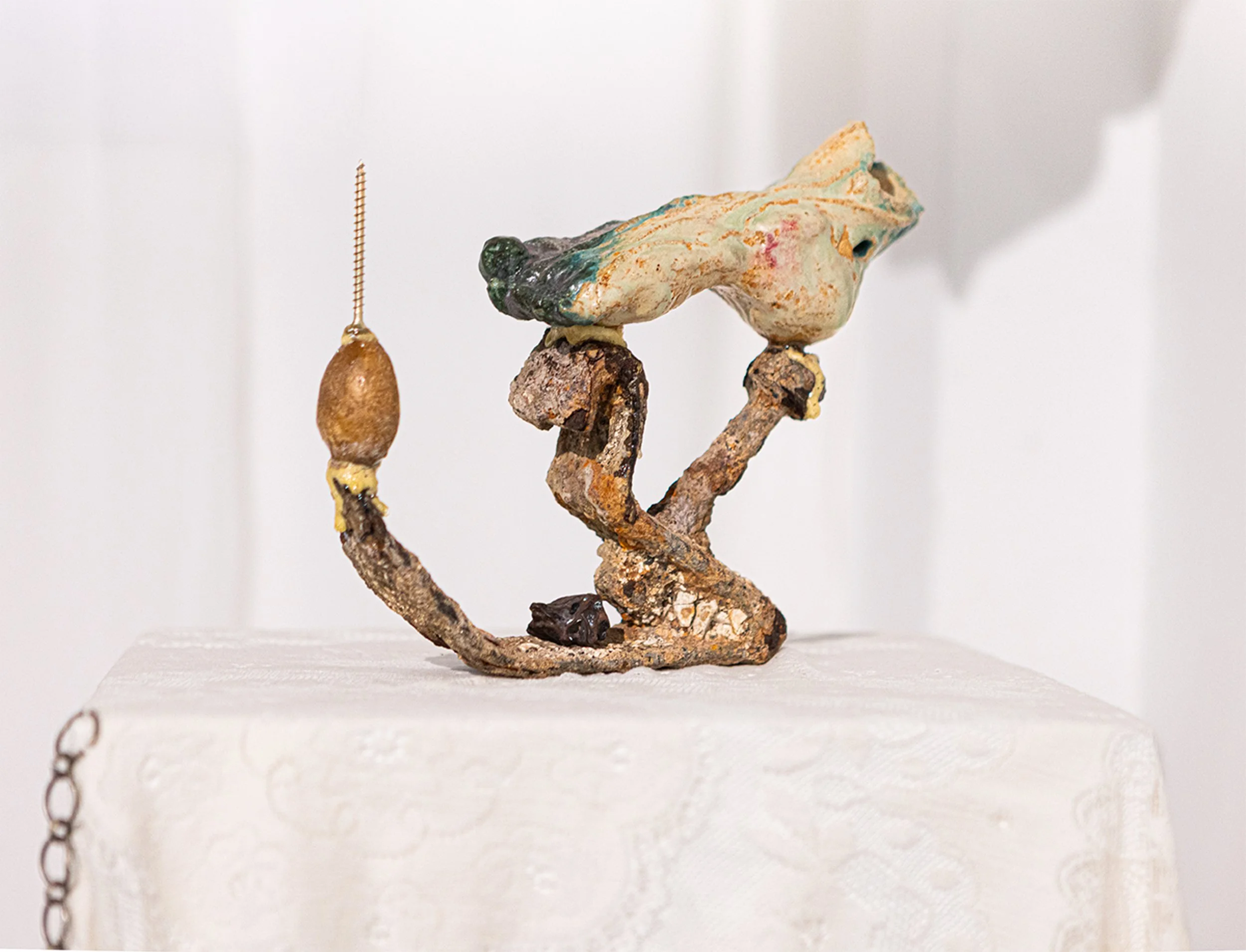
Freja Jiahui Ye. Condensation: A Held Breath, 2026. Installation; resin, fibreglass, ceramic, rusted metal, screws, lace, stone. Courtesy of Jialin Yan (@keykeyyan).
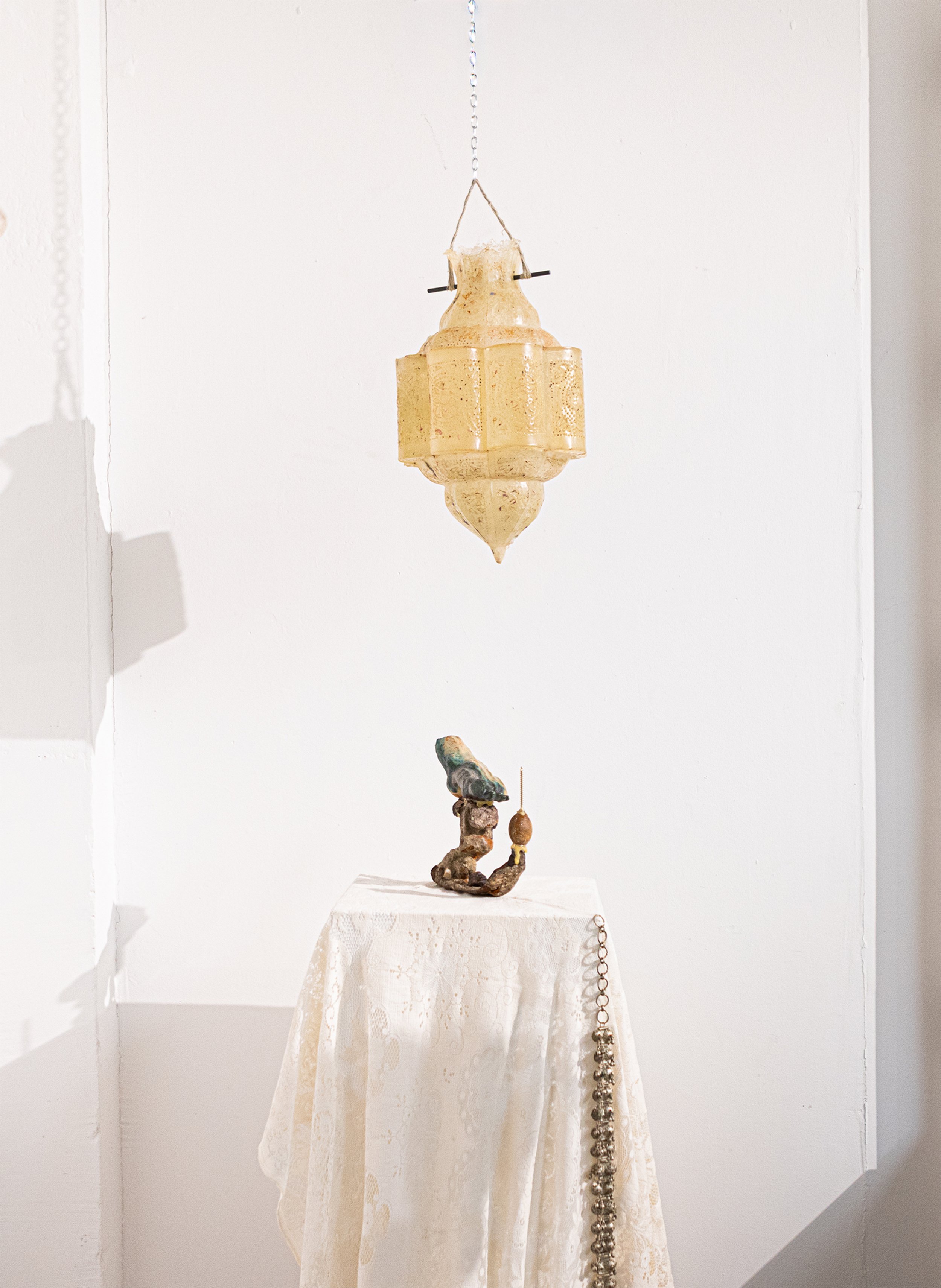
Freja Jiahui Ye. Condensation: A Held Breath, 2026. Installation; resin, fibreglass, ceramic, rusted metal, screws, lace, stone. Courtesy of Jialin Yan (@keykeyyan).
The connection between object and body becomes more complicated through the history of the piece. The resin vessel was cast from an abandoned aluminium lamp stand found in a desert village. Dust and dirt from the original object were preserved inside the new material. What had been a layer of environmental residue became part of the object’s surface.
According to the story surrounding the lamp, women living under curfew were sometimes able to move through the night if they carried one. The lamp was no longer only a source of light. It became connected to the possibility of passage.
Damp Town
In Damp Town (2024), Freja creates a fictional town through installation, sculpture and sound. It is a place affected by moisture, animal presence and fragments of ritual. The “dampness” is important because it makes the boundaries of the space less clear.
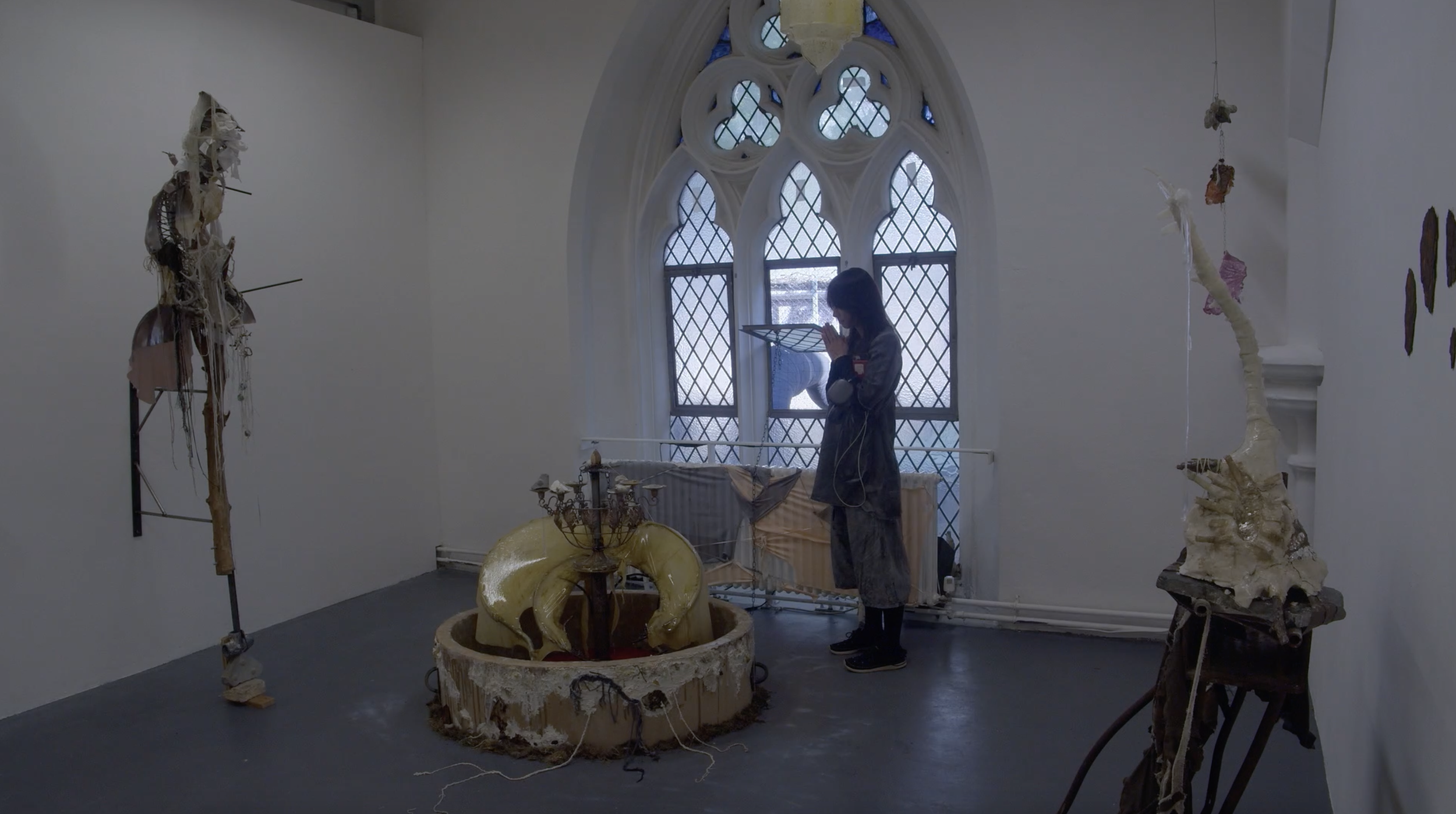
Freja Jiahui Ye. Damp Town, 2024. Site-responsive installation comprising seven interconnected installations and a sound work. Image courtesy of Zihan Mei
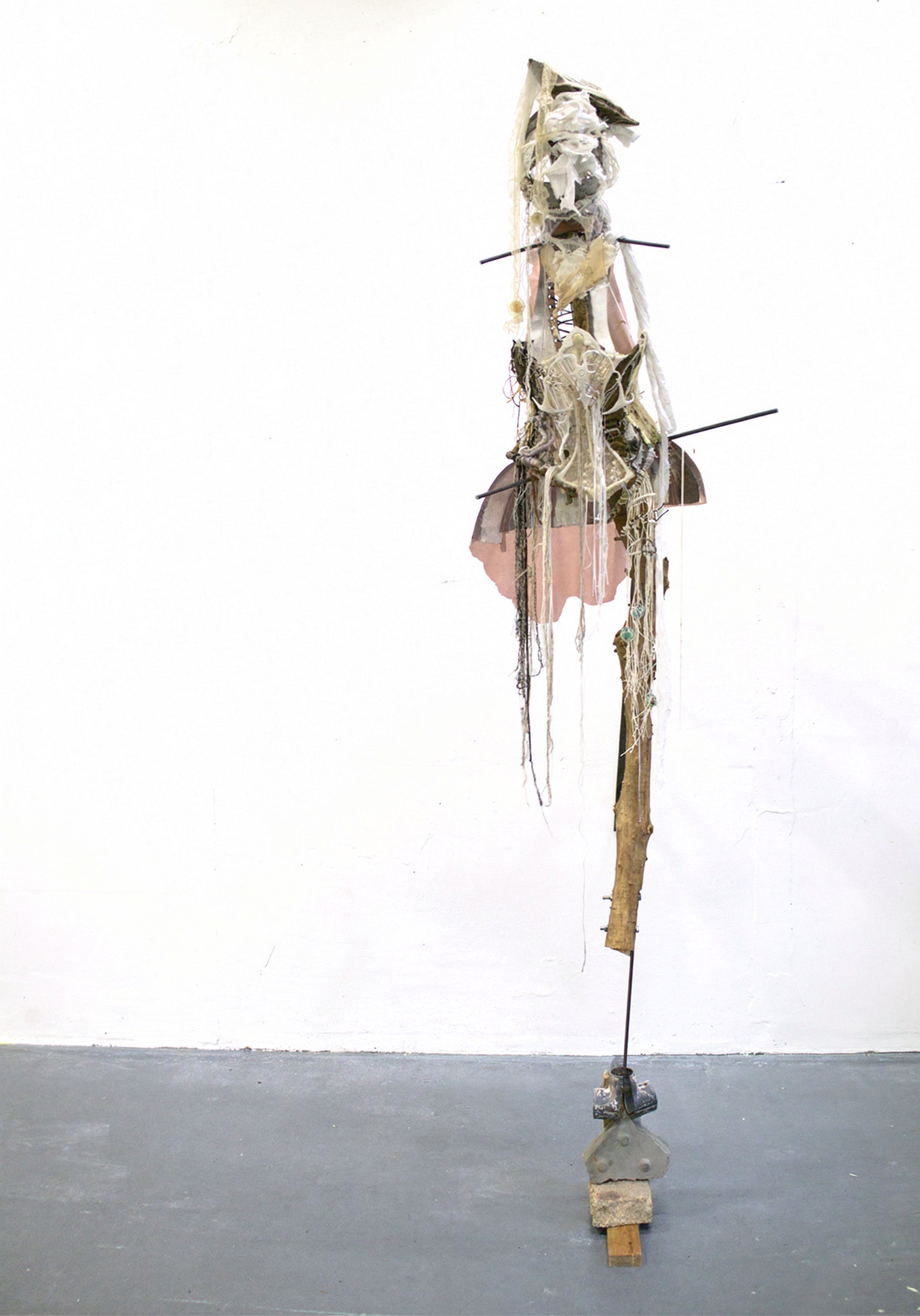
Freja Jiahui Ye, Damp Town, 2024. Site-responsive installation comprising seven interconnected installations and a sound work. Image Courtesy Freja Jiahui Ye
She describes dampness as something that “blurs edges, making your skin start to question where ‘outside’ ends and ‘inside’ begins.” This installation seems to work through this uncertainty. The body becomes more aware of its own surface, of skin, air and humidity.
The work also relates to Freja’s childhood in Xiamen, where the annual huínántiān season brought moisture into houses and changed the behaviour of walls, floors and doors.
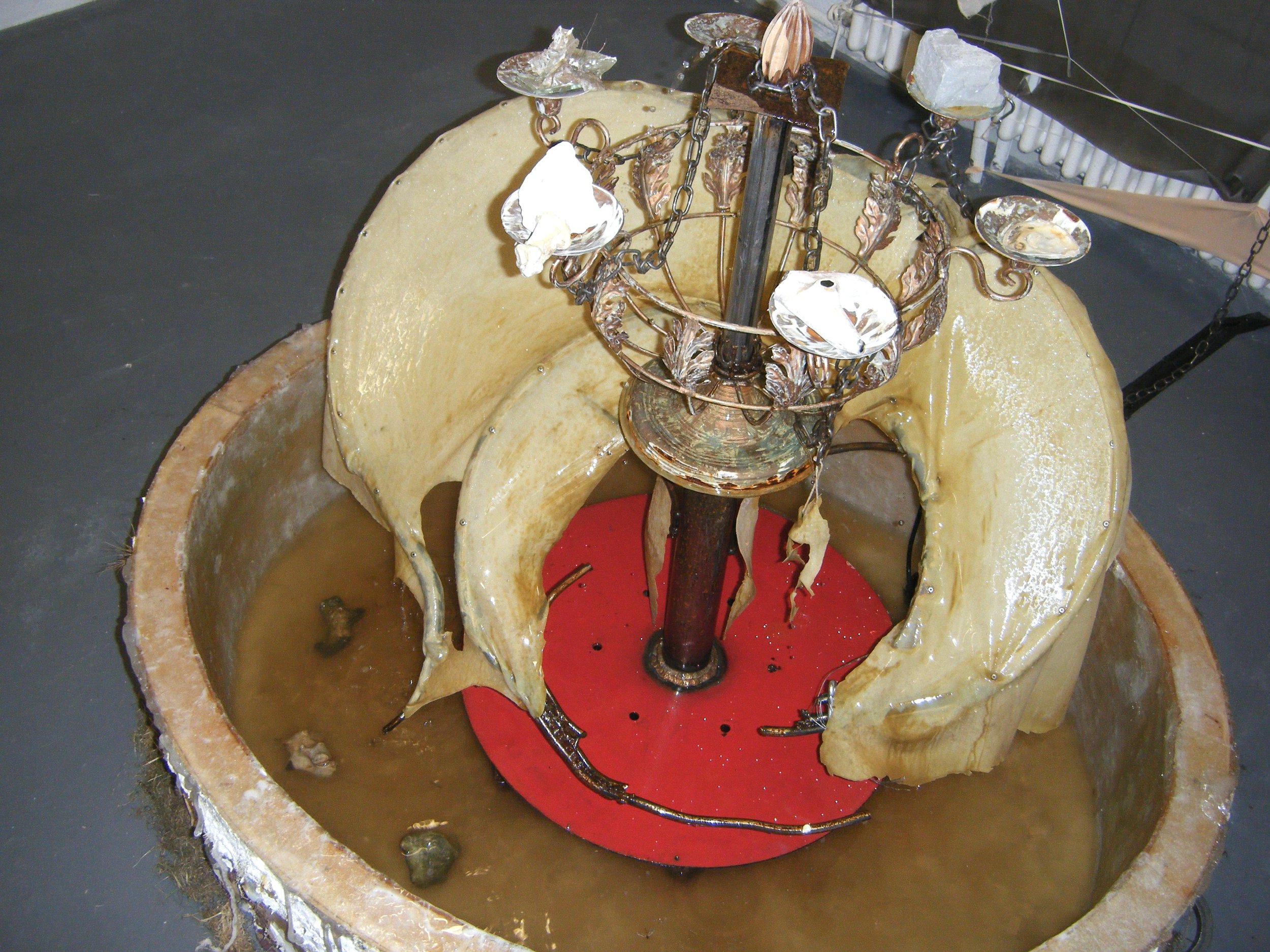
Freja Jiahui Ye, Damp Town, 2024. Site-responsive installation comprising seven interconnected installations and a sound work. Image courtesy of Freja Jiahui Ye
Looking through documentation
Across these works, Ye moves between sculpture, installation, performance, sound and writing without making the transitions feel separate.
What interests me most is the way her works remain visually inviting while refusing to become entirely comfortable. The colours and textures attract the eye, but they also point toward weight, decay, restriction and change. The objects look carefully made, yet they do not feel completely controlled.
I began with colour because colour was what first drew me in. But the longer I look, the less the works seem to be only visual. Their surfaces act as thresholds. They invite the eye toward texture, then remind us of what the photograph cannot deliver: the sharpness of crystal, the dampness of air, the sound of a mechanism, the risk of falling, the smell of a room, the duration of waiting.
Probably this is why the documentation feels so charged. It does not resolve the distance between image and presence. It makes that distance visible.