Airborne
An Interpretation Tracing The Wind, Wonder, and Kites of Anna Rubin
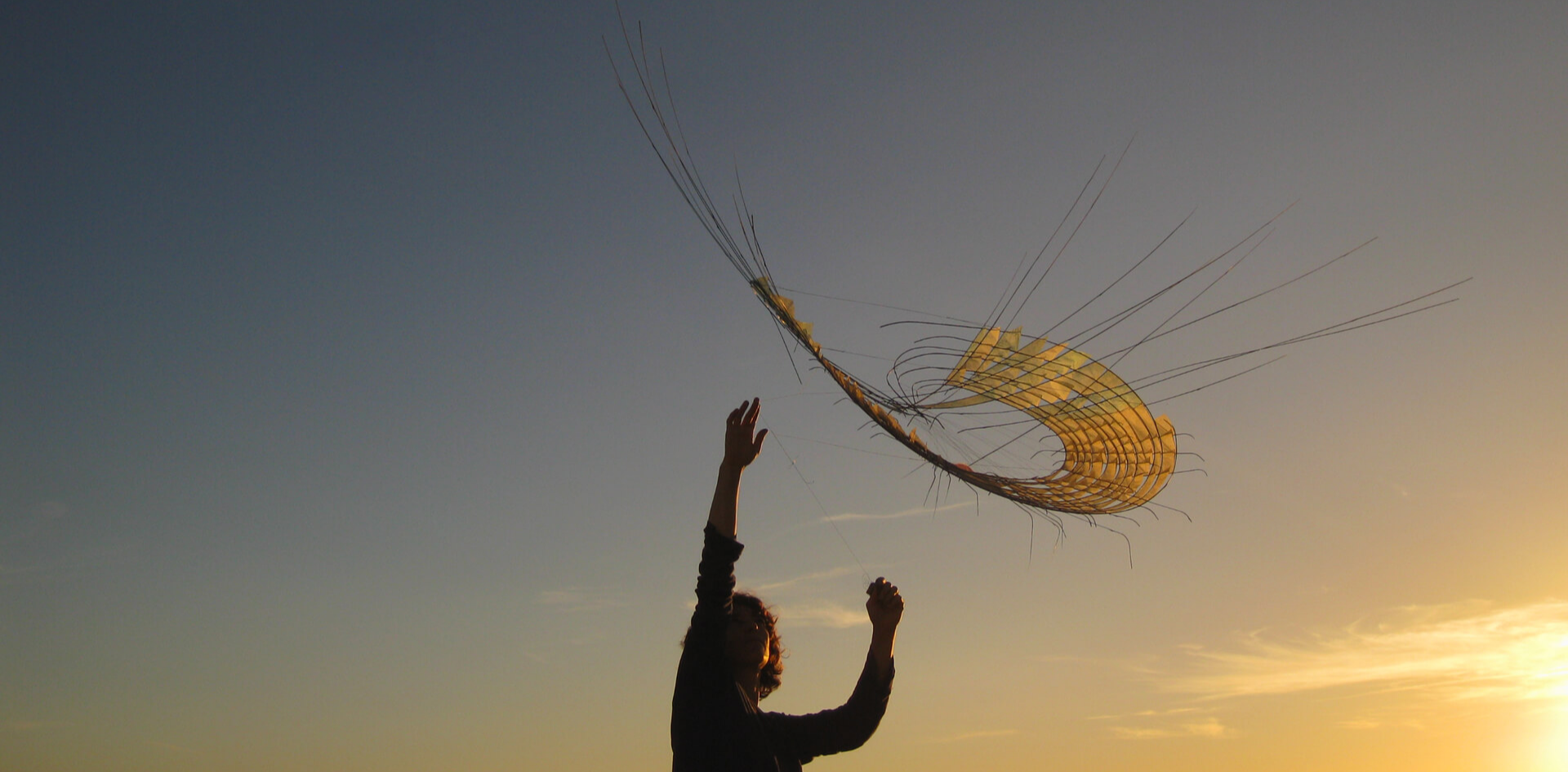
Title of the kite: blue, on the ground, bamboo, Japanese paper, ink; Photo by Ramlal Tien
Guest Anna Rubin Interviewer Panliew & Rachel Wang Writter Rachel Wang Editor Panliew Layout Edgar Zhang
This is a “bird” soaring through the boundless sky. This is a “glow“ drifting above the mountain peaks. This is a “star” gliding across the silent void.
The first time I saw Anna Rubin’s work, I was looking at images stretching across the sky—expansive, luminous, and full of stillness, but I did not recognize them as kites. Unlike the typical diamond shape with a long tail, Rubin’s kites leave long bamboo strips untrimmed, protruding beyond the sail’s edges, dividing the surface into small geometric fragments, and sometimes exposing them as holes. I began to wonder how Rubin has grown and continued such an unconventional artistic form—what gave birth to these kites?
“It was the idea of flying.”
Rubin explains that, as a child, she has been dreaming often and very detailed about different ways of flying, like swimming in the air or by concentration. She tried it when she was awake. Growing up in a small village surrounded by nature in the south of Austria, this fascination stayed with her, and she is still captivated by flight. As she becomes an artist, she turns the kite into her own way of expression. “Though people rarely fly kites at my place in Vienna,” Rubin gives a small smile and says, as if amused by the thought, “the kite’s existence is like a unicorn.”
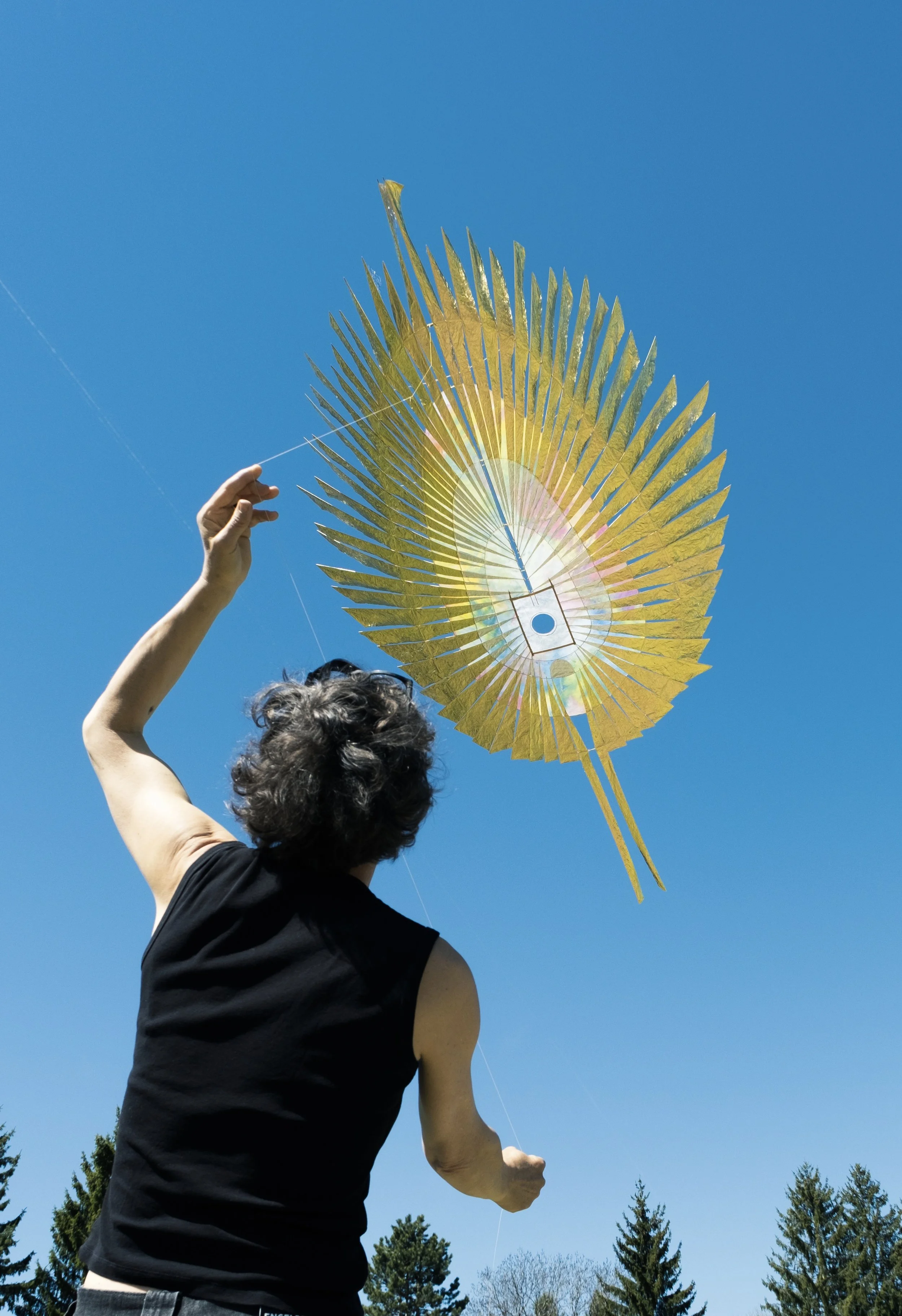
Title of the Kite: the wish, 2020, bamboo, rescue foil, filter, ink; Photo by Anna Markut


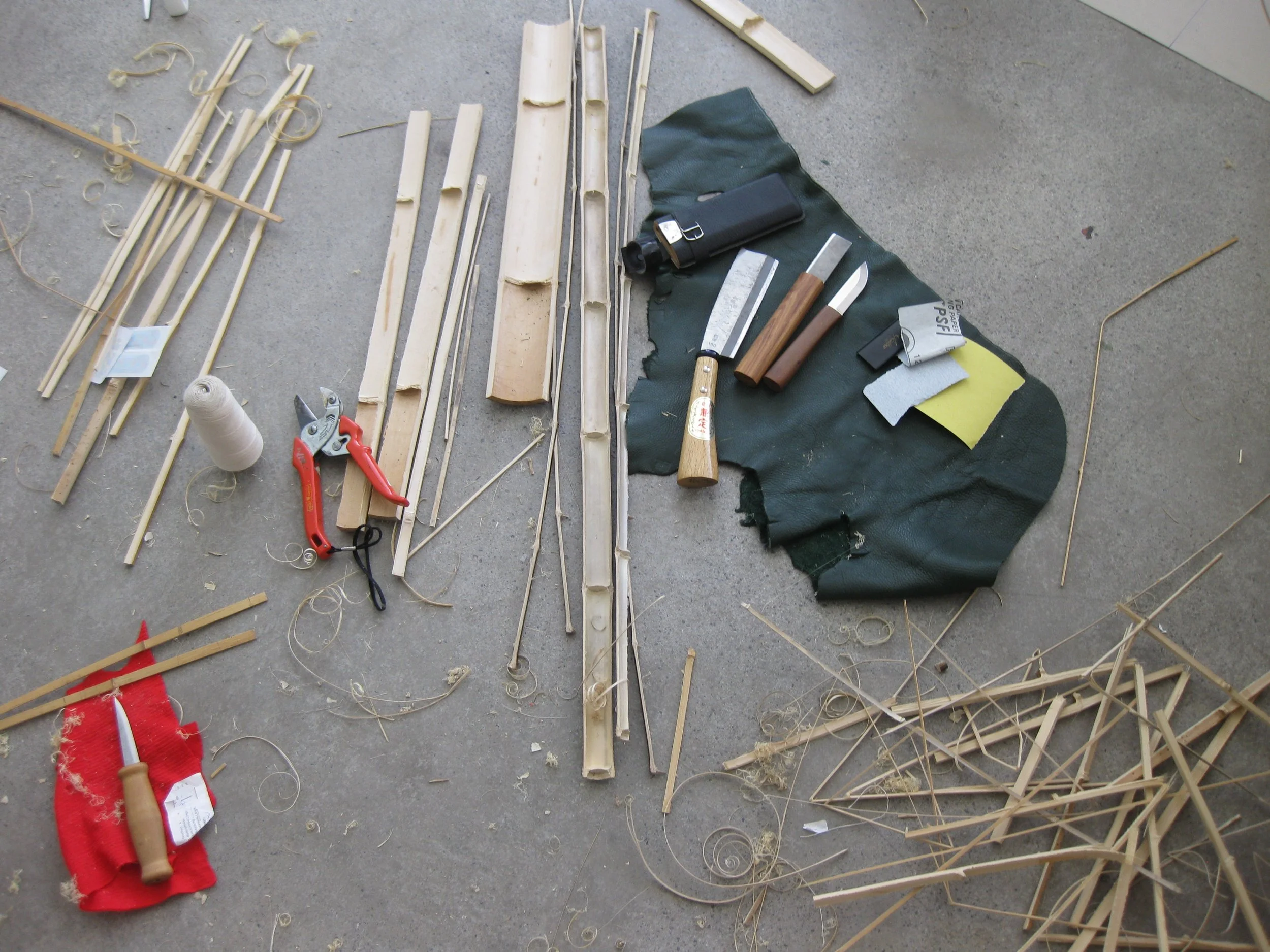

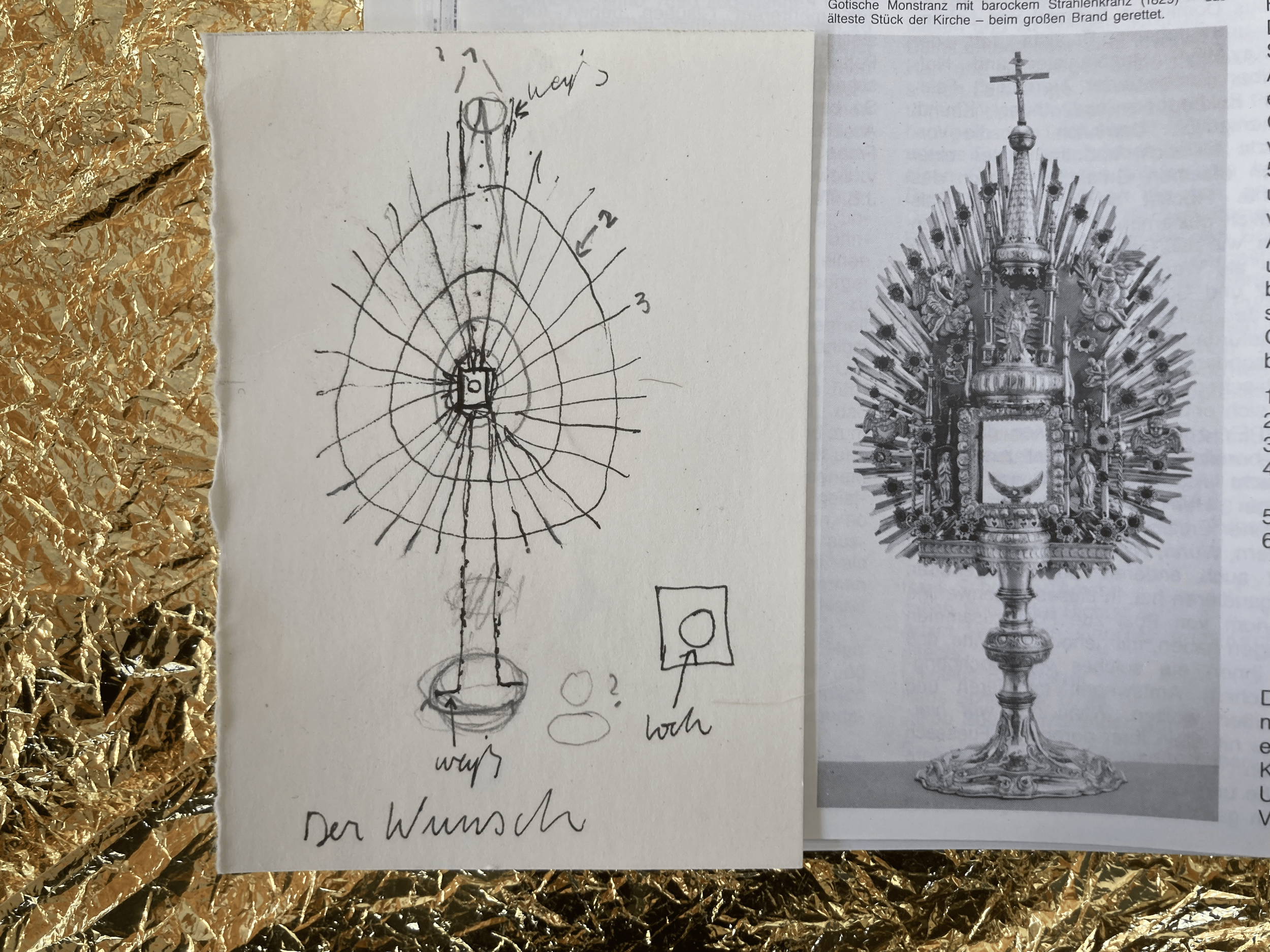
Anna Rubin chooses bamboo and paper as her materials. While some of her kites begin with the shape of a sail, in her work the bamboo structure usually comes first and is more heavily weighted. This priority is also visible in her drafts: the first sketches are done quickly in charcoal, with lines that map out the bamboo structure. If bamboo defines the concept, then the sail, made from Japanese washi or Chinese paper or Rescue foil, shapes the narrative through its color, texture and composition. Each kite comes to life between the firmness of bamboo and the softness of paper; its structure woven, and its surface gently laid down, until it rises into new creatures ready to lift into the sky.
Though some of the kites are also created for exhibitions and installations, hanging on walls or in spaces, they are all able to fly. The course of each flight is shaped by more than just Anna Rubin and the kite itself. The wind leads it too.
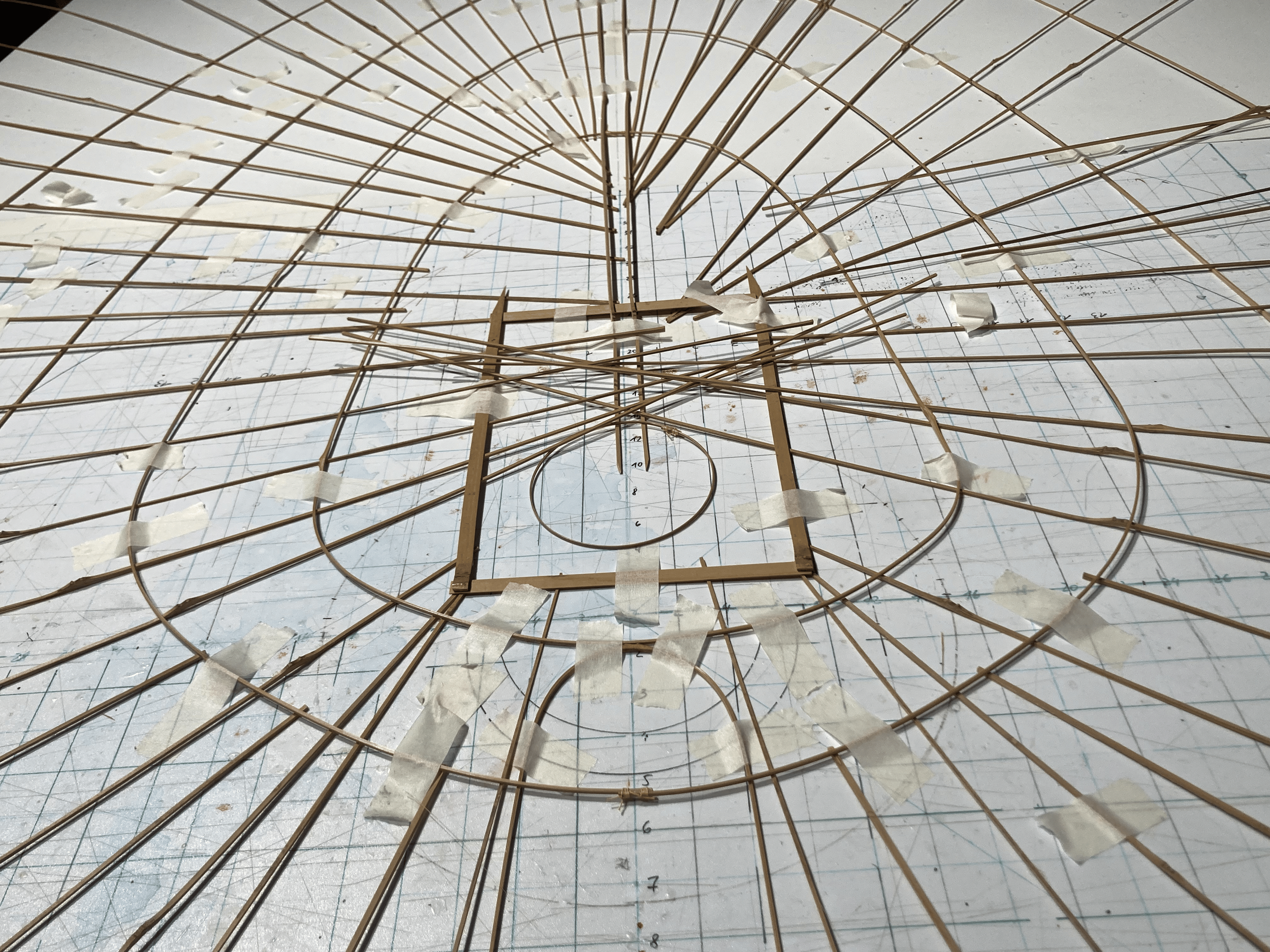


When Rubin designs a kite, she does not simply imagine its form; she studies how it might fly. The wind in her place is turbulent, determined by folds in the hills, woods and meadow, shifting with rising thermals. As each moment, place, and season brings a unique and unpredictable movement of air, the best response becomes a cycle of testing, observing, and refining. Rubin begins by estimating the path the kite is meant to follow and adjusts it through flight trials by altering the length of bamboo strips, changing the size of the paper’s holes, and modifying the connections between paper and frame to refine its balance, stability, and motion.
Through each training flight, the kite reveals the shape of the wind, making it visible as it runs through bamboo bones and paper skin, fluttering the surface into motion, trembling like wings, like a formless spirit slipping into its shell, beating in defiance of gravity.

Title of the Kite: the wish, 2020, bamboo, rescue foil, filter, ink; Photo by Anna Markut
However, when this unseen and untouchable force of nature begin to take control, the artist’s authorship seems to diminish.
Unlike charcoal, plaster, or clay, which are shaped entirely by hand, the kite is a medium governed by its fixed behaviors and shared associations. Like a toy held in a child’s hands or a racing tool on the track, the wind takes the lead. Does Anna Rubin’s creation risk becoming nothing more than a beautiful, changeable, colorful skin that wraps around the kite itself? In the flights, does she seek to guide every movement the kite makes in flight?
When I asked Rubin whether she wishes to control the wind or the flight, she answered that her kites are never about mastering the wind, nor about battling what cannot be controlled. On the contrary, kite-making is an exploration guided by respect and curiosity. Her creations often begin with what she senses—the landscape she sees, the people she speaks to, words and terms. Instead of turning inspiration into clever, trendy, or marketable topics about contemporary art or modern society, Anna Rubin holds on to the initial spark of an idea, lets it fade and reappear, and keeps those moments connected to her inner self. That is how the sunset over a snow peak outside her studio turned into the radiant colors of Obir; that is how her conversation with a priest about the Monstranz became the kite called Wish. The kite, as the core of Anna Rubin’s artistic practice, refuses to be packaged like the critical device of a contemporary artist, refuses to become a predictable container of meaning. It becomes instead a form of wonder—freer, wilder, and more alive.
“If a kite lies well in the wind, then I am no longer an observer,” Rubin said. “It makes me a part of the air, wind, height and view. It is an identification of myself.”
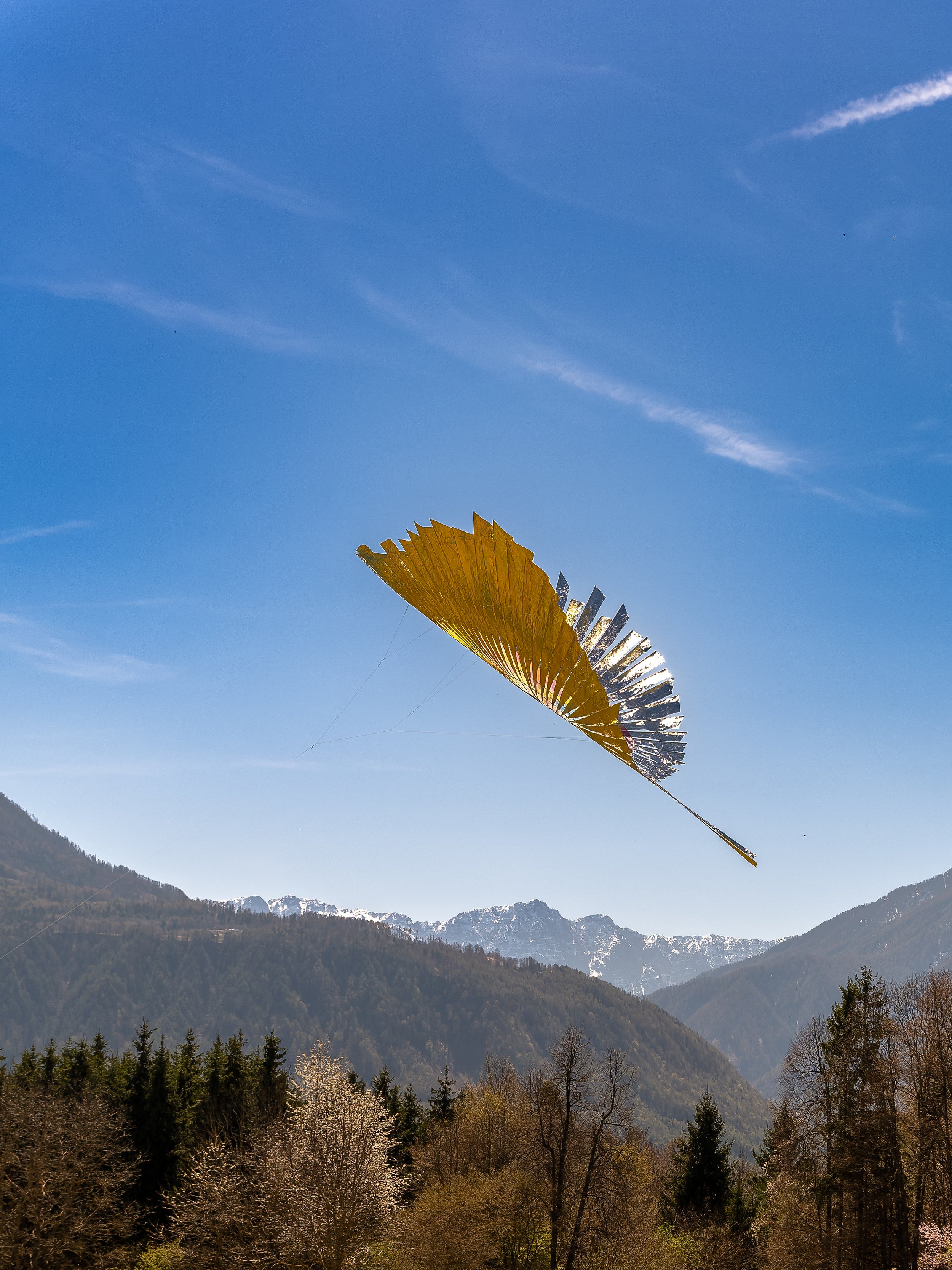
Title of the Kite: the wish, 2020, bamboo, rescue foil, filter, ink; Photo by Anna Markut

Anna Rubin
From the moment a thought appears in her mind, to the lines drawn on paper, to the splitting and weaving of bamboo and the pasting of the sail, and finally to the kite lifting into the sky, Anna Rubin’s kites are never about holding a string that controls every detail. They are instead a search for balance and connection, a dialogue between the artist and the air. As the natural landscape shapes the wind, the wind carries the kite, and the kite, in turn, connects her fascination for flight to the wonder she once felt in nature, to the shifting views revealed through every ascent. Her kites glide over fields in soft breezes and climb alongside clouds in strong winds, and they carry her spirit into a realm humans can never reach, into the natural world made of sun and stars. These “birds”, made of bamboo, paper, and wind, break from the thread of expectation, rise from the nest of over-defined contemporary art, and flare their wings into the shifting air, announcing in silence:
I want to fly. I am flying.
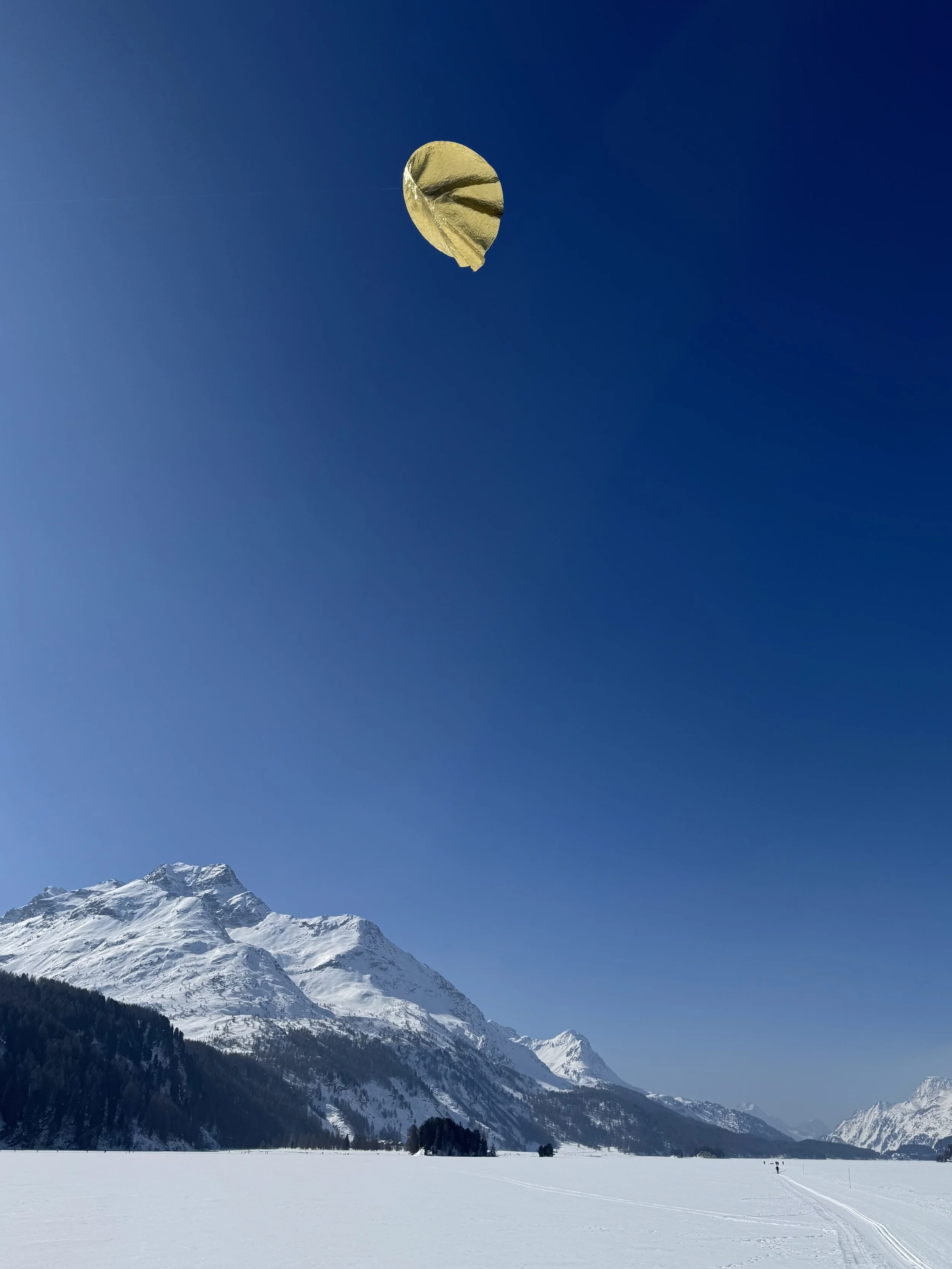
Title of the Kite: disk kite, 2023, bamboo, rescue foil, Photo by Christophe Mc Pherson
At the end of our conversation, I asked what thoughts she would offer to those just setting out on their path as artists. Rubin said, “Optimism, curiosity, and focus are important. I love my work, while work and life are melted together . To be able to live from my art makes me happy and thankful.” It is a belief grounded in both joy and discipline, carrying you forward like her kites finding their path in the wind, because flight itself is already a direction.