Solitude Is a Medicine: Interview with Songlin on transforming loneliness
Solitude, sadness, and death aren’t themes for Songlin, they’re the raw material he molds into something human, honest, and delicate as glass.
Guest Lee Songlin Interviewer Panliew Editor & Layout Edgar Zhang
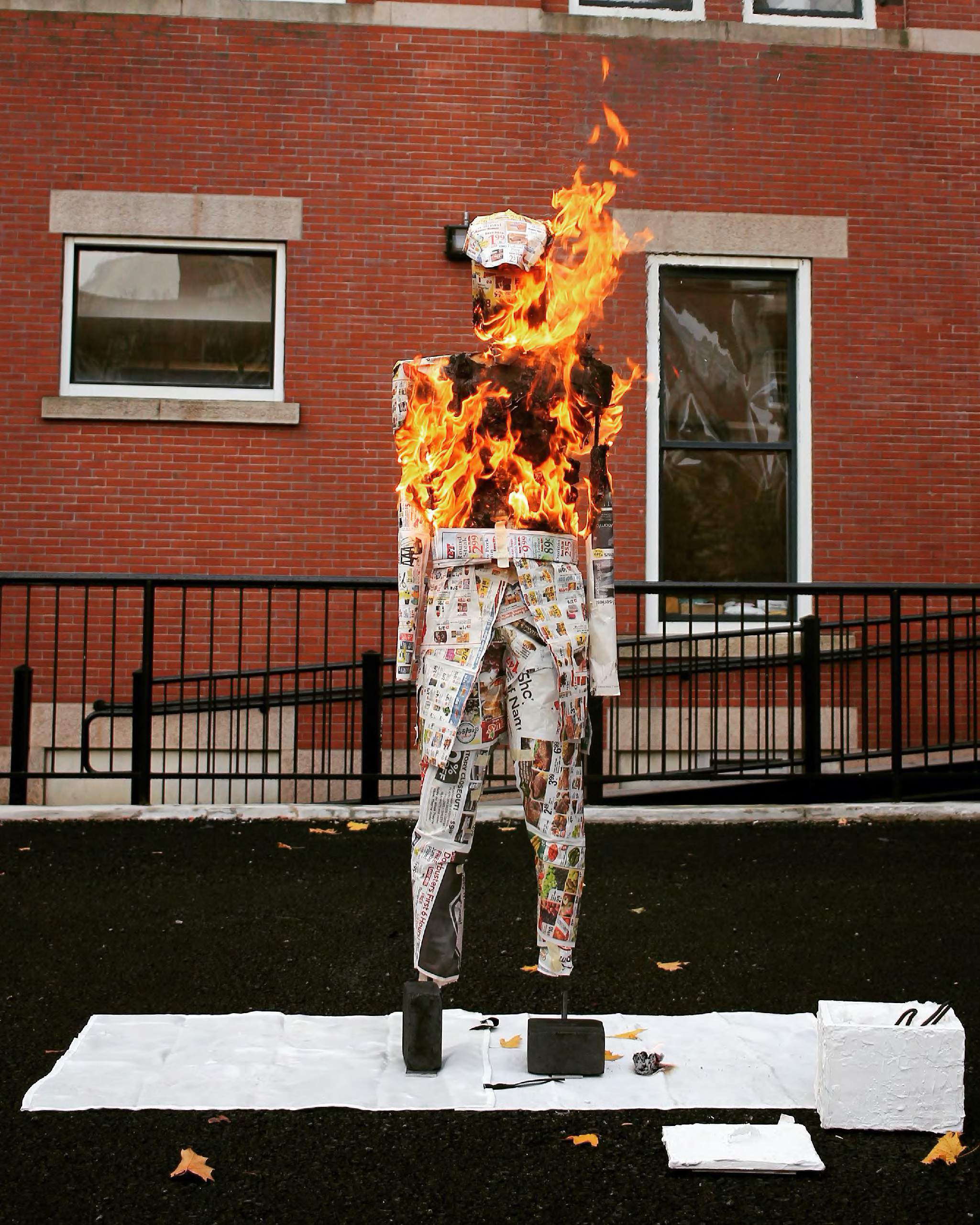
真相(Truth)
Performance Art / Video / Blown Glass
Video Documentation, 2016, 07:26 min, 16:9, 1280 × 720
Glass, Steel Reinforcement, Wood, Refractory Plaster, Ceramic Fiber, Newspaper, Tissue Paper, Matches, etc.
The original interview is written in Chinese, at the bottom of this page.
Intro:
Lee Songlin comes from Cangxi, a small county town far away in northeastern Sichuan, China. According to his humble words, like many kids of his era, he received the most mediocre of county educations. Yet, his admission to Tsinghua University's prestigious Glass Art program marked the first pivotal turning point in his life. Situated in China's bustling capital, Tsinghua, famed for its abundant educational resources, offered Songlin the opportunity to break free from the limitations of small-town isolation. The elevation of his educational platform didn't merely liberate him from his provincial constraints, it opened a gateway into the expansive world of visual creation, building upon his early interests in poetry and foundational painting.
Yet, as Songlin delved deeper into his specialization and expanded his artistic explorations, he gradually became aware of the constraints imposed by his conventional academic training. Recognizing the necessity for a breakthrough, Songlin studied abroad at the Rhode Island School of Design (RISD), seeking a deeper engagement with contemporary conceptual art. This international study experience became the second transformative milestone in his artistic journey.
His first year at RISD was very challenging. Coming from an environment steeped in technical rigor, Songlin initially struggled with RISD’s near-total abandonment of traditional technique, driving him into a state of depression. However, his third year marked a significant turning point, symbolizing a reward for years of persistent effort. Although even Songlin himself acknowledges that his early conceptual ideas remained somewhat fragmented, this marked his entrance into the "sanctuary" of conceptual art. It was here that he resolved not to commercialize his art, instead committing to authenticity over profitability.
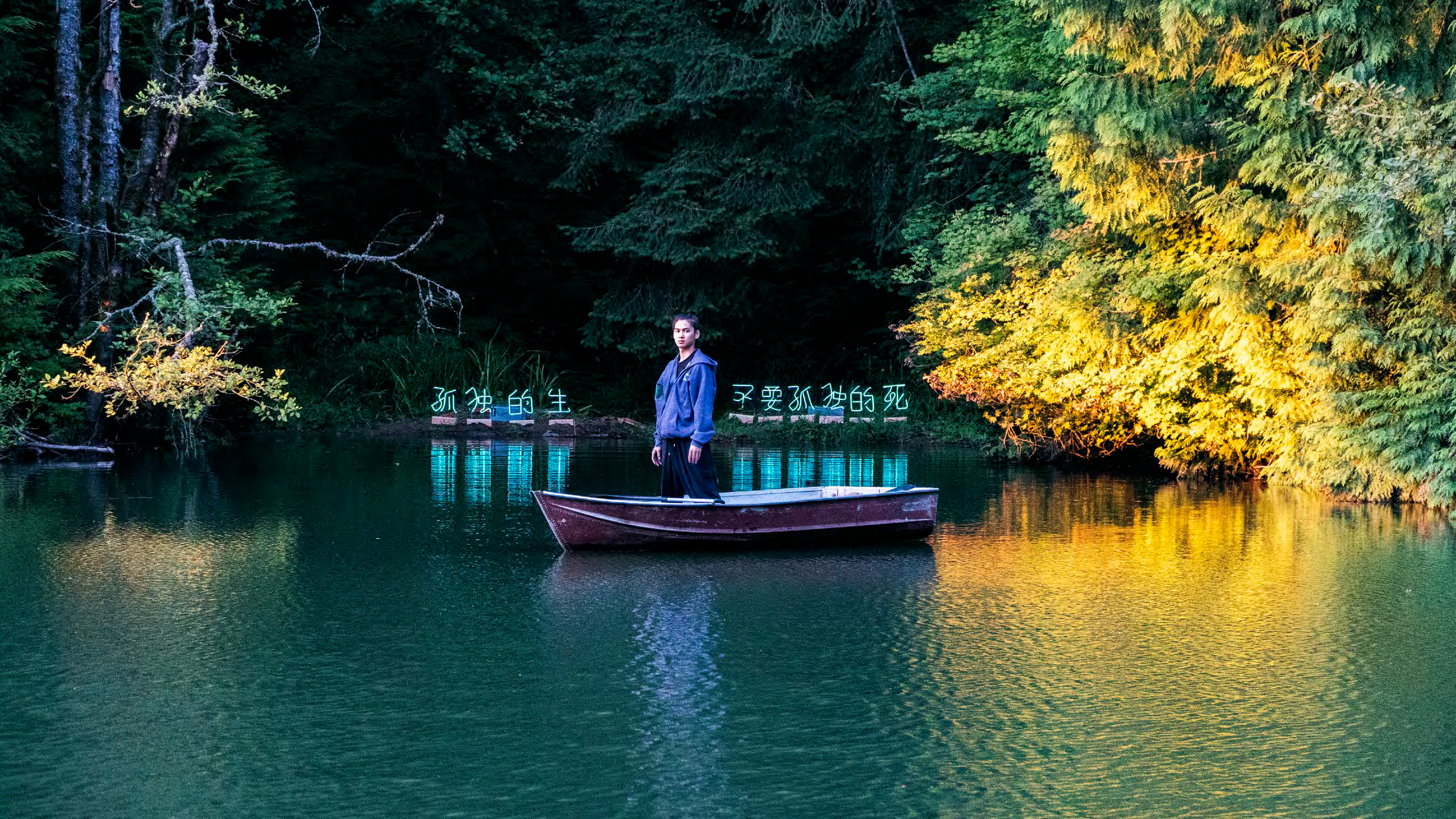
孤独的⽣,不要孤独的死(Live Lonely,Don’t Die Lonely)
Natural Installation / Neon Glass, Artisanal Neon Lights, Electricity, Wood, etc., 2018
Subsequently, Songlin created influential works exploring profound themes of loneliness, sorrow, and mortality, such as Homeless People (《无家可归的人》), Solitude is a Medicine (《孤独是一种良药》), and Life Lonely, Don’t Die Lonely (《孤独的生,不要孤独的死》). Songlin eventually returned to Chengdu, where he took on multiple roles at the same time: teaching at a university, running his own studio, and exploring educational initiatives. Despite these commitments, Songlin continues to produce art and curate. “My friends think I’m strange,” Songlin admits. “They say juggling three jobs to fulfill my artistic dreams is madness.” Yet it is precisely this multifaceted approach, this determined effort to preserve artistic purity against commercial pressures, that lends his work its uniquely profound.
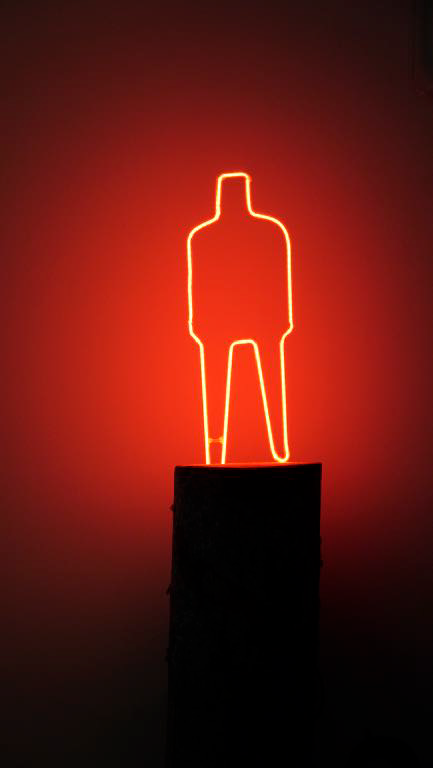
孤独的人(A man in solitude)
Sculpture / Neon Glass, Art Glass, 2018
Interview:
Pan: Solitude is a pivotal element in your work. What’s your personal relationship with solitude, and how does it influence your art? How have you come to conceptualize solitude?
Songlin: My first meaningful encounter with solitude came during high school when I discovered an online lecture by Professor Chen Guo from Fudan University. He said: “Solitude isn’t loneliness. Loneliness is restless and uneasy, whereas solitude is noble, a state of genuinely enjoying one's own company. Solitude is not lonely; it is a dignified solitude, a quality.” Later at university, everyone was solitary by default, offering opportunities to pursue my interests. In this environment, I started journaling and reflecting deeply on those entries. Suppose left untransformed, solitude risks becoming painful loneliness. But through creative work, I transformed solitude into something meaningful, turning isolated time into valuable, high-quality experiences. These experiences profoundly shaped my understanding and expression of solitude.
My first U.S. exhibition was titled Solitude is a Medicine (《孤独是一种解药》). The original English title captures solitude as both medicine and poison, yet for the Chinese translation, I chose to emphasize its healing. At that time, solitude was genuinely therapeutic for me. Without poetry, my solitude could have become oppressive loneliness. Later, one of my works involved writing poetry in glass. Rather than painful, that solitude felt delightfully enriching.
Pan: How do you perceive sadness? Is melancholy a foundational element in your work or emotions?
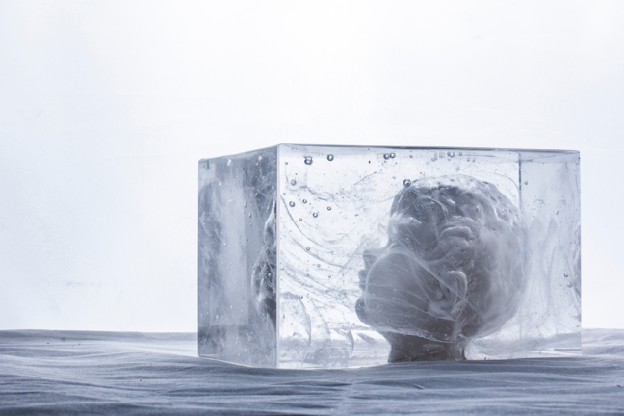
盼望(Longing)
Sculpture / Kiln-formed Glass
Glass, Plaster, 2012
Songlin: Solitude and sadness are intertwined. Much of my sadness is alleviated through creating. My first profound emotional encounter with sadness occurred when listening to the song I Cannot Sit Sadly Beside You, which immediately immersed me in solitude upon entering university. Subsequently, I learned to savor this solitude, embracing introspection. For a long period, especially in the U.S., my emotional state was strongly influenced by sorrowful art. Naturally, melancholy became an underlying tone of my work. Nevertheless, my ultimate pursuit remains a happy and fulfilling life.
Pan: Whether in your art or life, how do you approach the concept of death? How did you progressively explore this concept?
Songlin: If sadness is merely an underlying tone, and solitude a state I actively seek, death represents an existential boundary that I earnestly strive to transcend. I view these concepts as layered, with death being crucially significant in my life. During my final university years, death emerged as a theme infused with philosophical inquiry, leading to the creation of a work resembling an urn.
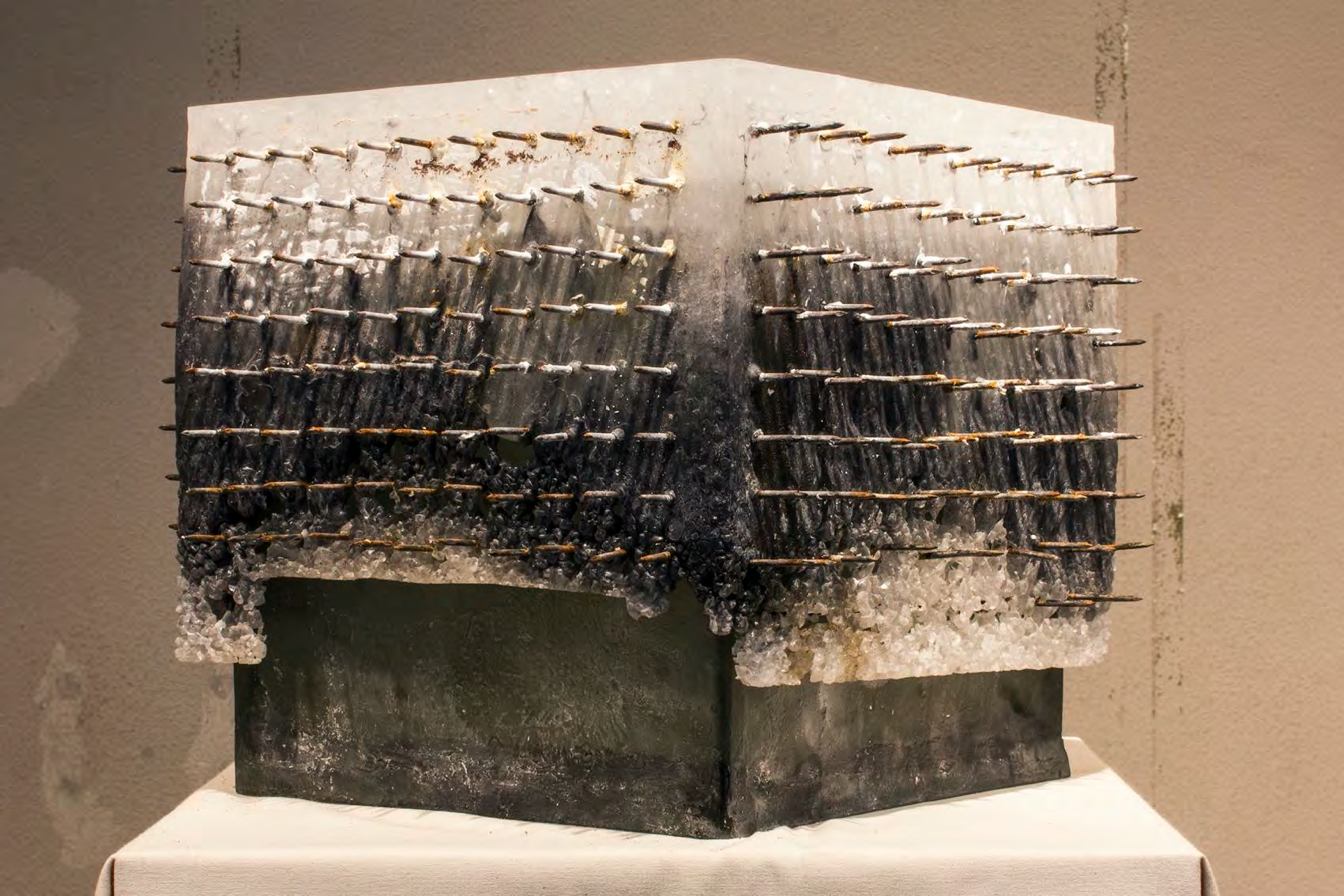
钉⼦户(归宿系列)(Nail Household (Destination Series)
Urn Sculpture / Kiln-formed Cast Glass, Iron Nails, 2016
Two things deepened my contemplation of mortality. First, after graduating, I adopted a vegetarian lifestyle. By the following spring, I found myself checking carefully for ants before sitting on the ground and gently brushing away mosquitoes, rather than killing them. My desires became less intense, and when my pet turtle passed away, my inability to protect life deeply pained me. The second experience was the devastating Chengdu bus fire incident, in which all passengers perished. The thought of dying so senselessly overwhelmed me, intensifying my realization of how much remained undone, and reinforcing my commitment to making each moment meaningful.
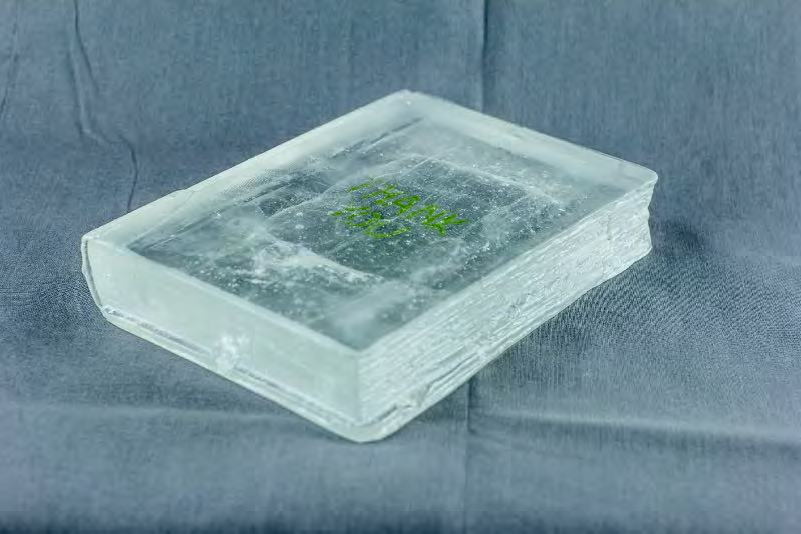
温暖的⽂字(Warm Words)
Sculpture / Kiln-formed Glass, Second Firing
Glass, 2016
However, this isn’t something I can control with my will alone—these accidents are beyond my control, no matter how hard or diligently I work. When I realized this, I slipped once again into that state of solitude. Soon after, however, I had an epiphany about something profoundly important: blooming. It doesn’t matter how others view my life; if I’ve genuinely lived out my true self, that is blooming. With this thought, my regrets in the face of death vanished completely.
After this experience, I wrote the poem titled If I Suddenly Die (《如果我突然死去》). But the poem isn’t sad at all. My only intention was to live every single day I have in this world earnestly. And if I do suddenly die, there’s nothing more I could have done.
The original interview is conducted in Chinese:
孤独是一种解药:
李松林对于提炼孤独
孤独、悲伤与死亡对李松林来说并不是主题,而是他用来塑造人性、诚实与如玻璃般脆弱之物的原材料。
对话 李松林 采访人 Panliew 编辑 Edgar Zhang
介绍:
李松林是广元苍溪人,苍溪是四川东北的一个小县城。据他自己的话来说,和这个时代无数孩童一样,他从小接受最为普通的县城教育,然而他考上了清华大学的玻璃艺术专业。这成为他人生中第一道分水岭,位于首都的清华大学是当今中国教育资源最为雄厚的大学之一,这让勤奋的李松林脱离了曾经小县城“没见识”的枷锁。平台的跃升也帮助他在早前诗歌创作和基础绘画的基础上打开了广袤的视觉创作的世界的大门;不仅如此,大学还授予了他设计,美术等领域的专业技能和知识。但随着他在在自己专业的进一步深入和对于自身艺术探索的进阶,他开始逐渐意识到了自己大学在当代观念艺术领域的局限性以及自己的创作道路需要突破的瓶颈。为此他去往了罗德岛设计学院继续深入学习艺术。这一次出国学习的经历成为了日后他的创作生涯中的第二道分水岭。
由于自己的教育背景,他第一年刚来到罗德岛时十分不适应这种近乎摒弃技法的创作模式,这一度让他抑郁。但在罗德岛的第三年可以说是Lee这几年的付出小有收获的一年。即使在现在的他自己看来,当时的一些创作概念依旧不完整,但是他已然迈入了观念艺术的“殿堂”。并且决定不依靠艺术赚钱——反商业。
孤独的生,不要孤独的死
⾃然装置/玻璃霓虹灯⼯艺霓虹灯、电、⽊头等 2018
“我的朋友觉得我是一个怪人,他们都觉得李松林打三份工去满足他的艺术梦简直是疯了。”李松林说到。为了满足自己艺术创作的纯粹性,不让商业性破坏了这种最真实艺术表达,身兼数职去支持艺术创作的行为,确实给予了李松林的艺术作品截然不同的艺术气质和思想内核。
接着他创作了《无家可归的人》《孤独是一种良药》以及《孤独的生,不要孤独的死》等一系列关于孤独、悲伤、和死亡这些深刻主题的作品。最后几番波折后,来到成都开始身兼数职;一边在大学教书,一边创立自己的实体工作室以及从事教育探索的工作。即便如此他依然在持续的进行艺术产出以及筹备展览。
采访:
真相
⾏为艺术/影像/吹制玻璃影像记录,2016, 07:26min, 16:9, 1280 × 720 玻璃,钢筋,⽊头,耐⽕⽯膏,耐⽕棉,报纸,⼿纸,⽕柴等
Pan: 孤独的是您作品中的重要元素之一,请问您和孤独是什么样的关系?然后孤独会怎么样影响你?您对于孤独这个主题的思考又是如何的?
Lee:孤独这个观念第一次走入我的内心,是高中的时候,我在互联网上看到复旦大学一个叫陈果的老师讲公开课,他说:孤独,不是寂寞,寂寞是一个人百无聊赖、百转劳心的一个状态。但孤独不是,孤独是你有在全然的享受自我地一种高贵的状态。孤独和寂寞不一样,它不是lonely,它是一种solitude。这种solitude是一种高贵的状态,品质。后来在大学期间,大家也都是独来独往,所以说我有更多的机会去做我想要做的事情。在这样的环境下,我开始写日记并且对日记的内容进行自我思辨。
这些孤独如果我不去转化的话,它就会成为寂寞,成为一种百爪挠心的那种不好的状态。因此我就用创作的方式把它转化成一个有意义的东西。这个转化的过程就让“孤独”的时间变成了一个高质量的时间。这一系列的经历都形成了我对于孤独的体验和感悟。
《孤独是一种解药》,是我在美国的第一个展览。这个展览的英文名字就叫《solitude is a medicine》既是解药也是毒药,但在中文翻译中,我就用了解药。我大概不想用毒药这个词吸引大众,且当时的我意识到孤独对我来说其实是一种解药。如果我不写诗,我可能就低质量的度过了那个百抓挠心的时期。后来我有个作品是在玻璃上写诗的这么一个作品。那个孤独没有特别痛苦,反而令人很愉悦。
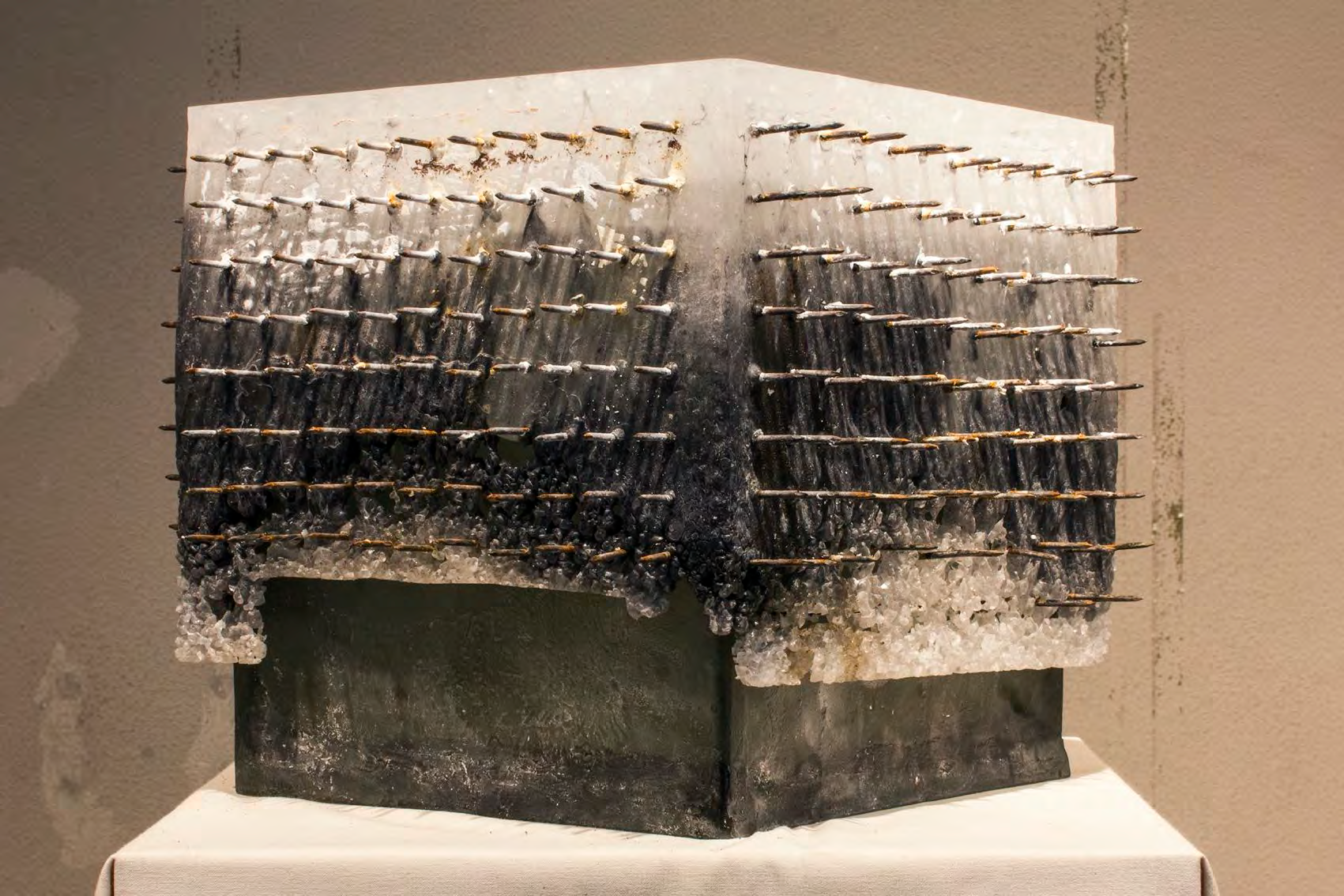
极端(归宿系列)
⻣灰盒雕塑/窑制玻璃铸造玻璃,铜钉 250mm*250mm*300mm 2014
Pan: 那您会觉得您是怎么看待悲伤的?你在创作中会有悲伤的这么一种底色,或是这么一种情绪在里面吗?
Lee: 孤独和悲伤是相辅相成的。我觉得我的悲伤有绝大部分都被我以创作的方式排解掉了。
第一次对作品中的悲伤到强烈感觉,就是一首叫《我不能悲伤的坐在你身旁》的歌曲。我当时刚上大学的时候听的这首歌,它会很快的让我进入一种”孤独”的状态。随之而来的,我开始去学会享受孤独,进入那种在孤独中自我凝视的状态。在很长的时间里,特别在美国的时候,我都充满情绪。受到忧伤的作品的影响下,悲伤自然而然地成为了我的一个底色。但其实我觉得快乐的生活或者美妙的生活才是我追求的。
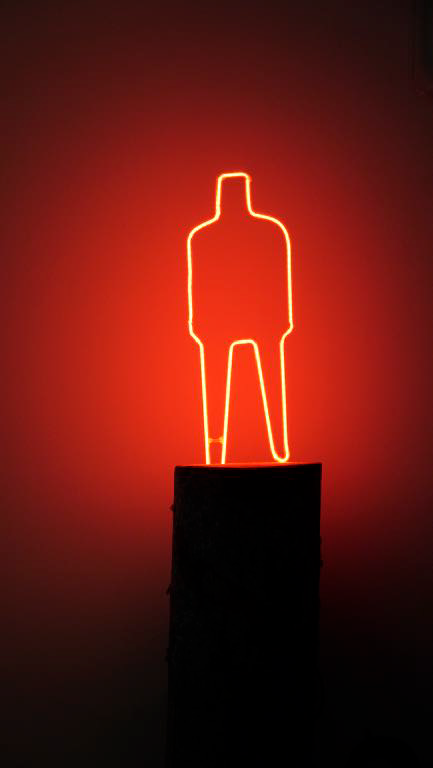
孤独的人
雕塑/玻璃霓虹灯⼯艺玻璃 2018
Pan: 无论是在你作品中,还是生活中,你是怎么去看待死亡的?包括你是怎么一步一步去接触到这个概念,并且深入进去的?
Lee: 如果说悲伤只是我作品的一个底色。然后孤独是我主动追求的一个状态。那死亡就真的是我非常认真自我突破的一个生命关隘。我觉得这三个观念彼此之间是有层次之分的,死亡这个观念是我人生中重要的一个部分。在一开始,也就是我大学末尾时期,开始萌发死亡这个有哲学思辨的创作主题,因此我就做了那个骨灰盒一样的作品。
有两件事激发了我对于死亡的进一步感受和思考。本科毕业后,我便开始吃素。第二年春天我坐地上的时候,不同寻常的是我会下意识的看有没有蚂蚁。蚊子叮咬我的时候,我不会摁死,我就推开。我变得没有太多的强烈的欲望。同时我养的宠物龟死掉了。这种我无法对生命负责的强烈情绪让我十分痛苦。
另一件事是起发生在成都公交车上的公交车自燃事件。在那次事件中,在那辆公交车上的人都死了。我想到:如果我也因此死掉,那简直太不值得了,我还有很多想要做的事情没有做。
可这不是我的意愿所决定的,这些意外都会不是我努力和勤奋就可以避免的。想到这里,我又进入了到了那种“孤独”的状态。接着我就想领悟到了一个特别重要的点:就是绽放——不管别人如何看待,只要我自己在我的生命中活出过真正的自我,那就是一种绽放。为此,面对死亡我突然就没有遗憾了。
在此之后,我写了《如果我突然死去这首诗》。但这首诗并不悲伤。我只想认认真真把我在世界上的每一天都活好。如果我突然死去,我也别无他法。