Unraveling What Lies Behind the Sweetness
On Memory, Tenderness, and the Ambivalence of Childhood in This Candy Has Teeth
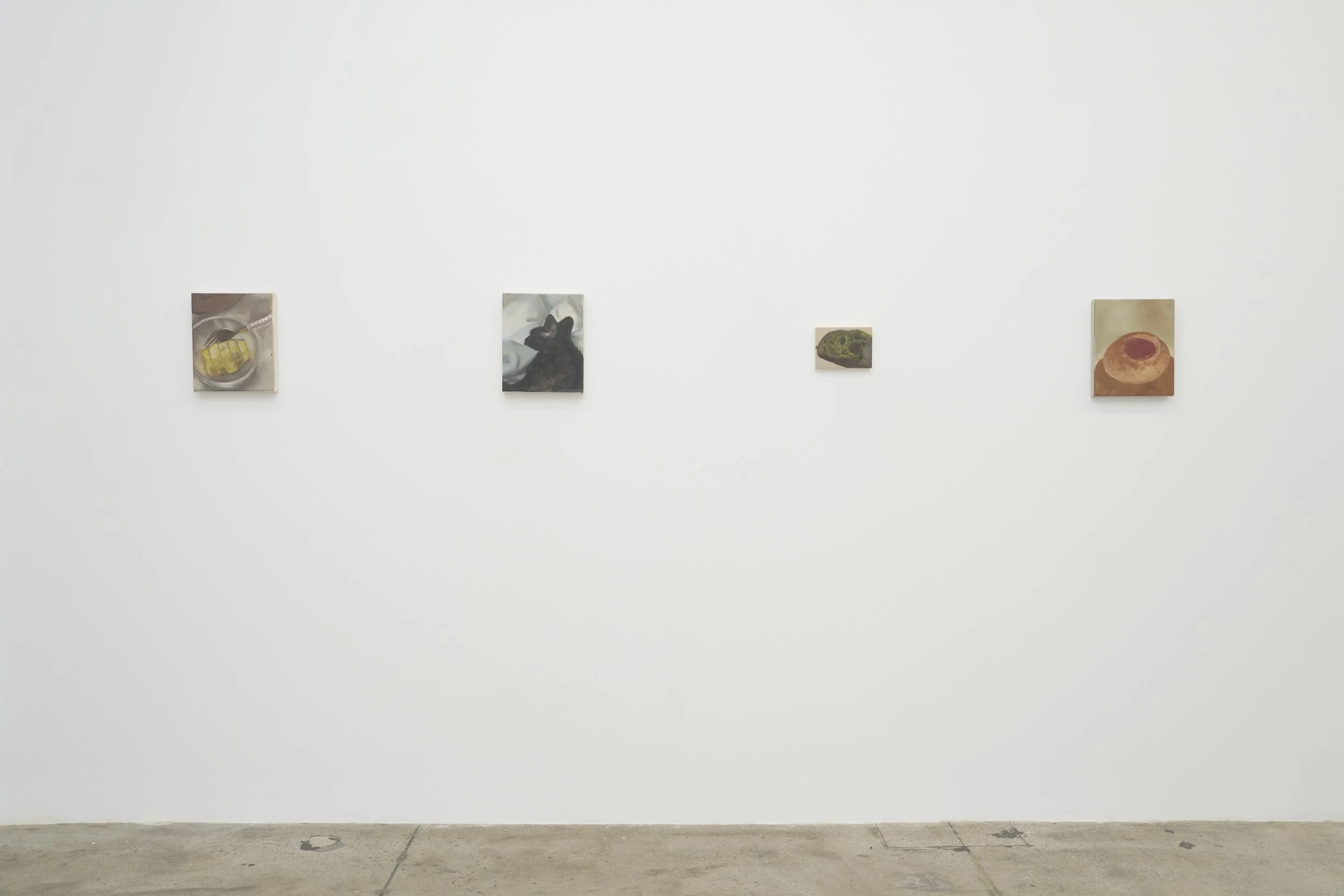
Installation View of This Candy Has Teeth, curated by Shuhan Zhang, 2026, image Courtesy of Weicang Wang
When I first entered This Candy Has Teeth, I was reminded of what childhood can feel like: light and tranquil on the surface, yet never entirely free of turbulence. Curated by Shuhan Zhang and featuring works by Shengjie Jiang, Weican Wang, Jiaqi Mao, Yukun (Chloe) Ba, and Cindy Zhaoyue Chen, the exhibition unfolds through fragments—images, objects, sounds, and moving images that gradually reconstruct a world that feels at once personal and strangely familiar.
The title, This Candy Has Teeth, already contains a contradiction. Candy suggests sweetness, pleasure, and perhaps the uncomplicated desires of childhood. Teeth, however, introduce something sharper: the possibility of resistance, discomfort, even pain. The exhibition does not attempt to resolve this contradiction. Instead, it asks what happens when tenderness and unease are allowed to occupy the same memory.
This is what makes the exhibition more than an idealization of childhood. The past presented here is not entirely innocent, nor is it treated as something that must be exposed or corrected. What has disappeared, what remains, and what has changed through time are placed alongside one another. Rather than making judgments about the sweetness or bitterness embedded within these memories, This Candy Has Teeth allows them to coexist. When tenderness develops edges, does it become less tender—or simply more real
Sound plays an important role in this process. In Jiaqi Mao’s work, voices and moving images reveal vulnerability as something embedded within memory itself. A transient voice echoes: “You already did a great job.” The sentence feels reassuring, but also strangely fragile. Removed from its original moment, reassurance becomes something we return to precisely because the moment that produced it can no longer be recovered.
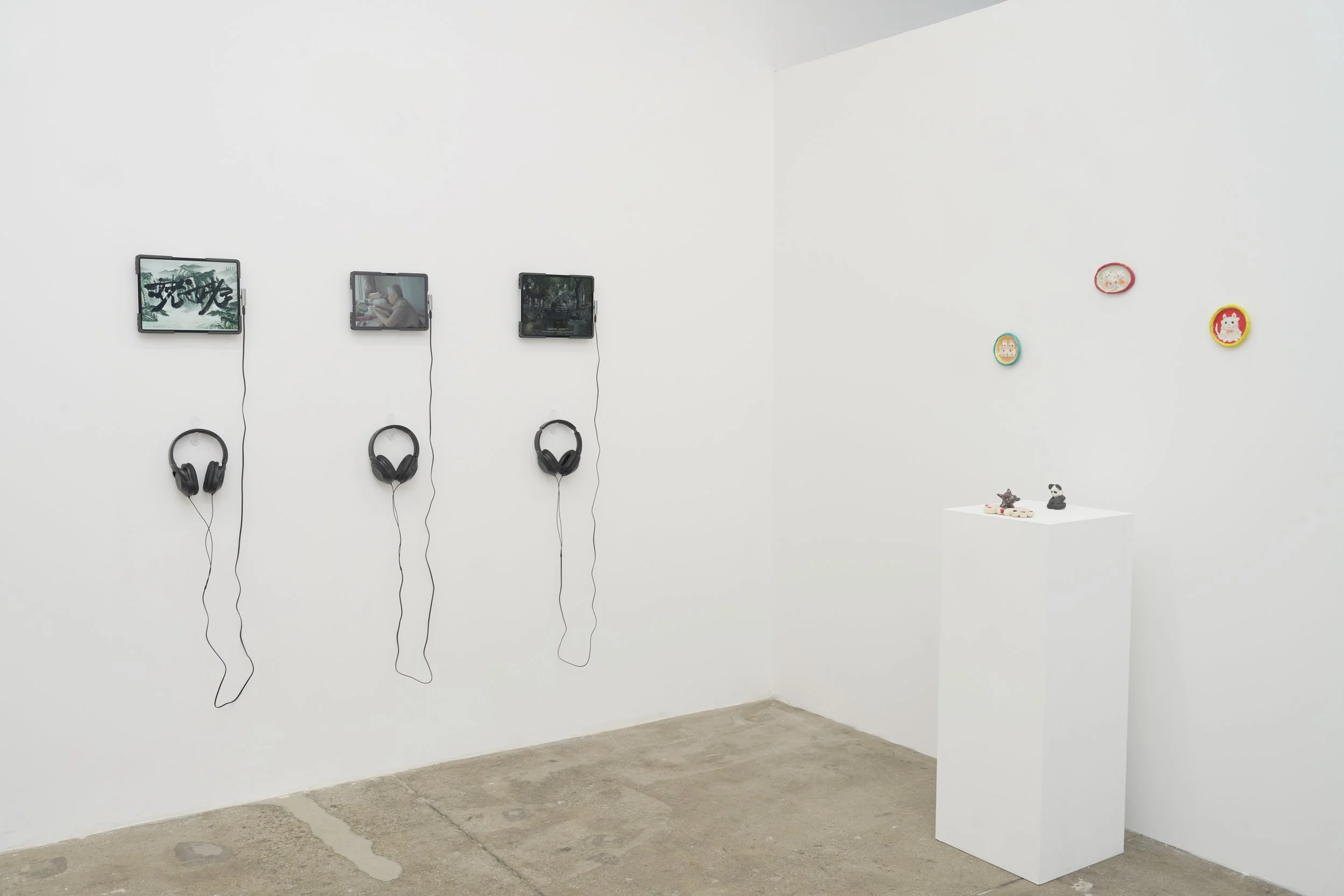
Installation View of This Candy Has Teeth, curated by Shuhan Zhang, 2026, image Courtesy of Weicang Wang
Nearby, Shengjie Jiang’s paintings shift this relationship between memory and time into something more physical. Along the wall, fragments such as a cut piece of fruit appear almost like remnants of an experience. Fruit carries its own associations with sweetness, but once cut open, it also exposes an interior. In this sense, Jiang’s work suggests that memory is never preserved intact. As we grow older, its structure changes with us. What once existed as a sensation may return years later as an image, an object, a color, or a texture. Sweetness becomes something more tangible precisely because it has already begun to disappear.
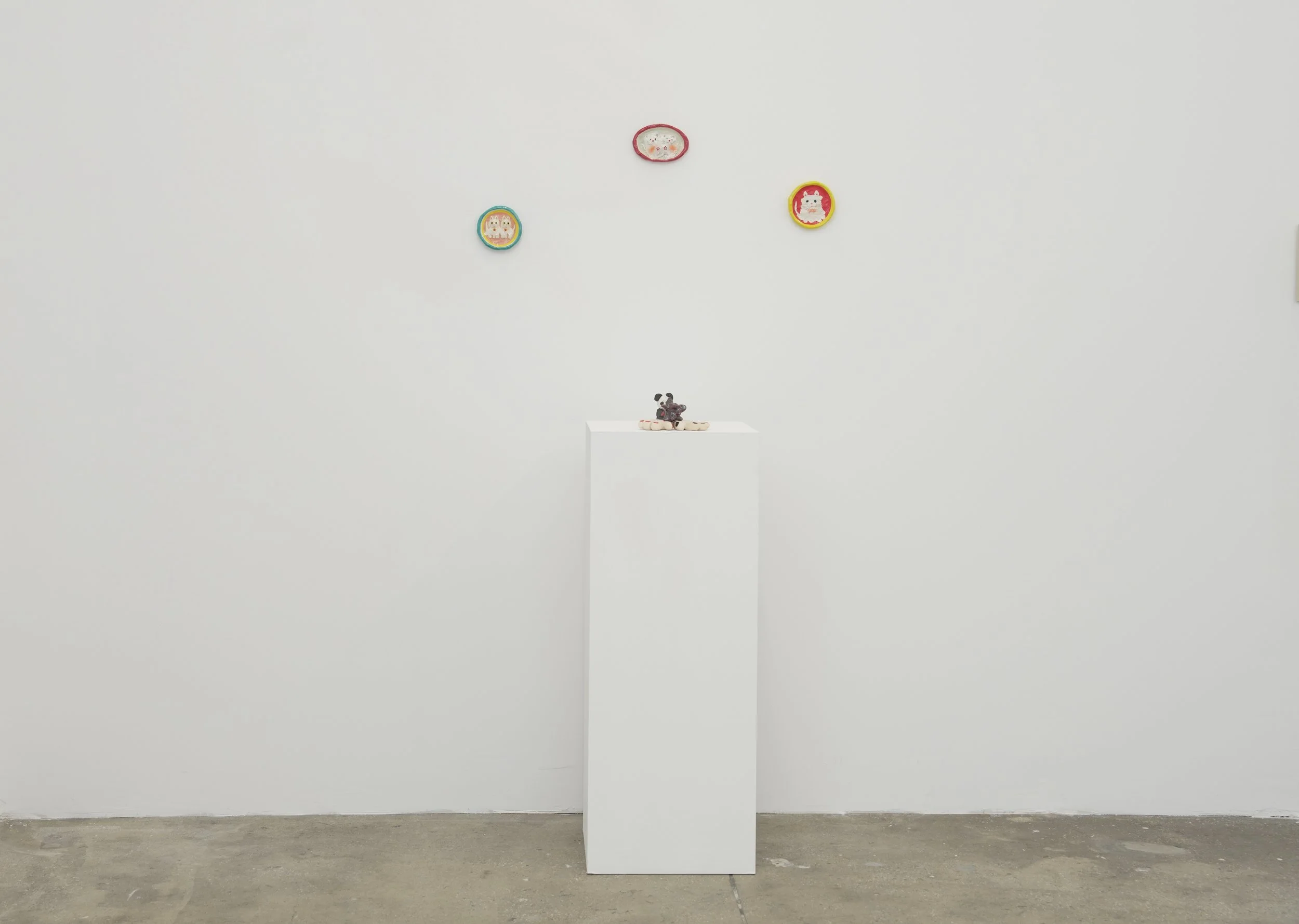
Installation View of This Candy Has Teeth, curated by Shuhan Zhang, 2026, image Courtesy of Weicang Wang
Cindy Zhaoyue Chen’s ceramics continue this tension between tenderness and discomfort. Each object occupies its own space, separated from the others while remaining connected through the installation as a whole. The arrangement seems to break emotion into individual pieces without completely isolating them. Here, tenderness does not confront discomfort as its opposite. The two can dissolve into one another while still retaining their differences.
This quietness is important to the exhibition. This Candy Has Teeth does not demand that childhood be decoded, healed, or turned into a coherent narrative. Instead, viewers are invited to stay with its fragments. Memory can be sweet without being innocent; tenderness can contain resistance; something comforting can still have teeth.
Perhaps growing up does not mean leaving these contradictions behind. It means becoming increasingly capable of recognizing that they were always there.