The Afterglow of Satiety: On Tenderness and Fetishistic Grace
A Review for The Bitterest Ice Cream at FLOHAUS Gallery, New York
The hues of dusk filter in, cascading from beyond the frame to bathe every piece in the gallery. Silverware overlaps, trading benign reflections; the glass of jar and goblet whispers crystalline glares; across the polished floor, splinters of pale luminescence are drafted by the fluttering hems of curtains. Nostalgia of these antiquities seems to awaken through the divine light to reverberate in mutual radiance. The creases of the shirt hanging on the wall bleed into the painted drapery within the frame. A mood mistily materializes. It veers, then pales, within this dining room of obsessive reveries.
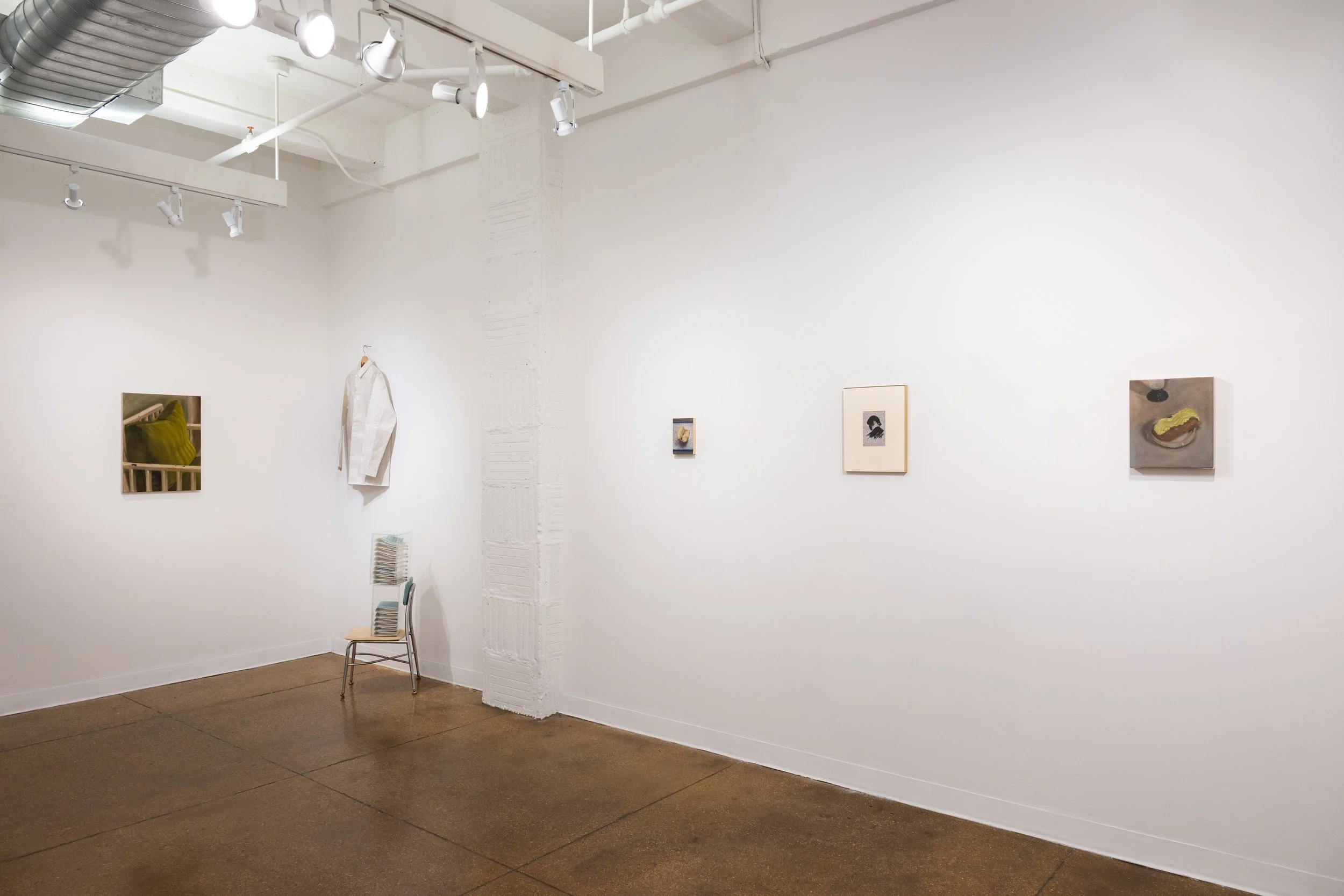
Installation view of The Bitterest Ice Cream. Courtesy of the artists.
In the duo exhibition The Bitterest Ice Cream at FLOHAUS Gallery, New York, curator Shuhan Zhang elevates our tenderness toward objects, steering away from a mere symptomatic reduction of consumer culture to instead shroud them in a fetishistic grace. Here, the concept of the fetish emancipates itself from its clinical and pathological confines and returns to its most poetic root: an overflow of human devotion sedimented into mundane objecthood. Her curatorial gesture animates a protective reverence that almost treats sliced fruits, half-eaten éclair, and folded garments as sacred reliquaries of mortal residue. Therein, the fetish becomes graceful.
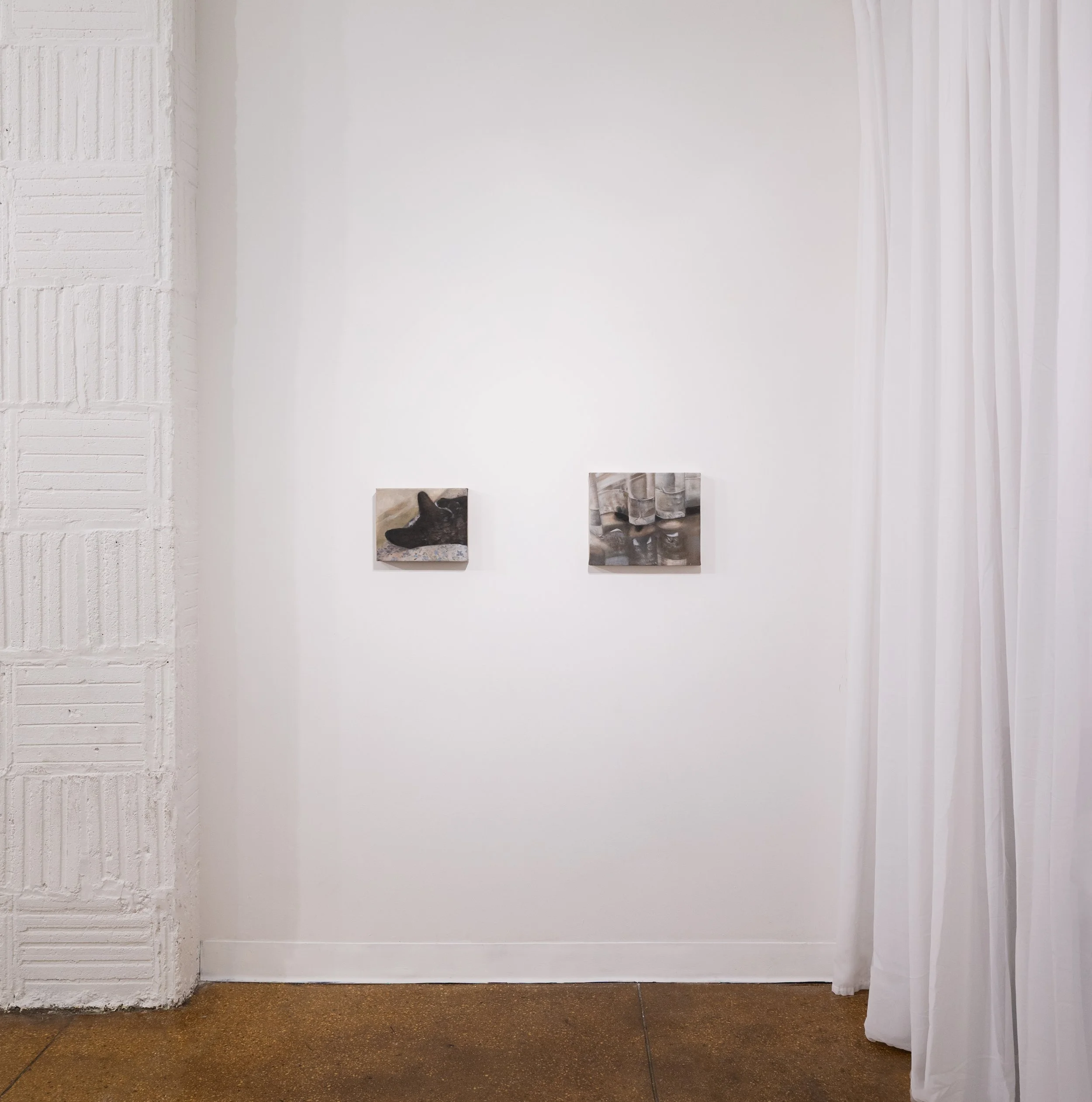
Installation view of The Bitterest Ice Cream. Courtesy of the artists.
The title ‘The Bitterest Ice Cream’ conjures a multi-sensory dissonance, a jarring collision between transient sweetness and a persistent aftertaste, held within a clime of frozen stringency. Bitterness ensues as the immediate aftermath of satiety. Through this delicate synesthesia, the taste of loss is granted a visual corpus, turning memory into an ‘edible’ warmth arrested in mid-melt. Time here adheres to the skin of things. It is a relic of abundance, a solemn cooling. The show is thus a deliberation on how the aesthetics of melancholy accommodates both states simultaneously. Melancholy functions here almost as a move of abdication and a phenomenological epistemology. It paints the alignment of one’s subjectivity with the irreversible clock, allowing the body to settle into the same velvety passivity as the eroding matter itself.
The interplay between Shengjie Jiang’s pictorial still lifes and Alex (Yeying) Wen’s tactile material archives choreographs an exchange far deeper than the mere boundary between evaporation and endurance. Jiang’s canvases are framed as micro-tableaux of exquisite tactility. An oxidizing half-apple, the cream-laden remnants of an éclair, a weathered wooden chair, and the wind rippling through cloth. They are all haunted by an incipient decay. A sweet corruption. Through these surfaces, she manifests an illusion of time—an imperceptible, sensuous dissolving of the present. Operating in tandem, Wen’s installations denude these artifacts of their original textuality, resolving their shapes into newly configured geometric armatures. Wen outlines the very skeleton of these objects as they endure through space. As if existing within another imaginary realm of Platonic Ideals, these artifacts are abstracted into archetypes, neatly archived through repeating morphologies and the solemn rituals of containment. One animates the inert; the other keeps them stored and folded. Together, they orchestrate a syncopated rhythm: an epic of the very flesh and bone that charts the circulation of objects.
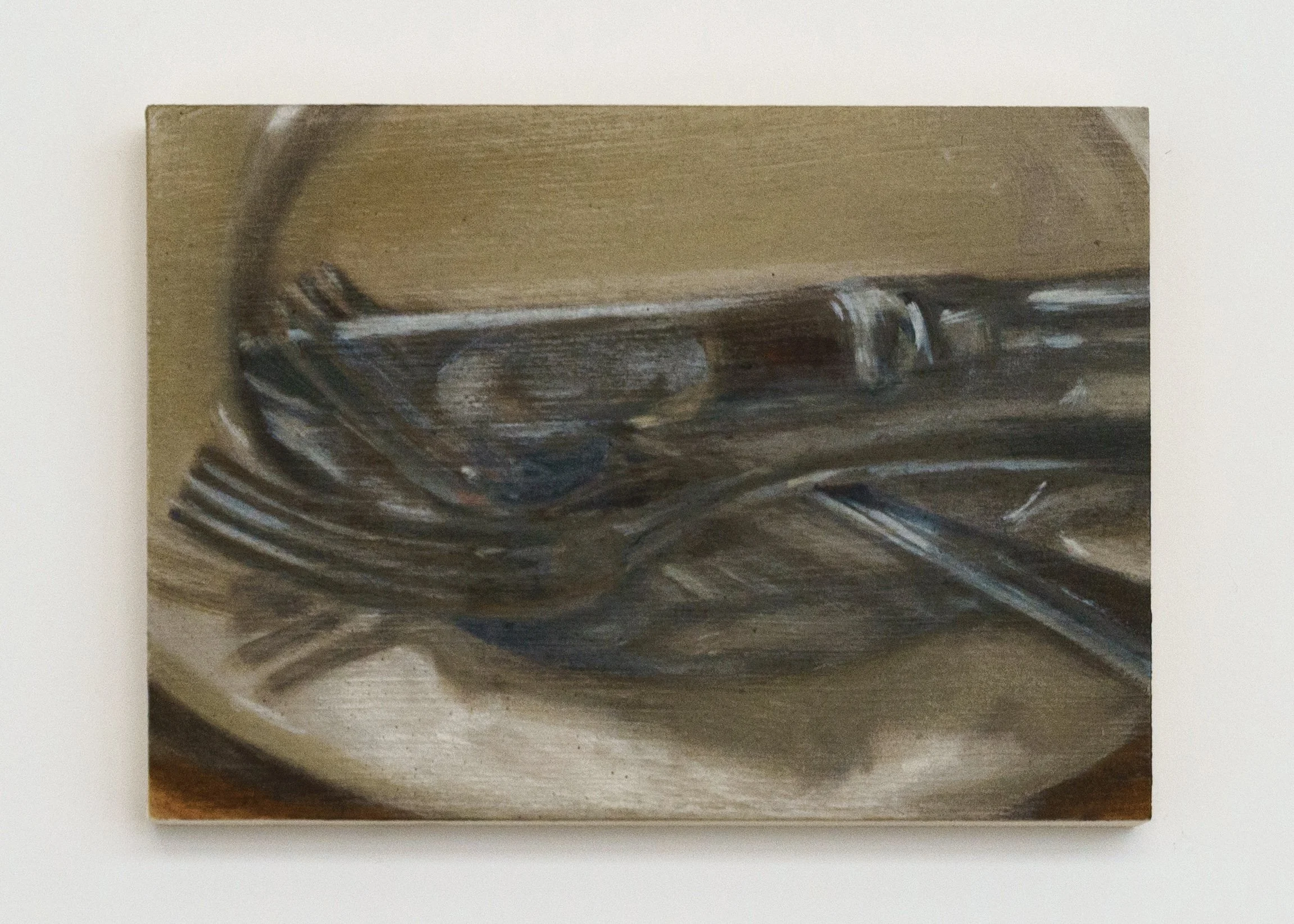
Shengjie Jiang, Grasshopper, 2025. Oil on wood panel, 5 x 7 in. Courtesy of the artist.
A shared, subtle allusion to the hand in each of their works returns us to the manifesto of tenderness. Tenderness is the texture of the residue. In Wen’s Where the Horizon Folds (2026), a pair of gloves suspends over an etching album meticulously archived inside a safe, while in Jiang’s works, the hand is similarly felt only by proxy, imprinted upon the meticulously placed dishware and the remnants of a meal. The touch, a fingertip-level contact with an object, is an implicit promise that permeates these depictions. Tactility itself is never blared; instead, it is tenderly, lingeringly implied throughout the showroom.
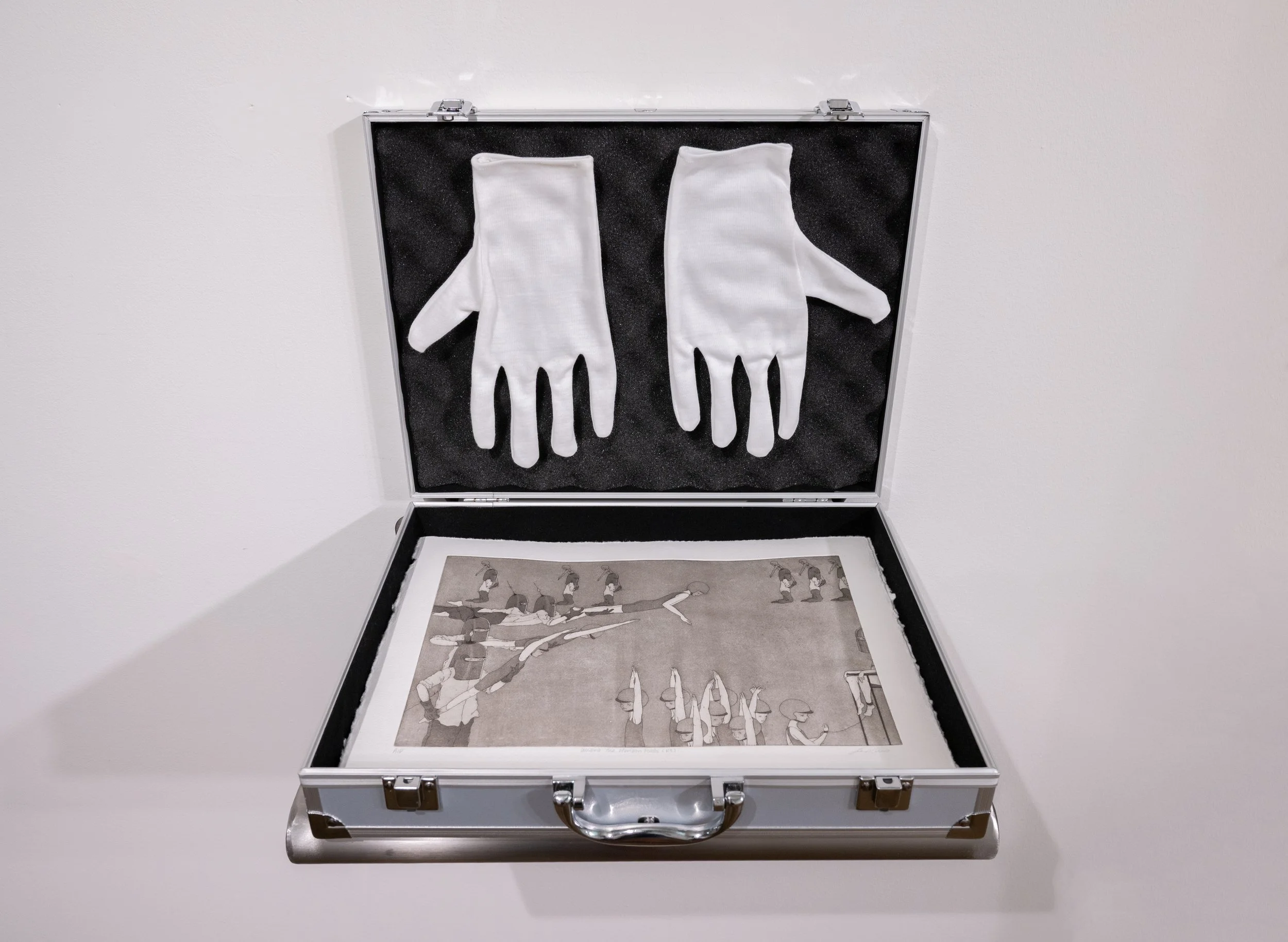
Alex Wen, Where the Horizon Folds, 2026. Etching on Kozo paper, handmade book with dos a dos binding, 8 x 12 in. Courtesy of the artist.
While the classical Memento Mori commands us to fear the end, Jiang and Wen offer a rendering of loss that is devastatingly tender. They suggest that even when our objects are stripped of their utility, broken and archived, they remain saturated with the warmth of past touch. Tenderness, then, is the persistent phantom limb of human intimacy, vibrating quietly within the pure, unyielding skeleton of matter.
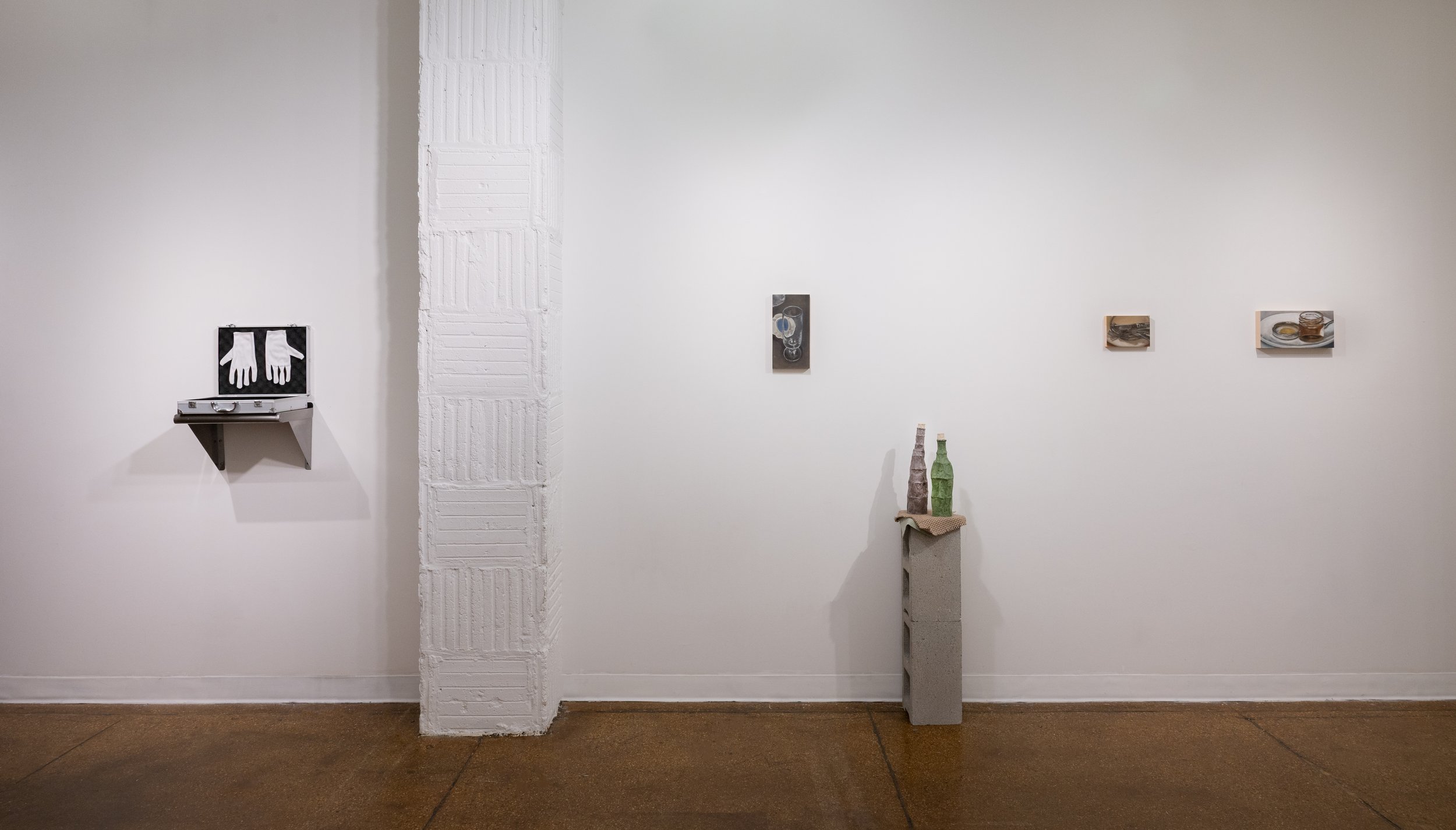
Installation view of The Bitterest Ice Cream. Courtesy of the artists.