Review: 12 Artists at Accent Sisters
Belief is a Prerequisite for the Aesthetic Experience of the Artwork
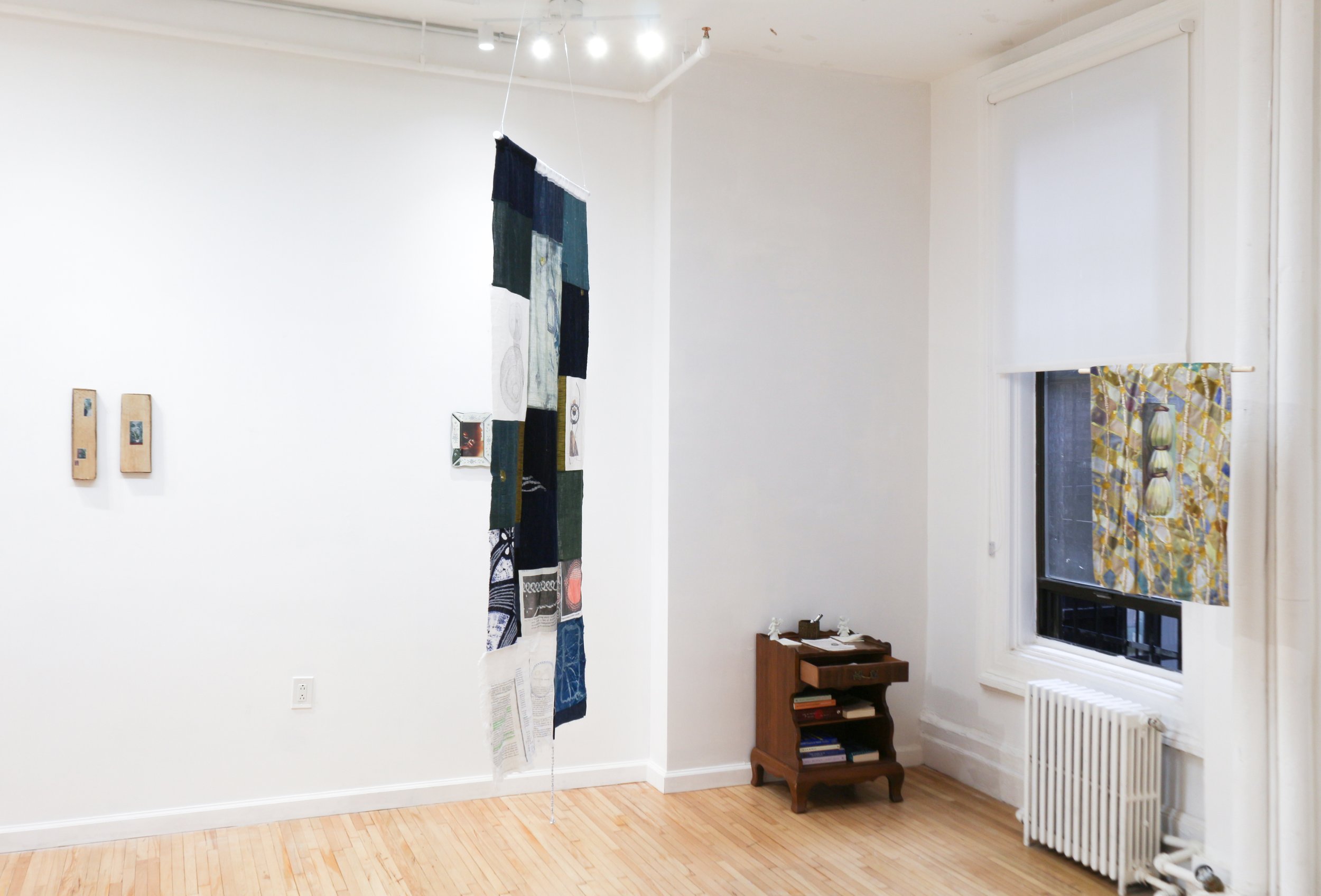
Installation View - Slipknots at Accent Sisters
“Slipknots” is a group exhibition of twelve women artists curated by Xingzi Gu, offering a safe space for intimate introspection and both personal and collective reflection. “Slipknots,” which is inspired by a widely circulated women’s magazine from early twentieth-century Shanghai titled, “Linglong” (玲瓏), refers to a type of loop-based knot that can be tightened or loosened easily by pulling on the loose end. It is a fastening technique found in sailing and crocheting. (Crocheting is a process of creating textiles and garments by interlocking loops of yarn or thread with a single hooked needle, and it differs from knitting, which involves the use of two needles to complete the stitches.)
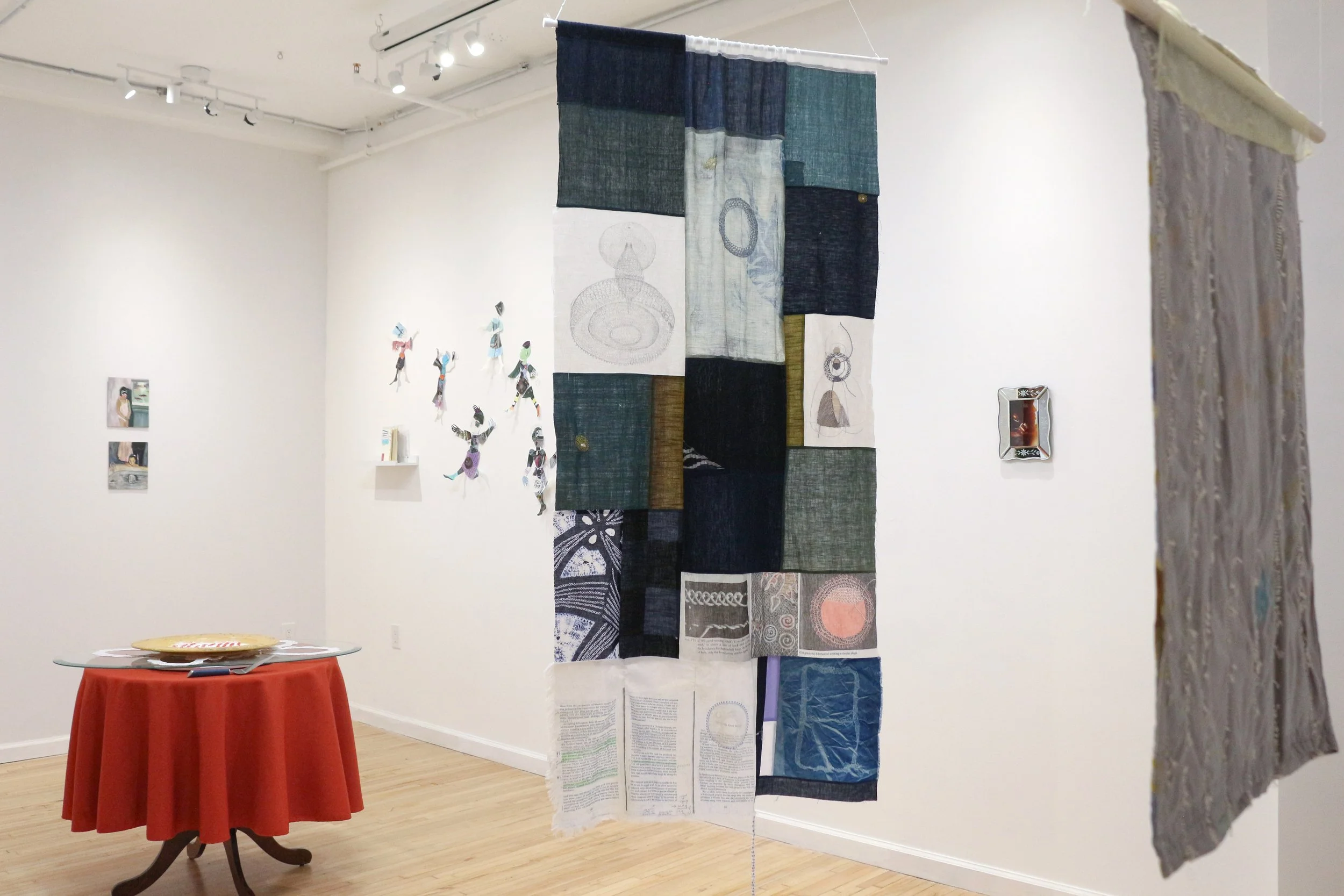
“Slipknots” thus may refer to sturdier garments made of a thicker, more three-dimensional fabric rather than the type of wear with elastic and natural drape that is made with knitting. The title points toward an approach to artmaking that observes the female form through a more delicate and attentive material language. This show exhibits works made by women for women, as if they are involved in an intimate and open conversation.
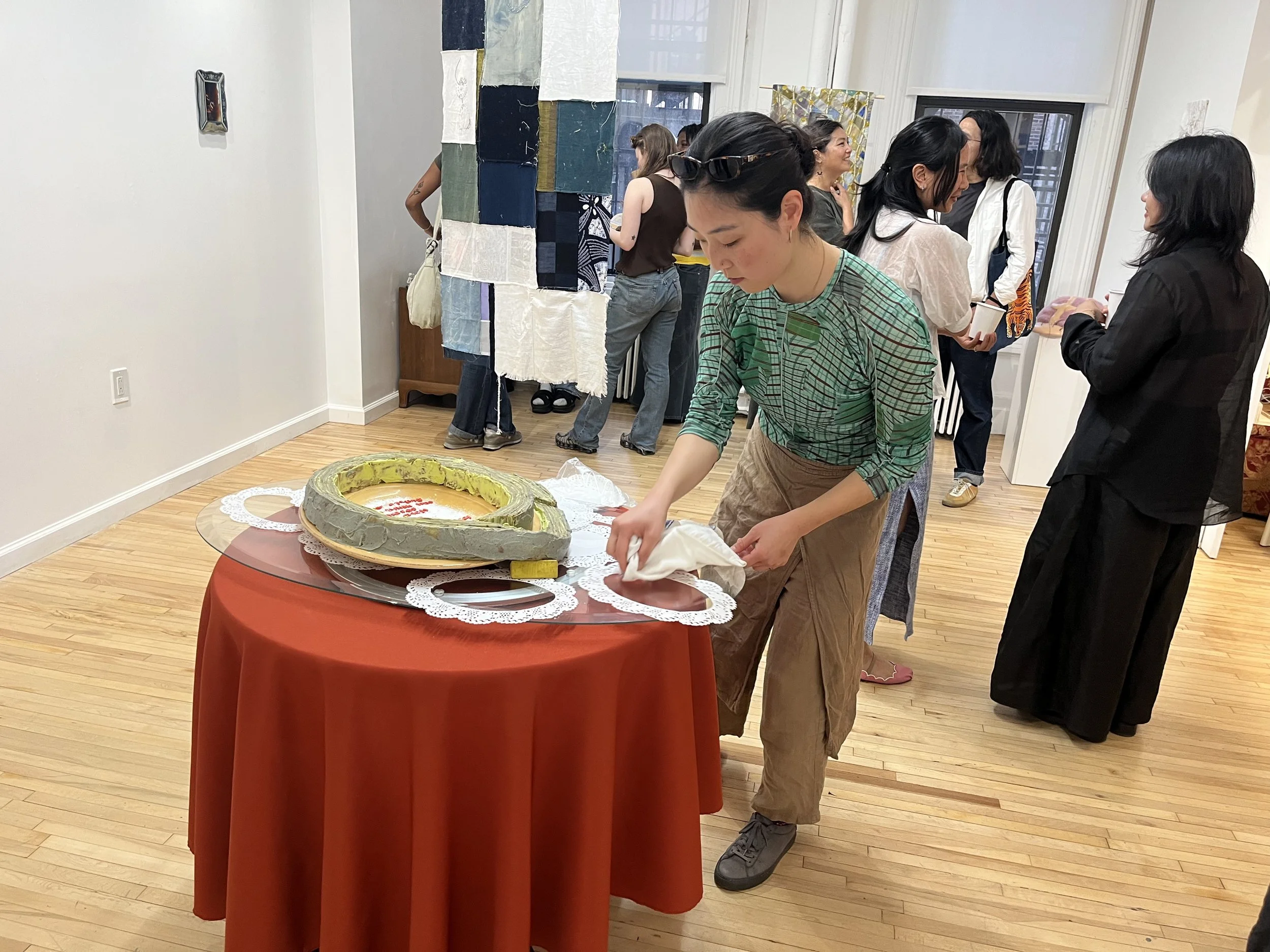
Rayer Ma - “(Said the words to the cake)” (2026)
egg, milk, butter, sugar, flour, salt, corn starch, heavy cream, gelatin, sesame, lime, lemon,
rose water, marshmallow, ceramic, glass, paper doilies, napkin, tasting fork, Lazy Susan, table cloth.
(The cake is meant to be shared and eaten.)
The spiritual dimension present in works such as Maisie Luo’s pillowcase inspired by the poems from one of the first enlightened Buddhist nuns. There are also personal reflections on intimate sensory and emotional experience manifested in the photography by Sha Luo.
Xinyu Liu’s Soft Shift shares a collection of drawings reflecting on belonging, stability and displacement. Similar to Alexandra Nelson’s work of a journal that invited the audience to leave a note.
More physical and tactile gestures emerge through the works of Emilia Qian Shen, imagining new states of being that are unfinished, undefinable, and constantly becoming. Brittany Adeline King, where paper dolls becomes a way of speaking through stitching, tension, and embodiment.
Jen Chen-su Huang’s weavings and soft collages carry connections and pulling from both personal and historical accounts. Winnie Weiyun Szu’s work anchor in abstraction as it finds vitality in ambiguity and in in-betweenness.
Lindsay Liang’s paintings of girls in masks and reflections move through psychological space. Siyu Chen’s work explores the lingering unsettledness and imaginary potential in the state of liminality.
Vic Xu’s bamboo photo albums hold memory through fragile and intimate forms, explores the tenderness and labor of remembering. Rayer Ma’s work approaches transformation through communal gesture and relational aesthetic. Ma’s performative piece of sharing a cake with the audience appears to activate the space into the likeness of a tea bus or a tea party. What is the difference between a cake being served at the food table in an art exhibition and Ma’s performance? What makes one a contemporary artwork and the other just a cake that just happens to be served at a gathering? Does the artist’s intent magically transform the act of serving the cake into an artwork?
Relational aesthetics is Nicolas Bourriaud’s vocabulary describing how artists make art concerning “human relations and their social context” (Tate.org.uk). Preceding works include Rirkrit Tiravanija’s curry kitchen piece at the 303 Gallery in the 1990s and its Futurist ideation by Filippo Tommaso Marinetti in the early 1900s.
The point to be made is that anything can become art if there is great intention and effort behind its execution as an aesthetic experience. Ma was not a gallery staff who happened to serve food and wine; she was in fact an artist with the will and the vision to execute the piece properly per its aesthetic requirements. The aesthetic choices include everything from the artist’s own professional and modern dress code (which appears to be partially inspired by Chinese traditional clothing) to the red of the tablecloth that complements the artist’s turquoise attire to the design of the cake that is sculpted as a circular labyrinth and colored in military green and yellow.
Even the quote written in the center of the plate, which reads, “runner cutting the finish line obliterates the circle… draw a spiral… umbibilical… now celebrate… there is nothing to follow,” is quiddical and mysterious at the same time. As more of the cake is eaten, the more of this quote becomes visible.
The artist thus metaphorically positions the act of consuming the cake as a celebration for the runner finishing the race in first place with “nothing to follow.” At the same time, the spiral refers to the cake’s overall design.
Why celebrate a runner’s victory in a race? At this point, it is all a play, like make-believe, but the artist has made the aesthetic choice of endowing the performance with a positive metaphor aligning the participants on the same side as the winner of a competitive event.
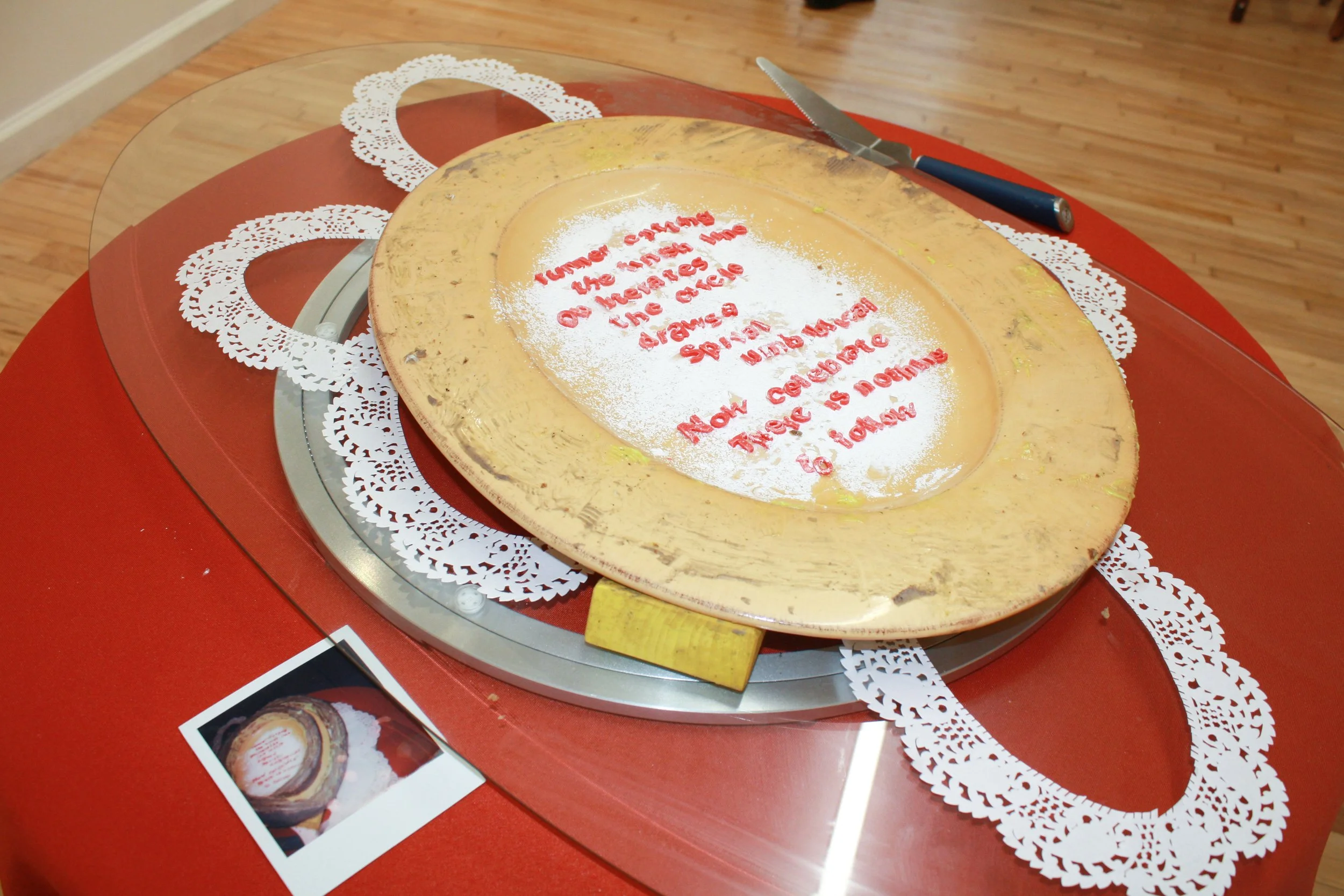
Closeup view
And this may highlight the core nature of Ma’s performance as a make-believe play. Does the artwork asking the participants to “celebrate” automatically mean that the participants must do so? It all really depends on how the audience believes in the artwork and how much the participants believe in the story or the narration of the fictional situation. If one does not believe, this all seems silly and fake; if one believes strongly, everything that is offered in the work has meaning and a place. The work is simultaneously a mirror and a transactional game mechanism in a social setting.
The other artists include Siyu Chen, Jen Chen-su Huang, Brittany Adeline King, Lindsay Liang, Xinyu Liu, Maisie Luo, Sha Luo, Alexandra Nelson, Qian Shen, Winnie Weiyun Szu, and Vic Xu.