Recognition, Unfinished: After the Face at FLOHAUS
When the Face No Longer Answers
As a social habit, we have grown accustomed to treating the face as the starting point of confirmation. Identity, emotion, social response, even a basic sense of presence, are all assumed to complete themselves through a face that has been seen. The mechanism predates the image era, but the speed at which images now circulate has pushed it into a position from which it can hardly retreat: the face no longer only carries expression; it has been asked to carry proof. And proof is exactly what it has become least capable of supplying. After the Face (FLOHAUS Gallery, April 18–24, 2026), curated by Shuhan Zhang with works by Aubrey LaDuke, Hongyu Zhang, Wendy Wei, and Weican Wang, unfolds around this loosening of the face as a site of confirmation.
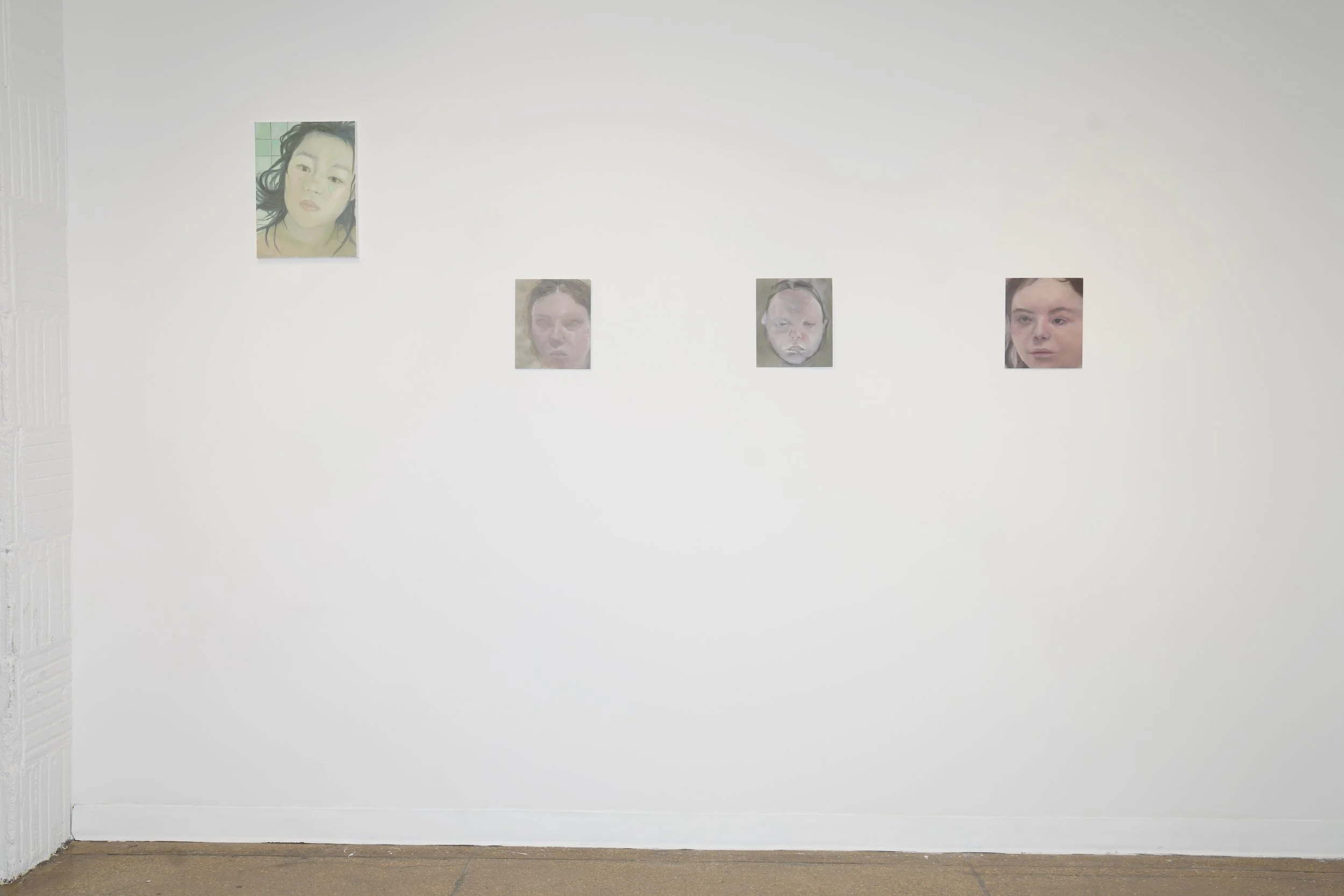
Installation view of After the Face. Photo by Weican Wang. Courtesy of the artist and CHINCHINART.
The space itself is arranged as an act of looking. Portraits by Wendy Wei and Aubrey LaDuke are gathered on one wall; paintings by Hongyu Zhang hang on the wall opposite. The figures regard one another across the room, their gazes crossing in mid-air in a conversation that is neither voiced nor answered. The exchange is produced not by any single work but by the curatorial logic of the space, which rewrites the relation between these paintings into something the works on their own could not perform. Recognition is lifted out of the interior of the work and raised to the scale of the room. Running parallel to this exchange, Weican Wang's photographs and a second body of Wendy Wei's work, built around objects rather than figures, extend the question of the face into a territory where the face no longer appears.
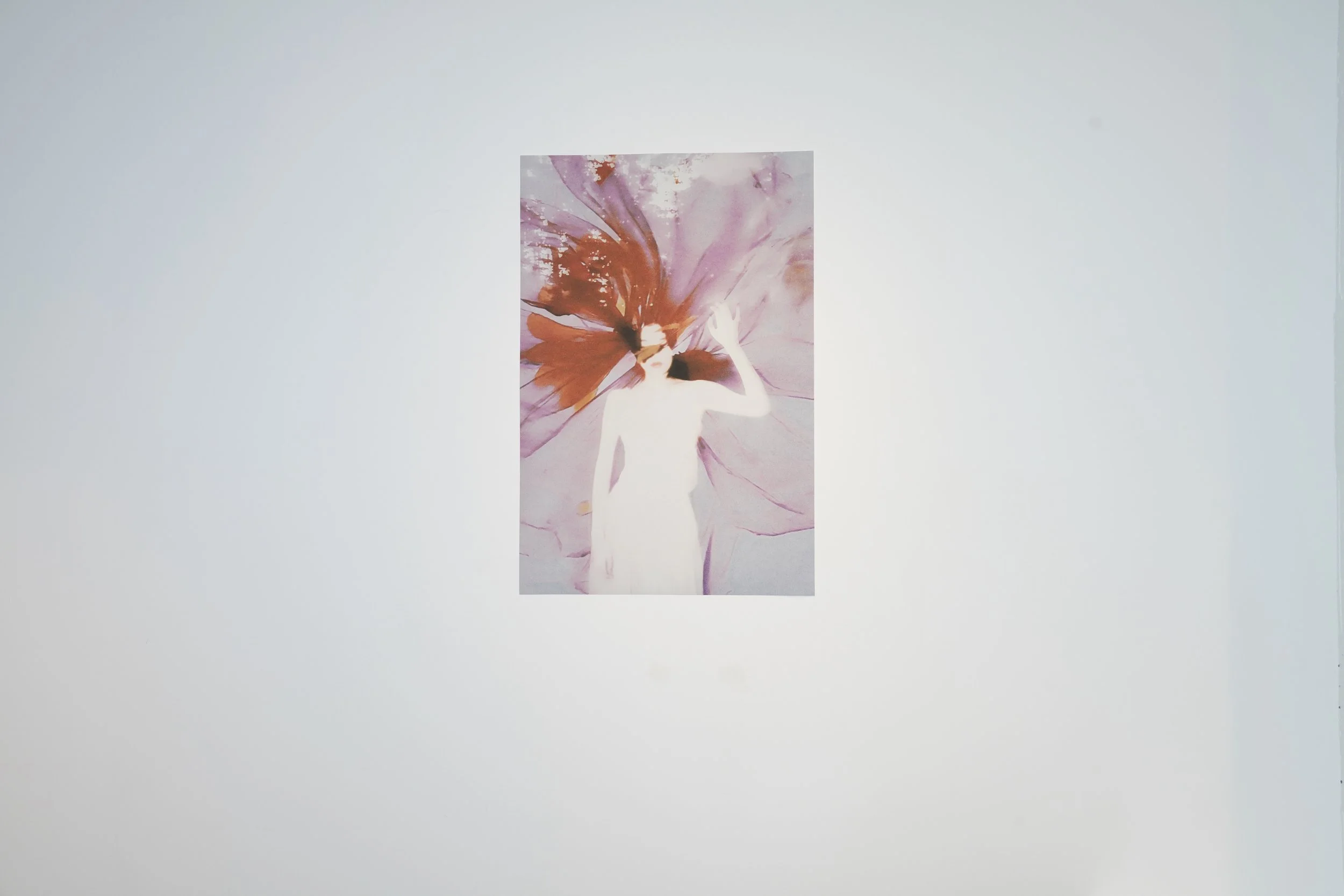
Weican Wang, Blossom, 2023. Photo by Weican Wang. Courtesy of the artist and CHINCHINART.
Hongyu Zhang's paintings take up the delay of recognition. The faces are frontal, their features intact, yet the details never quite settle. Brushstrokes are dragged across the surface, colors layered and wiped back, leaving the face in a state that has not closed. A face can be identified, something of its affect sensed; the stall happens one layer deeper, where the judgment what kind of face is this would ordinarily form, and where that judgment is continually postponed. The figurative is not replaced by abstraction; it is interrupted. The painting preserves every bit of the face's legibility while withdrawing the certainty it is usually trusted to provide. When these faces look out from the opposite wall, they do not anchor the exchange; they hold it in suspension.
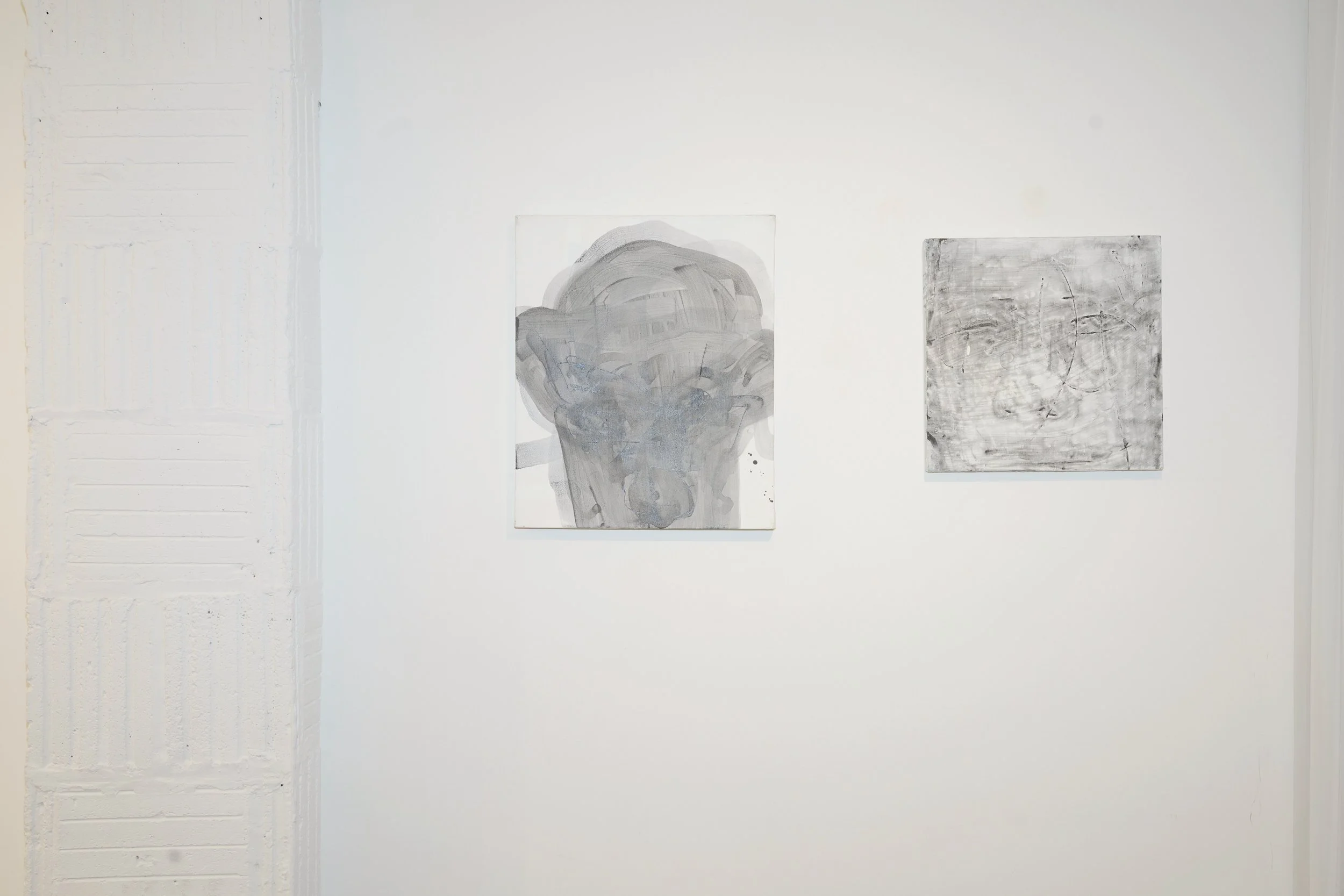
Installation view of After the Face. Photo by Weican Wang. Courtesy of the artist and CHINCHINART.
Aubrey LaDuke's Mirror series approaches the same question from another direction. Her aluminum panels are modest in scale, their frontal self-portraits close enough to read, at first, as identical. Difference is held in finer registers: a shift in the angle of the gaze, a slight misalignment of expression, a small turn between warm and cool. The mirror no longer functions as an instrument of self-confirmation; it is closer to an incomplete psychological archive, a sequence of states resembling one another without ever fully coinciding, none of them designated as the original. Hung opposite Hongyu's, these portraits begin to participate in the line of sight running through the room, forming an exchange between a self under revision and a face held in suspension.
Wendy Wei's portraits share the wall with LaDuke, but her direction is different. The face is still there, yet no longer the entry point. Tears, symbols, text, and bodily gestures carry the emotional tone of the picture, in a register that is self-mocking, contradictory, lightly theatrical, while the face itself is pushed toward the edge of the composition. Emotion is not softened by this retreat; it becomes more direct. Who is expressing recedes, and what is staged instead is the manner in which expression takes place. In the exchange across the wall, Wendy's face does not return LaDuke's gaze in kind; she has handed her looking over to other places in the image that can carry the affect.
A second body of Wendy's work removes the face entirely. Everyday objects and fragments of scenes stand in for the figure, and the owner is given to us through the relations between them. Weican Wang's photographs, hung in the same direction, carry this line forward: flowers, light, tree stumps, clothing, the edges of a scene. When the figure is absent altogether, the inhabitant's face returns in its faintest and most persistent form, sensed through the angle at which something has been placed, through the traces that have been left, through the atmosphere of someone having just passed through the image. The face is not denied; it is diluted into a scene larger than itself, becoming a feature of the state rather than its source.
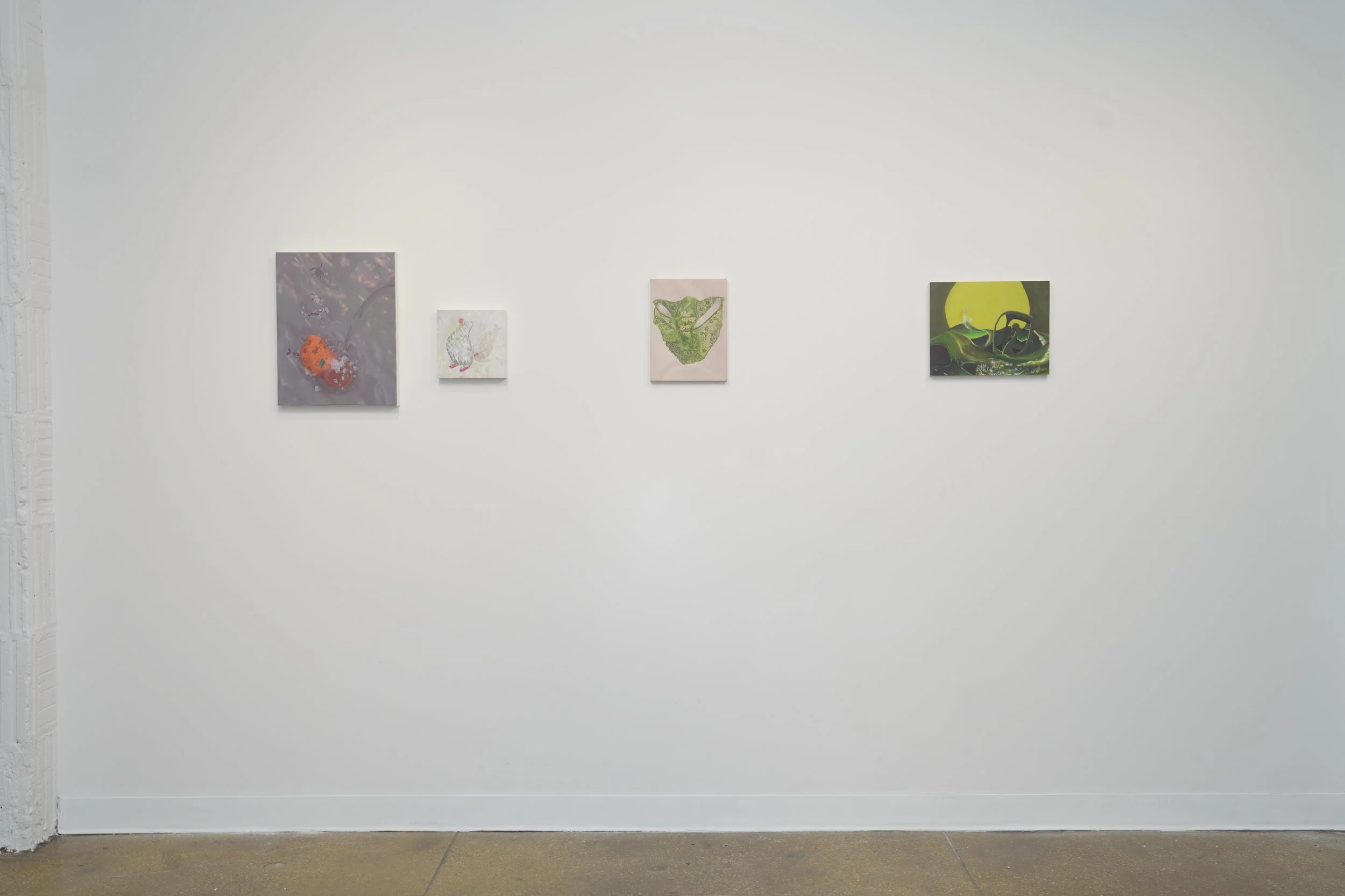
Installation view of After the Face. Photo by Weican Wang. Courtesy of the artist and CHINCHINART.
Taken together, the two lines produce a slowly unfolding loop of looking. On one side, two walls in silent opposition, where each recognition is brief and quickly interrupted. On the other, images without figures, where the outline of a face is sensed but never named. Emotion arrives ahead of understanding, and meaning refuses to come to rest. The face has not left the image; it has only lost its capacity to function as an answer. What it offers is no longer a conclusion, but a condition that has to be kept in view.
What makes After the Face effective is that it does not inflate its question. It does not build a theory of the post-image condition, nor propose an alternative mechanism of recognition. It places a very specific viewing experience in front of the viewer: one is, in fact, looking at people, and one is also, just as truly, unable to be sure what one is looking at. Inside a system trained to judge through images at speed, this modest failure is already a clear enough deviation. The exhibition asks only that the viewer slow down, let recognition complete itself less quickly, and stay with the image a little longer.