Nadia Coen's Inclining Experiment: A Never-Ending Dialogue between the Artist and the World
Interview with an artist who embraces an experimental and open-ended methodology
Nadia Coën is a multi-disciplinary artist based in New York City, born and raised in Zimbabwe, with generational ties to Austro-Hungary, Syria, and Egypt. Coën titles her artistic project “The Inclining Experiment,” which is an experiential time-based practice converging architecture, light, poetics, and ephemera. Several months back, she reached out to me for a studio visit. When I was there, I was able to experience her installation art first-hand and became interested in conducting an interview with the artist. This is the conversation that transpired after our initial encounter.
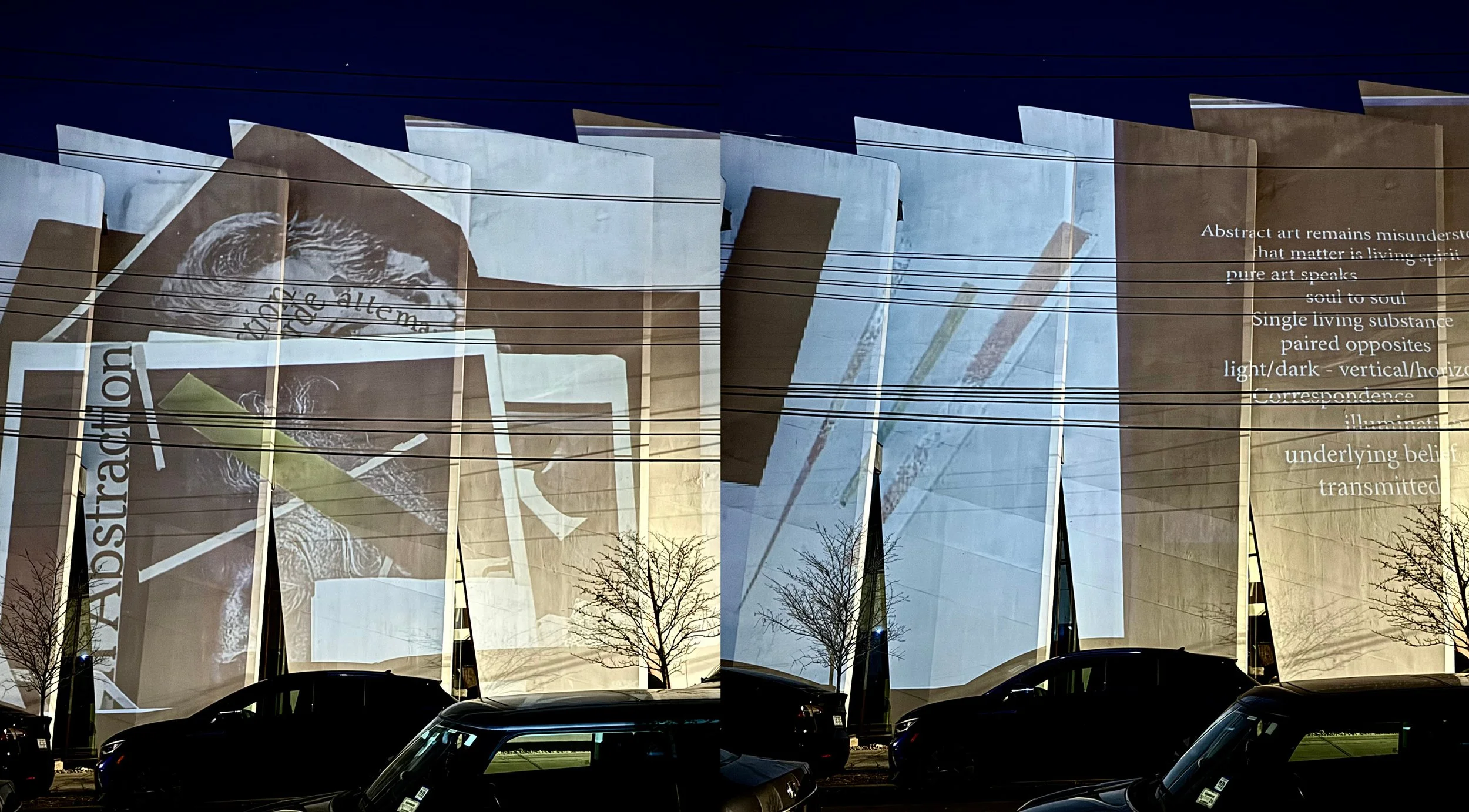
Red Hook Dada-ism, site specific urban intervetion / projection. Brooklyn, NY, 2024
CP: Could you introduce yourself? Where are you from and where did you study art?
NC: I’m Nadia Coen. I was born and raised in Zimbabwe, but my family’s generational history has been complex and migratory, spanning Austro-Hungary, Syria, Egypt, Paris, and Zimbabwe. We immigrated to New York City in 1979, a fairly common immigrant move, though one that profoundly shaped how I understand displacement, belonging, and cultural layering. As an undergraduate, I applied to Cooper Union but didn’t get in, so I attended NYU, where I studied Art Education. My real interest, however, was always art itself. I spent much of my time pushing my way through the NYU system, crossing departments, taking classes I felt I needed, and shaping my own education, often times to the frustration of my teachers. That impulse toward self-directed learning has stayed with me throughout my practice.
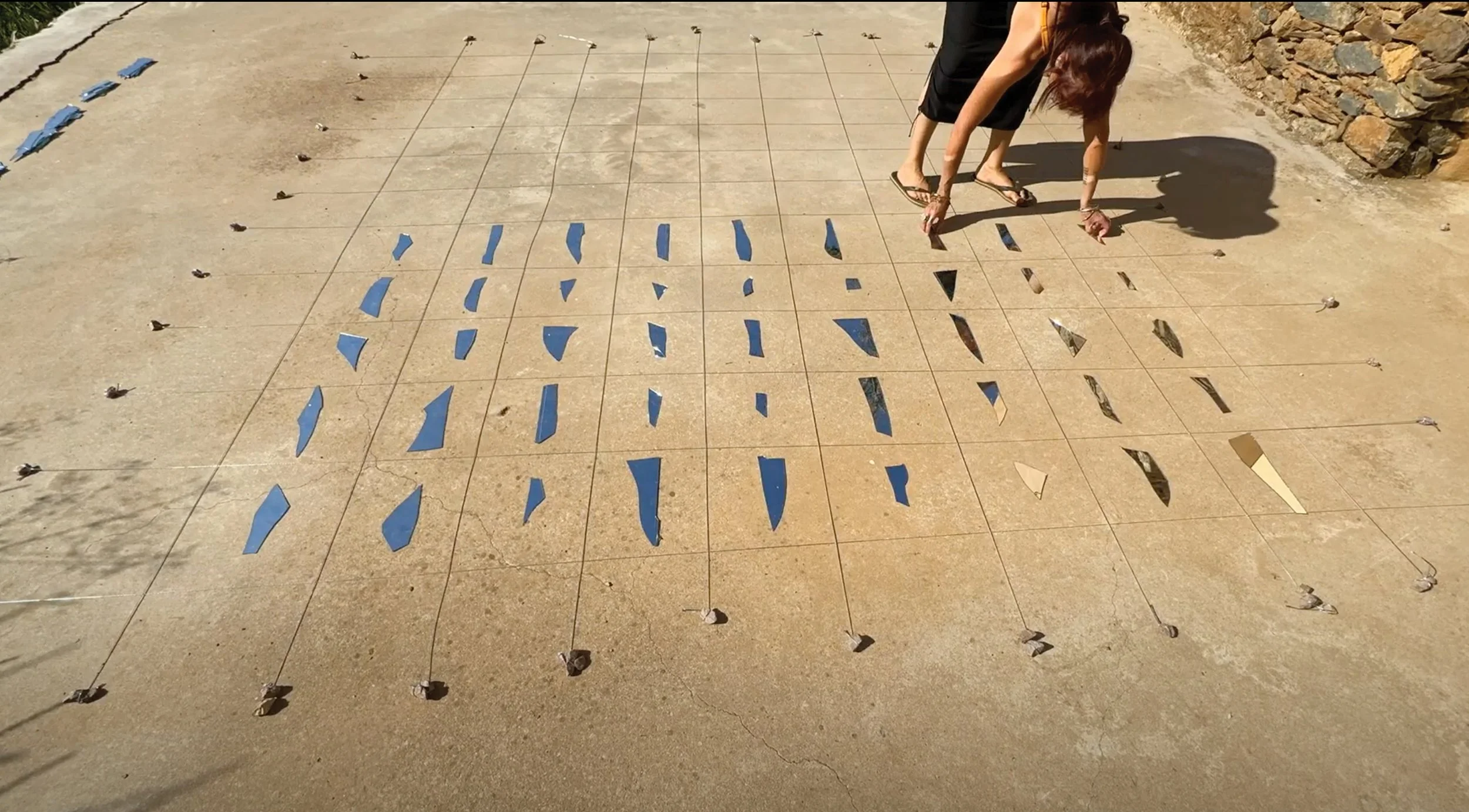
Mirror Shard Action, Andalusia, 2024
CP: What is The Inclining Experiment Manifesto? Does it relate to spirituality, the cosmos, and our place in the world?
NC: The Inclining Experiment is the name I give to my artistic practice as a whole. It’s not a manifesto in the declarative or prescriptive sense, nor a fixed system. It’s a way of working that remains experimental and openended, a conscious stance of not being defined by a single discipline or trajectory. There is definitely a spiritual dimension to this work, though not a doctrinal one. Metaphysical or even shamanistic might be more accurate metaphors. I’m interested in how we orient ourselves within space, time, language, ritual, and the unknown, and how the act of making can embody a dialogue between inner experience and a larger manifestation. Alongside this, there is a short manifesto connected to the work, written as a poetic and gestural text rather than a set of declarations. It pays homage to Surrealist, Dadaist, and other artistic movements that used manifestos not to fix meaning, but to signal intention, orientation, and a way of entering the unknown.
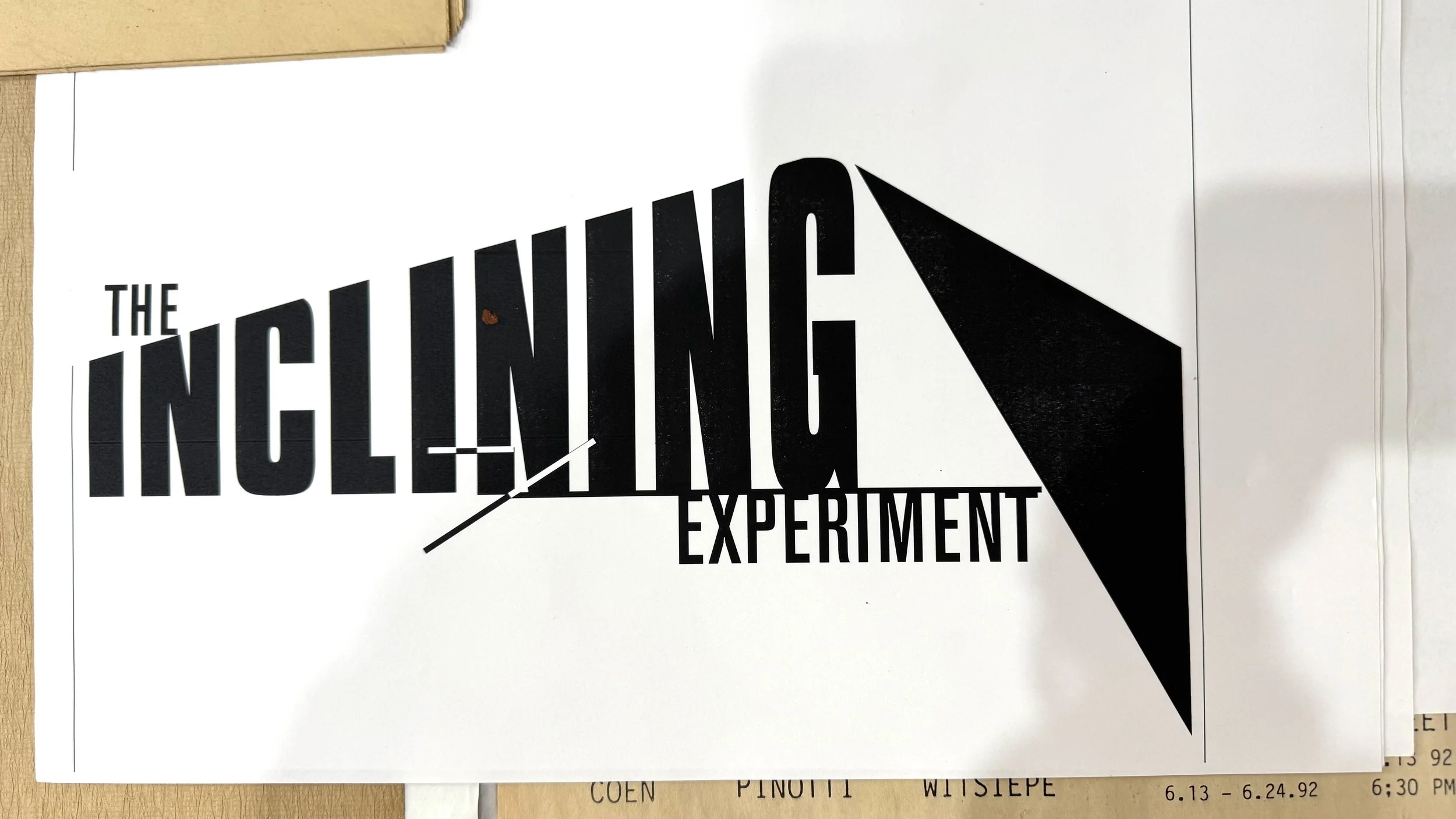
The Inclining Experiment, print / ephemera
CP: Which philosophers or artists have shaped your thinking?
NC: There have been many deep influences throughout my trajectory, especially philosophers, thinkers, and artists concerned with the spiritual or poetic dimensions of form rather than representation. Literature, poetics, and artistic practice have always courted one another in my thinking. Early influences include writers such as Antonin Artaud and artists like Joseph Beuys, alongside Sufism, Aboriginal Australian Dreamtime cosmologies, Symbolism, Dada, Fluxus, and other movements that challenged linear logic and material certainty.
I’m drawn to figures who worked outside strict categories — artists, writers, and mystics whose work emerged from necessity rather than style. Across generations, I’m less interested in schools of thought than in lineages of inquiry.
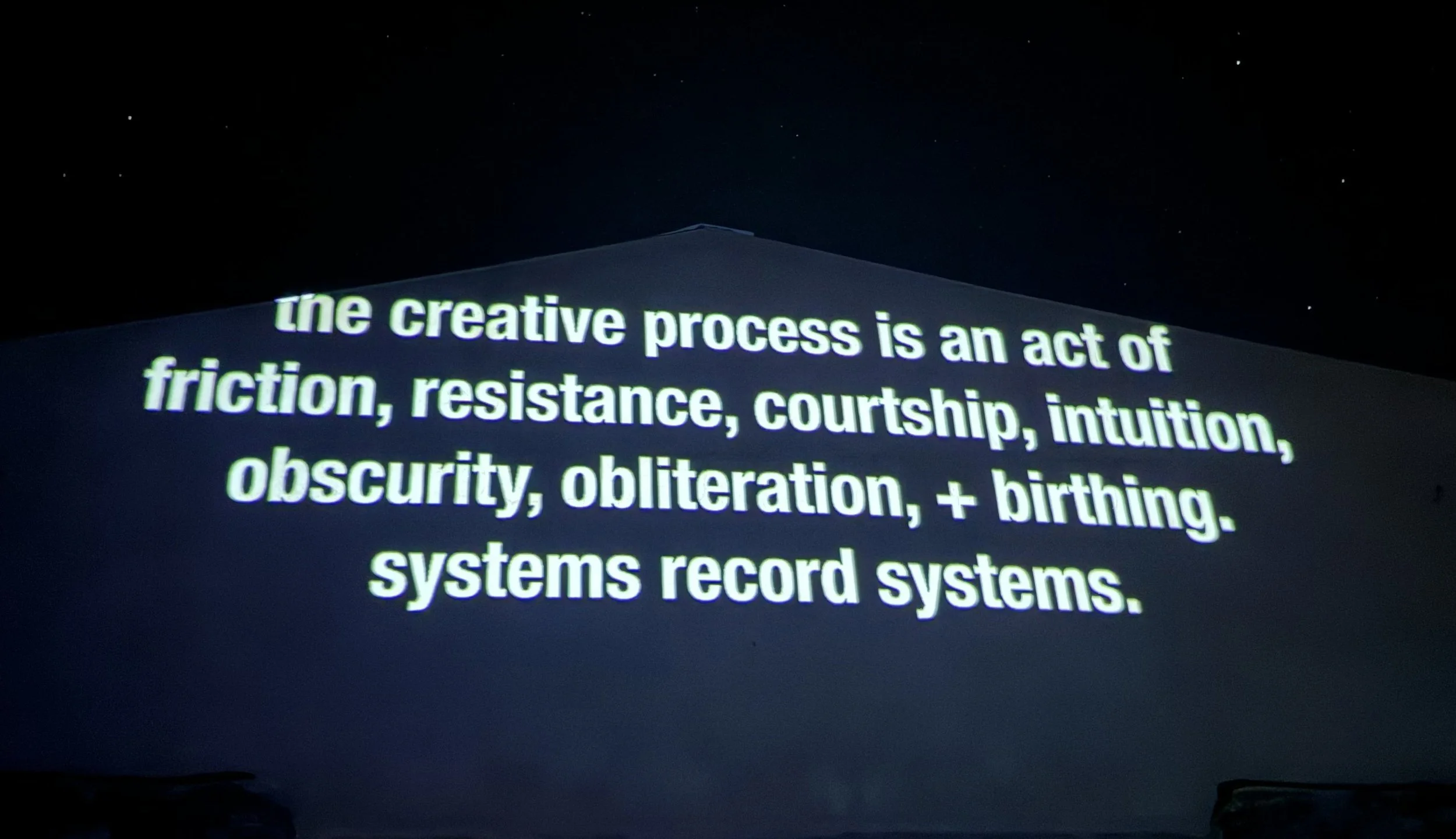
The Creative Process, site-specific projection on atelier building facade, under night sky, Andalusiam 2023
CP: What is infinite to you? What is the unknown, and how does art approach it?
NC: For me, the infinite is not something abstract or cosmic alone. It is actively connected to perception and inner life, and it both encompasses and transgresses time as we know it and as we do not yet know it. The unknown is not unreachable; on the contrary, it is something that can reveal itself and something we can remain in relation with. Both feel like living substances. “Visible is the invisible,” to borrow a phrase. My work is a way of courting the invisible, entering into an exchange with thresholds — between matter and ephemera, micro and macro, time and duration. Through light, language, and time-based environments, the work invites encounters with what is not yet fully knowable, without forcing resolution.
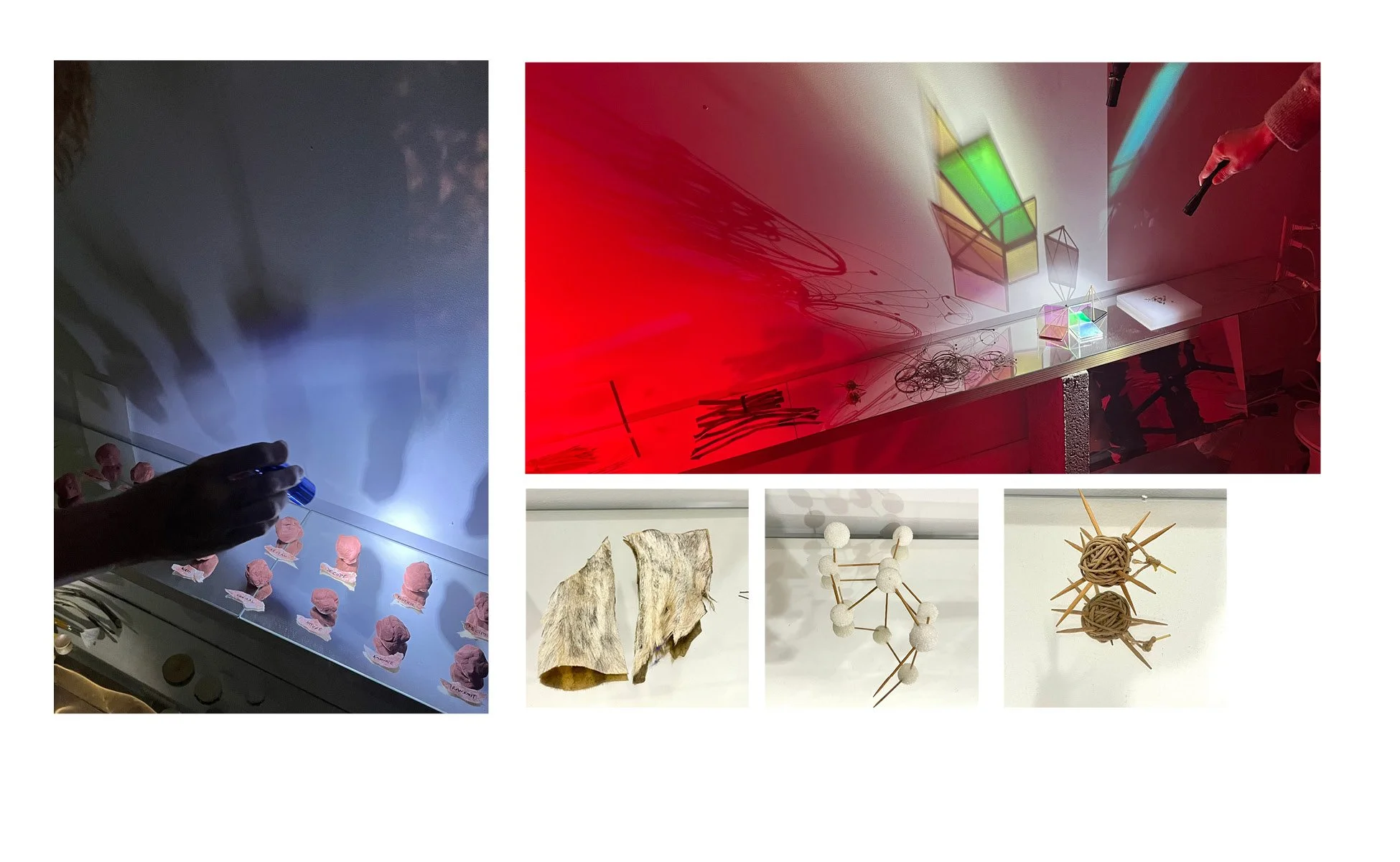
Artifact Assemblages, 2023 - 2034
CP: Your works on paper reference symbolic, scientific, or spiritual systems. Could you explain this?
NC: Many of my works on paper function like diagrams or notations — not explanations, but traces of thinking. Some borrow from, and reinterpret ancient knowledge systems that feel scientific, symbolic, or architectural, but they’re not meant to be decoded literally. I’m interested in what happens between systems, where logic gives way to intuition. These works often function as seeds that later become installations or projections, moving from the intimacy of the page into larger spatial and environmental experiences.
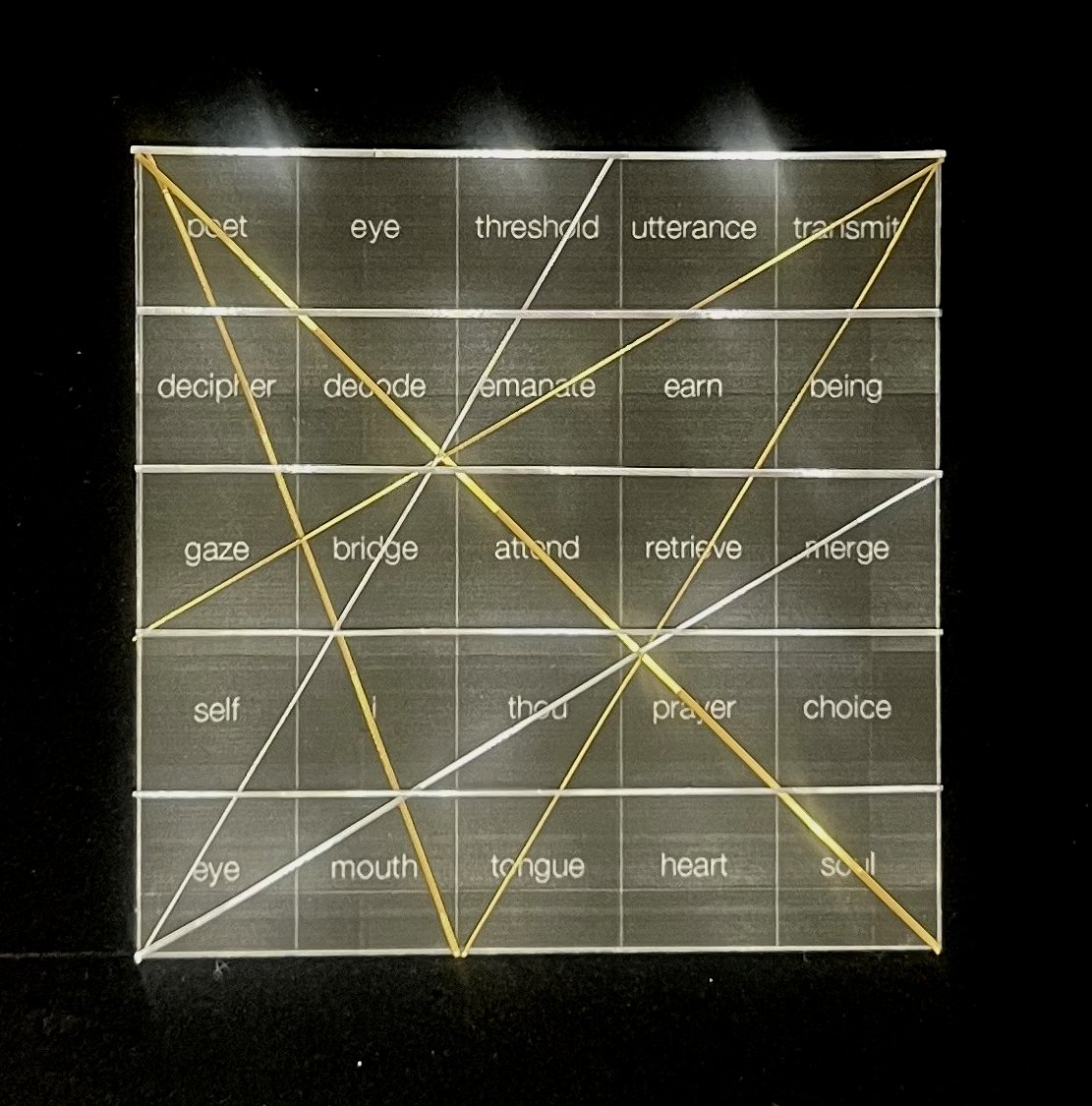
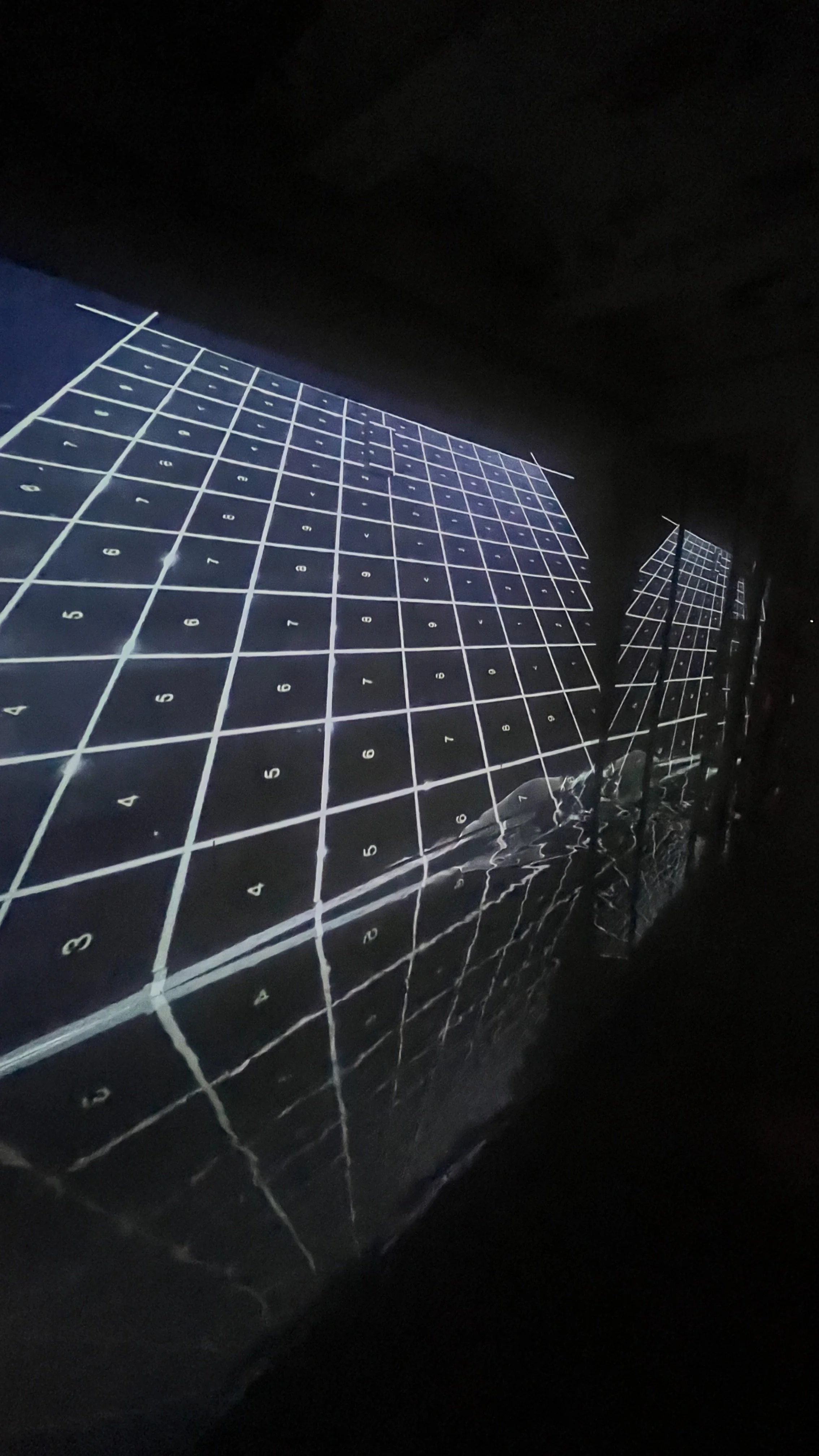
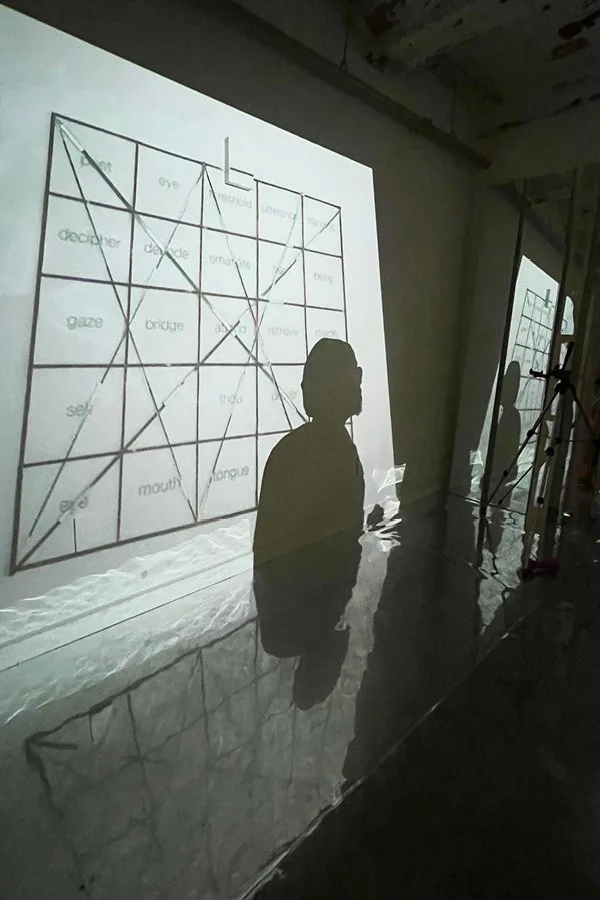
Left: Magic Square, works on paper, Middle: Infinity, tim-based projection, Right, Magic Square, projection, 2022 - 2024
CP: You’ve made several artist books. Could you talk about A.D. by Anti-Utopia?
NC: Anti-Utopia was composed of a number of artists focused on the intimate space of the page as a visual and poetic structure. A.D. emerged from this collective in the 1991 as a one-of-a-kind artist book produced for an exhibition at Franklin Furnace curated by Nancy Spero. The book contained over seventy pages of fragmented texts and poetics typed onto translucent vellum, interspersed with original photography and visual material. It combined the voices of my collaborator Bruce Witsiepe and myself into a single, porous form. The work was bound with an anodized steel cover and piano A.D. (Anti-Utopia), Artist Book, 1991 hinge, with the interior pages wrapped in an army blanket as an homage to Joseph Beuys.
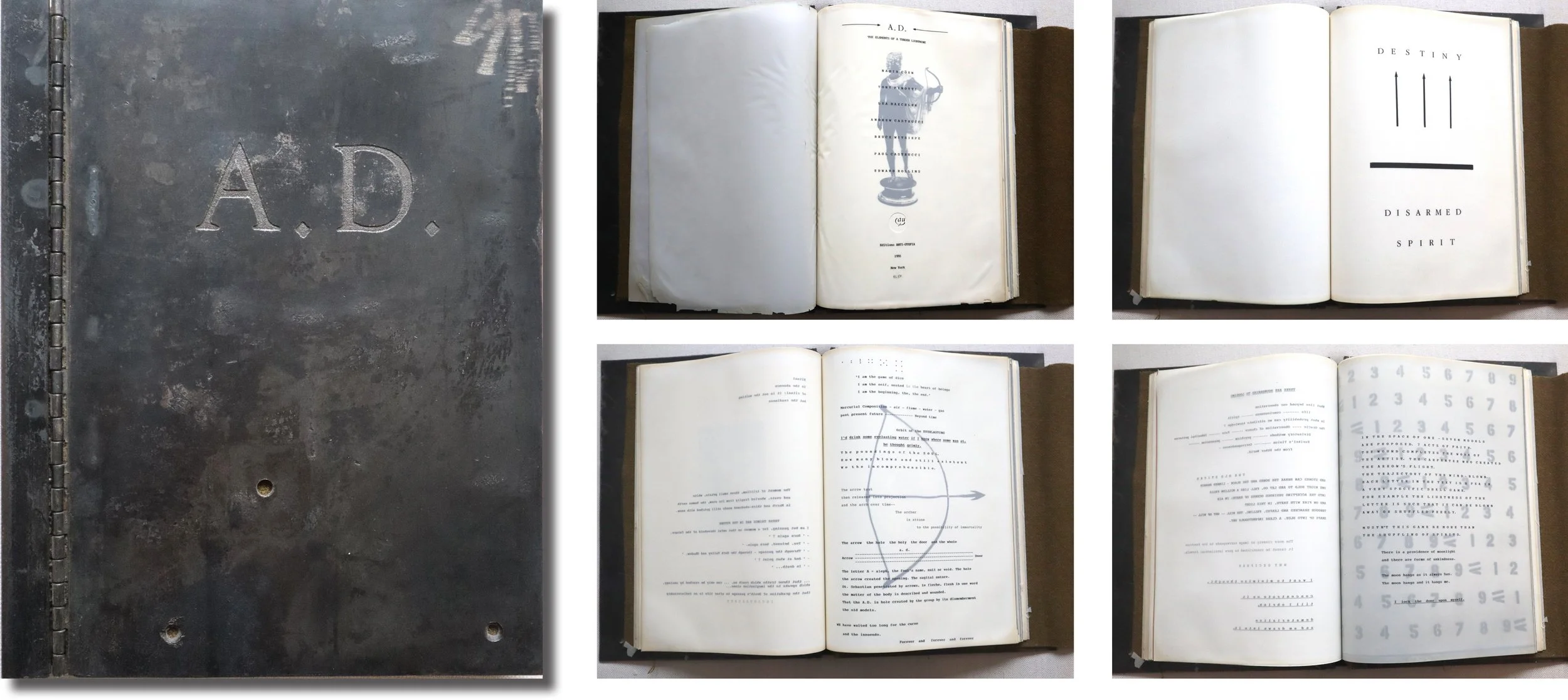
A.D. (Anti-Utopia), Artist Book, 1991
CP: You’ve created many installations. Is there one that stands out?
NC: Rather than a single project, what stands out is the shift toward immersive environments where viewers become participants. Installations where people move through light, text, reflection, and sound — where the work only fully exists through presence — feel central to how my practice has evolved. Do Not Be Distracted by Surfaces (2023) was a particularly powerful interior installation. Visitors entered a saturated red environment with a mirror-lined floor and time-based projections of handwritten text, diagrams, and sound. Viewers navigated the space with flashlights, activating reflection and perception through movement. This work connects directly to recent outdoor site-specific projection interventions in Venice, where public space became the field of encounter.
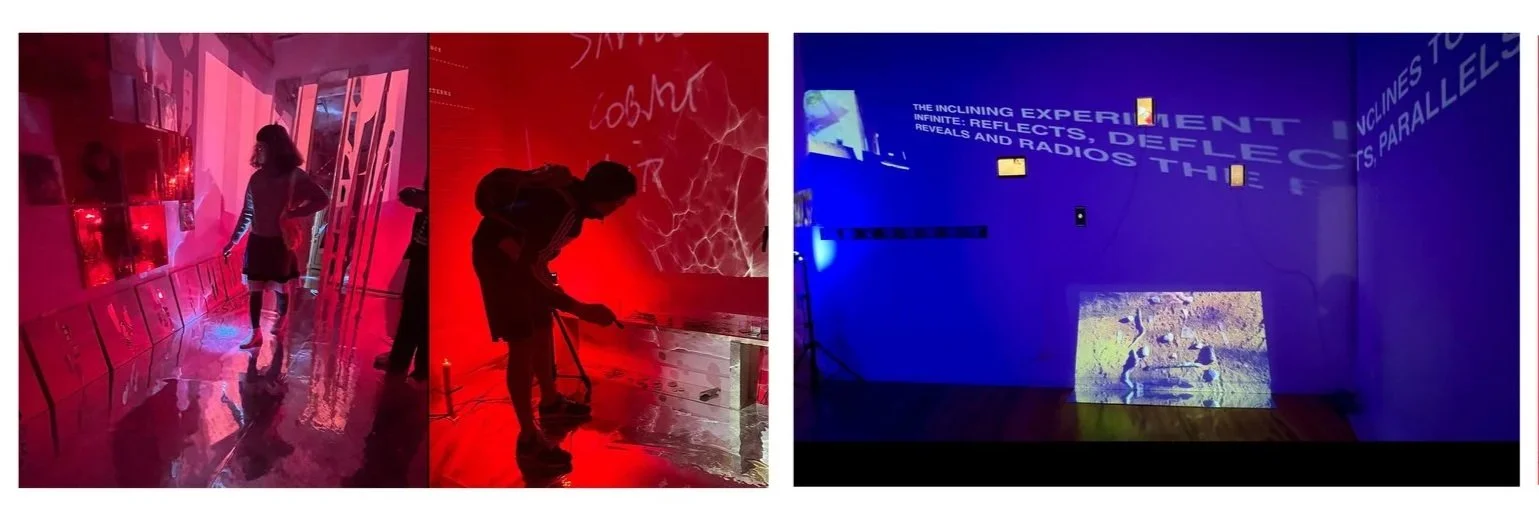
Do Not Be Distracted By Surfaces(left),Time-based Installation, 2023
I Detach Myself on Condition I be Replaced(right), Time-based Installation, 2025
CP: What is the most pressing issue for contemporary art today?
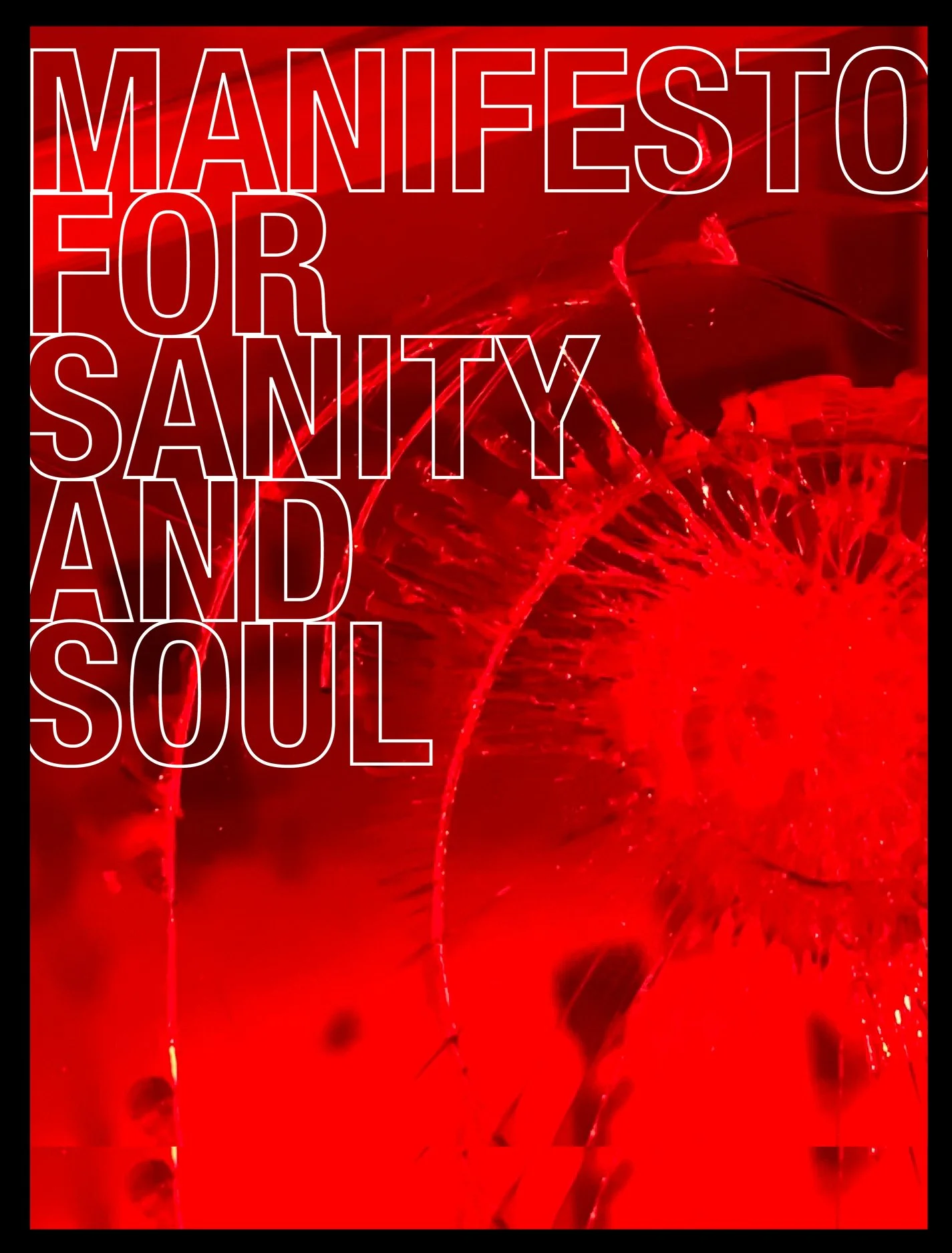
Shattered Mirror Series, 2023, Manifesto for Sanity and Soul
NC: For me, it’s the question of inner necessity. In a world saturated with images, markets, and systems of validation, how do artists make work that comes from genuine urgency rather than consumption? How do artists practice restraint rather than compulsion within a competitive environment? We’re living through profound political, ecological, and moral upheaval. Art has the potential to offer spaces of reflection and recalibration — not as spectacle, but as necessity. My work tries to participate in this by creating environments that slow perception and invite attention as a form of care.
CP: As a female artist, is feminism important to your practice? Who are some women artists you admire?
NC: Feminism isn’t a position I consciously declare, but it is inseparable from my lived experience. Being a woman in the art world, and in the world at large, has shaped my path in subtle and often invisible ways. The phrase “Anonymous Was A Woman” still resonates. As a young artist, I was influenced by figures like Madame Blavatsky, the 19th-century mystic and theosophist who shaped many artists concerned with the spiritual in art, and by Hilma af Klint, not just for her work but for the belief systems that drove it. I’ve also been deeply drawn to women writers, philosophers, and poets such as Simone Weil, Alice Notley, and Kathy Acker, all pioneers in their own eras. Visual artists like Agnes Martin and Ana Mendieta are also interesting to me, whose work emerged from necessity rather than persona. Persona has never felt useful to me; the work has always had to speak for itself.
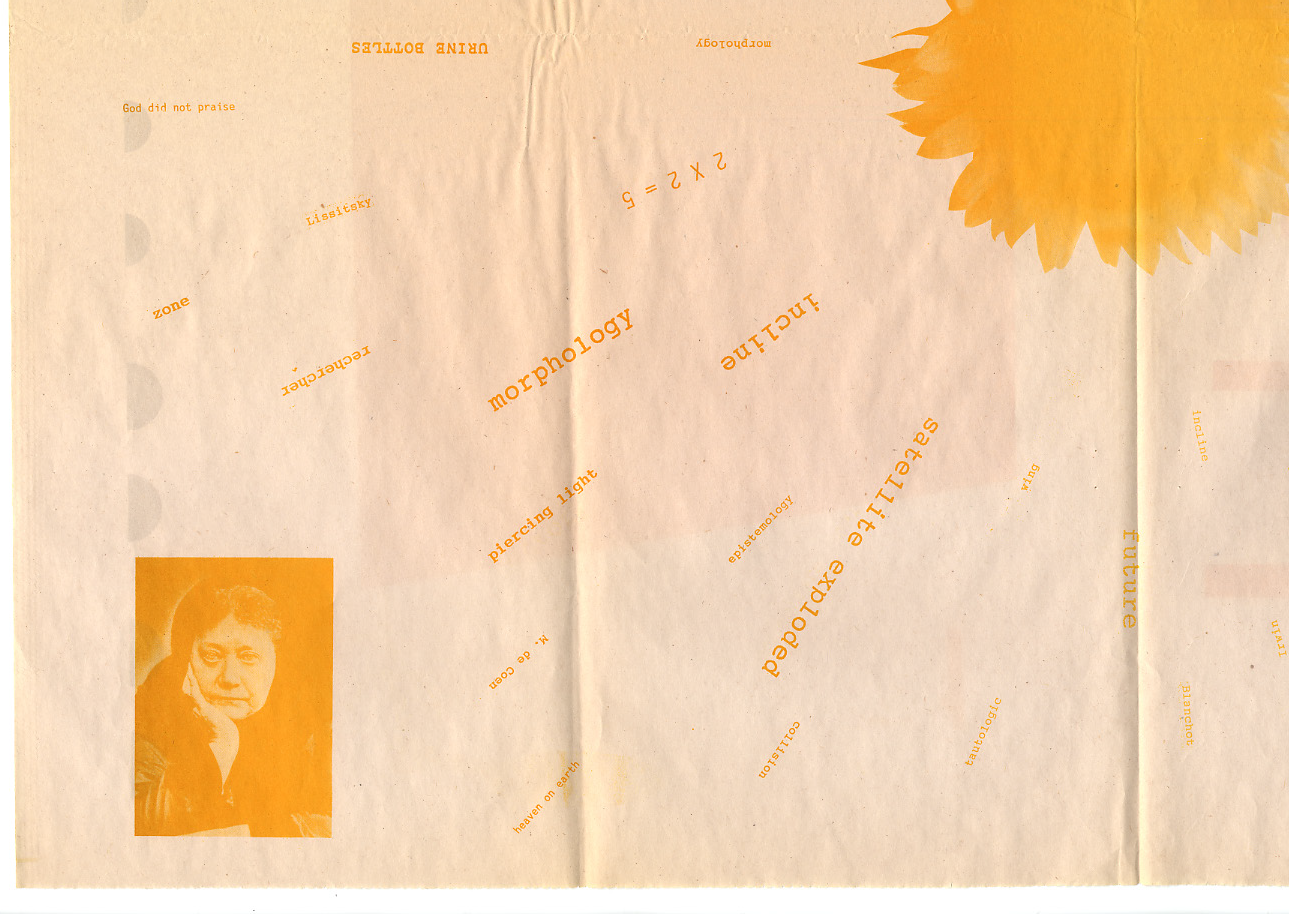
The Inclining Experiment Newspaper 2, with Theosophist Madame Blavastsky
CP: Any final thoughts? Where do you see yourself in the next 5–10 years?
NC: I see myself continuing to deepen the work rather than redirect it. I’m interested in sustained inquiry, in projects that unfold over time and across sites, and in creating conditions for encounter rather than outcomes that feel predetermined. This also means being willing to pause or stop working long enough for the next evolution of the work to arrive authentically, rather than forcing momentum. After all, art is only one part of a much larger life cycle. In the next five to ten years, I hope to expand the scale and reach of the work while remaining attentive to its core questions. I want to keep working across land, architecture, language, and light in ways that remain porous, experimental, and responsive. More than anything, I want to continue making work that feels necessary, that allows for reflection, and that stays open to transformation.
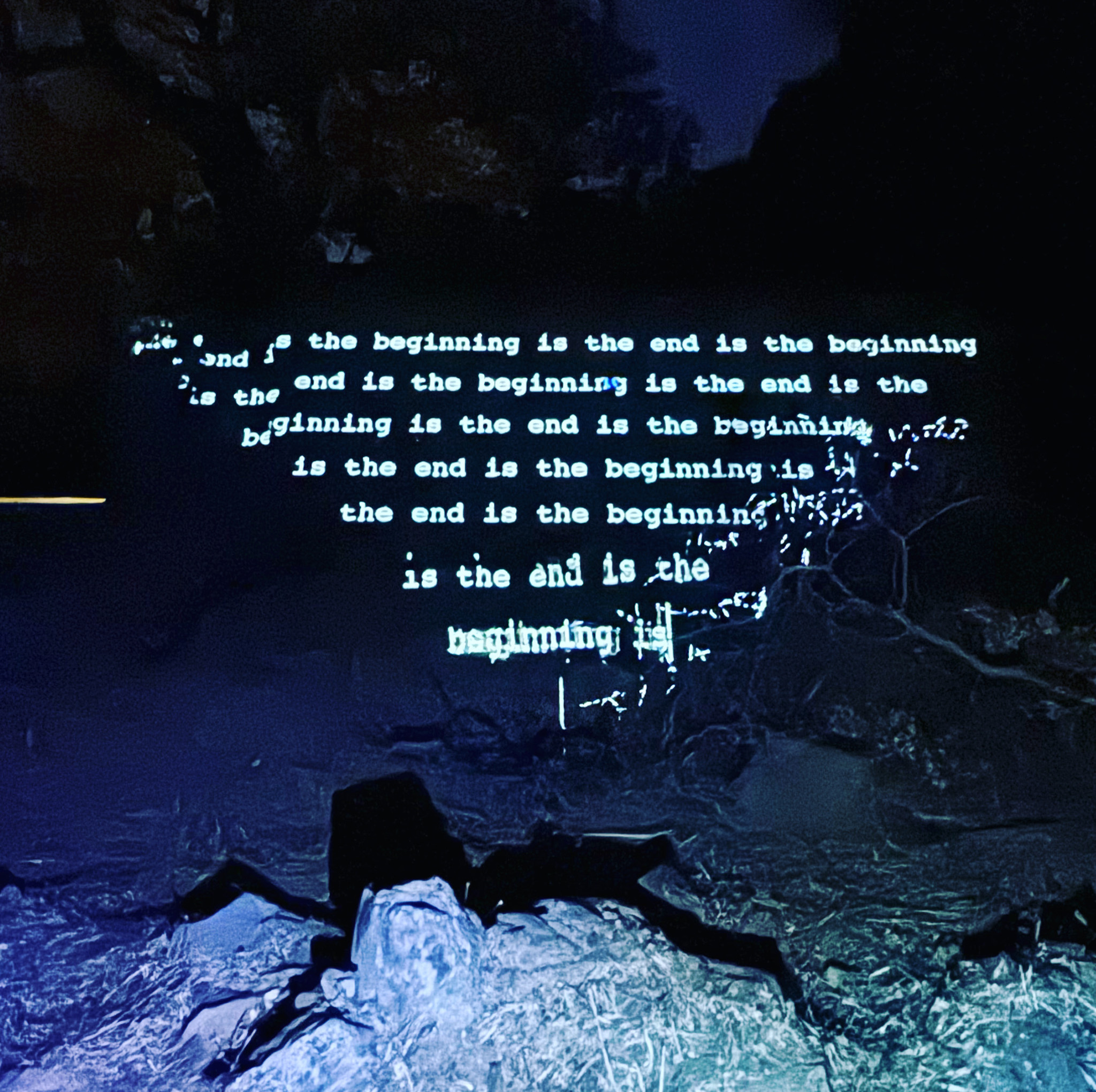
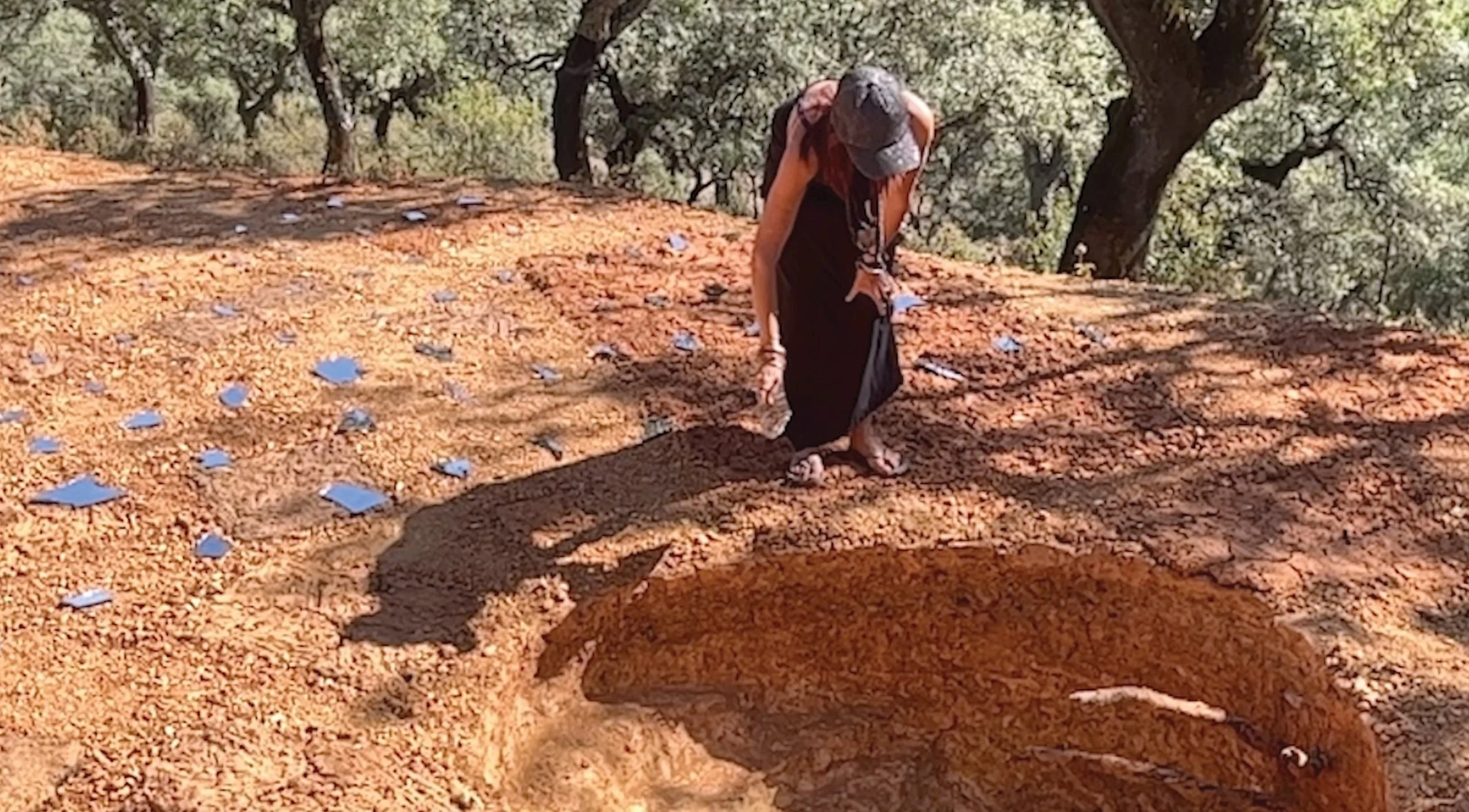
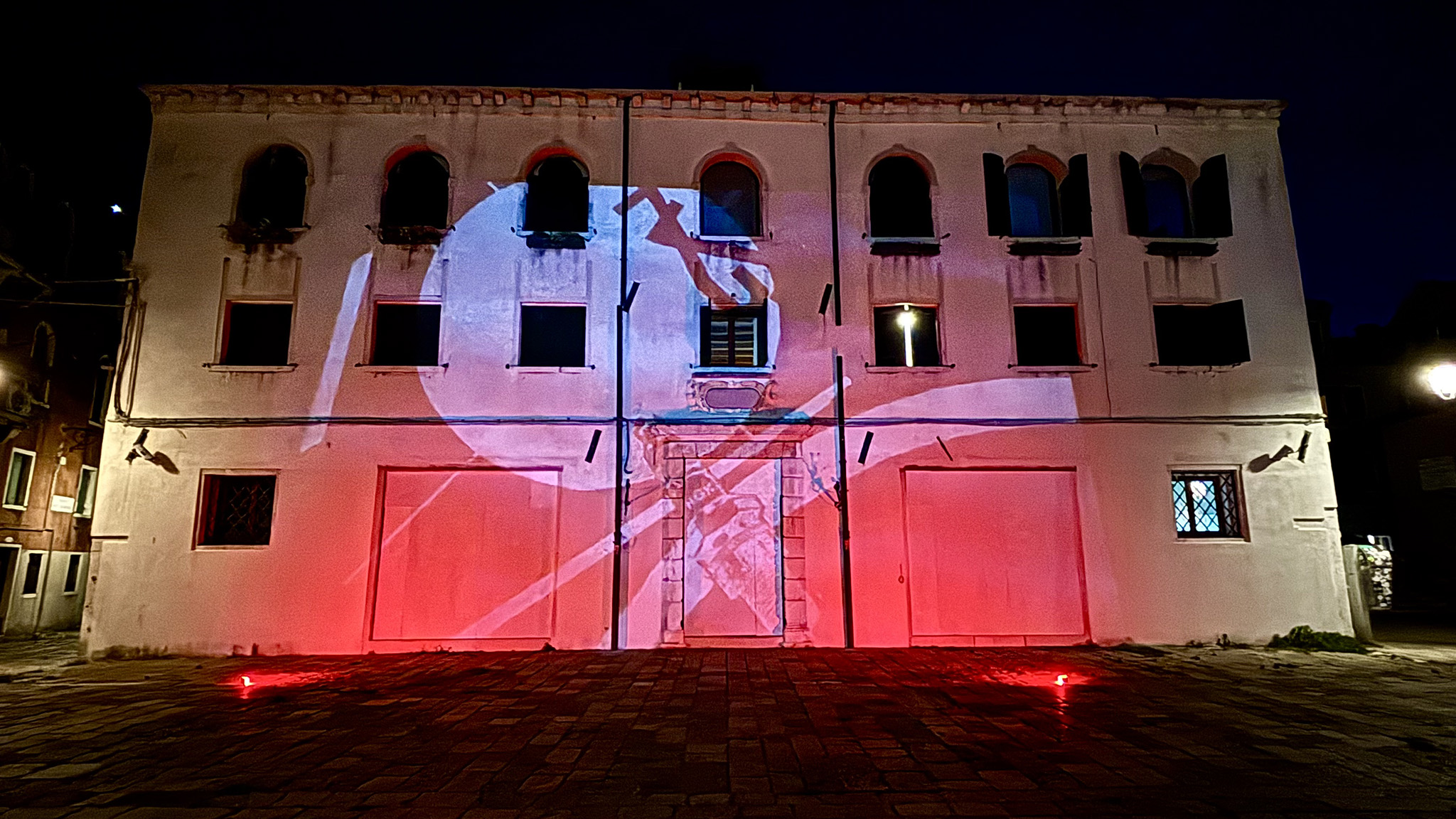
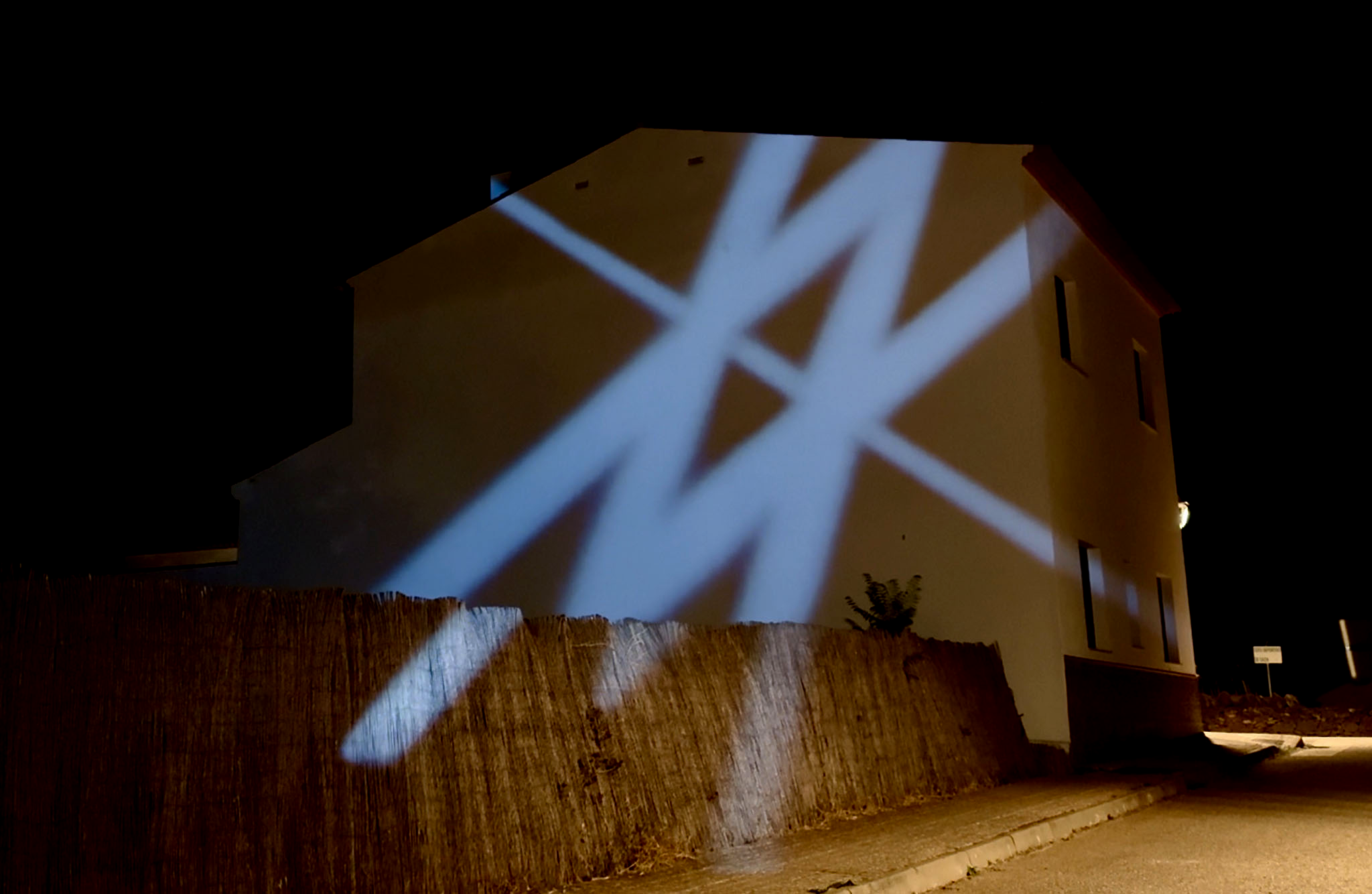
Various site specific projection / interventions Andalusia and Venicem 2023-2025