Outside of Luggage, is Still, Luggage
After a life of moving, Evgeniya Korotchenko makes sculptures from what her suitcase couldn’t hold.
Guest Evgeniya Korotchenko Writer Edgar Zhang
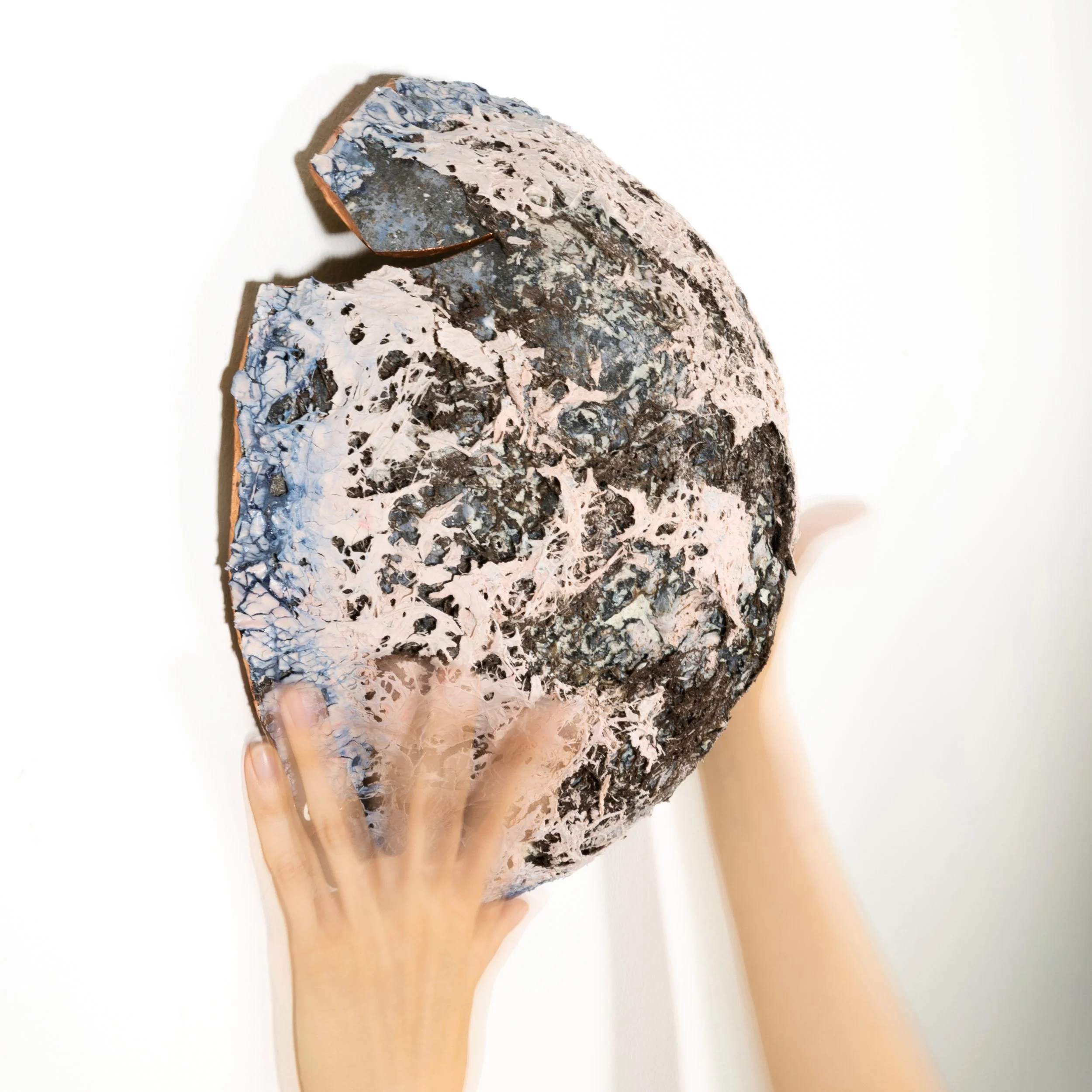
Evgeniya Korotchenko, One of Many - Pleiad, 2025. White clay, black clay, porcelain, copper foil. 14 × 14 × 7 in. Image Courtesy of the artist.
Before I set foot in Evgeniya Korotchenko’s studio, our conversation revolved around a word. The word was luggage. I still have trouble digesting what it means and how it applies to this day.
Usually it means the things you take when moving, traveling or relocating, and Korotchenko is quite familiar with that experience: born in 1985 in the far east of the USSR, she was three weeks old when her mother first carried her away from where she was born, across the continent, grew up in Ukraine, studied in Russia, lived in Mexico, and in 2025 settled in San Francisco, where she is now an artist at Root Division.
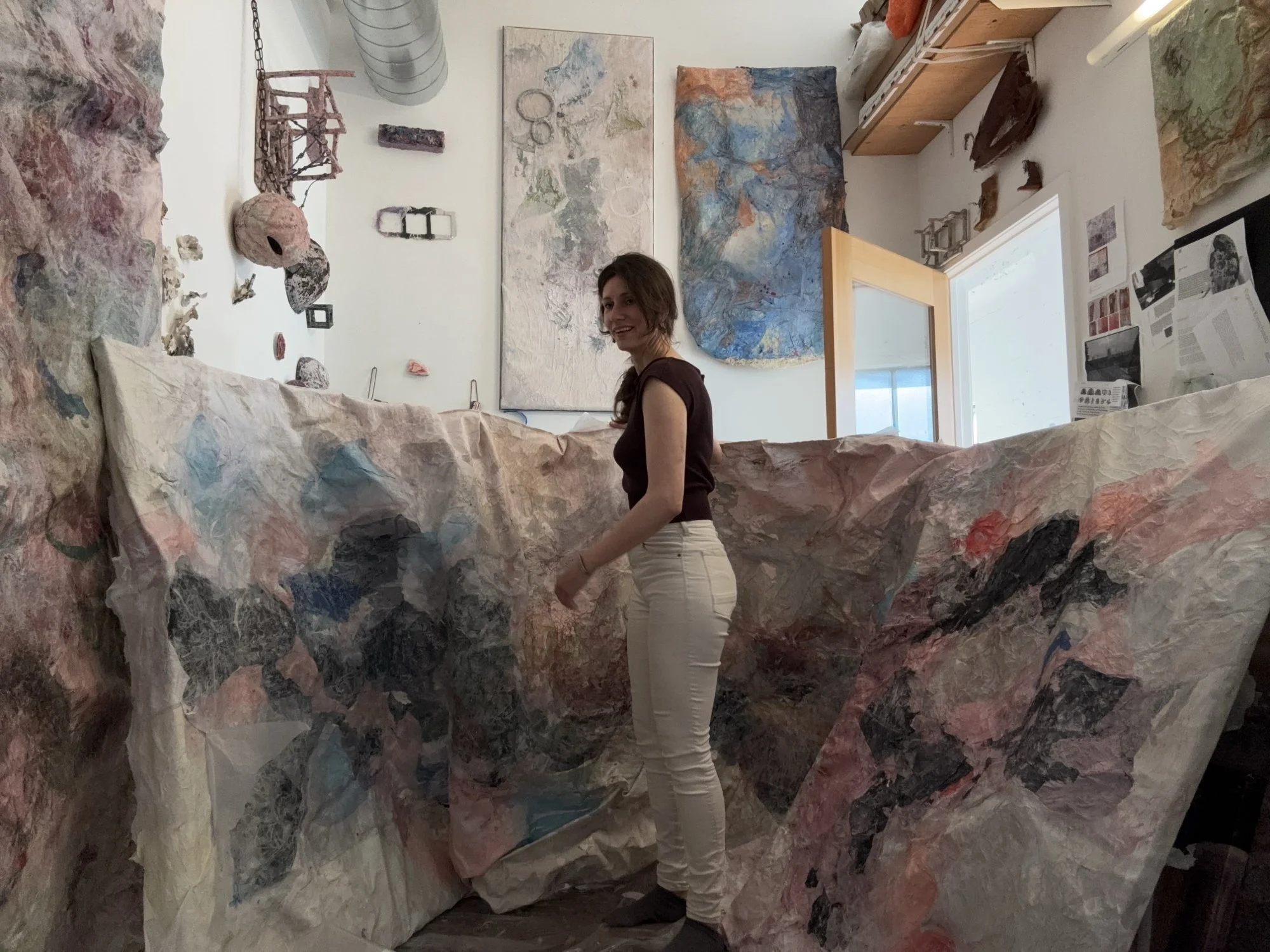
Evgeniya Korotchenko’s studio at Root Division in San Francisco, CA. Image Courtesy of the artist.
“My father, who grew up in an orphanage house, used to say 'think that you always can come back home,' but I know that it is not true: because there is no way back once you move” Korotchenko said. She has spent years watching entire ways of life torn apart and whole structures collapse.
After years of moving from house to house, Korotchenko realized in 2025 that her life could be reduced to what fit inside a single box. She chose an original IKEA box and built inside it a small environment for a sculpture: "a home within a home, or perhaps only the suggestion of one." I was touched by the grief in that gesture, and by the moments in life that require someone to leave. I suspect more people can recognize it now than ever. On a global scale, international migration has nearly tripled since 2000[1], her experience is one that more people now share.
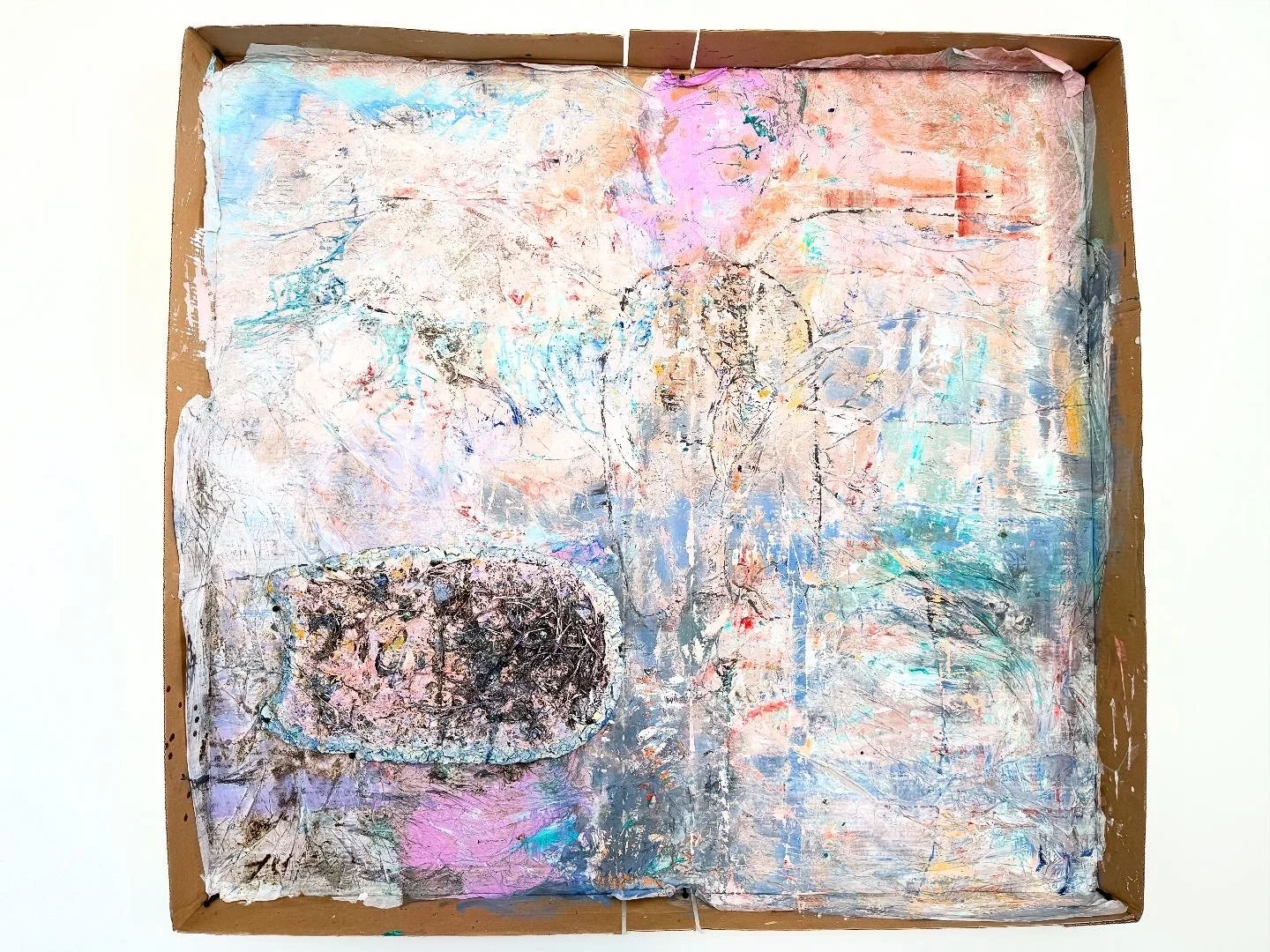
Evgeniya Korotchenko, IKEA Box
Relating to it, though, is a different matter. Before Korotchenko shifted to contemporary art practice, she spent a decade in research psychology and social studies, and she said it is getting harder and harder for people to relate. I understand that to fully meet a piece of art could take honesty with yourself and a willingness to sympathize, which is a lot to ask.
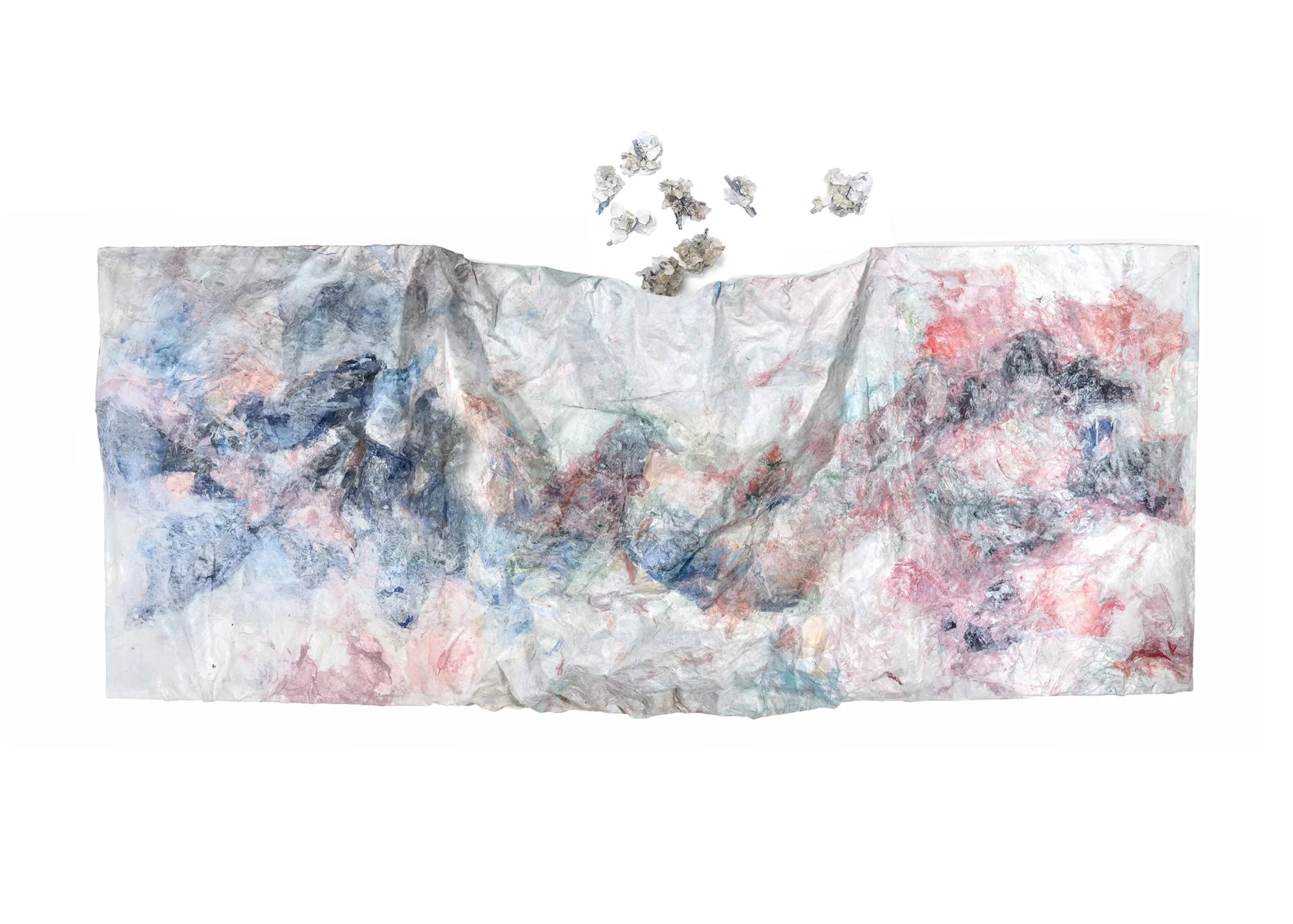
Evgeniya Korotchenko, Somewhere Better – This Place, 2026. Paper on canvas with wood armatures, ceramic, magnets, and interactive work for browser, Dimensions variable (up to 12 ft). Image Courtesy of the artist.
Korotchenko’s studio at Root Division is small, and I was startled by how far her piece travels across once laid out in full, that’s Somewhere better - This Place. It was still in work when I visited, this is one of rare works in which she tells a story. In Somewhere better - This Place, Korotchenko builds colonies out of clay and porcelain, flattened by hand and fused into small bodies, some of them have left the canvas and climbed onto the bare wall. When blue and red collide on paper, it resembles the inhabitant environment for colonies. Even the smallest organisms feel, react to it, act as a whole and migrate acting together. At the moment it was not easy to visualize the story of “You are the environment they are answering,” a week later when Korotchenko updated her website, it was clear. When your cursor comes close, when the environment becomes hostile, the colonies join into one body, a “Social Amoebae”, quoted from Korotchenko, and they come apart when you leave.
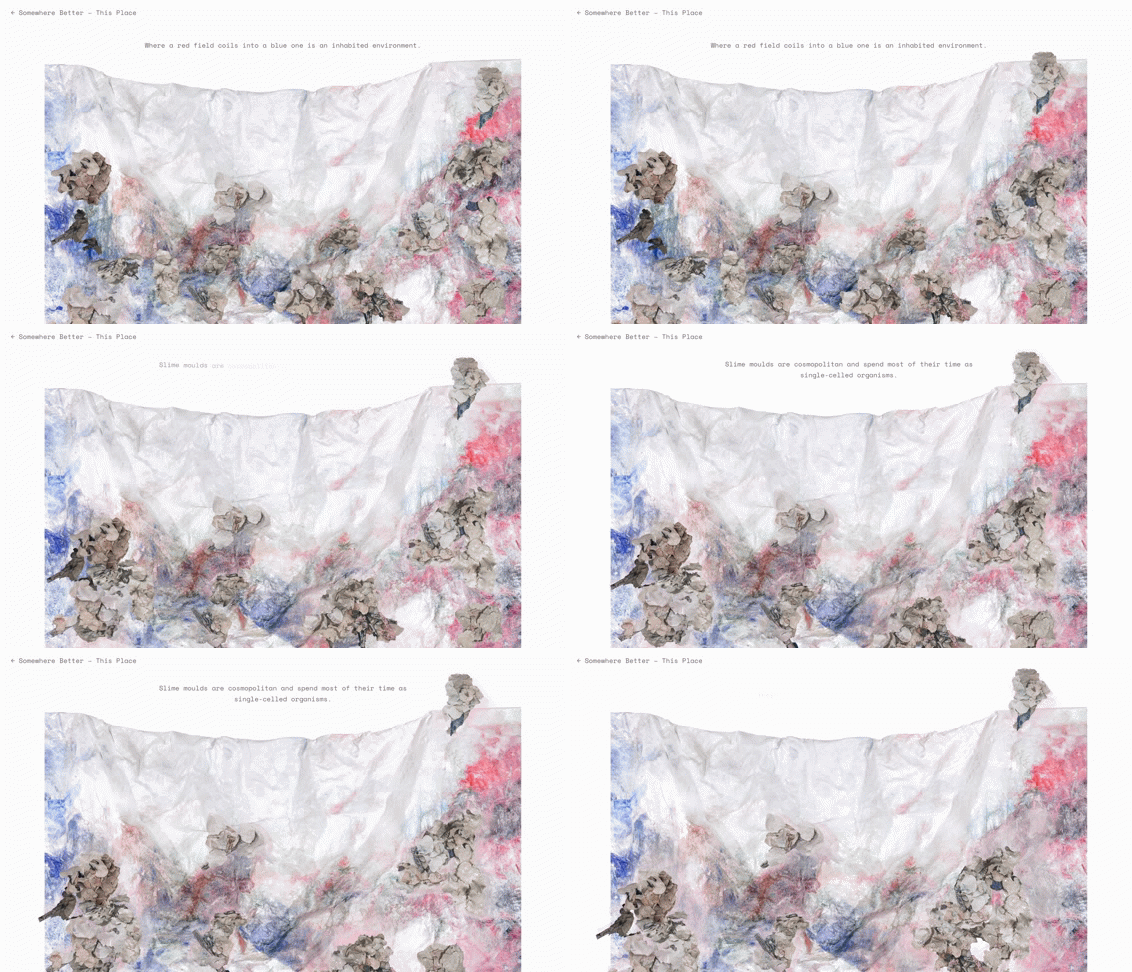
Evgeniya Korotchenko, Somewhere Better – This Place, 2026. Paper on canvas with wood armatures, ceramic, magnets, and interactive work for browser, Dimensions variable (up to 12 ft). Image Courtesy of the artist.
Given her history of moving, I was surprised that the room could hold so much of her work, and I could only conclude that she must have left a great deal behind along the way. Her IKEA box is about what we take: the luggage, and what fits inside it. This studio made me wonder about what stays behind, leaving work behind must stir mixed feelings in any artist, and I came to see that those feelings differ from person to person.
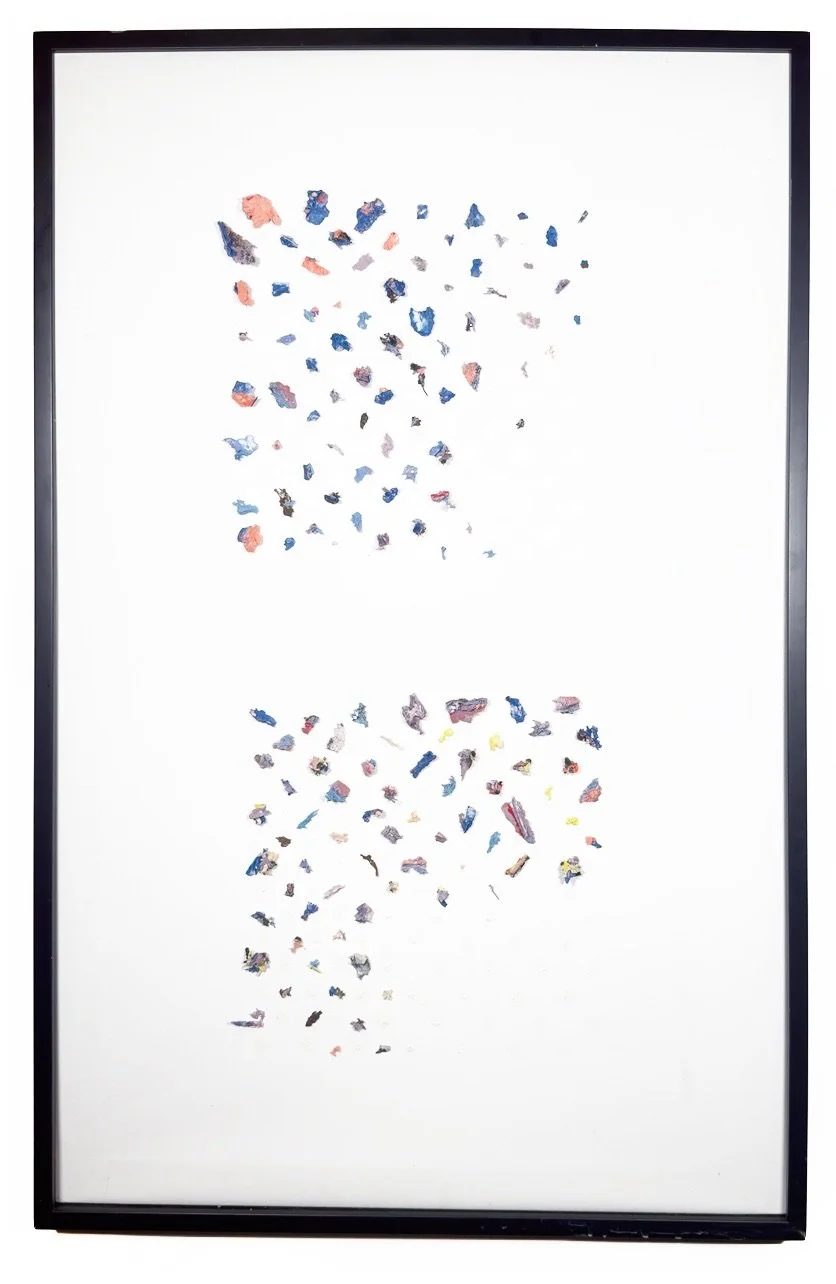
Evgeniya Korotchenko, Splinters in Order, 2025/2026. Porcelain on canvas, acrylic medium. 40 × 50 in.
Our feelings about what goes into the luggage matter enormously, because we take things that are important to us, to use or to remember. What we leave behind matters too, only more indirectly. Maybe people left it because they simply did not want it, and they are set on being forgotten. For some people, though, the part left out grows and is transformed into another form of being. It may reappear, or it may quietly change how a person sees things even in its absence, sometimes more powerfully than anything they carried. For Korotchenko, multiple times of migrating made it apparently more complicated: things that’s not part of the luggage and can’t be carried, are still luggage, as I see it.
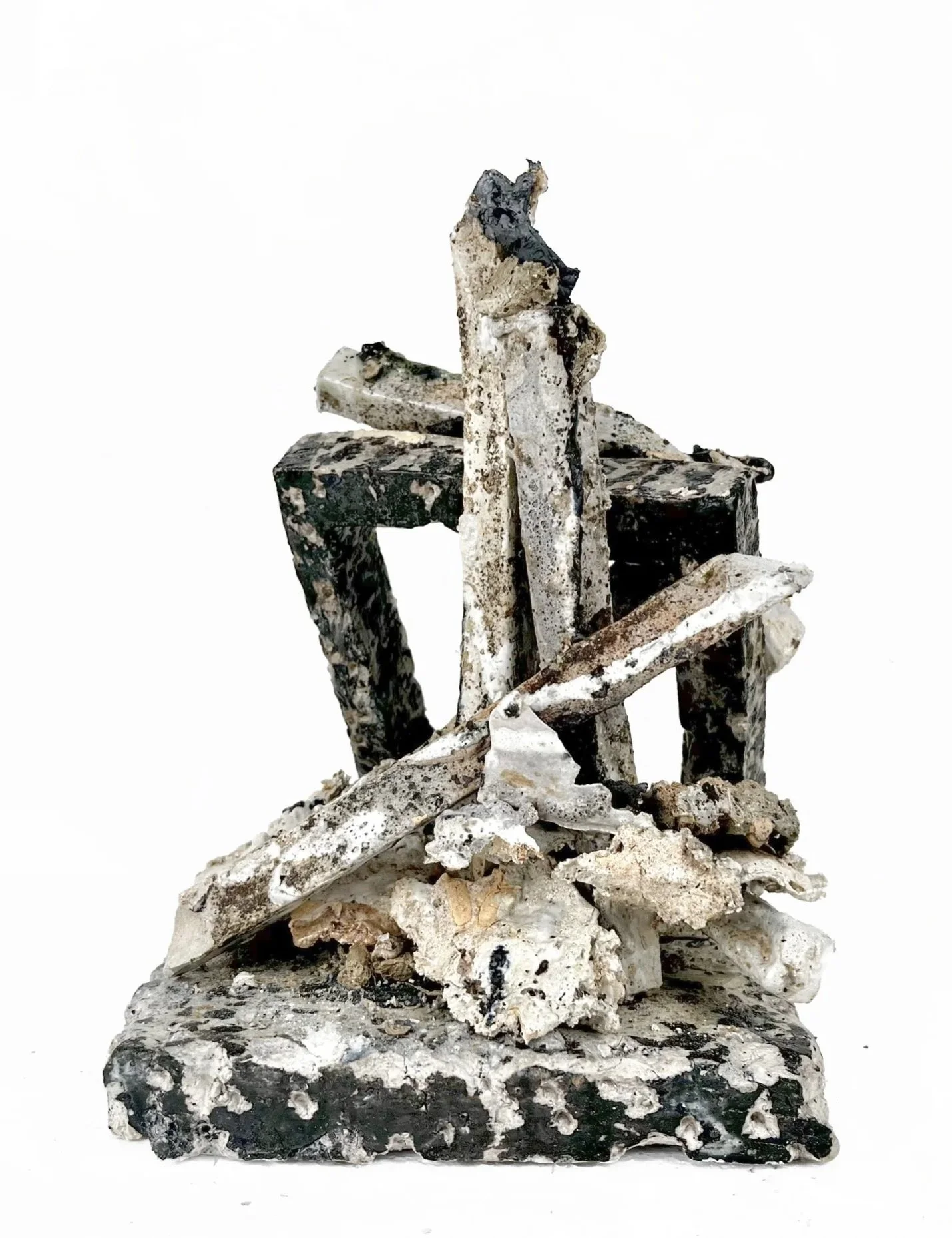
EvgeniyaKorotchenko, Collapsed Structures, 2024. Ceramic.
“In Seattle, I made a few sculptures and shipped them to San Francisco, but they arrived broken. At first, I grieved over the broken work, but later I realized that what I had left behind in my previous home was already broken — as if that were its original condition.” Korotchenko said.
In that sense, Korotchenko is always losing something. Her work is raw: she hardly tells stories, and she lets the process show. "My way of working often involves moments of breaking or collapse at every stage of making, both in work with clay and paper." she says. She coats unfired clay with iron or copper oxide and cuts sections of that surface away. She adds parts to a form and tears them off again, leaving the torn edges in plain view. At the extruder she varies the speed unevenly, so that the clay tears or breaks as it comes through. Then comes the kiln, and with it one more break she anticipates, when the surface tension of the layers on the piece opens it in a crack.
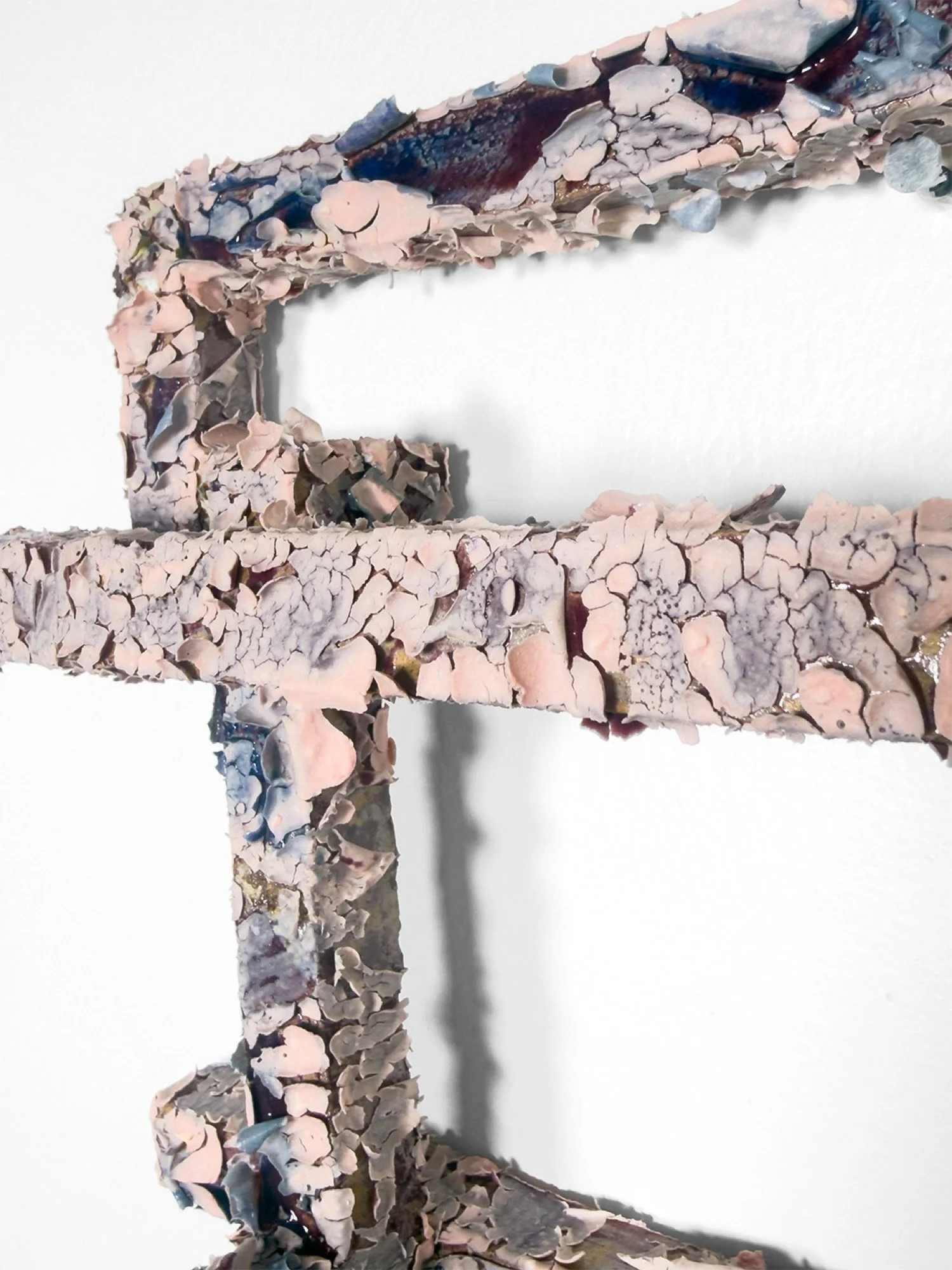
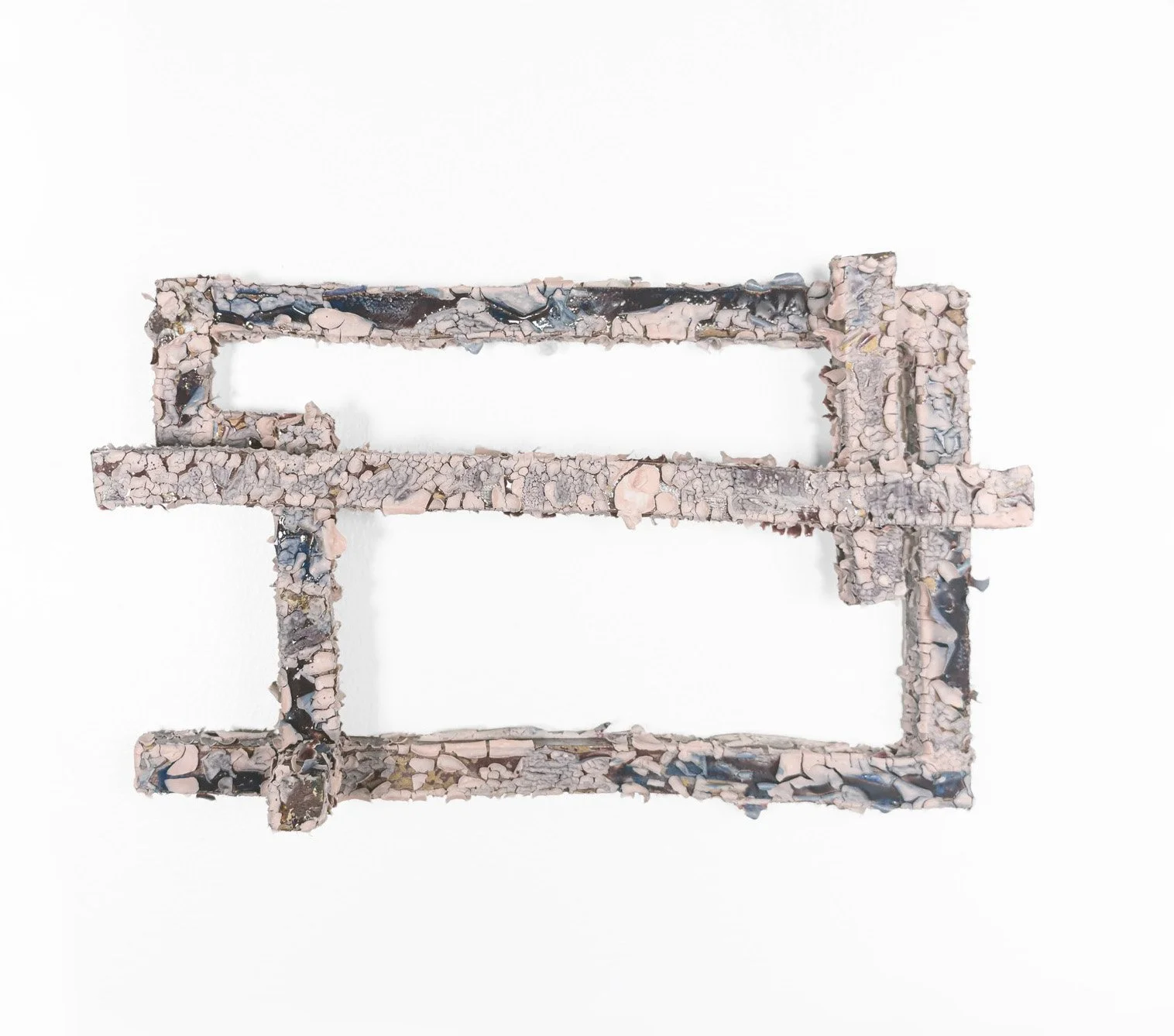
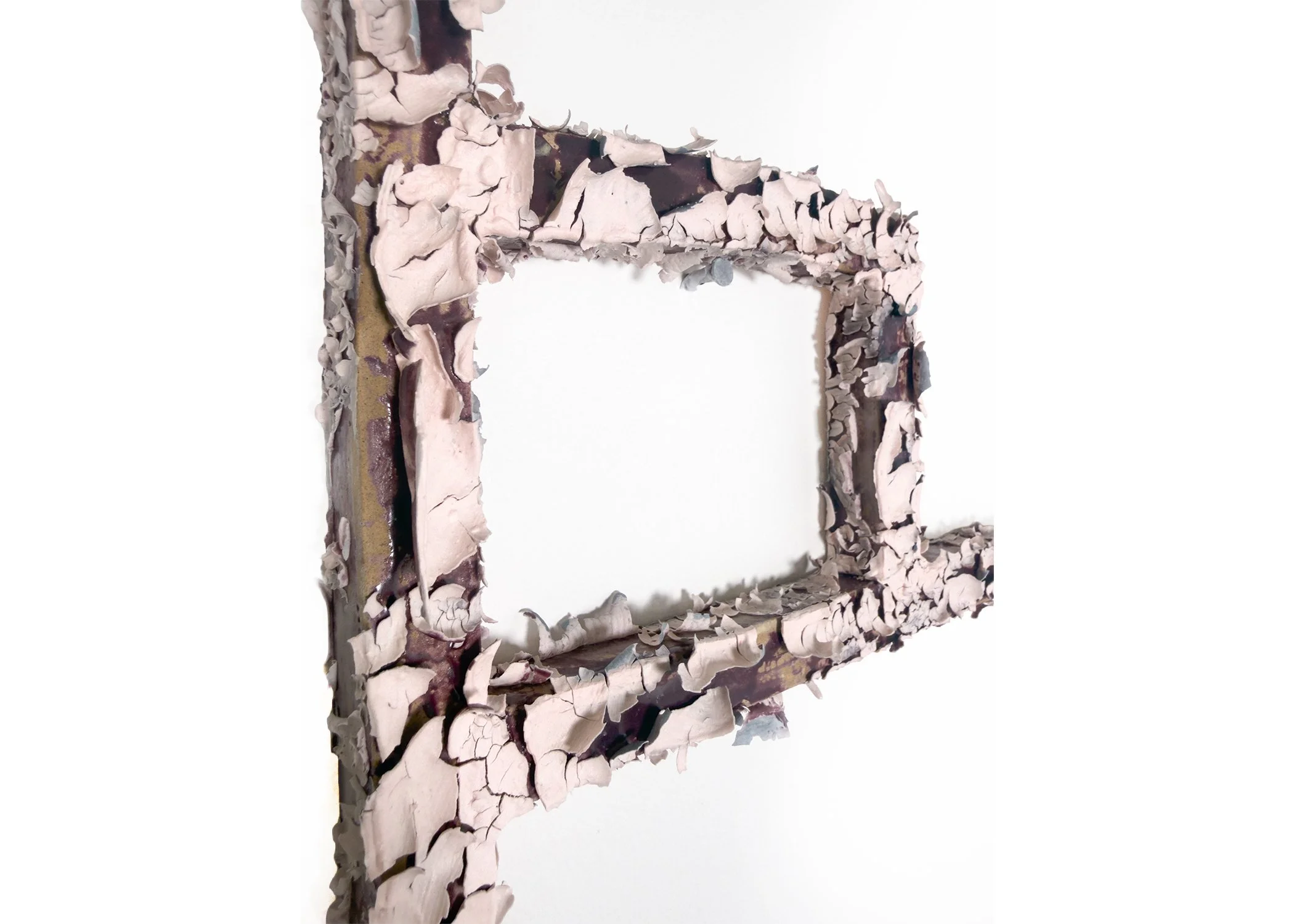
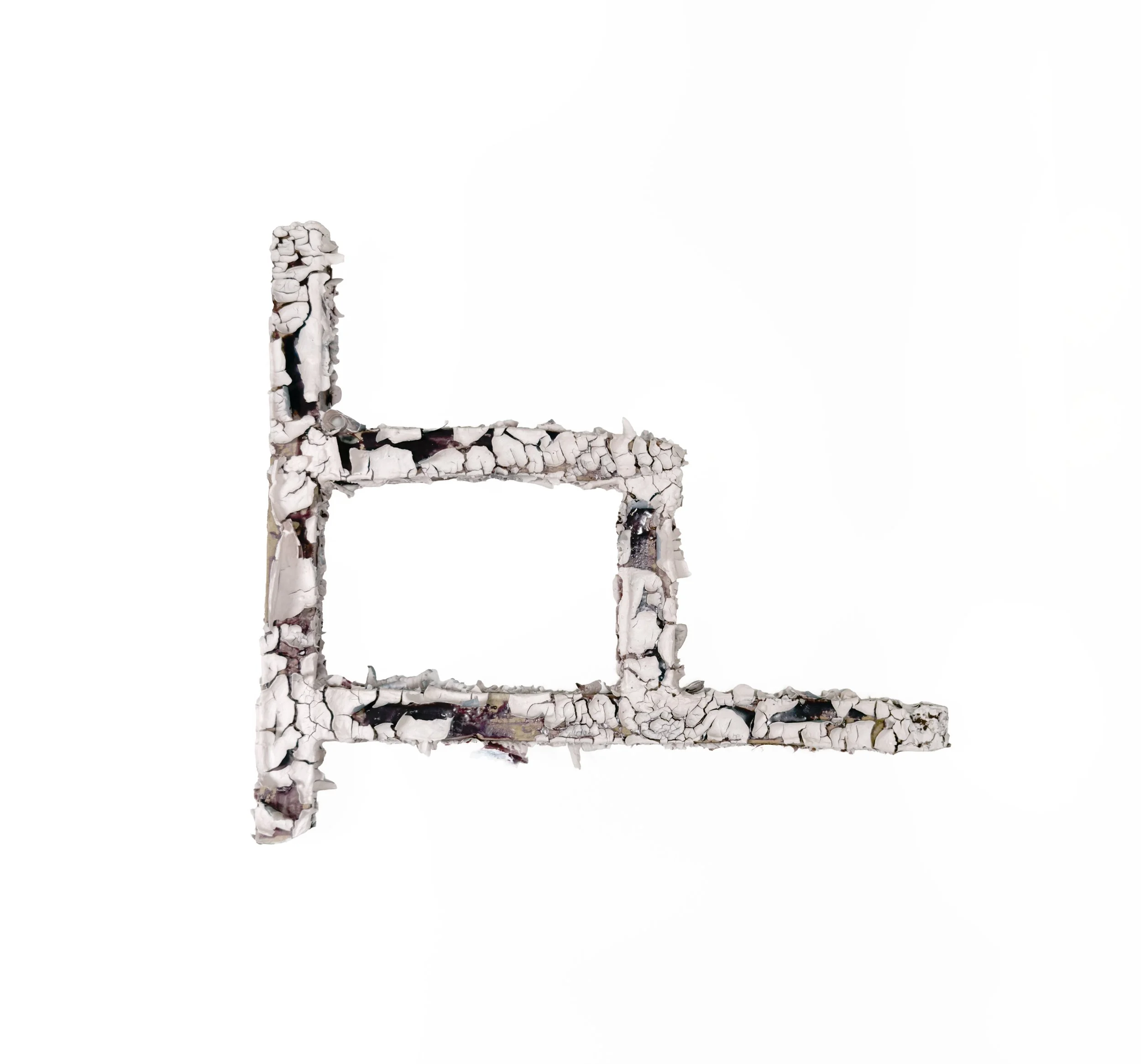
Evgeniya Korotchenko, Tinkling in the Moment of Silence, 2026, Ceramic,approx. 12 × 16 × 3 in. each piece
“Work with clay is interestingly related to migration, because migration and clayworking are both acts of extraction and building new forms of life, in a way it is an irreversible change, going further.” Korotchenko said.
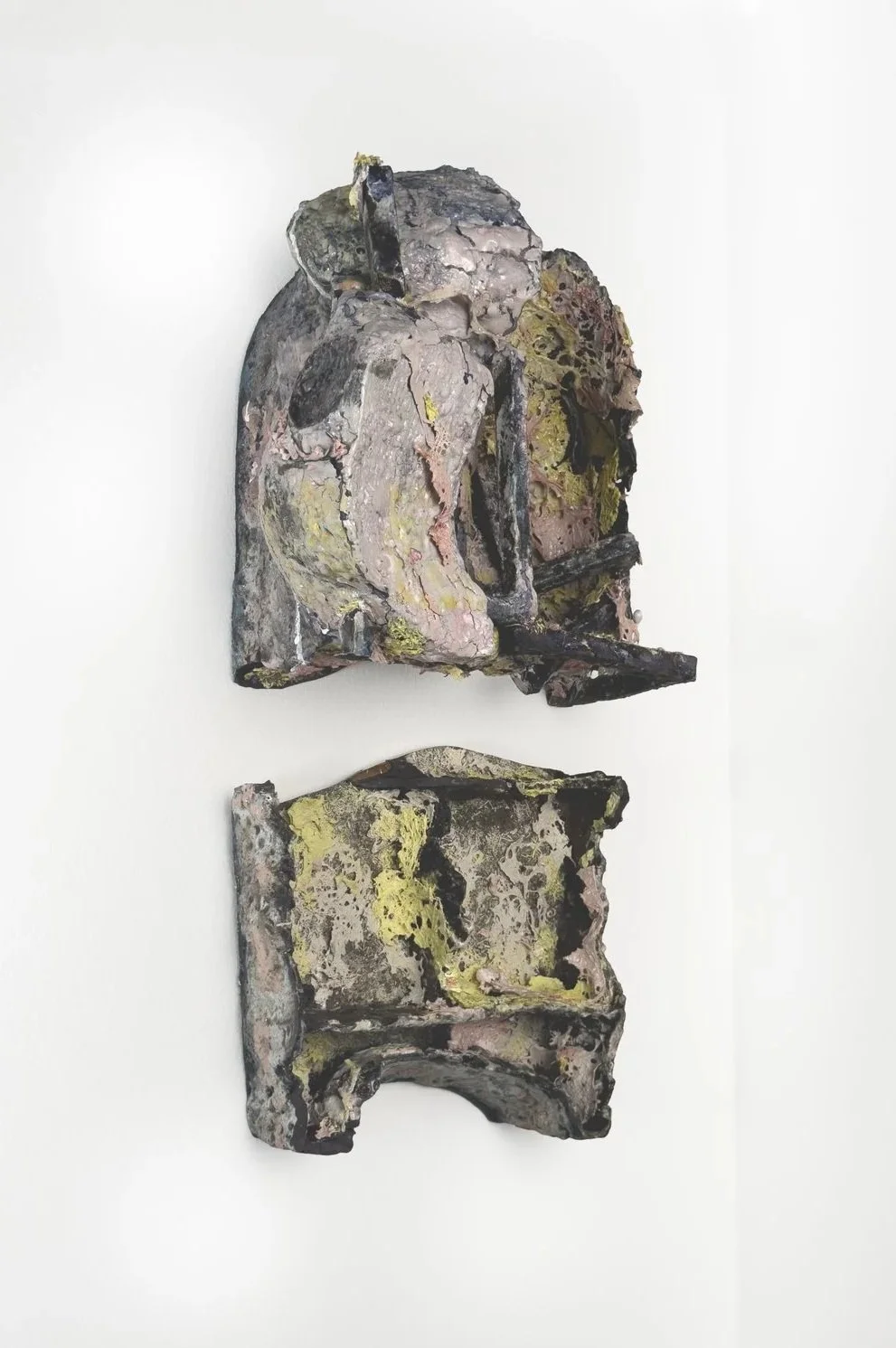
Evgeniya Korotchenko, Body Of Two, 2025–2026. Ceramics, copper, solder. 12.00 × 26.00 × 11.50 in. Image Courtesy of the artist.
Korotchenko’s works’ surfaces seem to sit somewhere between the "luggage" and the "un-luggage," between what was carried and what was not. Each piece is made as something she carries, and then it breaks, stalling in a phase where she has not fully taken it with her but has not left it out of the luggage either. What survived the move is not necessarily safe and sound, and in this case, not intact, and what was left behind is not entirely absent. In another way they are stuck in time, between now and past, as reflected on Body of Two. Yet in both cases, what breaks does not always leave the work. At one point in her process, previously made parts break, and come together to form a new piece, assembled and fused in the kiln with glaze, which is to say glass, and fired once again.
Which brings me back to the people who rarely relate. Imagine walking into a gallery with a suitcase in your hand, looking at the work. To relate to an art piece is to take it with you, to add to your luggage that you already carry at the cost of emotional connection. Most people prefer to keep their luggage light, and who knows in what forms the piece could return to them?
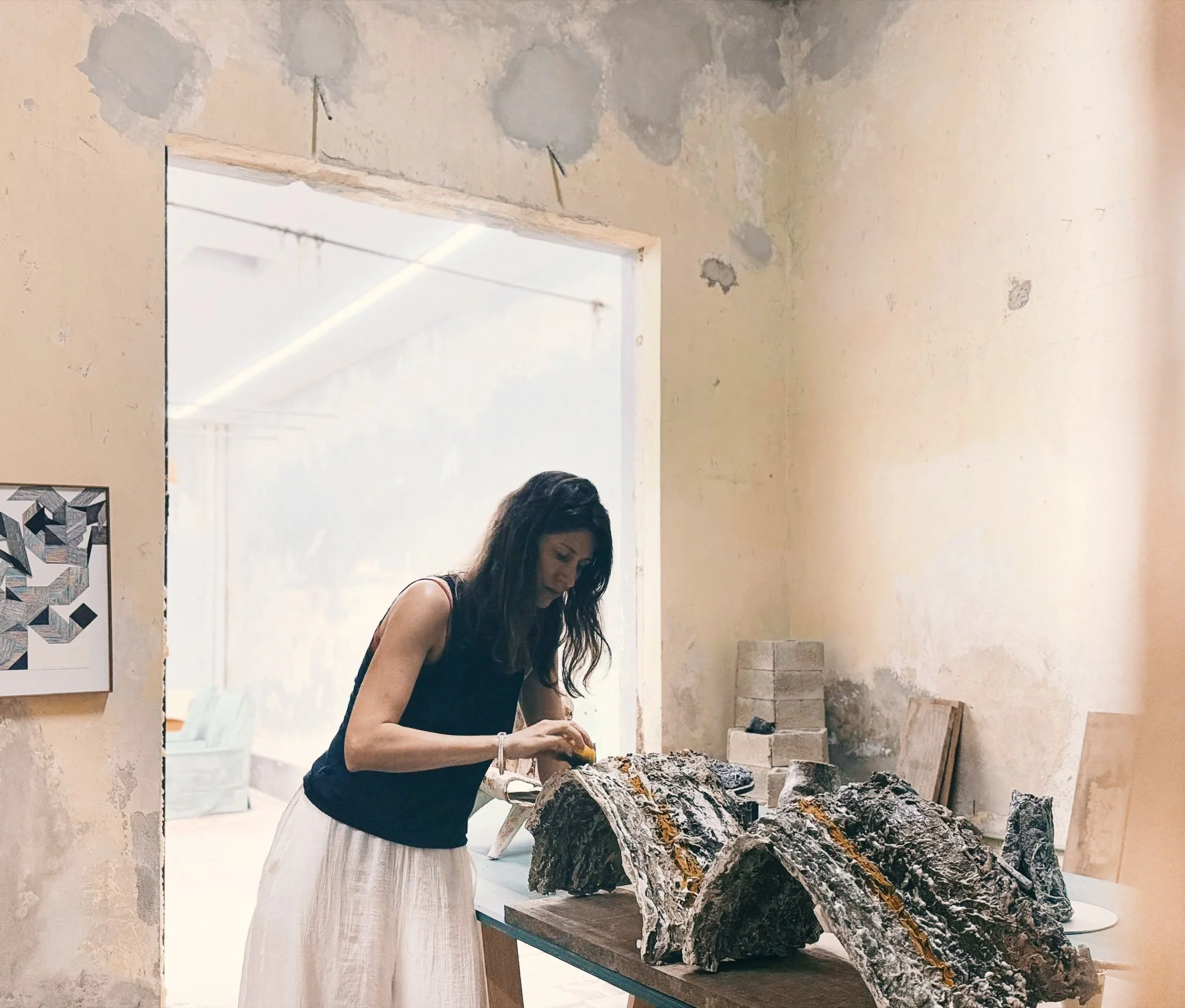
Evgeniya Korotchenko’s studio in Mérida, Mexico. Image Courtesy of the artist.
The piece I have saved for last is one I found on her website, and it is in Mérida, never finished. In 2023, working with the idea of deterioration, Korotchenko built "a literally living sculpture" in an adobe-like technique. Today she has only digital images of it, as she took earth from a place, shaped it, fired it, and left it where it was extracted. She left it behind because the move to the U.S. had to be light.
The sculpture is the part of her luggage that never fit in the bag, and I suspect she carries it anyway. Walk into Korotchenko’s studio and you can see what a life of moving has taught her about packing, her luggage was every room she left and every piece she set down, expressed through her delicate, careful crafts with material and time.