A New Alphabet of Images
Olga Shishko on CIFRA, the living archive, and building a cultural institution that doesn't exist yet
Featuring CIFRA Guest Olga Shishko Interviewer Edgar Zhang
What does it mean to collect moving images in an era when moving images are everywhere? For Olga Shishko, Chair of the Artistic Vision Council at CIFRA, the answer begins with a refusal: a refusal to let the algorithm decide what matters, a refusal to reduce art to content, a refusal to accept that preservation and access have to be in conflict. In this conversation, she traces the philosophical lineage behind CIFRA's curatorial vision: from the private collections that preceded the modern museum, to Peter Greenaway's call for a visual literacy as foundational as reading, to the idea of an archive that doesn't freeze a work in amber but holds open the possibility of encounter.
DART:
CIFRA gets described as ‘Spotify for new media art’ — is that a framing you embrace, or does it miss something essential about what the platform is trying to do?
Shishko:
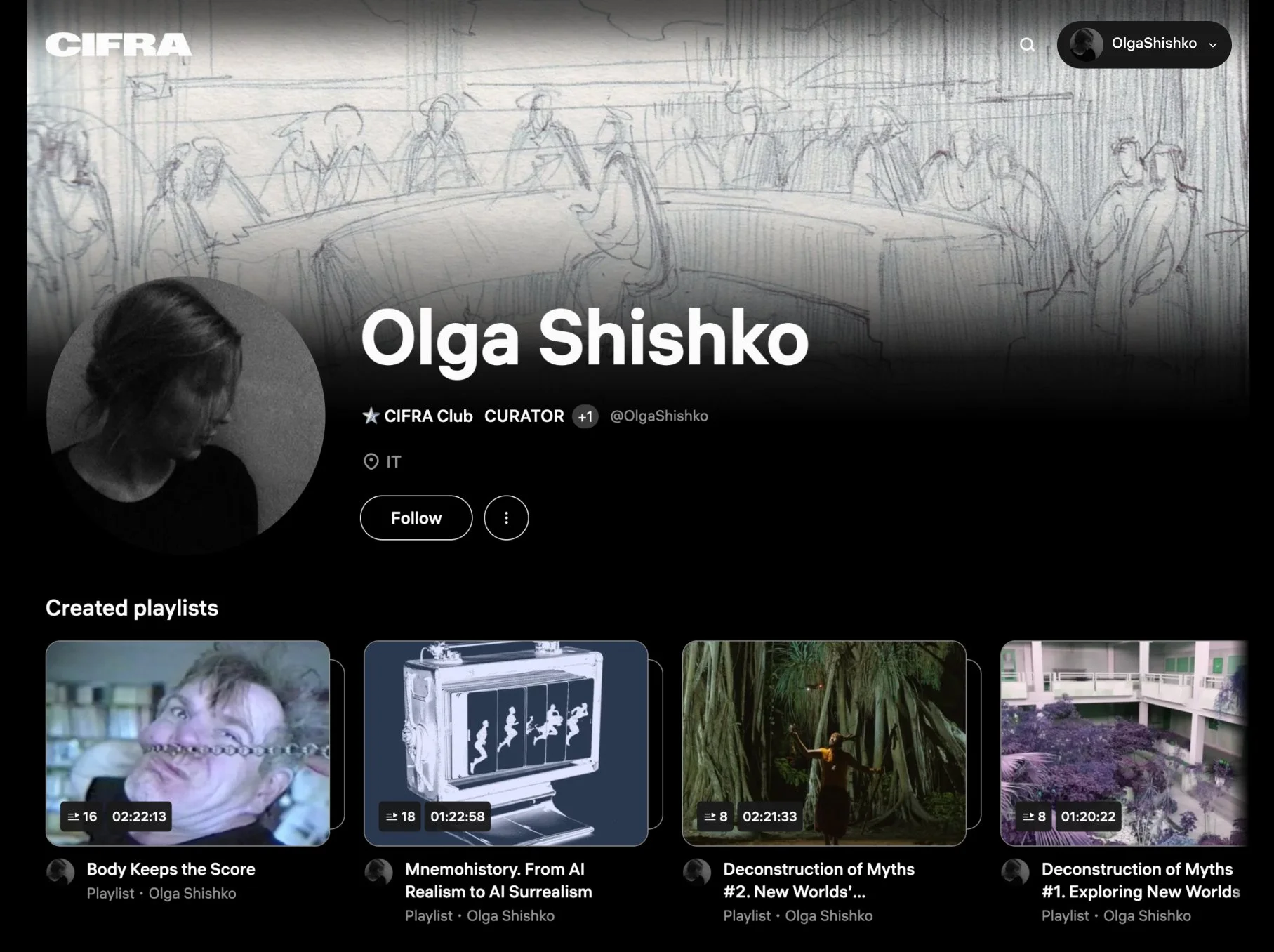
I understand why people reach for that comparison – it offers a quick shortcut. But in fact, it misses something essential. CIFRA is not “Spotify for art.” First of all, CIFRA is a collection, a curated collection of moving images.
That distinction matters. Before museums took their modern form, there were private collections of all kinds: diverse, sometimes strange, not yet fully classified, but already trying to make sense of the world through objects. Over time, those collections needed not only preservation, but explanation: what exactly is being shown, why it matters, and how it should be seen. I think CIFRA belongs to that lineage in a contemporary way. We are building a collection for a world shaped less and less by the page and more and more by moving images.
After the end of the Gutenberg era, moving images have become one of the dominant ways through which we understand reality. This field includes video art, sound art, digital images, experimental film, and hybrid and time-based practices. So the task is not simply to stream works. The task is to create the conditions in which they can be read.
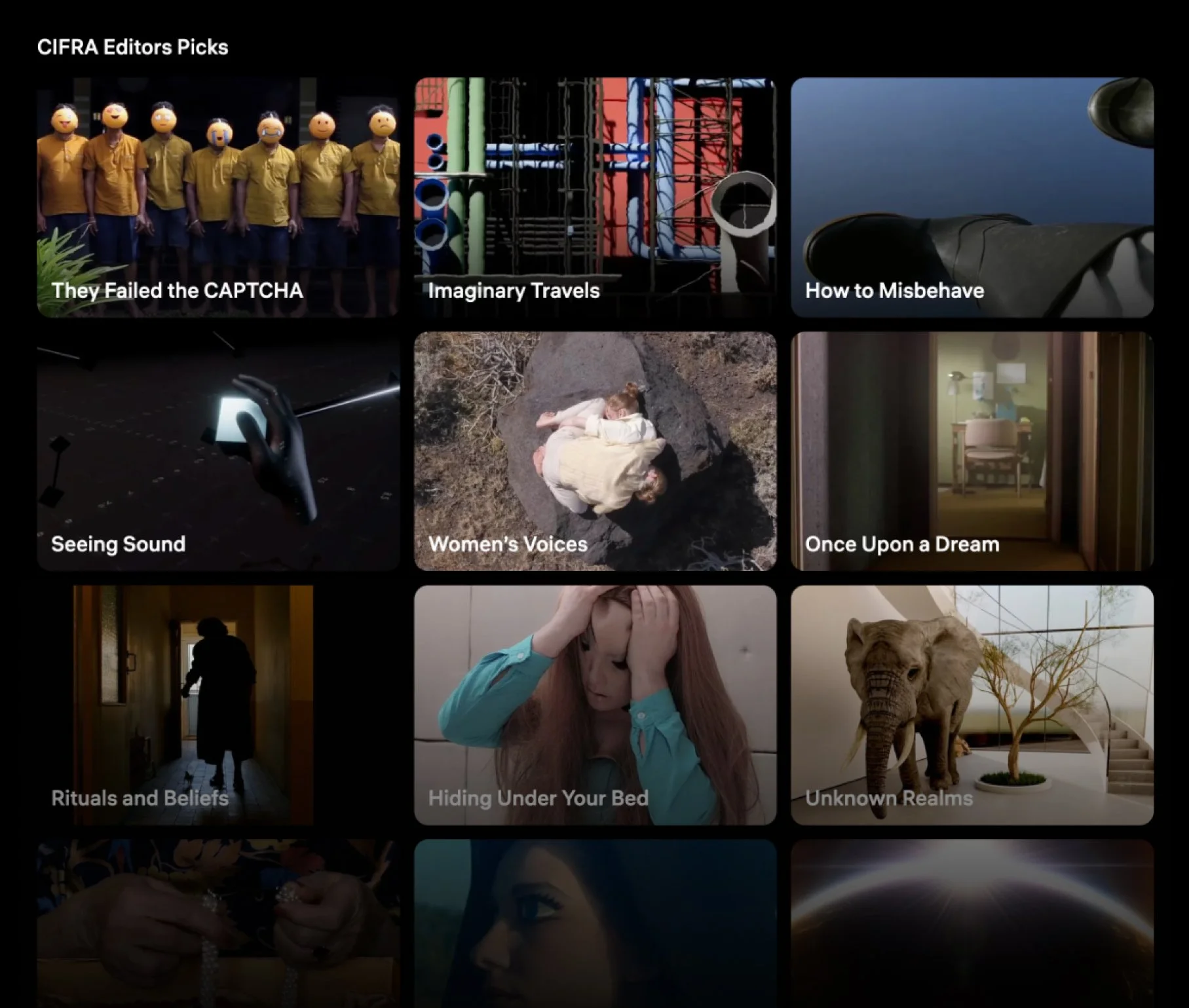
In that sense, CIFRA is also an educational structure. It is a place where one can learn a new alphabet and a new grammar of images.
Peter Greenaway once said that children should be taught not only the alphabet of letters but also the alphabet of images, and the history of the image itself. I feel very close to that idea. CIFRA is part of that larger effort: helping audiences learn how to look, how to connect works, and how to move more freely through the language of moving images.
So no, I would not define CIFRA through Spotify. I would define it much more simply: it is a collection of moving images, and a curatorial platform that helps people learn how to see.
DART:
New media art has spent decades at the margins of the institutional art world. What's actually changed — is this a cultural shift, or is it more about the infrastructure finally catching up?
Shishko:
What has changed is perception and the infrastructure around the work itself.
There is, of course, a cultural shift. Today, moving images, sound, digital environments, AI works, and hybrid forms no longer feel marginal in the way they once did. They have become central to how contemporary culture thinks, communicates, and imagines itself. In many ways, media art was already speaking the language of the present long before institutions were ready to hear it.
But infrastructure is just as important. For a long time, media art moved faster than the structures meant to support it. Museums, collections, markets, and educational frameworks often struggled to keep up with its temporality, its technical fragility, its dependence on devices and display conditions, and its transnational character. So what we are seeing now is not simply the rise of a new taste but the slow emergence of forms capable of carrying this material more seriously.
That is why I am interested not only in visibility but also in continuity. A work should not disappear after one screening, one exhibition, or one moment of attention.
It needs context, pathways, editorial framing, conversation, and sometimes translation from one audience to another. It needs a life beyond the event. For me, that is where a platform like CIFRA becomes meaningful as a structure that can help works remain active in time.
DART:
The museum emerged as an institution to confer legitimacy, preserve context, and slow down the encounter with art. Streaming does the opposite , it accelerates, multiplies, and removes friction. Can those two logics ever be genuinely reconciled, or is CIFRA building something structurally different from a museum, not just a digital version of one?
Shishko:
These two logics are different, but they do not have to cancel each other out.
The museum slows down, legitimizes, preserves context, and creates the conditions for serious attention. A platform accelerates, distributes, multiplies access, and makes encounter easier and more immediate.
The real question is what kind of cultural form can hold some of the strengths of both without becoming superficial.
This is very personal for me, because I was directly involved in building one of the museum collections of media art. That experience taught me something very important: collecting is never enough. With media art, preservation has to be accompanied by explanation, interpretation, display, education around the material, and, yes, popularization as well. Otherwise, the work may be technically stored but culturally unreadable. Media art has always needed not only conservation but also mediation — bridges between the work, its history, its technology, and its audience.
This is also why I do not see CIFRA simply as a digital museum. But I do not see it as a pure streaming platform either. What interests me is a hybrid form: a platform that can inherit from the museum its responsibility toward context, memory, and critical framing, while also using the openness and mobility of digital distribution.
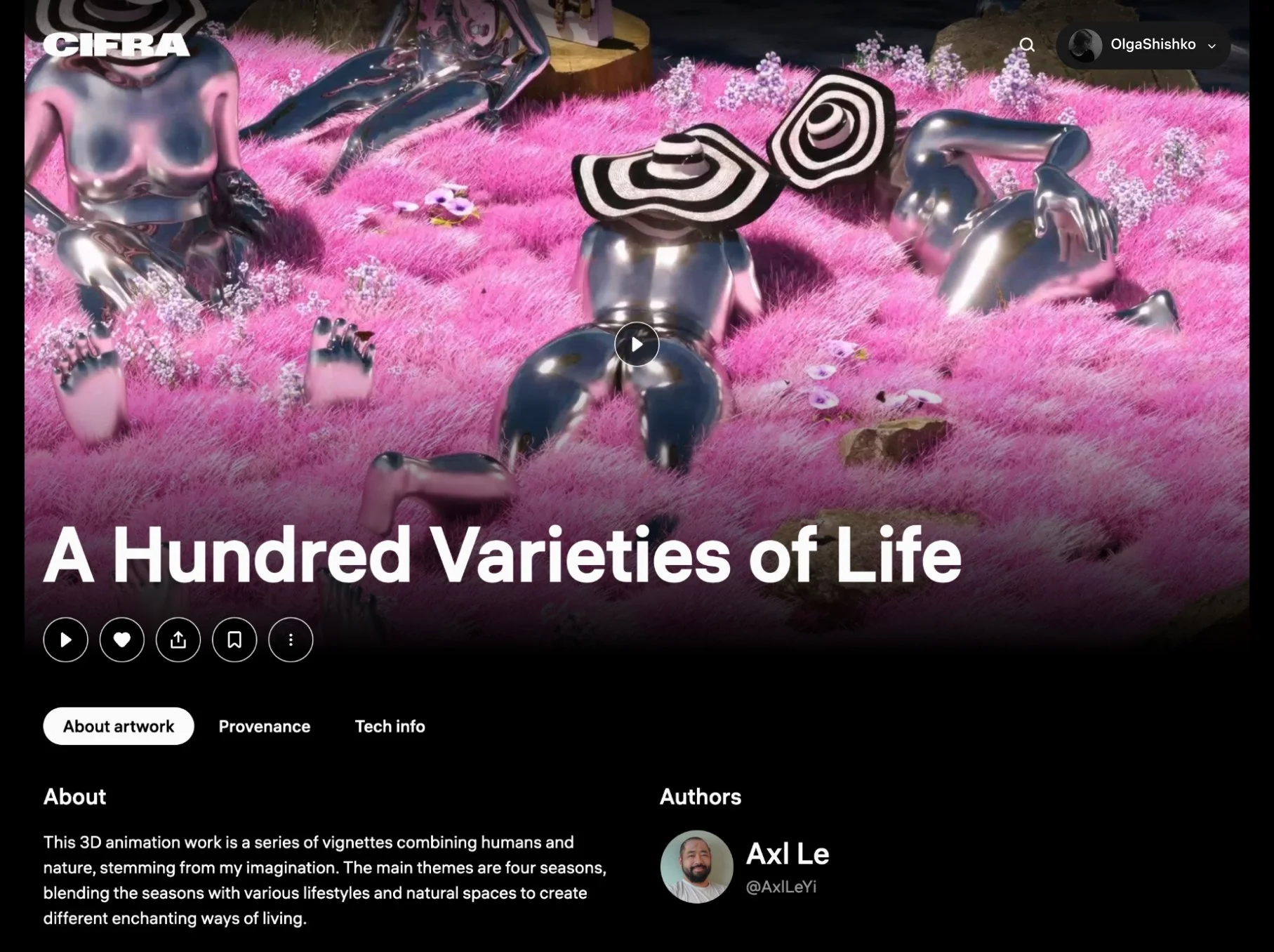
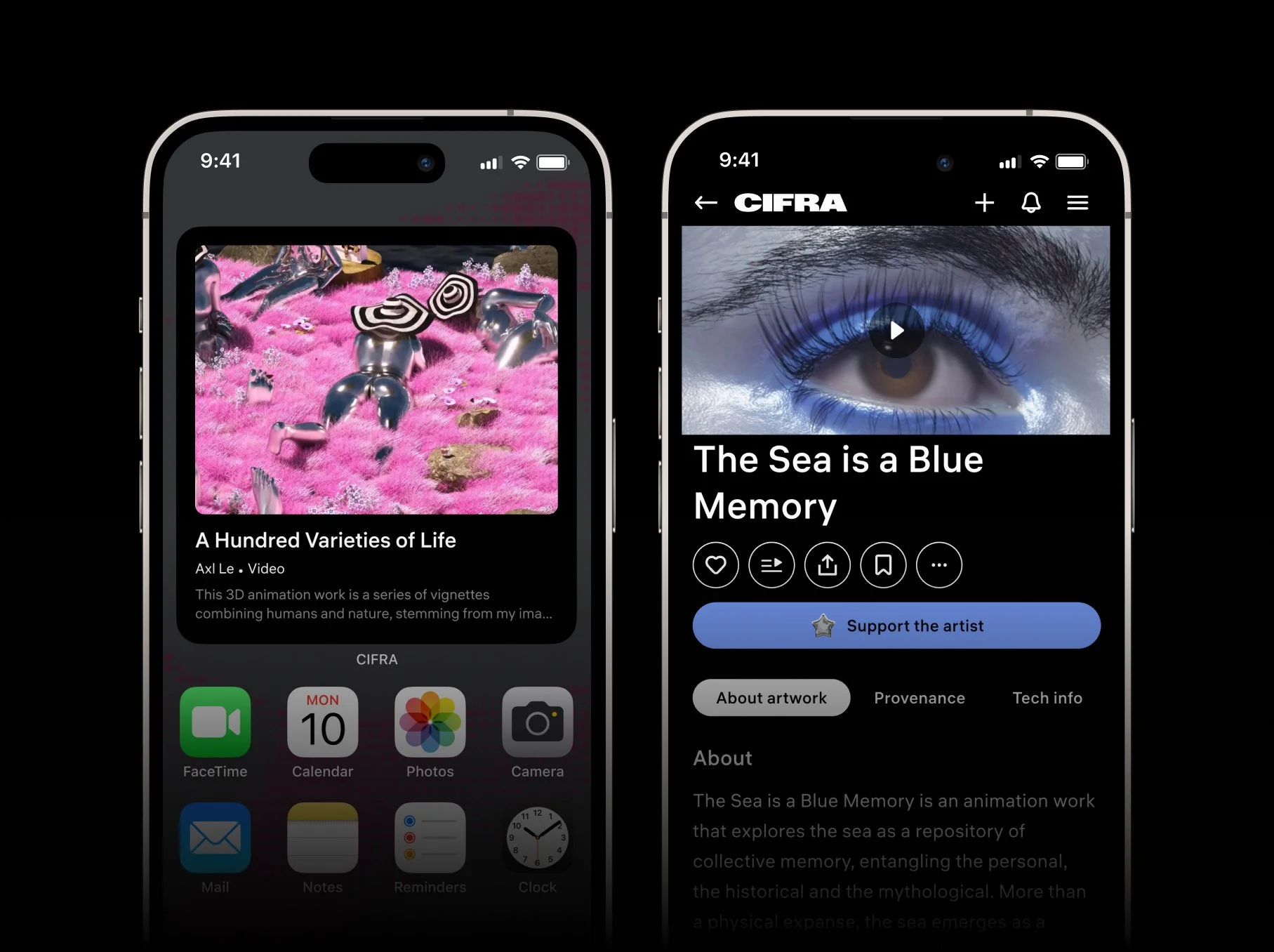
We are a collection of moving images, but also a structure that teaches people how to approach them. These works are often made for different spaces, different scales, and different kinds of attention. How we watch matters. Not everything should collapse into the phone screen. CIFRA is also about restoring conditions of viewing: watching on a real screen, with time, with sound, with context, and with concentration. In that sense, it comes close to the museum through archival thinking, curatorial framing, education, and bridge-building around the work. But structurally, it is also something else: more fluid, more transnational, more continuous, and more able to let works live beyond the temporary moment of exhibition.
So no, I would not call CIFRA a museum online. I would call it an attempt to build a new cultural institution for media art — one that keeps together preservation and access, historical depth and contemporary circulation, critical thought and public openness.
DART:
There's a tension at the heart of any platform that curates: the more successful it becomes, the more pressure there is to scale, and scaling tends to flatten curatorial identity.
How do you protect the integrity of the curatorial voice as CIFRA grows?
Shishko:
This is probably one of the most important questions, because any platform that begins to grow very quickly encounters the temptation to simplify itself — and art is usually the first thing to suffer from that simplification.
All these years, CIFRA has been sustained to a great extent by manual curatorial care, and I still deeply believe in that kind of human guidance. For me, the curatorial voice cannot be handed over to an algorithm. It can be supported, strengthened, and structured, but not replaced. Because at a certain point, a platform starts showing not what is truly important but what circulates more easily. And that is already a very different logic.
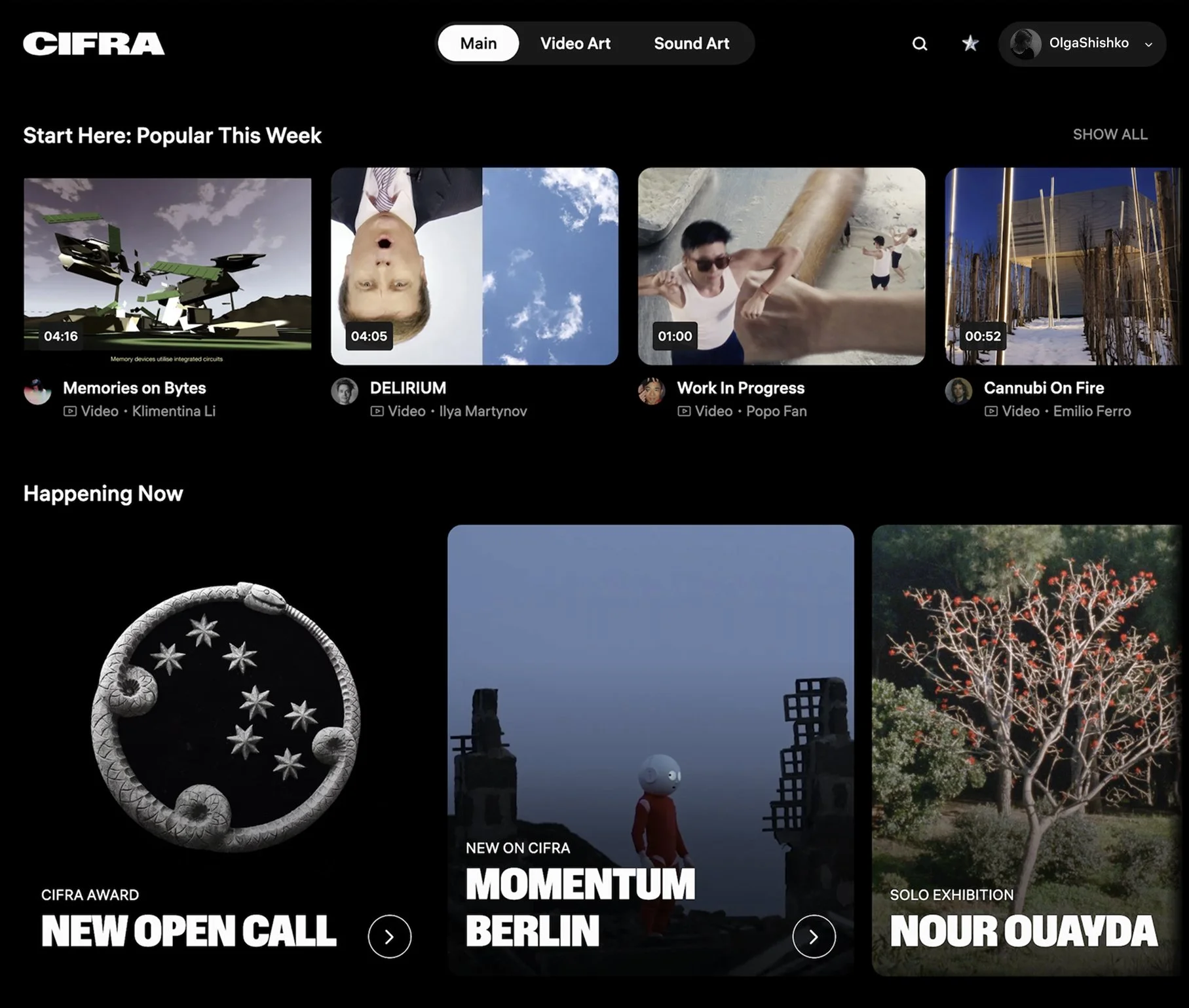
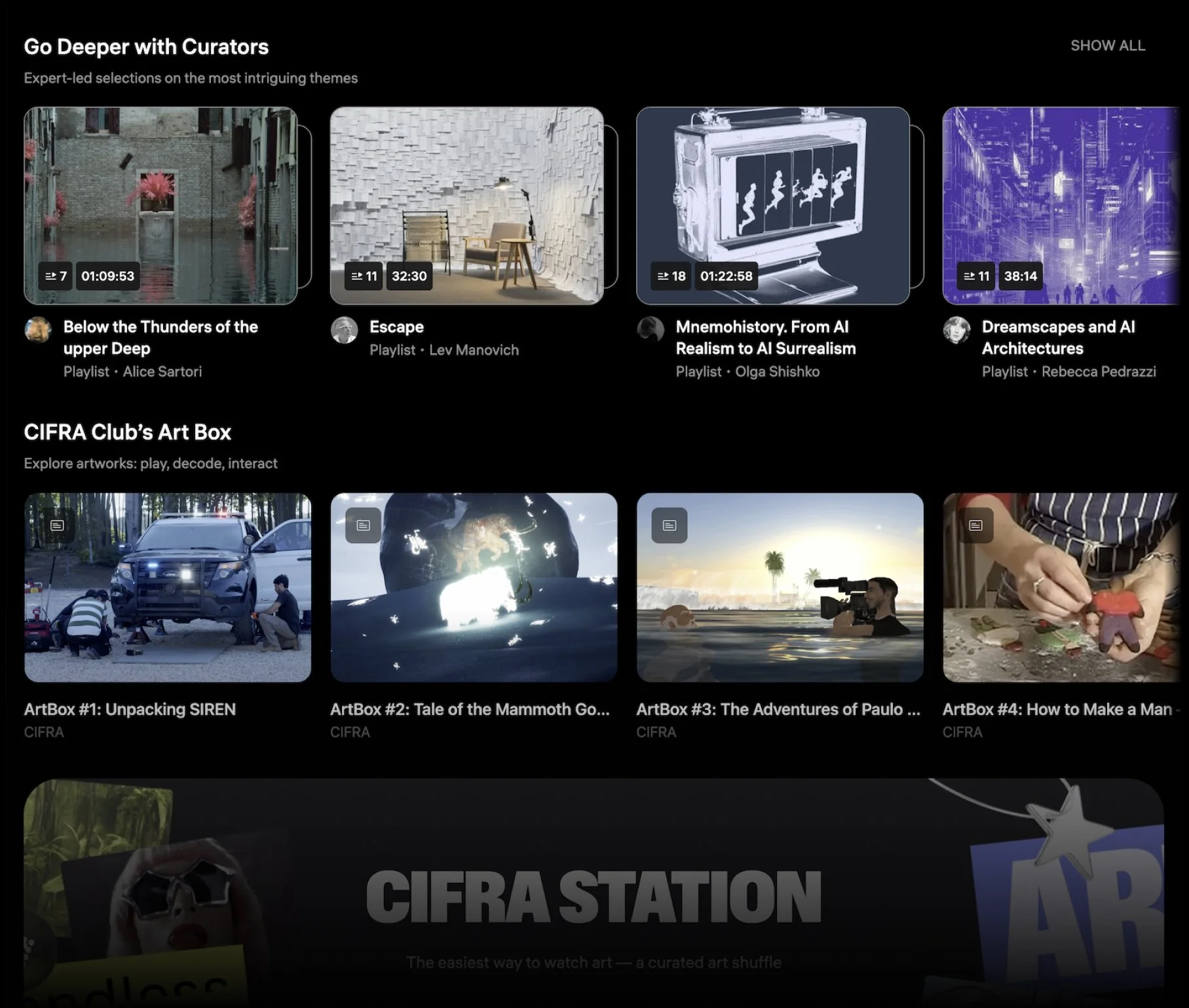
That is exactly why our Artistic Vision Council matters so much. Our Council is an advisory body whose ideas will genuinely shape CIFRA: its seasons, curatorial pathways, partnerships, the Award, the editorial voice of the platform, and the way artists are not simply presented but truly thought through. It means a great deal to me that this conversation includes people such as David Elliott, Lev Manovich, Martin Honzik, Daniela Arriado, Oliver Grau, and Christiane Paul — all voices shaped by very different intellectual traditions, curatorial approaches, and ways of understanding the field.
Our task is simple: CIFRA must remain a cultural institution that holds together history, context, and the future while staying open to different audiences.
We want to continue creating zones of non-algorithmic discovery, keeping the archive alive, giving space to artists and curators, and openly discussing the rules of the platform.
DART:
Algorithmic platforms like YouTube or Instagram have already shaped how digital art is made
— artists optimize for what the feed rewards. What does it mean to build an alternative infrastructure, and can a counter-platform actually change artistic practice, or does it just archive what already exists?
Shishko:
An alternative infrastructure begins the moment you refuse to treat visibility as the only measure of value.
Today, too much artistic production is shaped by the logic of the feed: speed, brightness, instant recognition, short loops of attention.
But art does not have to be optimized for the feed. It can be slow, complex, quiet, layered, and demanding of time.
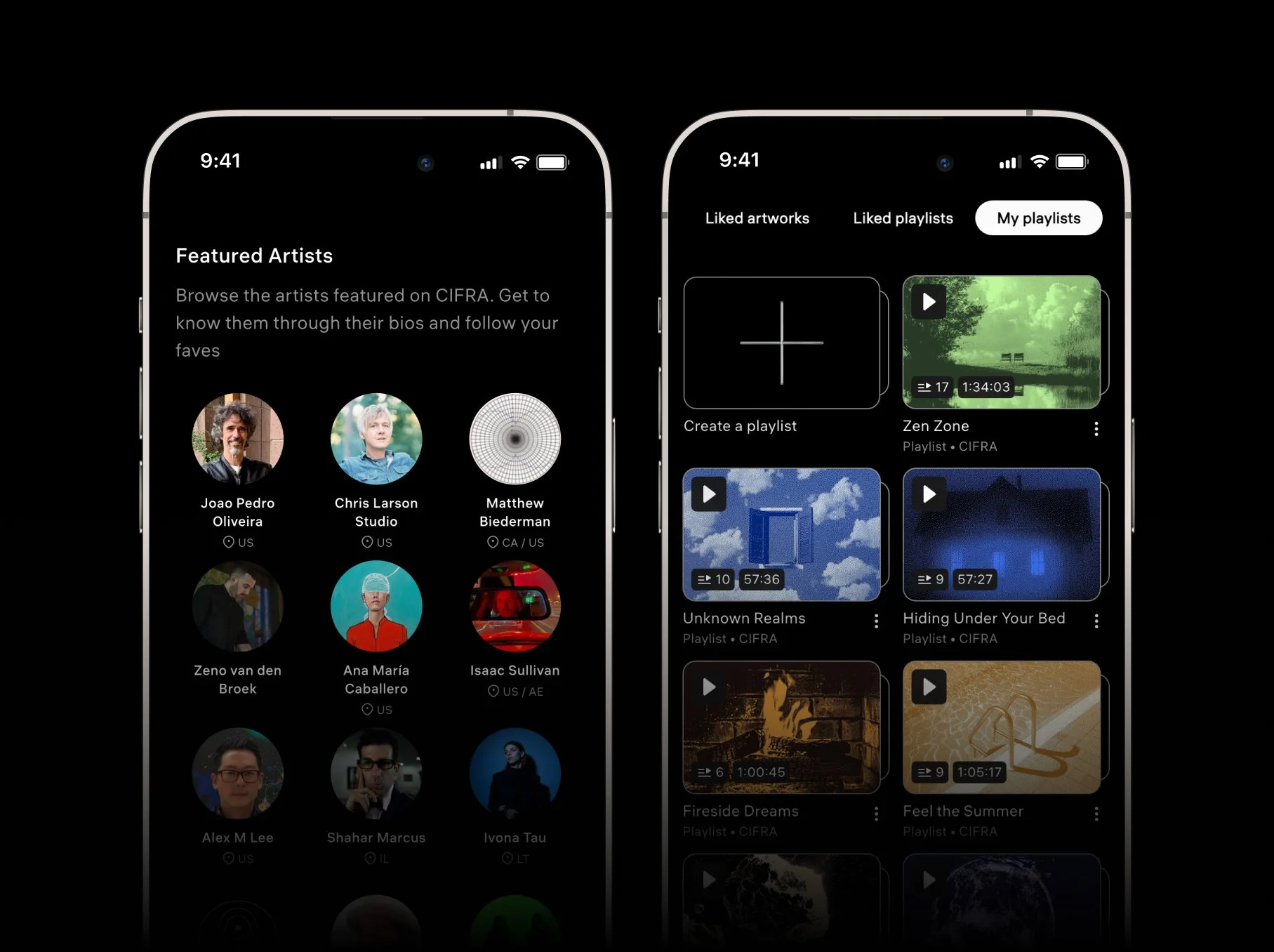
And if there is no space for that kind of existence, then over time not only the mode of presentation changes but also the very way works are made.
Of course, no counter-platform changes anything automatically. But it can change the conditions in which artists work. It can bring back duration, context, sequence, and the possibility of being seen beyond metrics of engagement. It can offer not just exposure but also curatorial framing, editorial conversation, relations between works, encounters with new audiences, and continuations offline.
In that sense, CIFRA does not simply archive what already exists. It creates an environment in which certain practices can be seen differently — and perhaps, over time, also made differently.
For me, that is the real meaning of alternative infrastructure: not simply to preserve what falls outside the algorithm but to support artistic forms that require a different rhythm, a different scale, and a different kind of attention.
DART:
Preservation in new media art isn't just a technical problem — it's a philosophical one. When a generative or interactive work is archived, is it still the same work? How does CIFRA navigate what it means to keep something alive versus keeping a record of it?
Shishko:
For me, this is absolutely not only a technical question. For many years I have thought about the archive as a living and complicated form.
In media art, preserving a work does not simply mean preserving a file. Sometimes what must be preserved is the logic of its behavior, its interface, its temporality, its mode of encounter with the viewer — sometimes even the whole situation of display. And sometimes, on the contrary, one has to honestly acknowledge that full identity is impossible, and that a work entering a new technological moment already exists in a slightly different way.
That is why I feel close to ideas such as the living archive, the anarchive, the situationist archive — an archive that does not freeze a work once and for all but creates the conditions for its reactivation, rereading, and responsible translation into another technical and cultural moment. In that sense, there is a profound difference between keeping something alive and keeping a trace of it.
A trace is a record. A living archive is the possibility of a new encounter.
This is one of the points where CIFRA comes close to the museum — but not as a museum of storage. Rather, it is an institution that takes responsibility for memory, transition, interpretation, and the reintroduction of works into cultural circulation. For me, the archive is not the end of movement but one of the forms through which movement continues.
DART:
What's the institutional model that doesn't exist yet — the one CIFRA is actually trying to become?
Shishko:
Perhaps the most honest answer is that we do not want to become something already familiar. Not another gallery platform, not "Netflix for art," not a museum in the browser, not a marketplace with a cultural interface.
What we are trying to build is a new kind of cultural institution for media art: at once a collection, a platform, an archive, an editorial environment, a curatorial machine, an educational space, and a point of entry into the world of moving images for different audiences.
What matters to me is to build a structure in which the artist does not dissolve into the stream but receives a framework; where the archive is not dead but active; where online does not oppose offline but extends it; where human judgment is not decorative but foundational. In that sense, CIFRA cannot be reduced either to technology or to distribution. It is trying to hold together several things that usually remain separate: preservation, presentation, education, critical reflection, community, and access.
If I had to put it simply, CIFRA is, for me, an attempt to create a living infrastructure for an art form that has always existed between poles — and for that very reason has long resisted fitting into any ready-made system.