The Urban Palimpsest by Danbi Kim
Textile April 22 2026
Intro
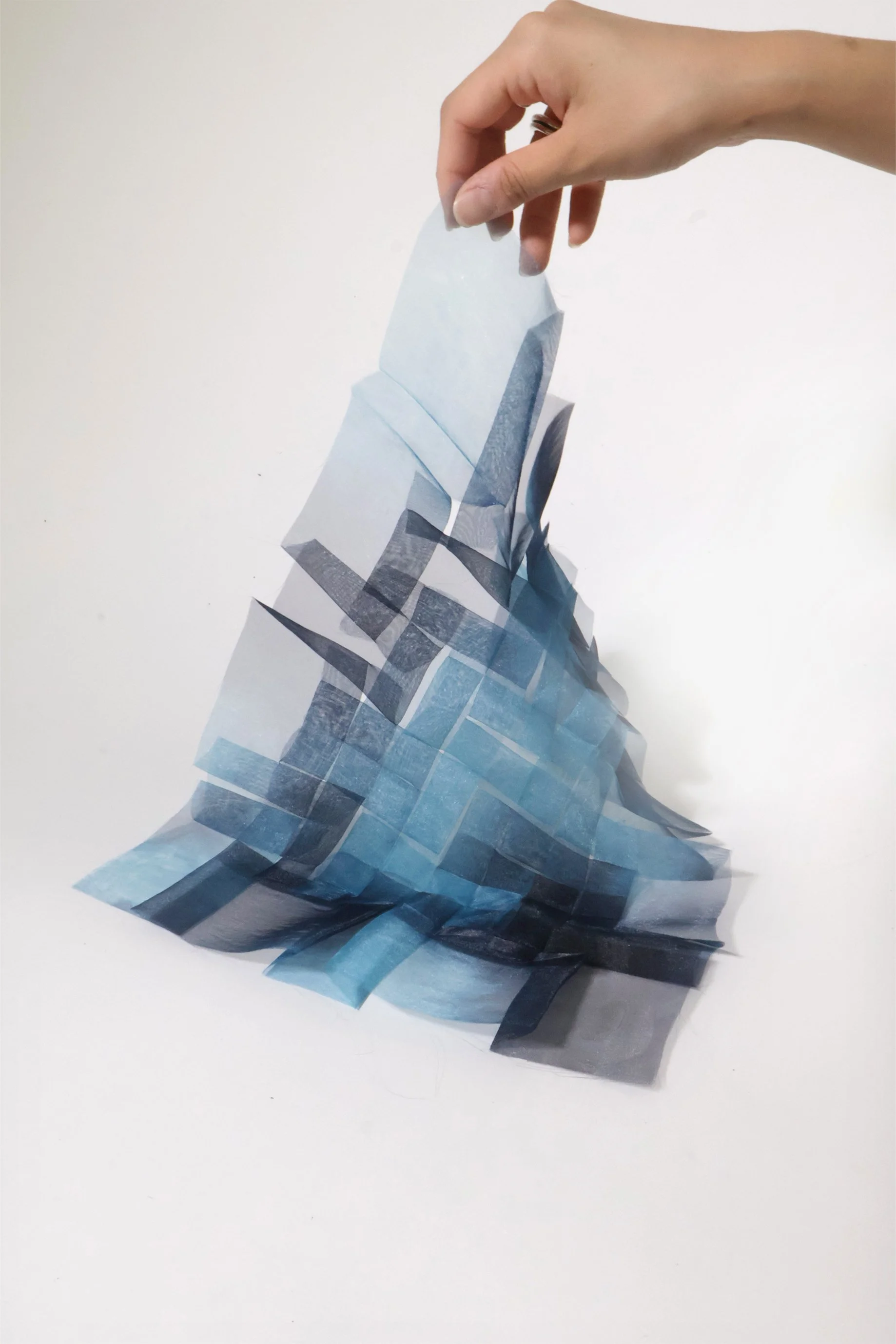
In The Urban Palimpsest, Danbi Kim explores how textiles can function as soft architecture to preserve collective memory. Her practice investigates the connection between people and the spaces they inhabit, with a particular focus on how personal and collective memories are embedded within urban environments.
Through research in both Seoul and London, Kim reflects on how redevelopment in Seoul has displaced local identity and erased layers of memory, creating the sensation of living atop compressed and lost histories.
From the Artist
“I grew up in Seoul, where I watched my own neighbourhood disappear through redevelopment.
When I was six, my family moved into a newly built apartment, which was constructed on what had already been a redeveloped site in Wansimni, a neighbourhood in Seoul.
Around the complex, there was a Buddhist temple, surrounded by old single-family houses and low-rise villas that had been part of the area for decades. I remember hearing the temple bell every evening. It was part of my daily life.”
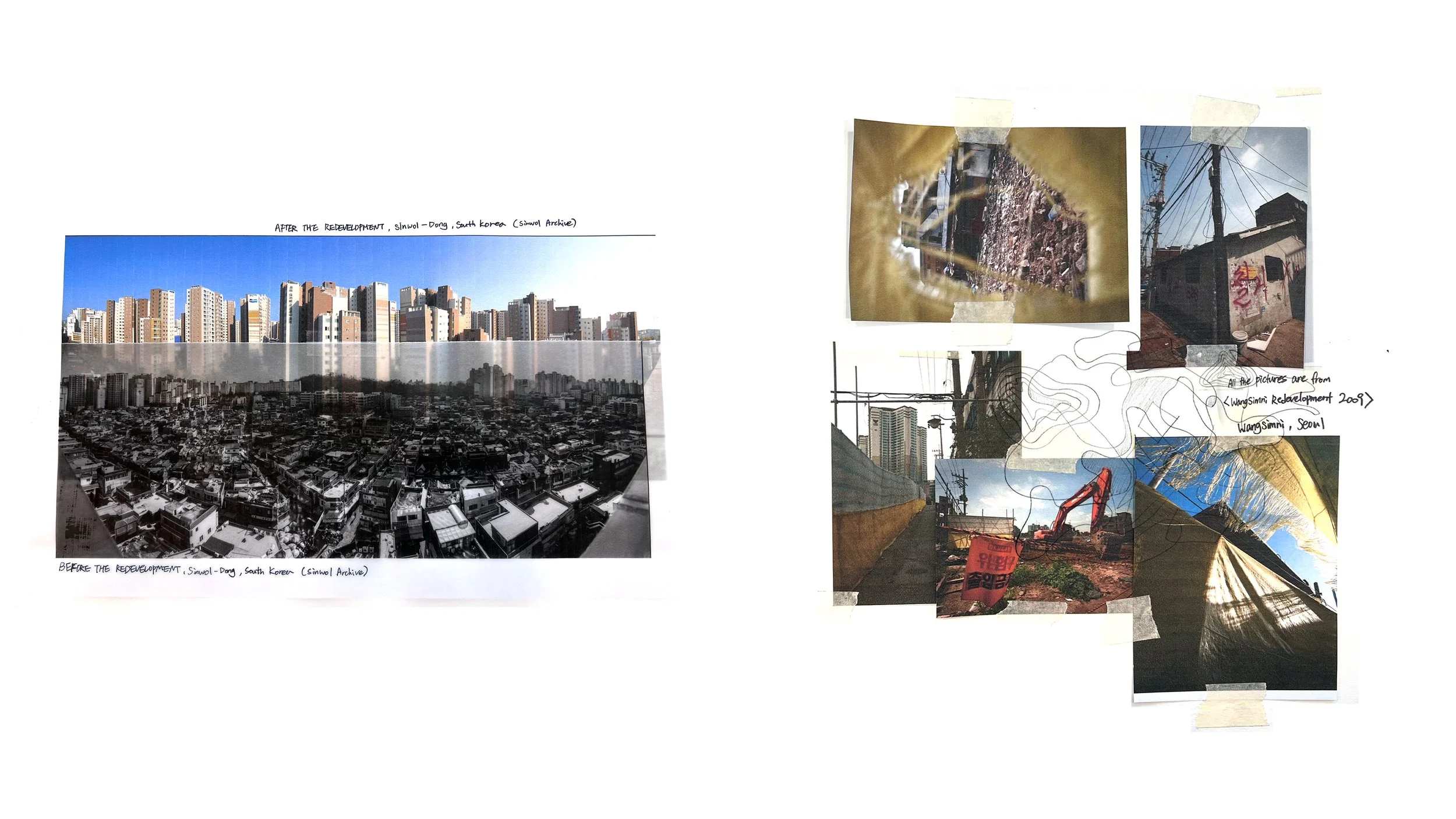
(Left) Before and After the Redevelopment in Sinwol-dong — different neighbourhood as hers — Seoul
(Right) Wangsimni Redevelopment
“About ten years later, the neighbourhood went through another cycle of redevelopment. The temple, the old houses, all of it was demolished and replaced by high-rise apartment towers.
I often thought about the people who had lived there and the memories that might have been left behind. The buildings, the old factories, the textures of everyday life — they were demolished and replaced, but the memories of the people who lived there didn’t vanish with them. It often felt like living on top of someone else’s compressed and lost memories.
This research looks at both Seoul and London as cities built on layers of erased histories. After moving to London for my MA in Textile Design at Chelsea College of Arts, I began noticing how differently the two cities relate to their built environments.
In London, Victorian houses from over a century ago are still lived in, still part of the everyday fabric of the city. In Seoul, the redevelopment cycle is roughly every 30 to 40 years — meaning buildings rarely have the chance to accumulate the kind of deep, layered history that I saw in London. Endless rows of visually uniform high-rise apartments dominate Seoul’s landscape, and with each cycle, traces of local identity and community memory are erased.”
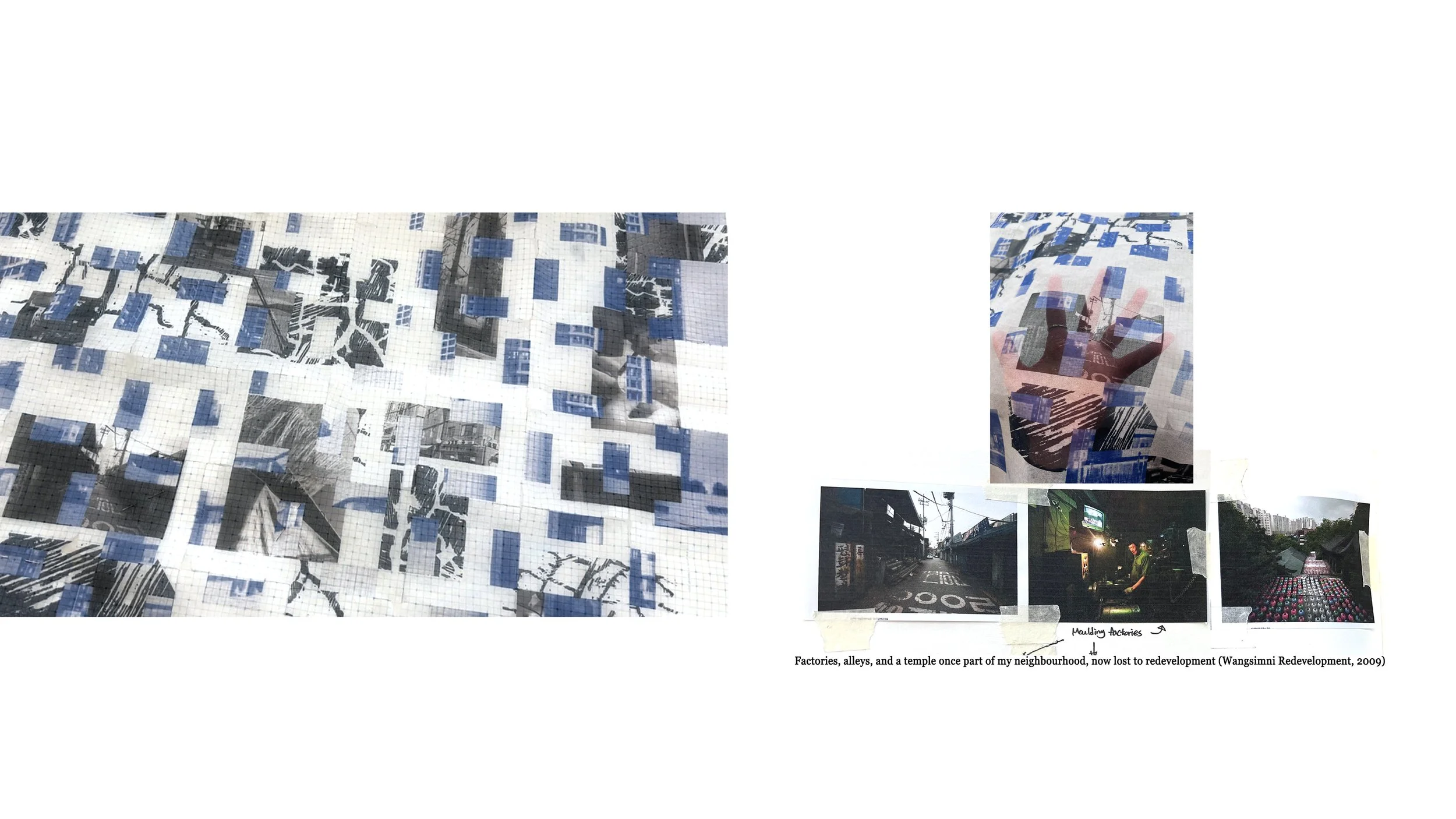
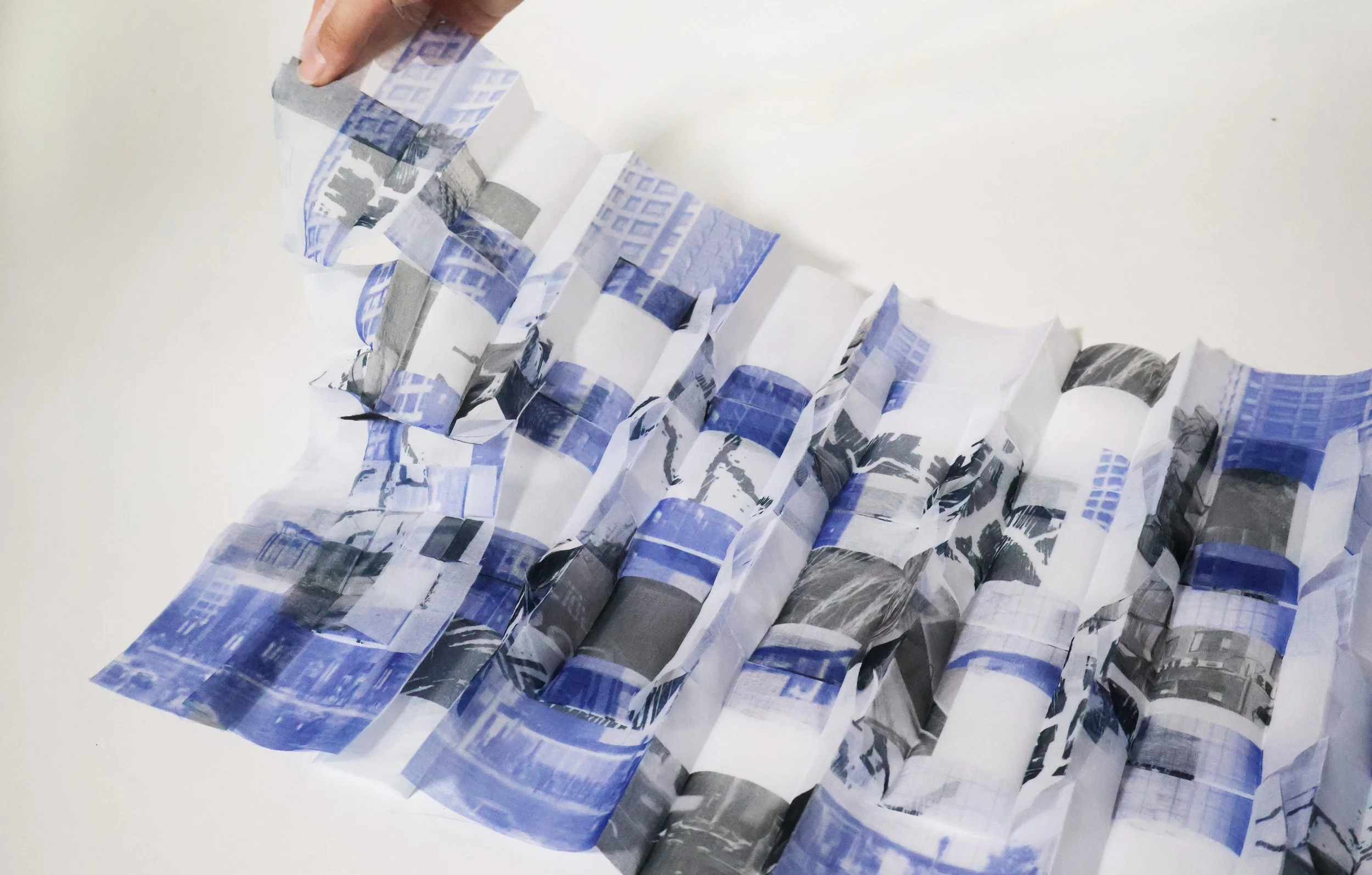
(Left) Digital Print Development
(Right) Old pictures of Danbi’s neighbourhood Wangsimni, Seoul.
“These observations led me to a question that became the foundation of this project:
Can textile be a practical medium for preserving collective memory as soft architecture?
I explored this through two research areas. One of which investigated how textiles can create multi-sensory spatial experiences using light and layered materials, and the other examined how folding and layering techniques can visually express the accumulation and erasure of memory in urban spaces.
Architecture is not just a physical structure. It functions as a vessel that holds layered histories, social narratives, and personal memories. But when buildings are torn down before those layers have time to settle, the memories connected to them risk disappearing too. I became interested in whether textiles could offer an alternative way to hold those traces.
Much of my visual development draws from Wangsimni, my neighbourhood, itself. This area was once an industrial district filled with small sewing factories, mould-making workshops, leather workshops, and family-run shops.
Many of the material textures I remember — the wooden surfaces of the temple, threads from the sewing factories, leather scraps from local workshops, have disappeared from the physical landscape.
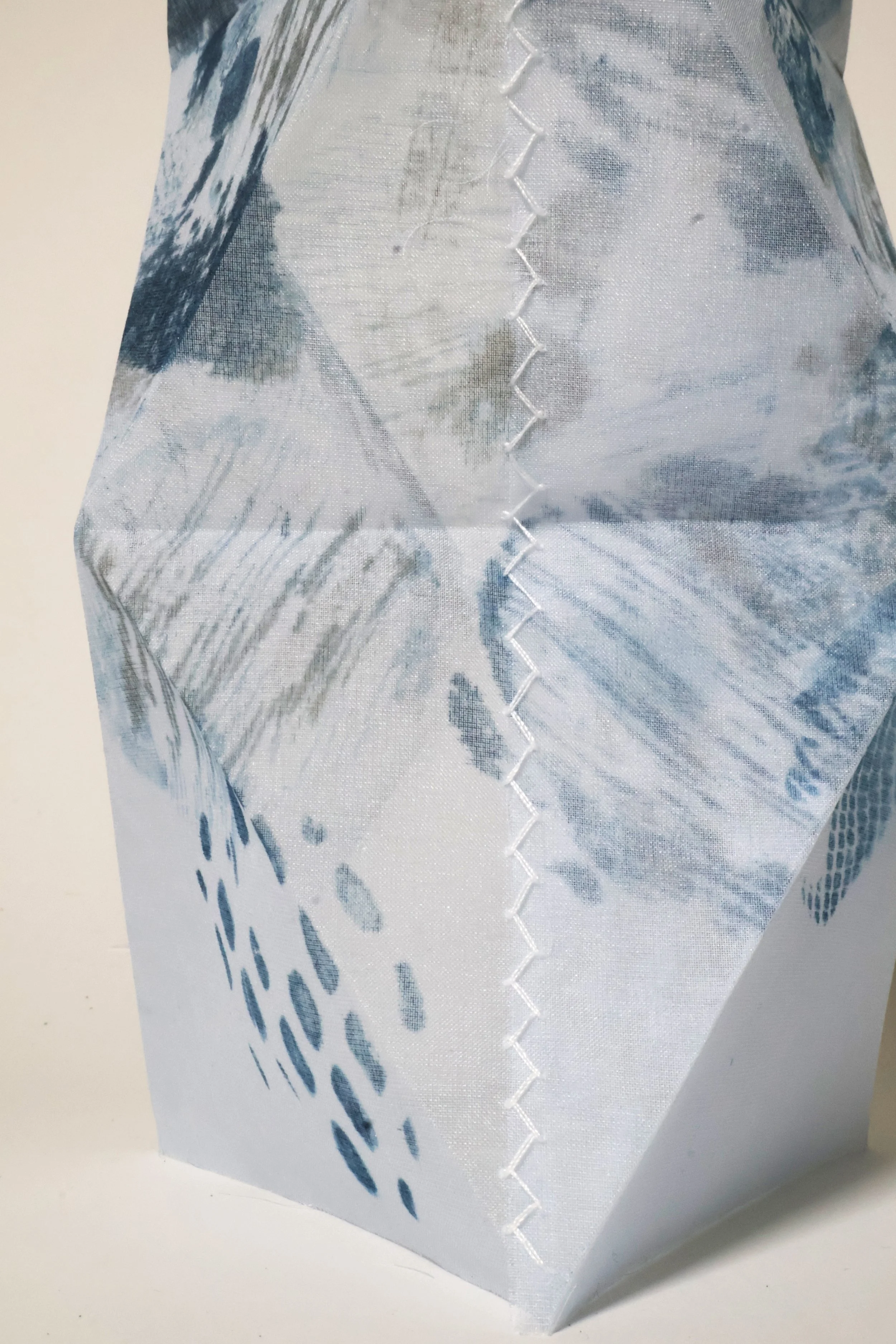
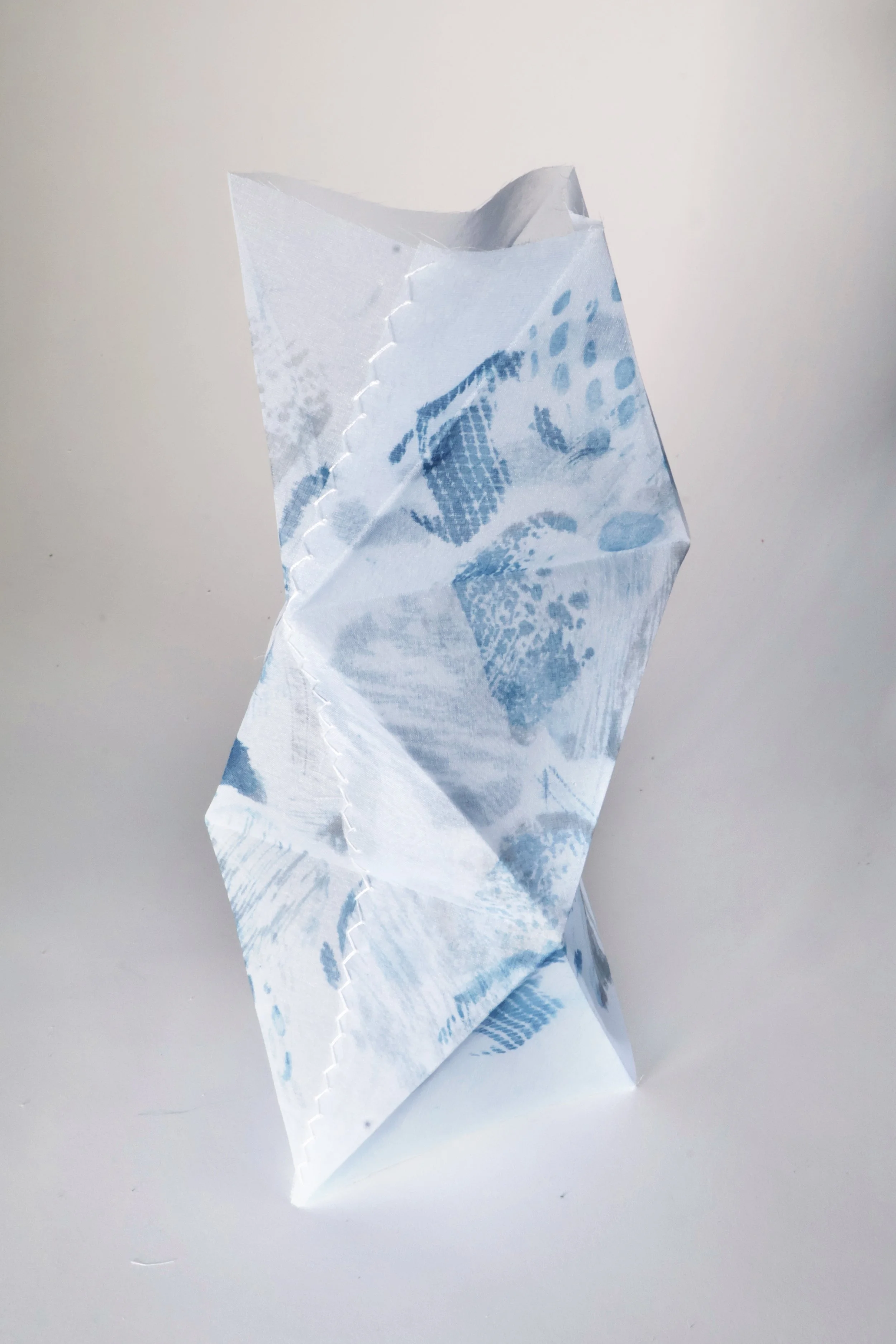
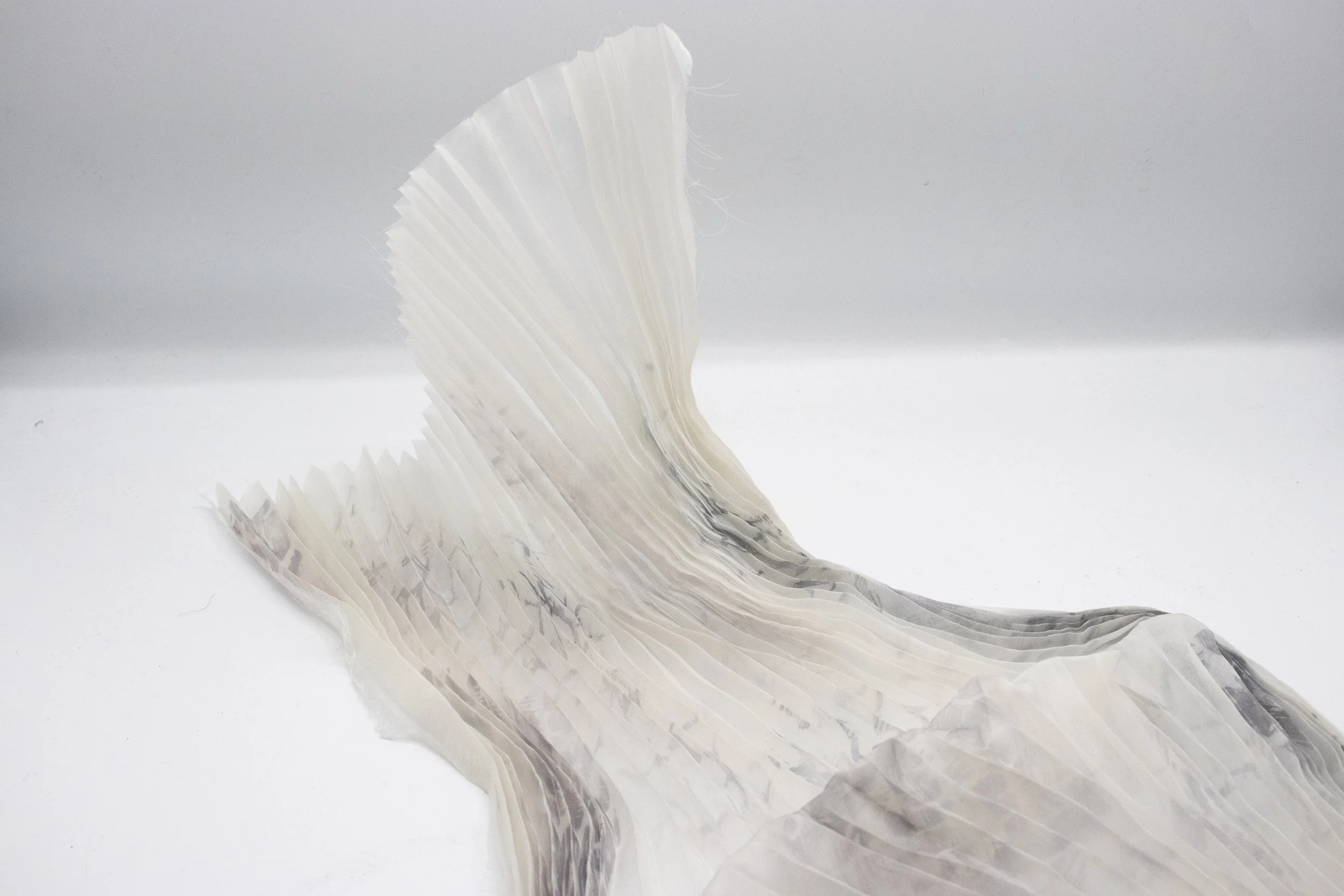
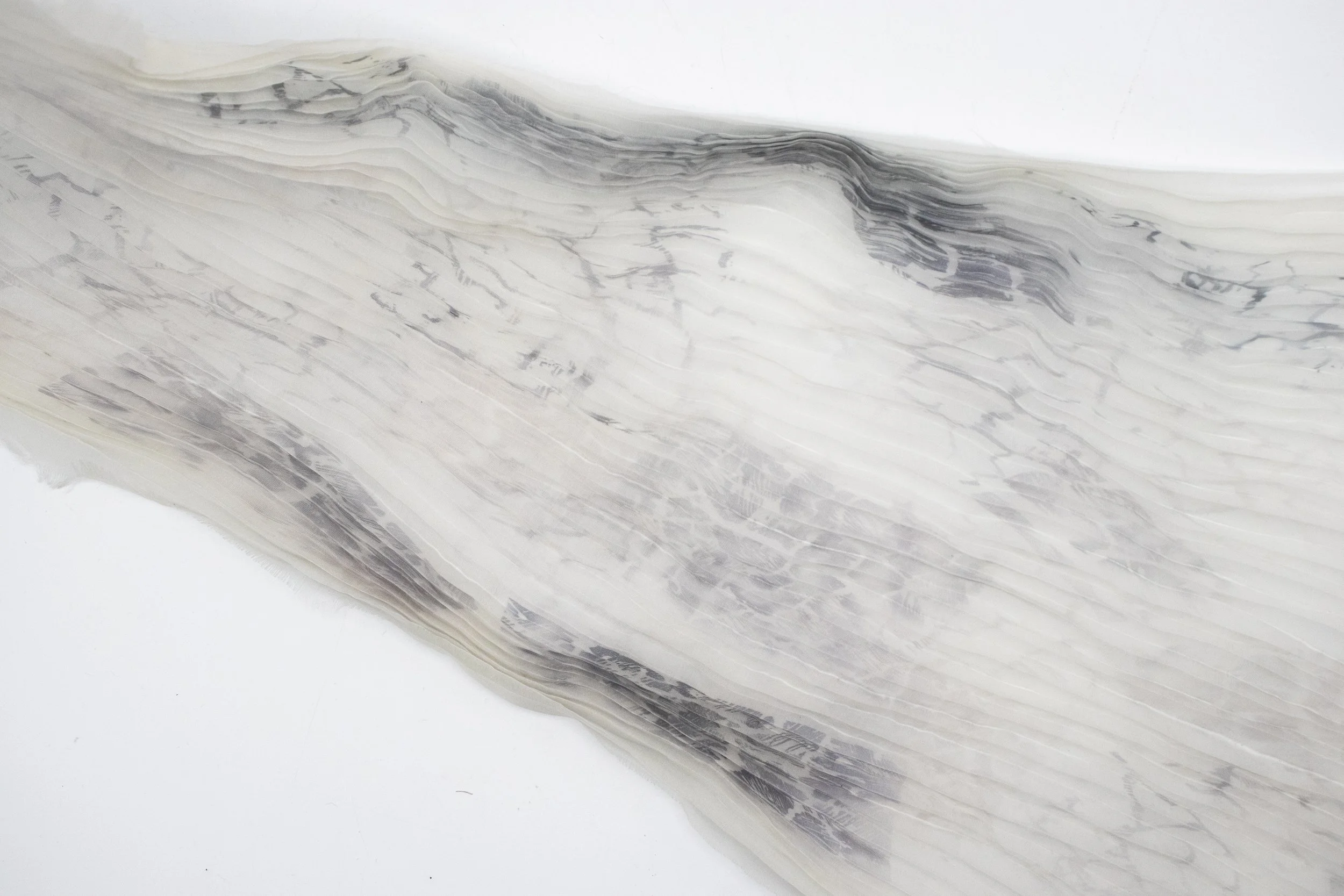
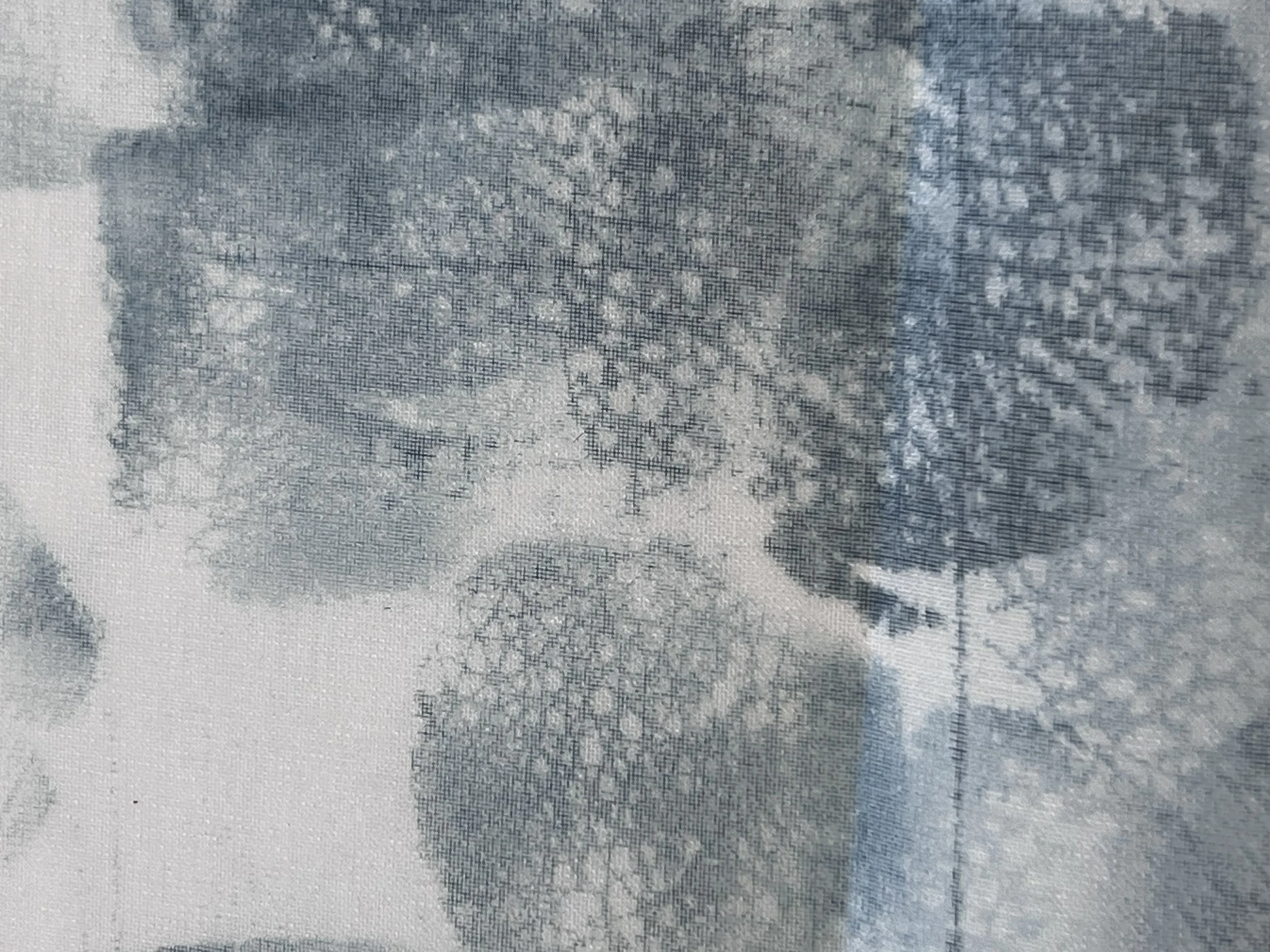
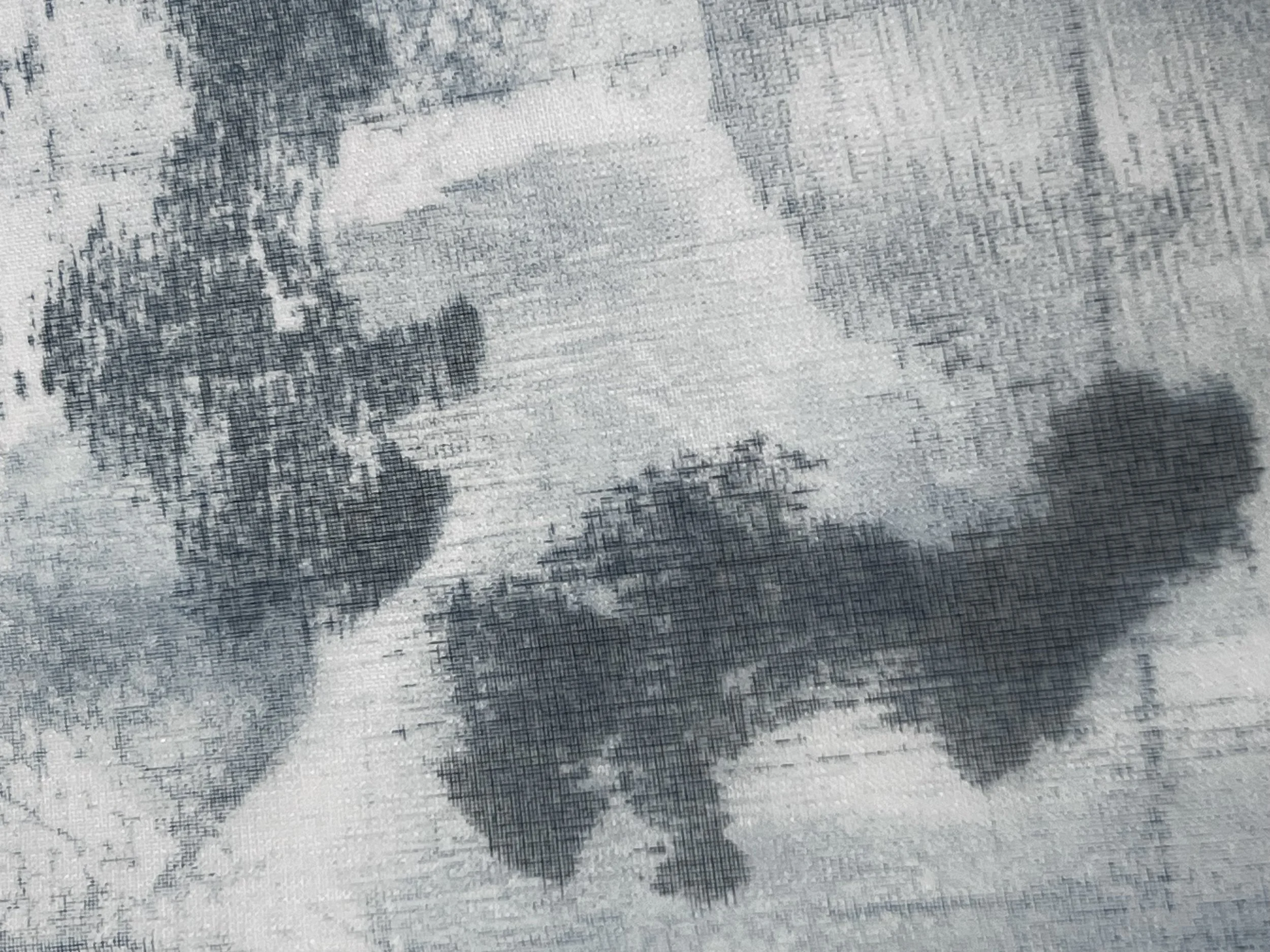
I revisited these sites through photographs, sketches, and archival images, gathering textural traces that now remain only in memory. I then reinterpreted these references into digital prints on organza, mark-making using stamps, working with translucent layers that reflect the palimpsest-like character of the neighbourhood: history written over but never fully erased.”
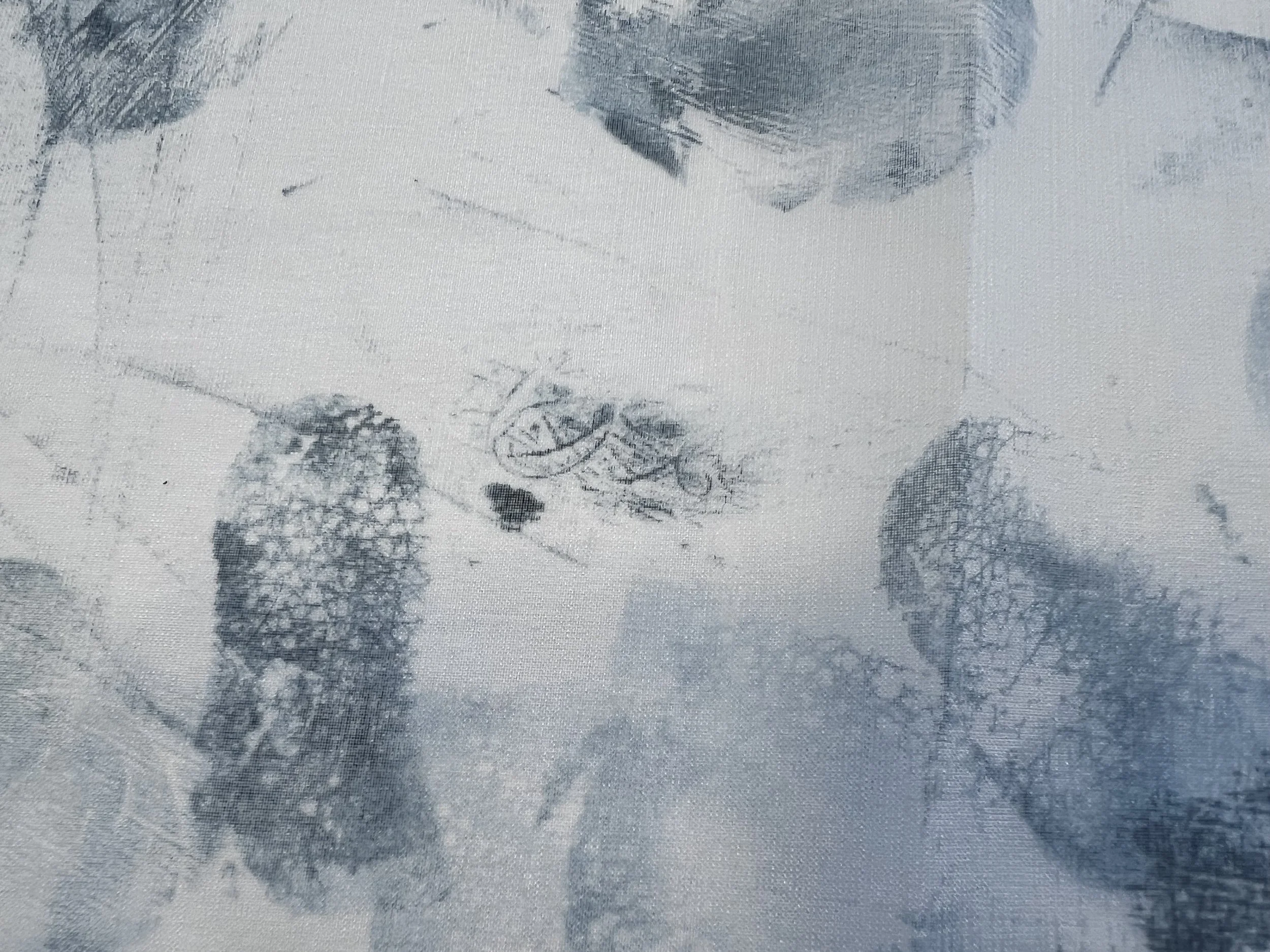
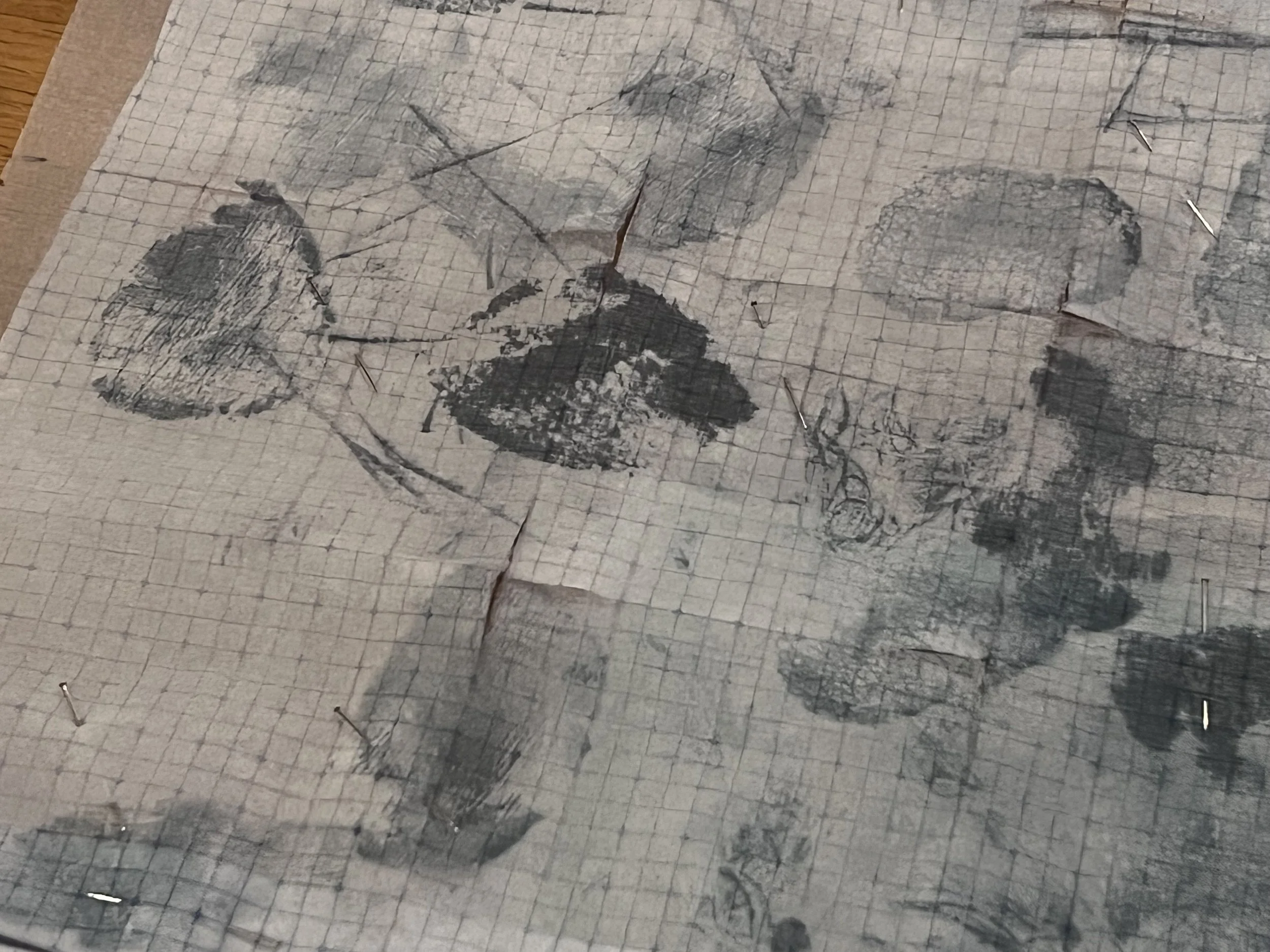
“Concepts like emptiness, layering, and blurred boundaries, rooted in Korean architecture and informed by Confucian, Buddhist, and Taoist thought — shaped how I approach materials and structures.
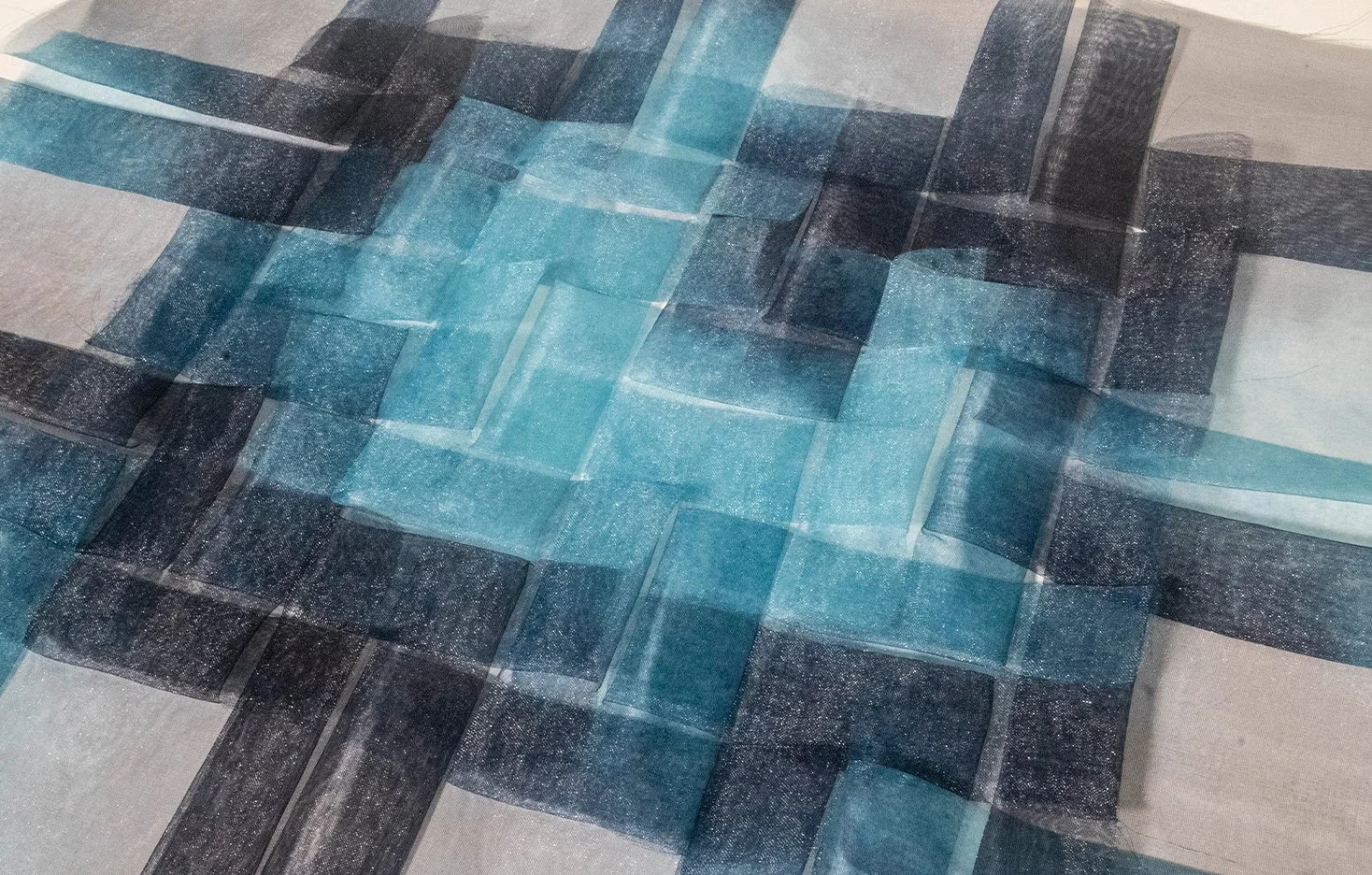
I chose to work with organza for its translucency, lightness, and capacity to capture light and shadow, qualities that echo those of Korean traditional philosophy and aesthetic.
Recreated the material textures using stamps. (Textures of threads, wood, leather, etc)
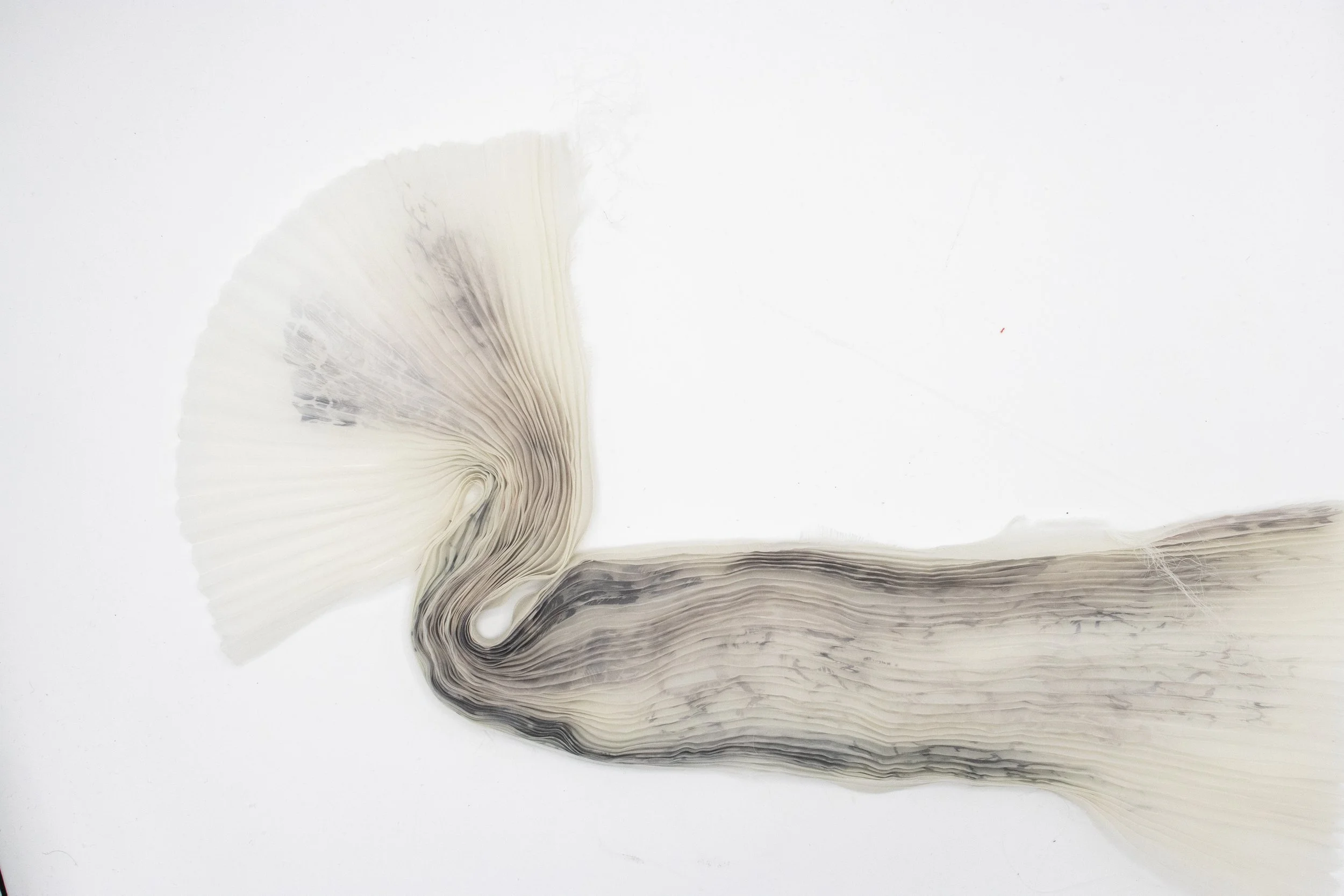
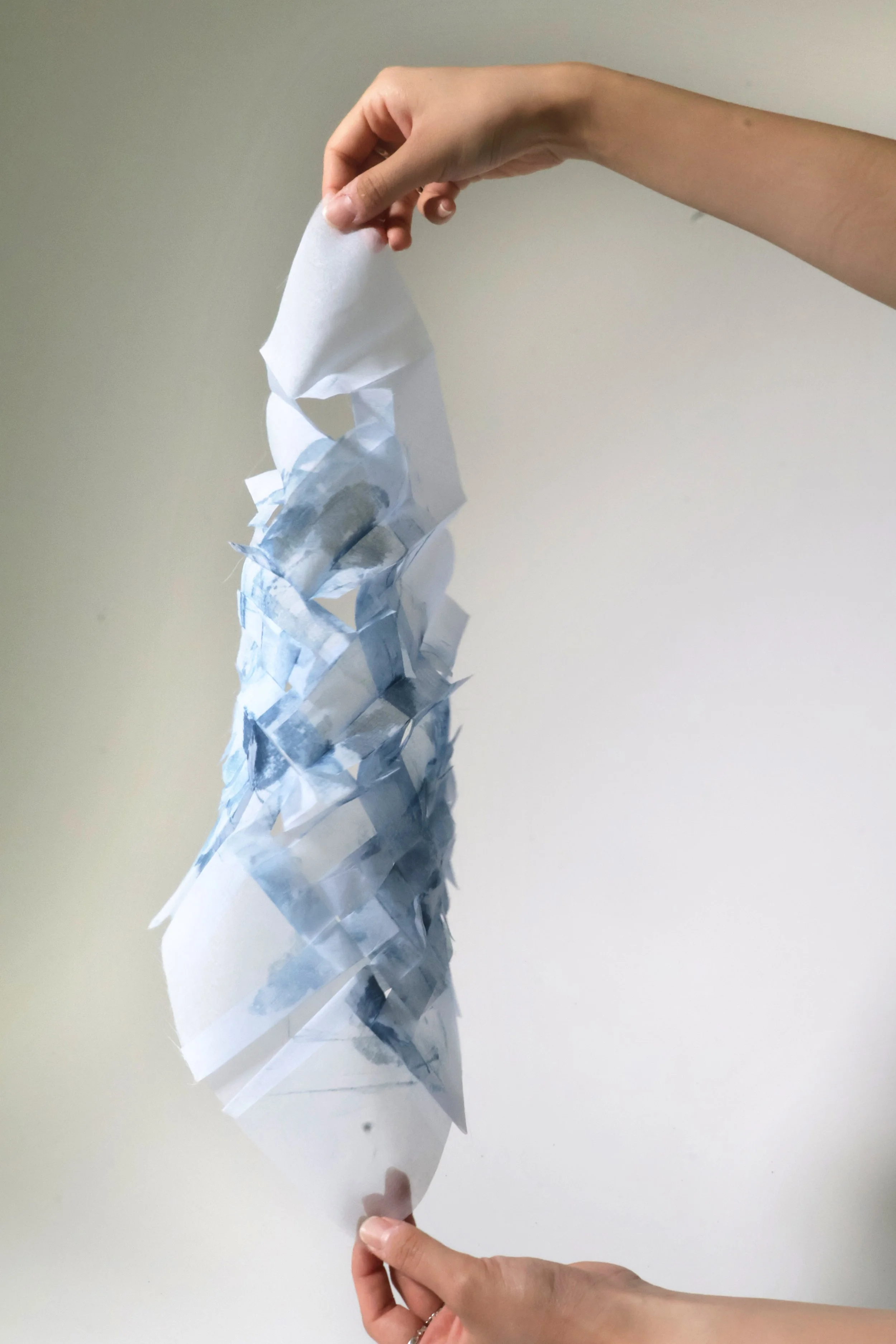
“I also experimented with the Joomchi technique — a uniquely Korean method of creating texture by rubbing traditional mulberry paper, Hanji, with water — during the process to explore how layering can physically embody the accumulation of memory.
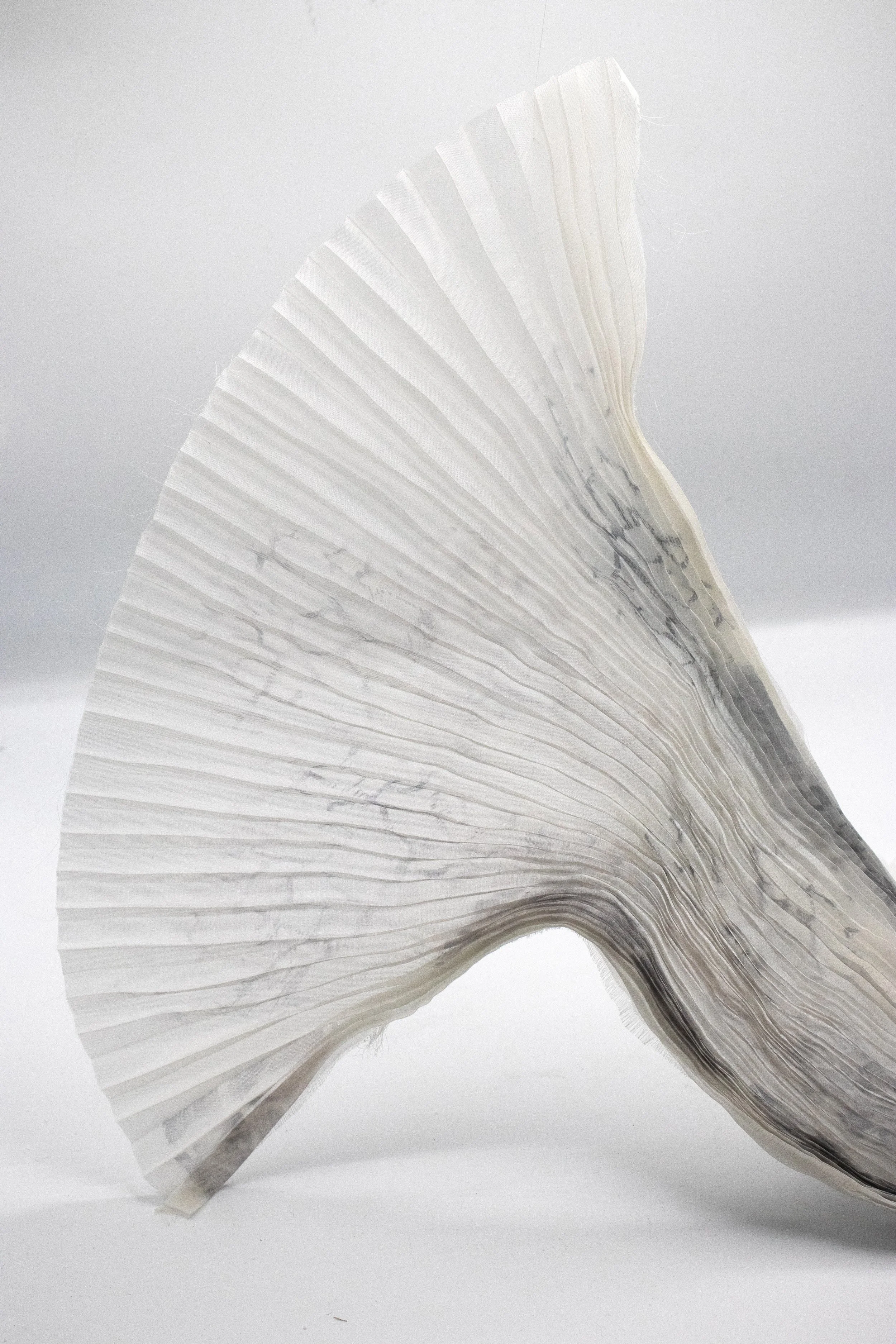
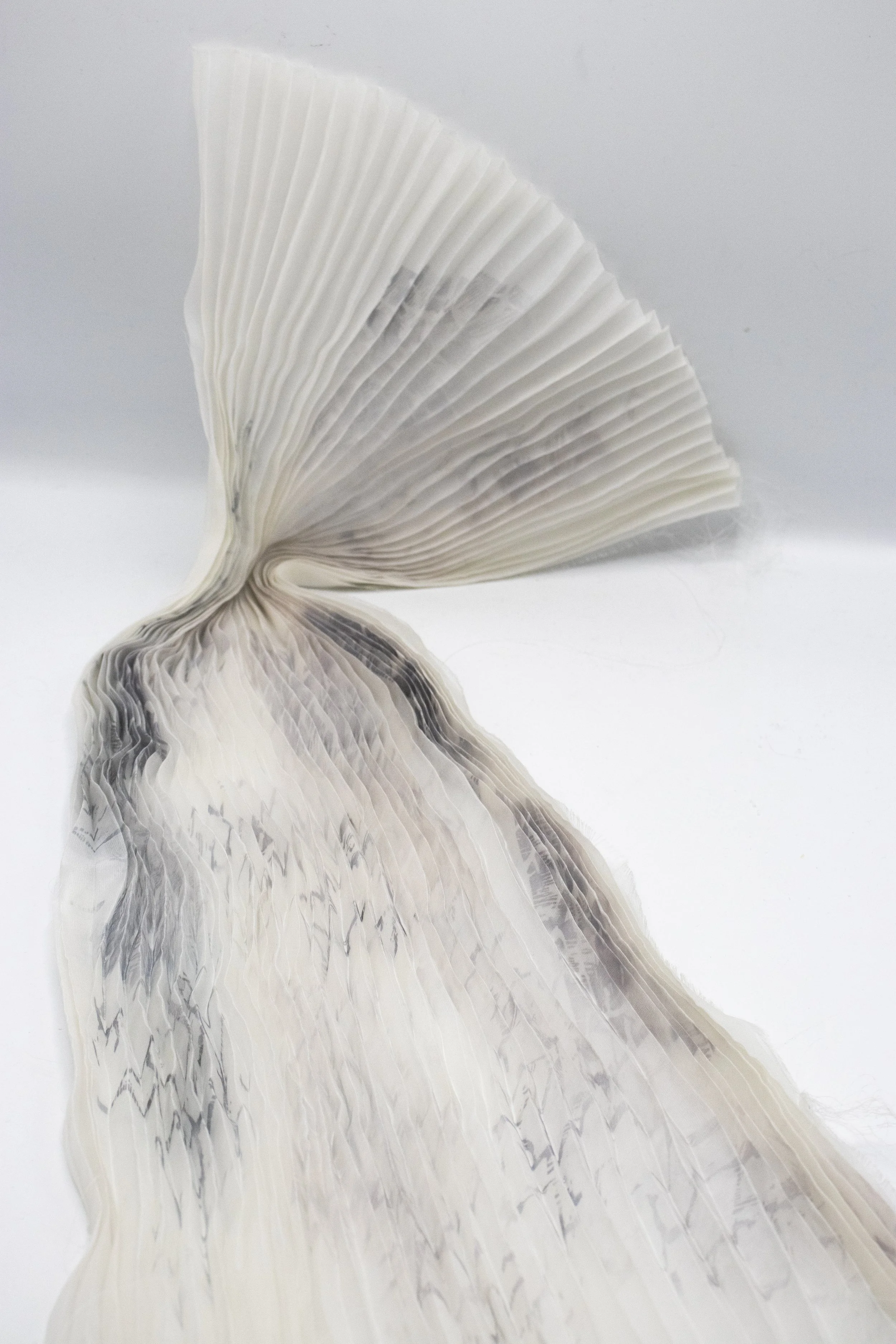
When these printed, layered textile surfaces are folded into spatial structures, they reconstruct fragments of the neighbourhood’s identity in a new sensory and architectural form.”
“Light passes through the translucent layers, casting shadows that shift with time — much like how memories themselves are fluid, incomplete, and constantly reshaped.
The title, The Urban Palimpsest, refers to a manuscript that has been written over but where traces of earlier text remain visible beneath. In the same way, urban spaces carry traces of past lives and histories beneath their current surfaces, and textiles, with their inherent capacity for layering, can hold and reveal these traces.”
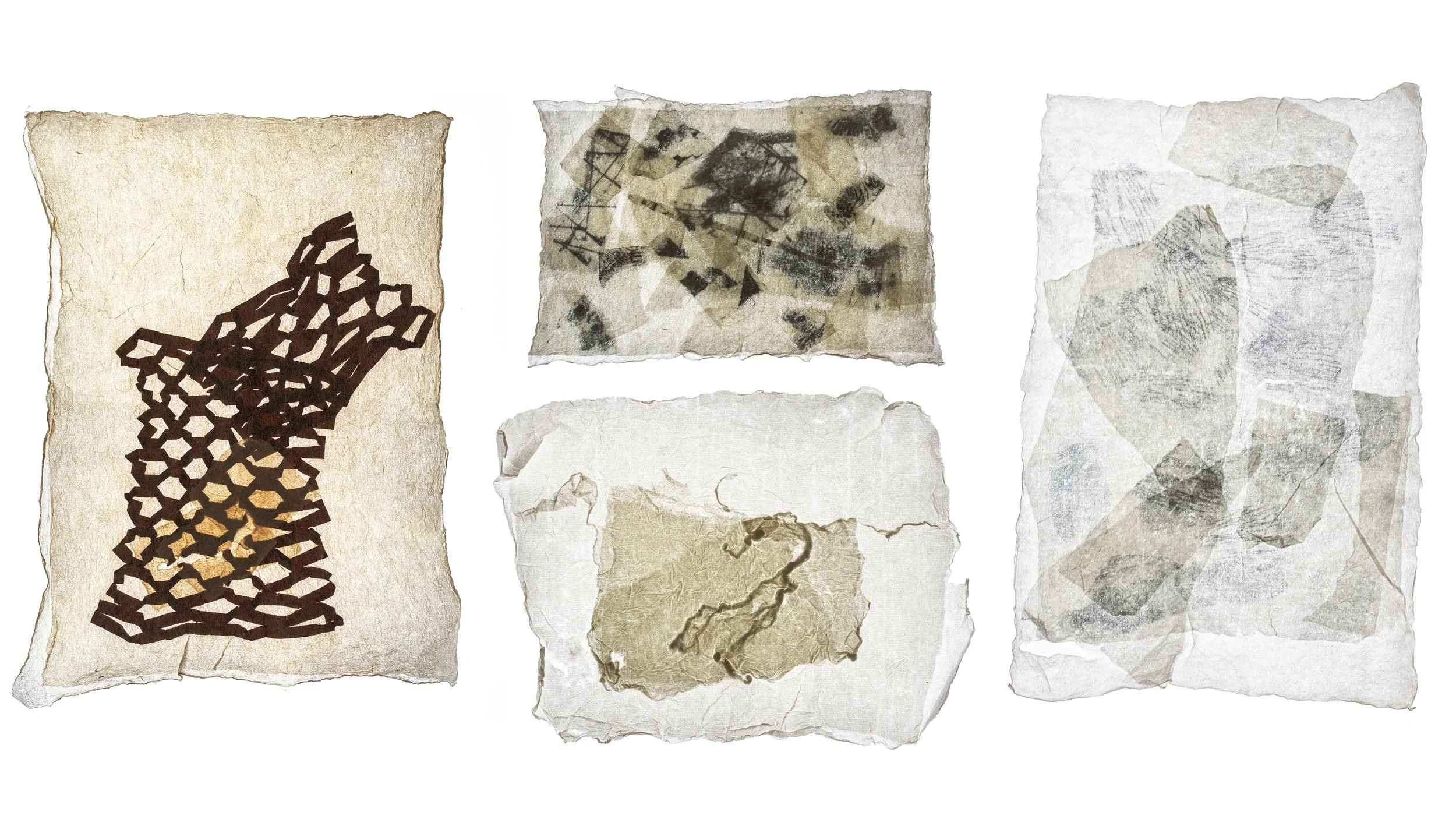
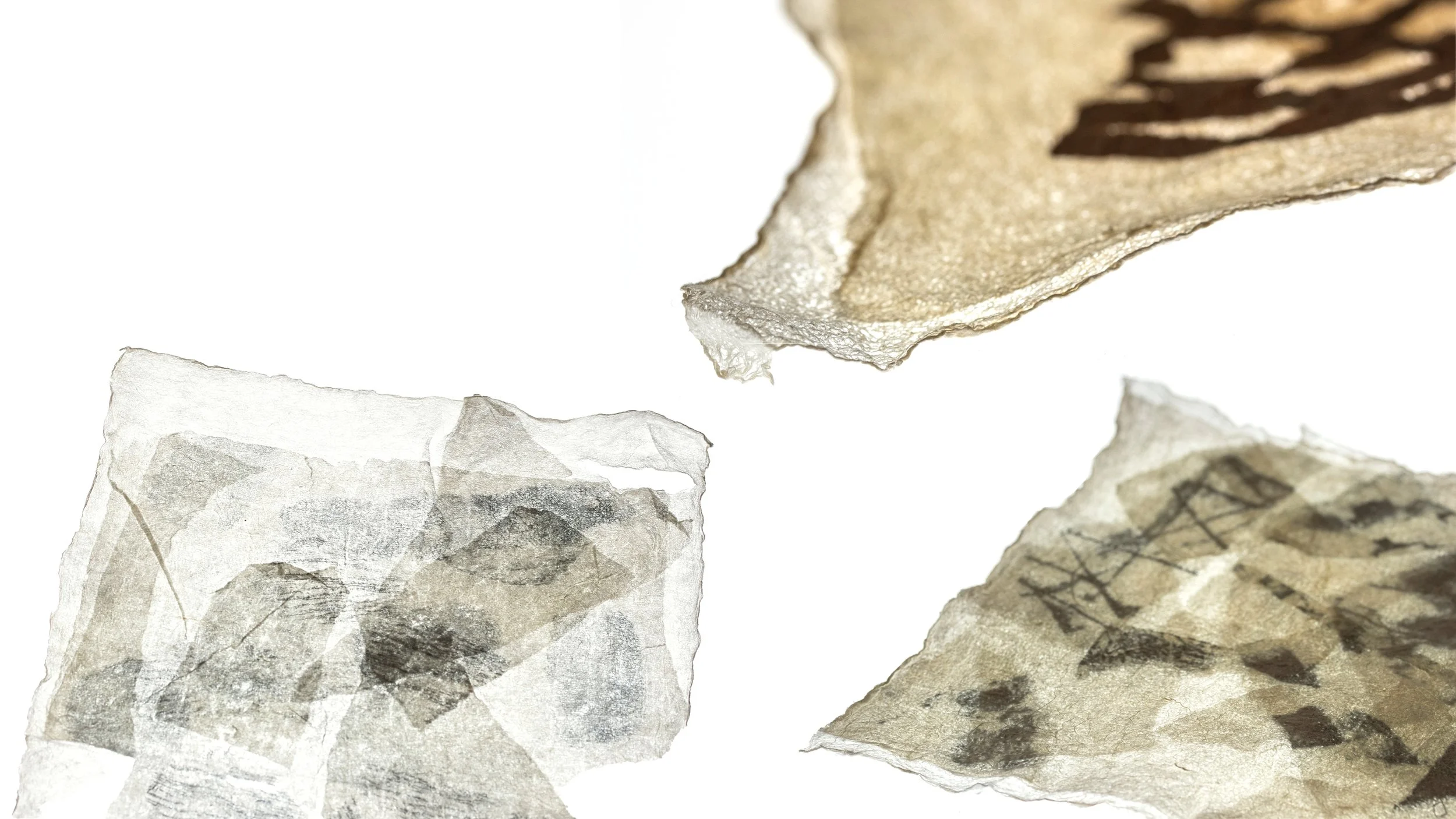
Experiment using Joomchi Technique
The Urban Palimpsest