
Tall Wall by Bea Qian
Animation Film February 20 2026
Intro
Tall Wall is an animated short film written and directed by Bea Qian, telling a hidden story set under the shadow of a smallpox crisis.
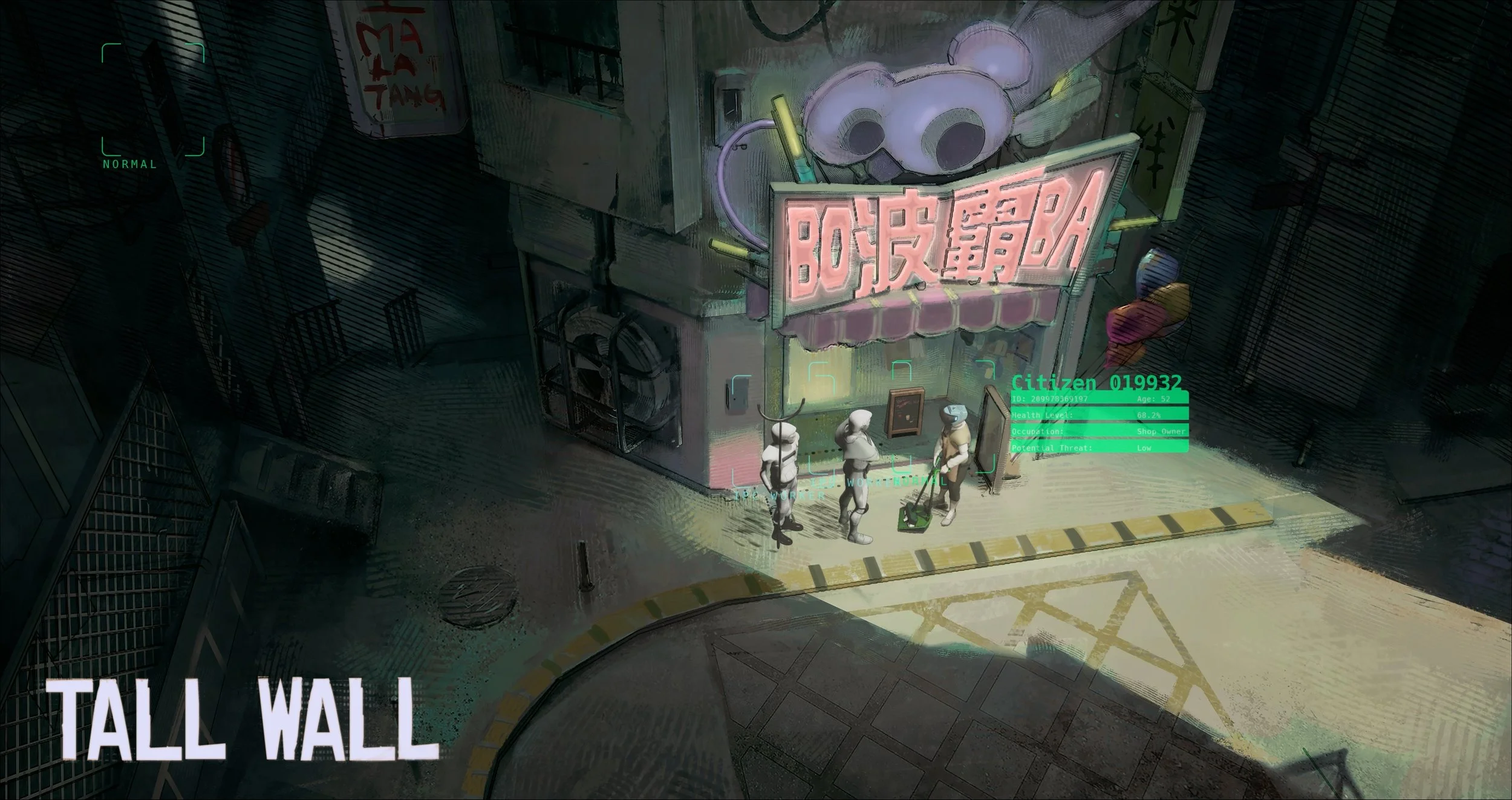
Through the perspectives of closed-circuit televisions and network cameras, we catch a glimpse of a fictional city under lockdown—Las Nieves—where the daily lives of its citizens unfold under special control; a few ordinary people, whose lives are quietly observed through the lenses, eventually have their stories intertwined by the film’s end.
The title “Tall Wall” symbolizes not only the city barriers erected due to the spread of smallpox but also the invisible walls growing deeper between people.
In this film, you will step into the world constructed by Tall Wall: surveillance cameras covering every corner, ever-growing buildings resembling a metabolic cycle, and the constant hum of air conditioners... These elements together portray a city slowly sinking. Amidst the heavy order, some eyes quietly search for a way toward the light.
TALL WALL
Interpretation
Tall Wall can be understood as a story about how COVID changed the way a generation sees the world and each other.
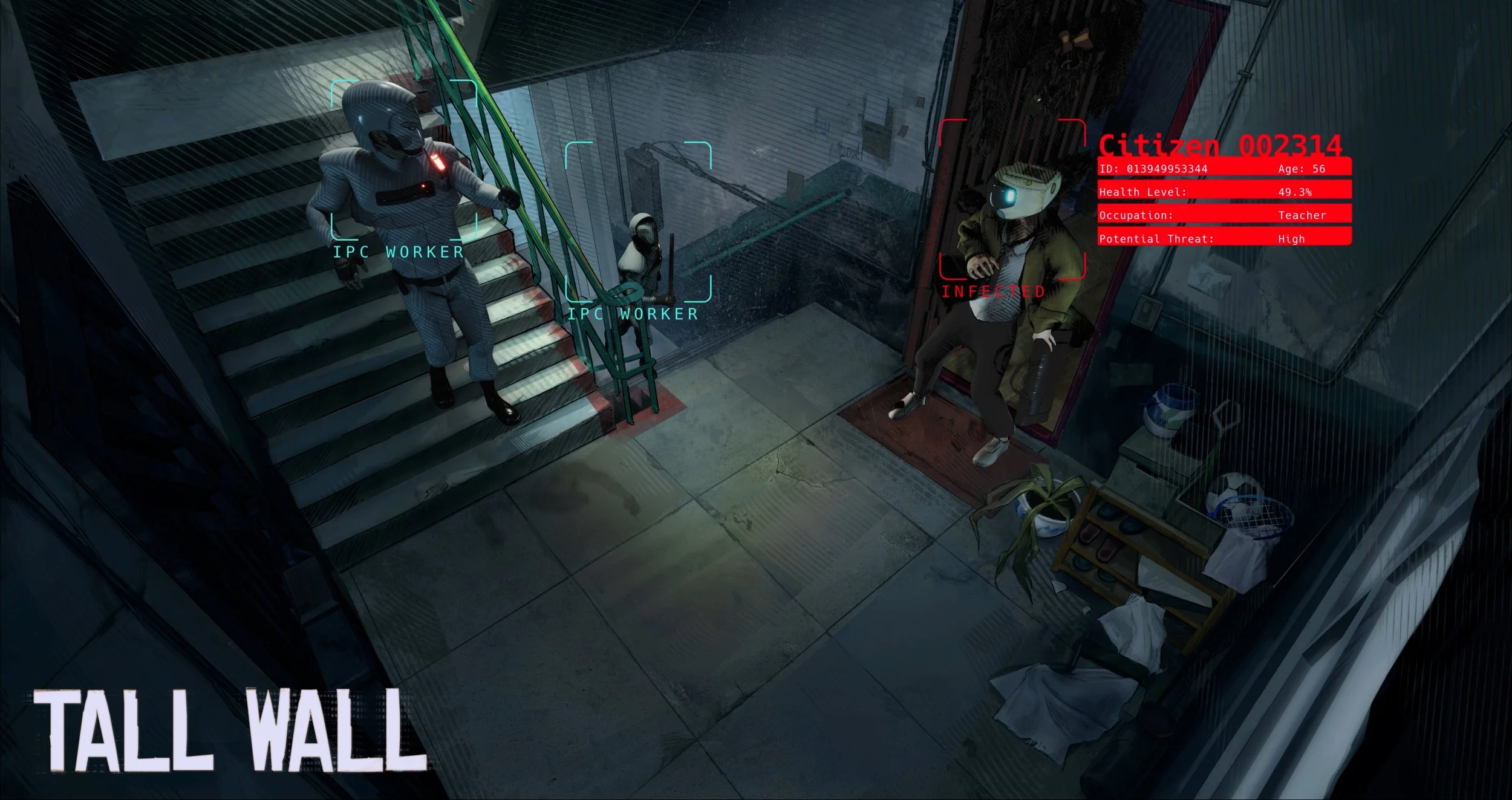
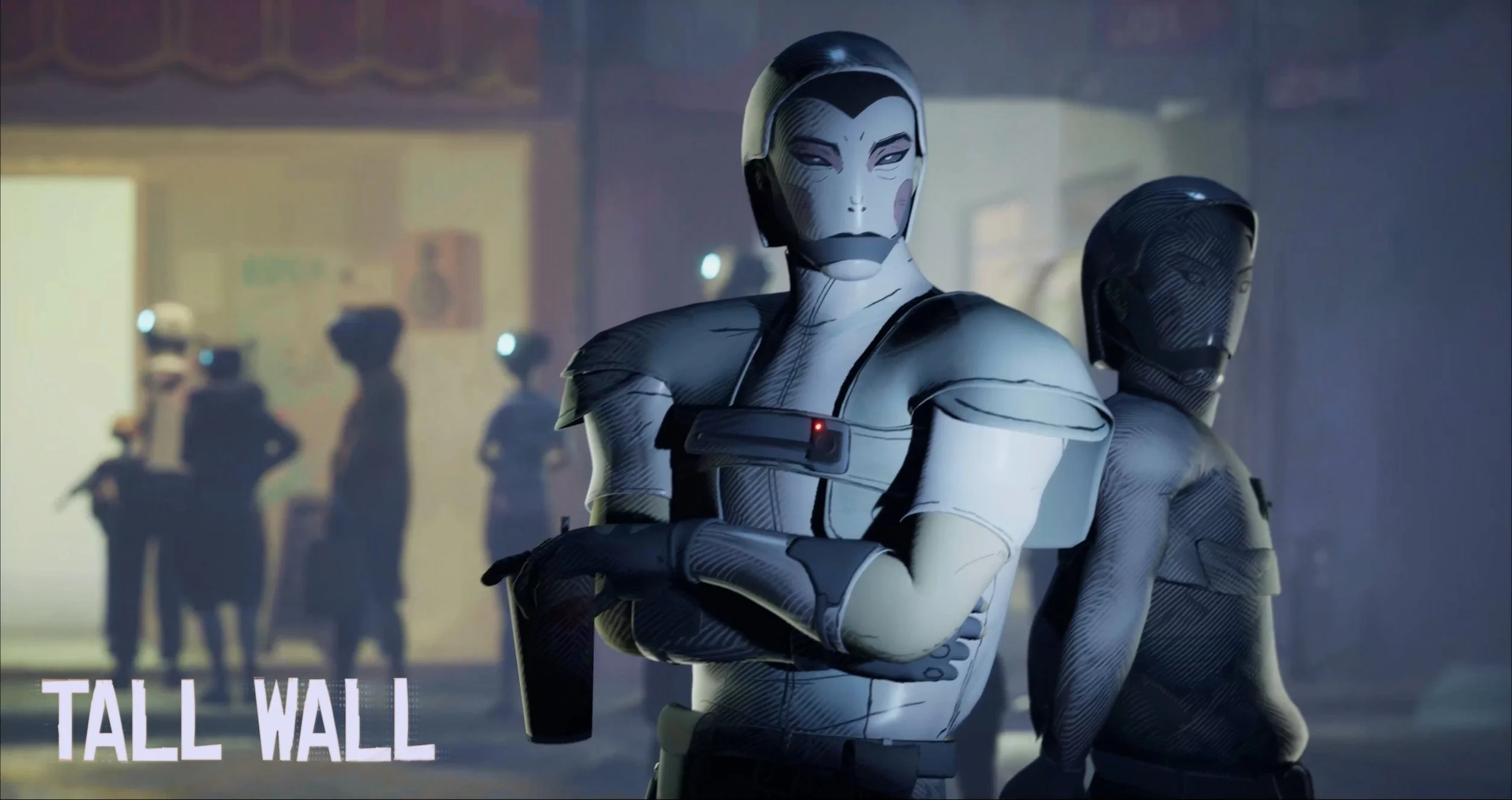
During COVID, daily life moved behind screens. People watched each other through webcams, security cameras, and phones. The film adopts this perspective by telling the story entirely through surveillance cameras. This viewpoint feels calm and objective, but it also reveals how isolated people have become. The audience watches from a distance, much like how people experienced the pandemic—connected through technology but physically separated.
From the Artist
“When I was preparing my capstone pitch decks at ArtCenter, I had two stories: one based on a historical trauma I never lived through, and another was Tall Wall. The faculty chose the historical one, but I felt disappointed—I realized how much more I wanted to tell Tall Wall. After talking with my mom, she reminded me to tell the story of my generation’s pain, not just inherit someone else’s. That gave me the confidence to continue.
One key image in my pitch deck was a ruined wall painted with the words: “Without records, it never happened.” During COVID-19, I witnessed how fragile human nature and governance could be, and how easily memories fade. Choosing smallpox as a subject echoed how history repeats itself and how we keep making the same mistakes. Out of that urge to remember, Tall Wall was born.
As cliche as it could be, the production design for this film started with “we wanted to do something different”. The story is told entirely through CCTV and webcams—a perspective that feels calm, detached, yet brutally honest. Shows and games like Person of Interest and Watch Dogs inspired me, but for me it was also about intimacy: a camera in someone’s room reveals a side of humanity we usually keep masked. On a practical side, this perspective helped our zero-budget student film by blending matte-painted backgrounds with 3D animation into a unique 2.5D look.”
Behind the Scene
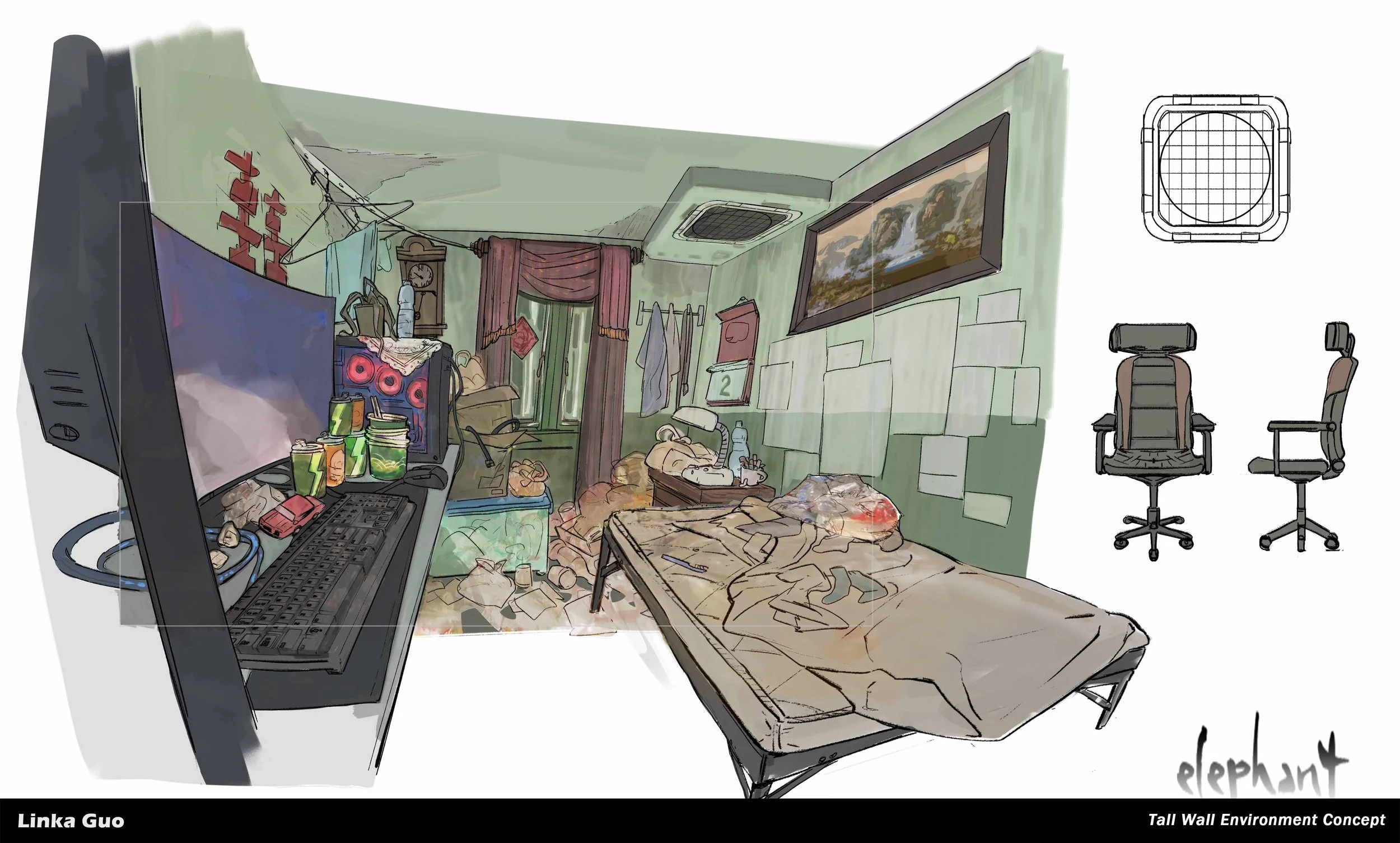
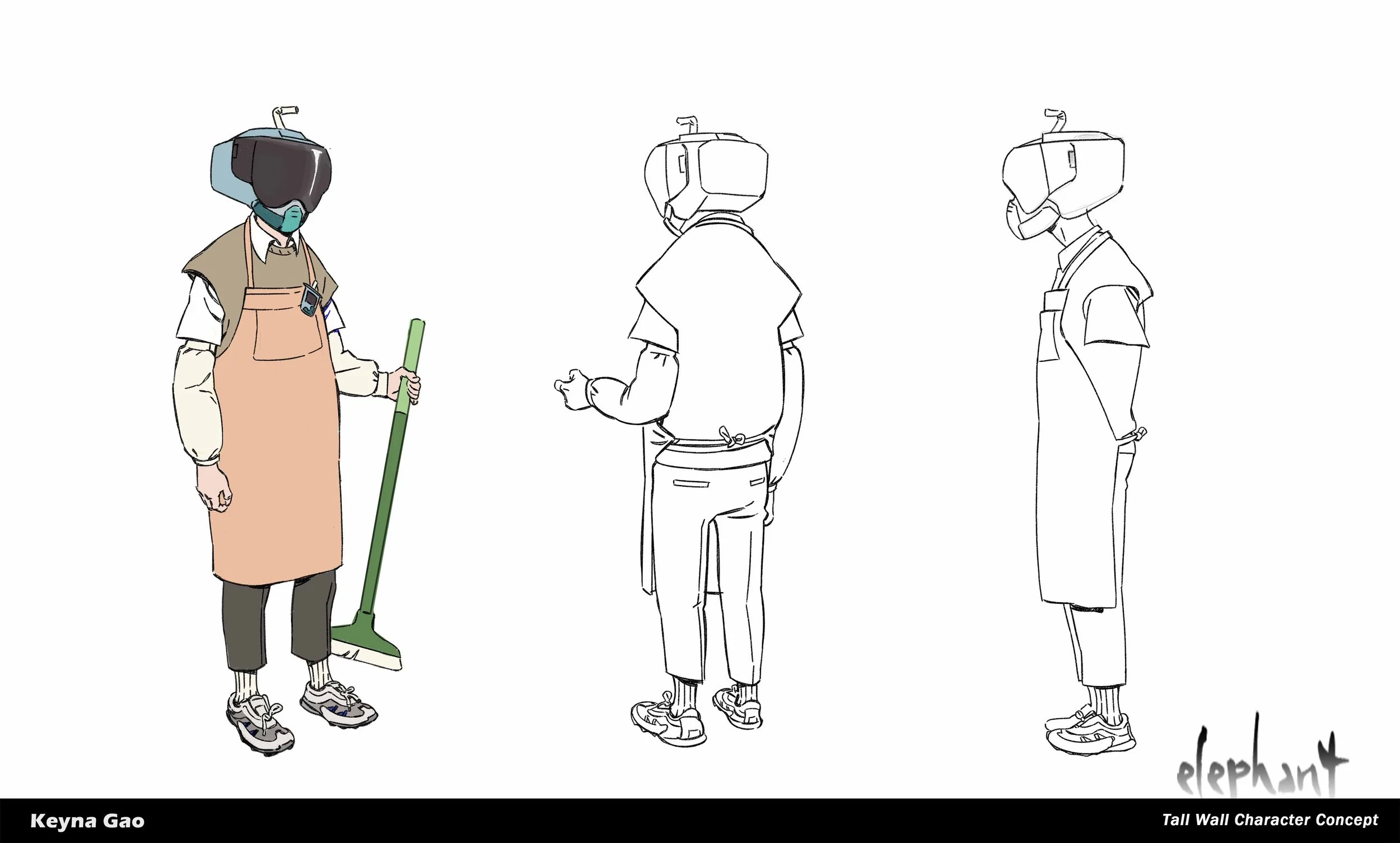
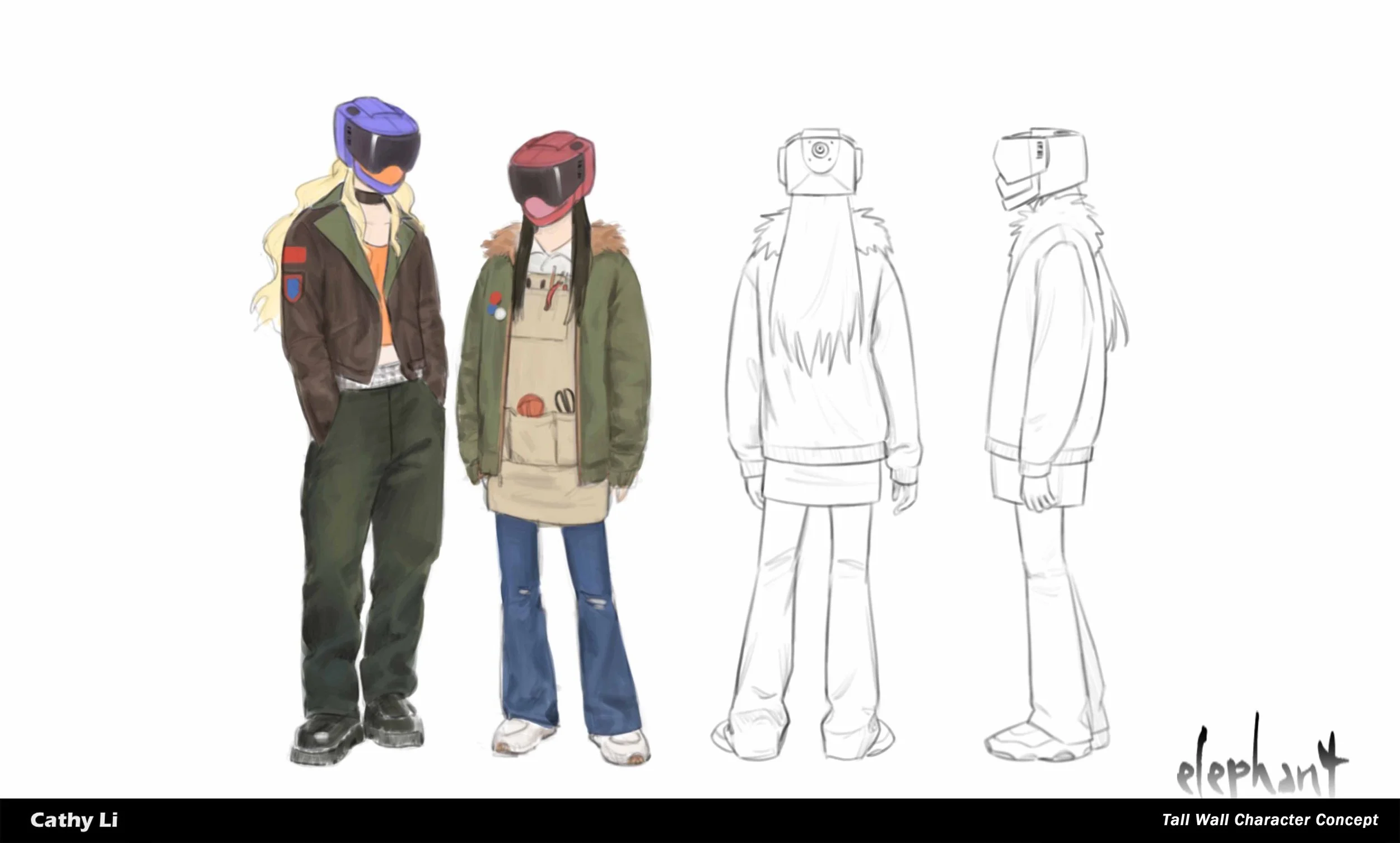
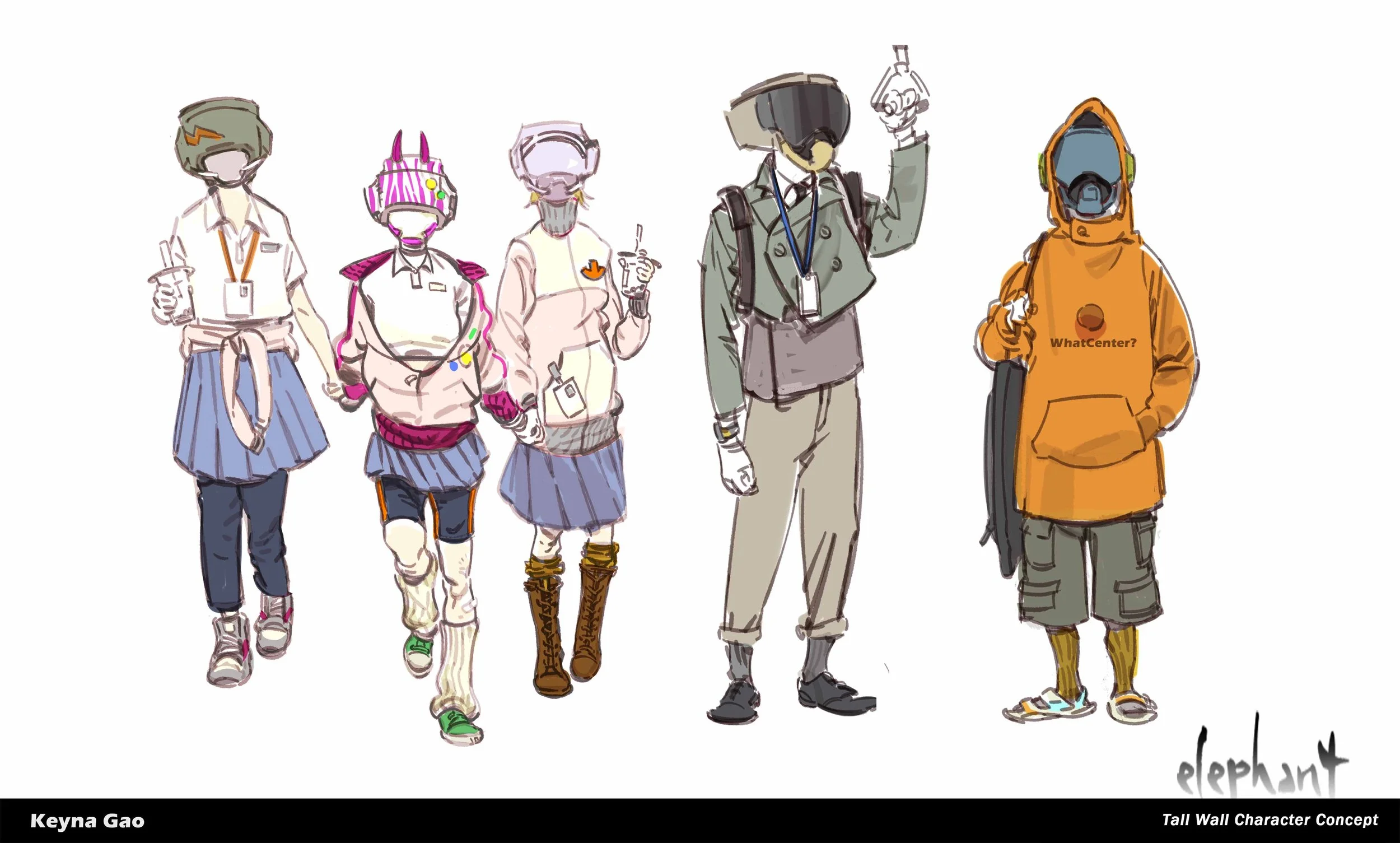
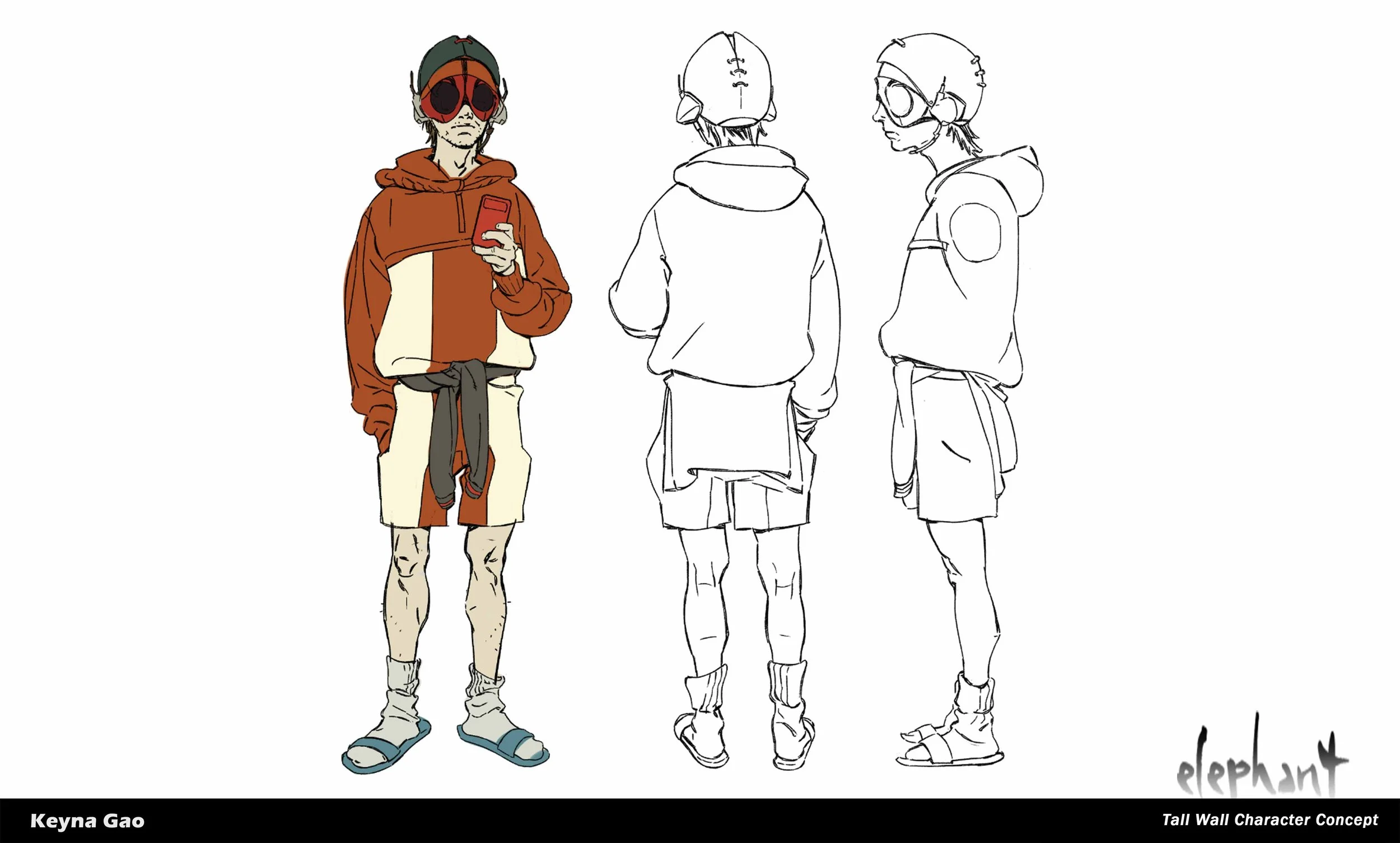
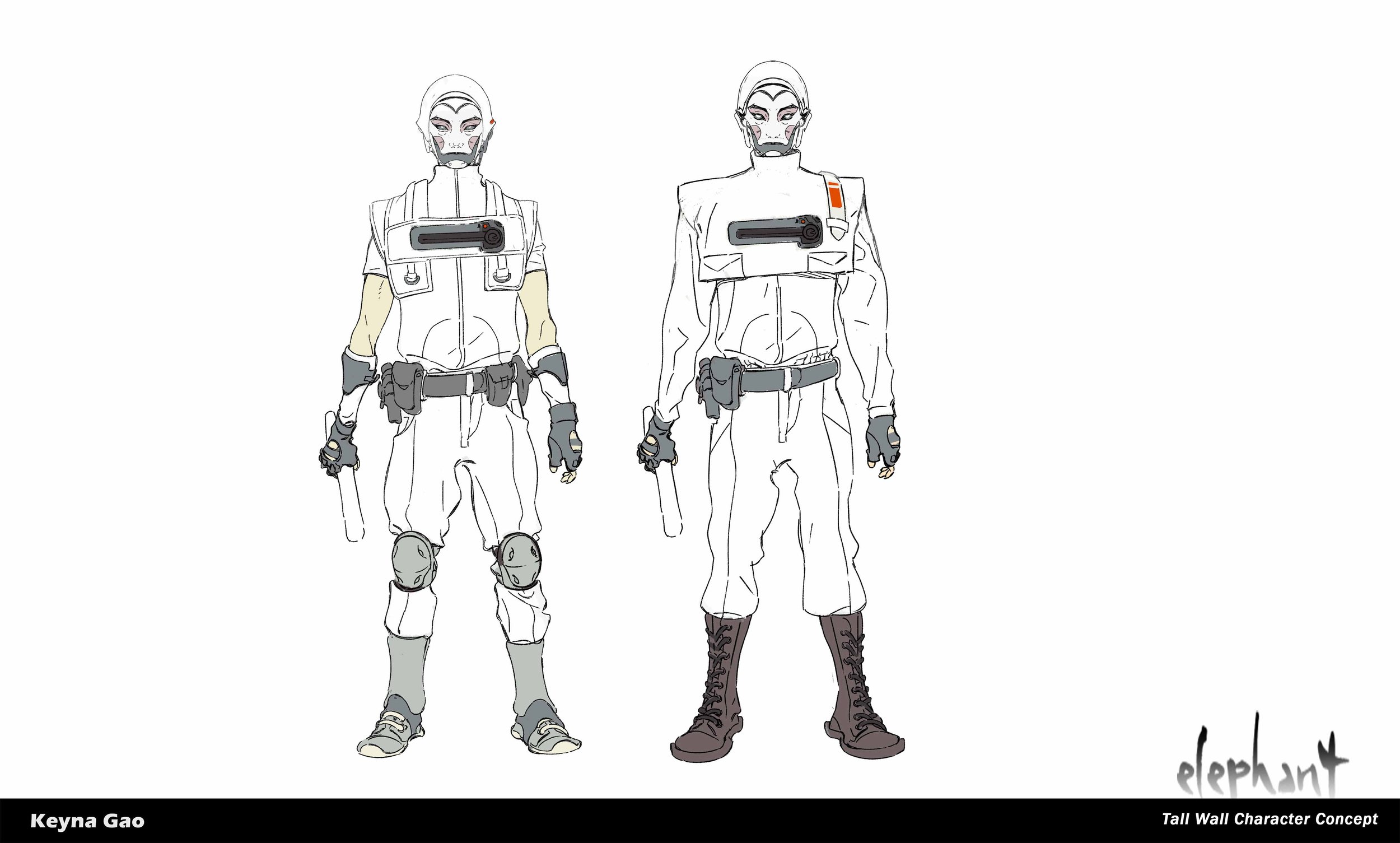
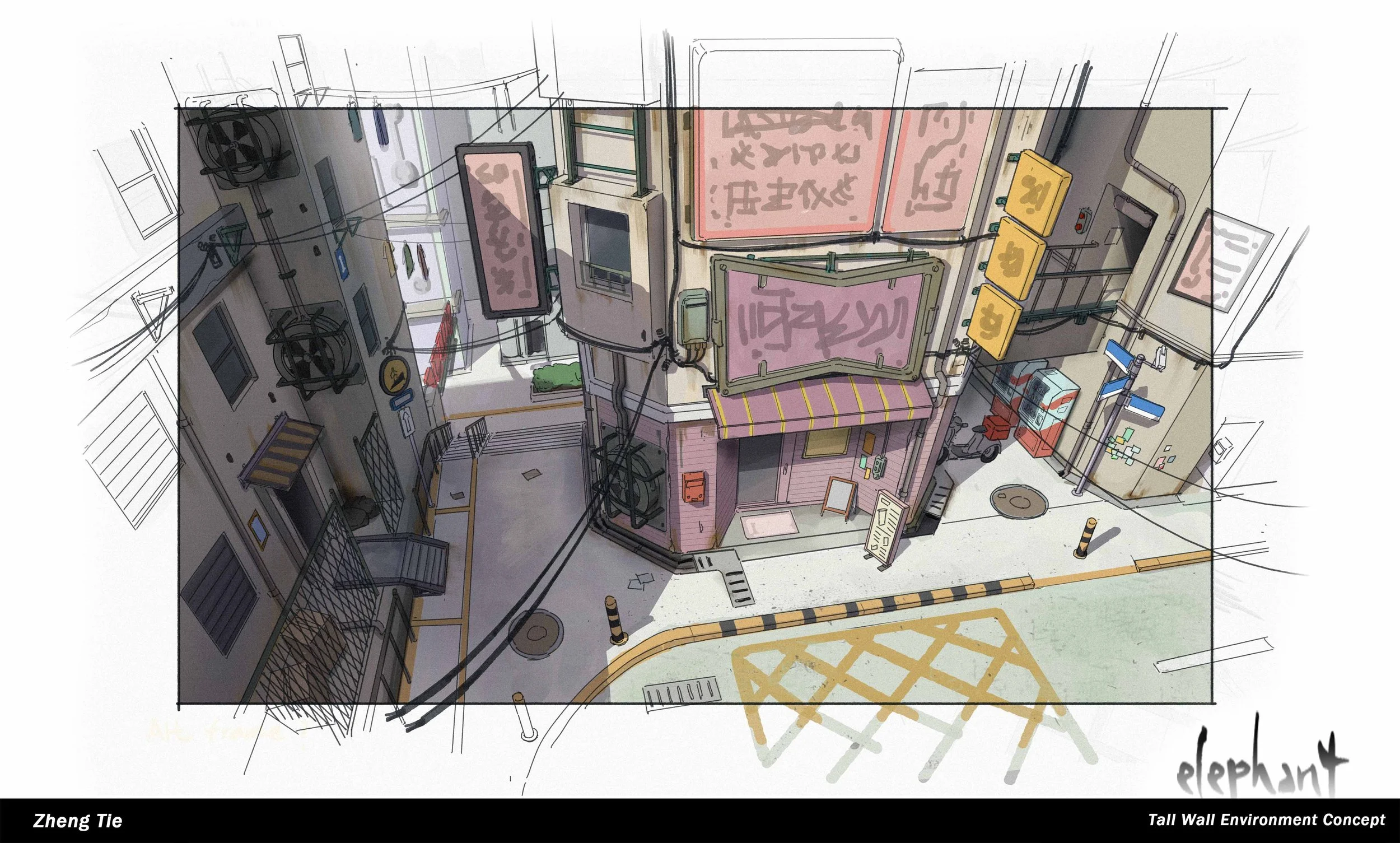
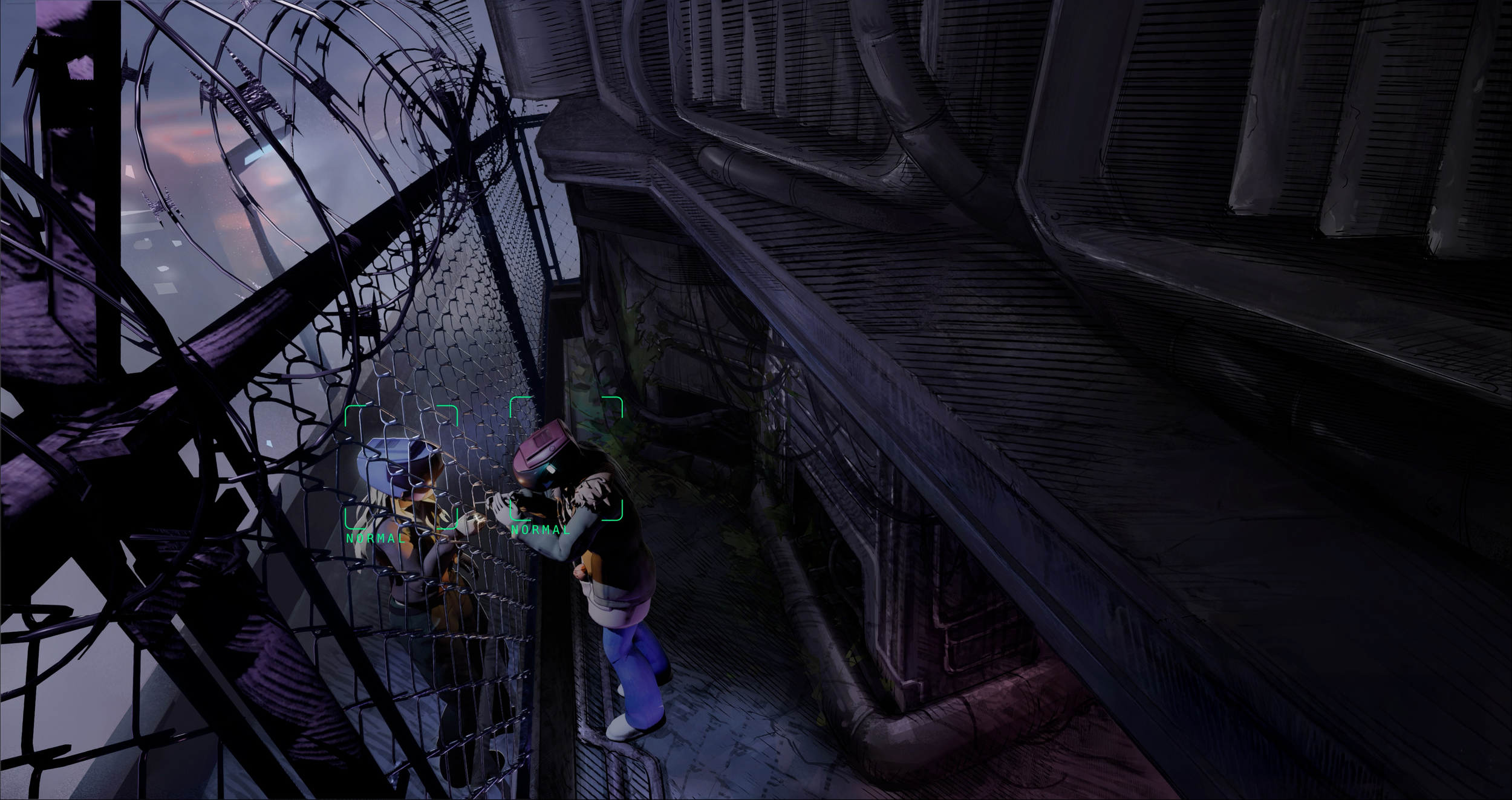
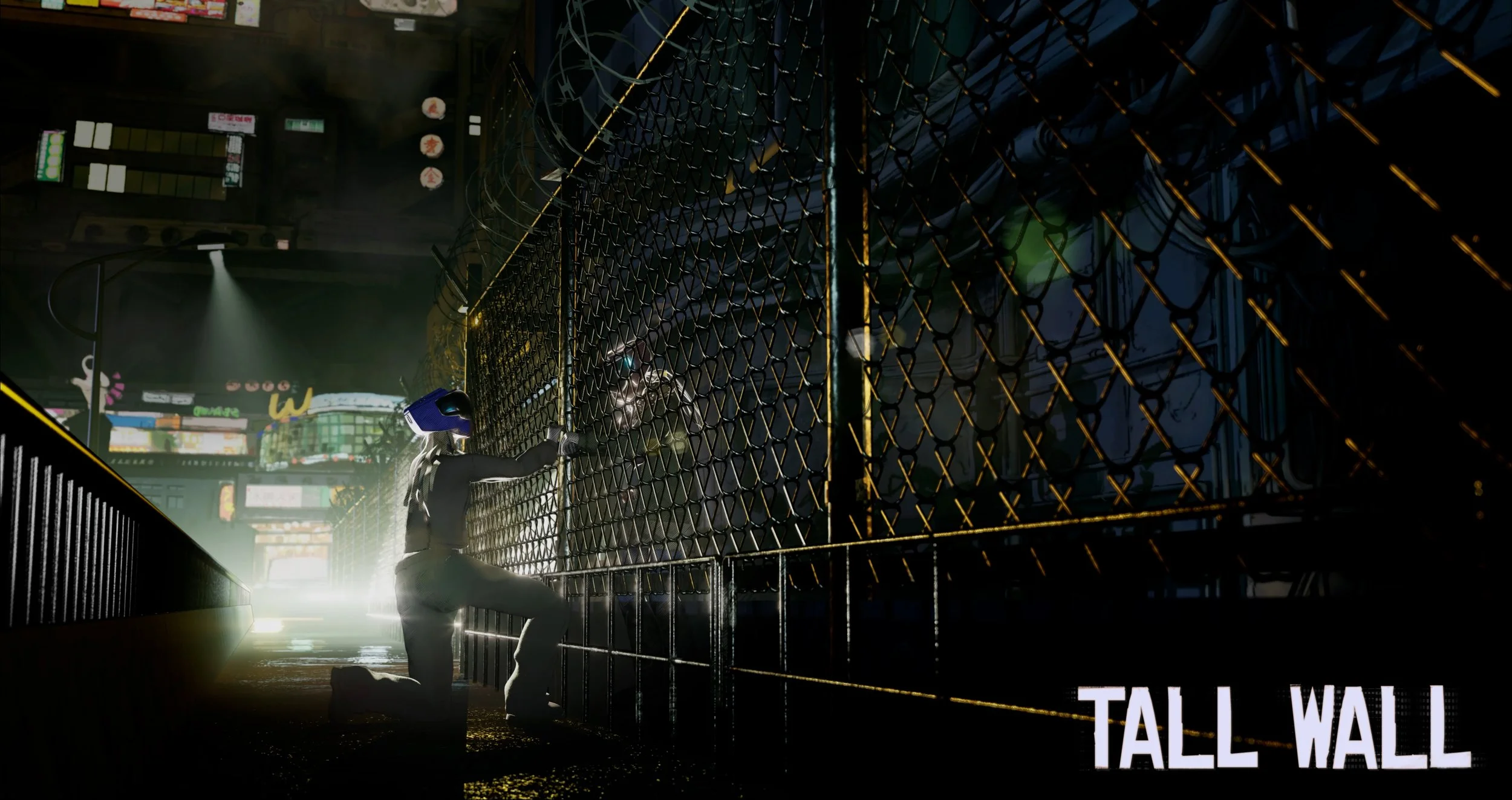
“Our art director, Linka Guo, brought her graphic novel-inspired style, and later we were joined by Doma Wang as associate art director and environment lead. Together we built Las Nieves, a multicultural city under a dystopian world. Through its environment design, you can see the impact of overpopulation and the widening gap between rich and poor. Doma was deeply inspired by post-war Japanese “metabolic architecture,” which fused architectural megastructures with ideas of organic growth. We incorporated those ideas into the city—stacked air conditioner units, fences to deter thieves, weathered walls, and water stains along concrete edges. These details gave Las Nieves its lived-in, fragile identity.
Helmets were also a central part of the design. In my early storyboards I used motorcycle helmets as placeholders, but eventually we redesigned them into practical, story-driven objects. The idea of these helmets started back in 2020, when I created the concept of the “Anonymous helmet,” long before Tall Wall existed. In Asia, masks had been part of daily life long before COVID—used not only for health, but also as a quiet form of protection and social distance. I saw parallels between this and the anonymous culture of the internet, where my generation grew up shielded behind screens and carried that sensitivity into real life. The helmet in Tall Wall represents this shift: a future where people wear helmets both for hygiene and for anonymity. At the same time, every helmet carries an identification chip linked to a personal ID, showing how anonymity and surveillance exist side by side.”

“For postproduction, we chose Unreal Engine 5. There was a debate between using Blender or UE5 for a 2.5D pipeline, but UE5 won out—mainly because of its strong Maya-to-UE5 workflows already established in the community, and its project management system that allowed us to structure everything like a game project.
We treated the environment modeling pipeline much like a traditional 3D animation film, even though they were not presented in the final film. After the models were done, I worked as cinematographer, placing final cameras inside an untextured 3D model of the sets. From those camera views, we exported screenshots and handed them to matte painters. Their job was to paint over the layouts—keeping perspective and prop placement exact—while also adding textures and lighting details based on concept art and color keys. In this way, their work became a hybrid of texturing and lighting within a 3D workflow.
For characters, all animation was done in 3D, so they needed full textures. The style followed the same painterly strokes as our matte paintings, but at this stage we were still refining the final look. To bridge characters and backgrounds, we built custom UE5 shaders for both characters and props. This let us add bold, stylized light and shadow lines that echoed the painted environments. Once the matte paintings were finished, we projected them back onto simplified 3D models, imported them into UE5 with the final cameras, and had our lighting artists adjust the scenes so the characters blended seamlessly into their painted worlds.”
Credits
Written & Directed by
Producer
Bea Qian
Tracy Li
Animation Lead
Fred Zeng
Pipeline Lead
Shiyu Liu
Unreal Lighting & Compositing Artists
Lucya Chuang / Freya Zhao / Bea Qian
Kandrea Zhou / Larainne Li / Shiyu Liu
Gerile Yang
Sound Designer and Score Assist
Xie Alphonse
Voice Actors
Phil Echavarria / Jonah Ko
Stephen Chin / Devin Morgan
Jared Guadalupe Ayala
UI Designers
Nadine Seoro / Jerjie Chernick Kim
Olivia Li / Jing Ding
Animators
Fred Zeng / Tracy Li / Soyeon Bae
Astrid Long / Claire Wu / Astrid Yu
Fay Chen / Chris Chang / Konjia Liu
Daisy Suol / Cathy Li
3D Animation
Huanran Mao / Bea Qian
Actors
Menyuan Qin / Yuxin Wu
Yokshui Mu / Yonglong Wu
On-set Director and Casting Director
Amy Li
Texture Artists
Shiyu Liu / Gerile Yang / Qiudi Peng
Kandrea Zhou / Larainne Li
Victoria Collazo Hernandez
Gaoge Ren / Kevin Guan / Lobster
Character Concept Artits
Keyna Gao/Cathy Li
Rigging TD
Bea Qian / Veronica Tolmacheva
Recording Technician
Daniel Vidal
Production Assistant
Gerile Yang
Art Direction
Linka Guo
Layout
Claire Wu / Patrick Christyanto
Bea Qian / Samar Mingshan Chen
Environment Concept Artists
Dora Wang / Zheng Tie / Linka Guo
Matte Painters
Cheri Wang / Joe Travis / Rengyu Xu
Reese Chen / Rust Lu / Cedric Yao
Linka Guo / Dora Wang / Rebecca Li
Selim Chol / Shannon Chen
Color Scripts
Linka Guo / Dora Wang / Ziye Liu
Orginal Score
Elva Chen
Associate Art Director
Doma Wang
After Effect Compositing Helpers
Tracy Li / Gerile Yang / Linka Guo
Astrid Long / Freya Zhao
Lead Matte Painters
Kevin Wang / Amber Wang
Character Modelers
Tracy Li / Cathy Li / Shiyu Liu
Elina Huang / Fred Zeng / Keyna Gao
Kevin Guan / Veronica Tolmacheva / Freya Zhao / Qiudi Peng
/ Kevin Guan
Graphic Designer
Yangyu Sheng / Dora Wang
Sound Designer
1573
Concept
Bea Qian / Linka Guo / Doma Wang