
SHE WHO DIES ALONE by Lera Bolkonska
Short Film April 18 2026
Intro
Throughout history, a woman’s purpose and success in life have often been defined by her relationship to a man—having a partner, raising children, and dedicating herself to home and family. Long-term singlehood, especially after the age of 30, is frequently marginalised and associated with sadness, failure, or wasted potential.
This film challenges those narratives by exploring the societal pressures placed on single women. It offers alternative perspectives on what happiness and success can look like, celebrating the lives of women who thrive outside traditional roles..
From the Artist

My final animation project was inspired by The Lobster film, a surreal narrative in which single people must find a partner within 45 days or be transformed into animals. It's absurd premise exposes the societal pressure to conform to romantic expectations often to a grotesque degree.
This darkly humorous and ambiguous tone strongly shaped my own work. Rather than simply depicting reality, I became interested in exaggeration as a way to provoke reflection and, at times, discomfort. Through this lens, I began questioning deeply rooted gender expectations and the narrow definitions of fulfillment imposed on women.
My research drew from texts such as Single Saudi Women by Wasma Mansour, Women Who Fly by Serinity Young, and Woman as Design by Stephen Bayley. These works reveal how women’s identities have historically been shaped, controlled, and often reduced to fit societal and male-driven ideals.
I also turned to mythology, referencing figures such as Penthesilea and Aphrodite. These archetypes allowed me to explore femininity beyond contemporary constraints, using symbolic language rather than fixed biography.
The graphic memoir Persepolis by Marjane Satrapi further influenced my approach, reminding me how personal narratives can illuminate broader political and cultural realities.
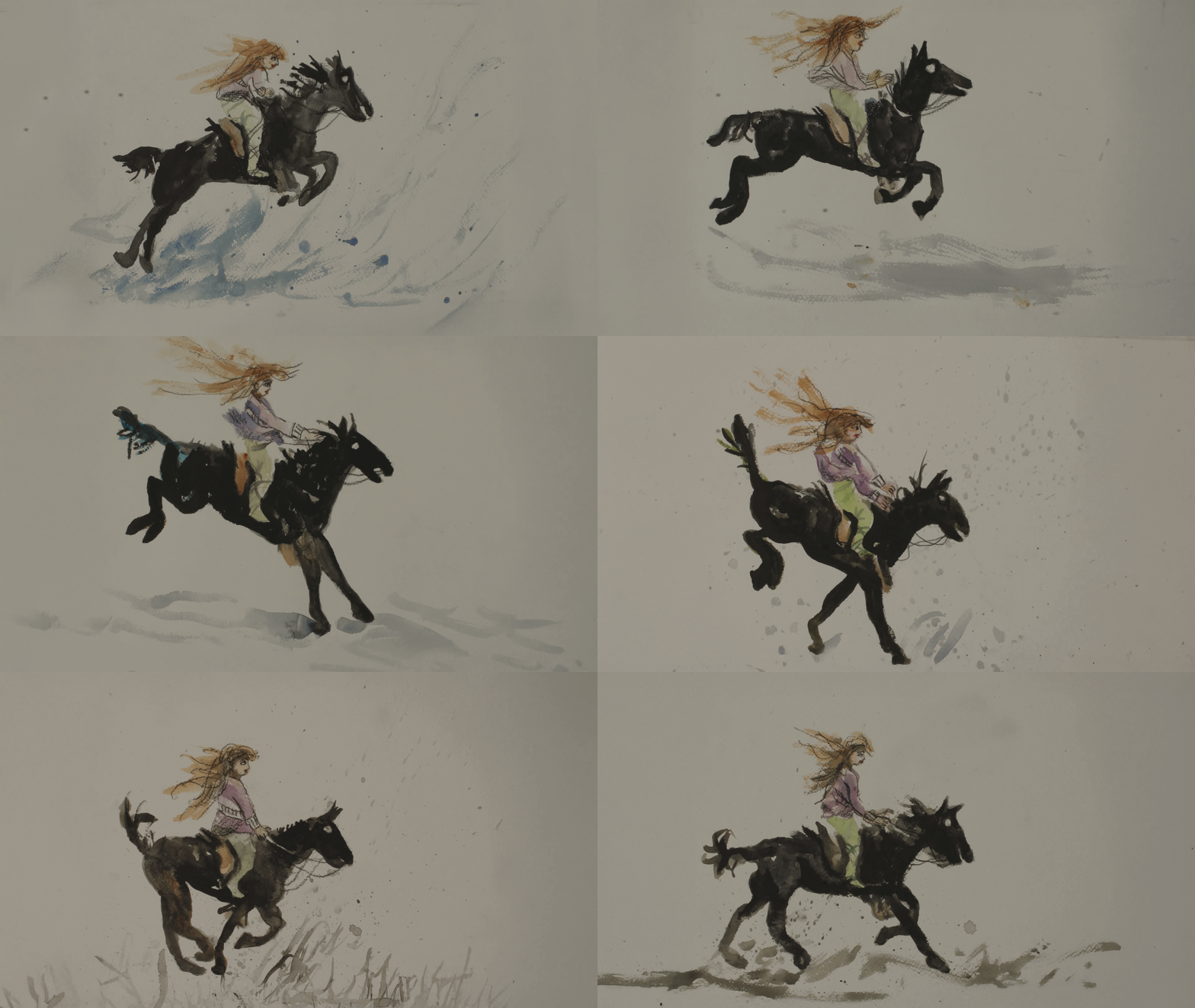
Technically, I was inspired by Jeff Scher’s animated style, particularly his use of watercolor and pencil textures to create flickering, expressive movement. I applied a similar approach in my depiction of Penthesilea, using shifting colors and layered textures to reflect emotional complexity.
I was also influenced by David Földvári, whose work often animates only fragments of an image while maintaining strong emotional impact. His use of contrast, rough textures, fragmented imagery, and layered sound encouraged me to experiment with collage, moving paper, and the combination of still images with animation and text.
The project is deeply rooted in my personal experience of growing up in Ukraine, where patriarchal norms continue to shape expectations around women’s lives. Social narratives often define a woman’s success through marriage and family, reinforced by phrases such as “your clock is ticking,” “female happiness,” or “you will miss your train.” These expressions reflect a cultural belief that a woman alone is incomplete.
Historically, a woman’s purpose has been framed in relation to a man through partnership, motherhood, and domestic roles. Long-term singlehood, particularly beyond the age of 30, is frequently stigmatized and associated with failure or lost value.
This film challenges those narratives by examining the pressures placed on single women and offering alternative visions of fulfillment. It seeks to reclaim space for women who exist outside traditional roles, presenting independence not as absence, but as possibility.
In terms of process, I combined painted stop-motion animation with moving collage elements. This hybrid technique complements my loose, expressive drawing style, allowing for imperfection, texture, and emotional depth.
Ultimately, this project helped me recognise that my creative voice lies in revealing what is often left unspoken, whether social expectations, internal tensions, or inherited cultural myths.
