
Review on Alexandra Baraitser: I Just Gotta Do It, at Tiderip, London
Finding the Realness in Reality
“Chair, stop being such a chair!
Too much matter, too much identity.
They are. They are what they are, by themselves.
For these objects: solid, single, frozen.
It will take airy tenderness."
— Patrizia Cavalli
The chair has become, almost inescapably, a defining object of contemporary life. The history of seating revisits something of human power, social roles and desire through the objects that have shaped it. The chair, an extension and proxy of the body, has been reproduced in countless artistic forms, each evoking presence, absence and emotions. The excerpt from the Italian poet Patrizia Cavalli explores a fluctuating sense of division and loneliness between everyday domestic objects and the lives they hold; it feels isolated, and we, likewise, leave our attachment to them, and something happens through them. Baraitser seeks to uncover the concealed power interweaving within banal domestic objects. Seeing the objects that live with us, so close, as separate is a way to see ourselves living with them from the outside, tentatively stretched and tugged. Chairs in different designs, along with other domestic objects, thread through most of Alexandra Baraitser’s latest solo exhibition, I Just Gotta Do It, at TIDERIP, London. Curated by Marjorier Ding, the exhibition is a space for a conversation between past and future, a recurring representation of interior items as a document of Baraitser’s practice and new realisation over a decade. We are gently invited to feel the complexities that weigh upon us today.
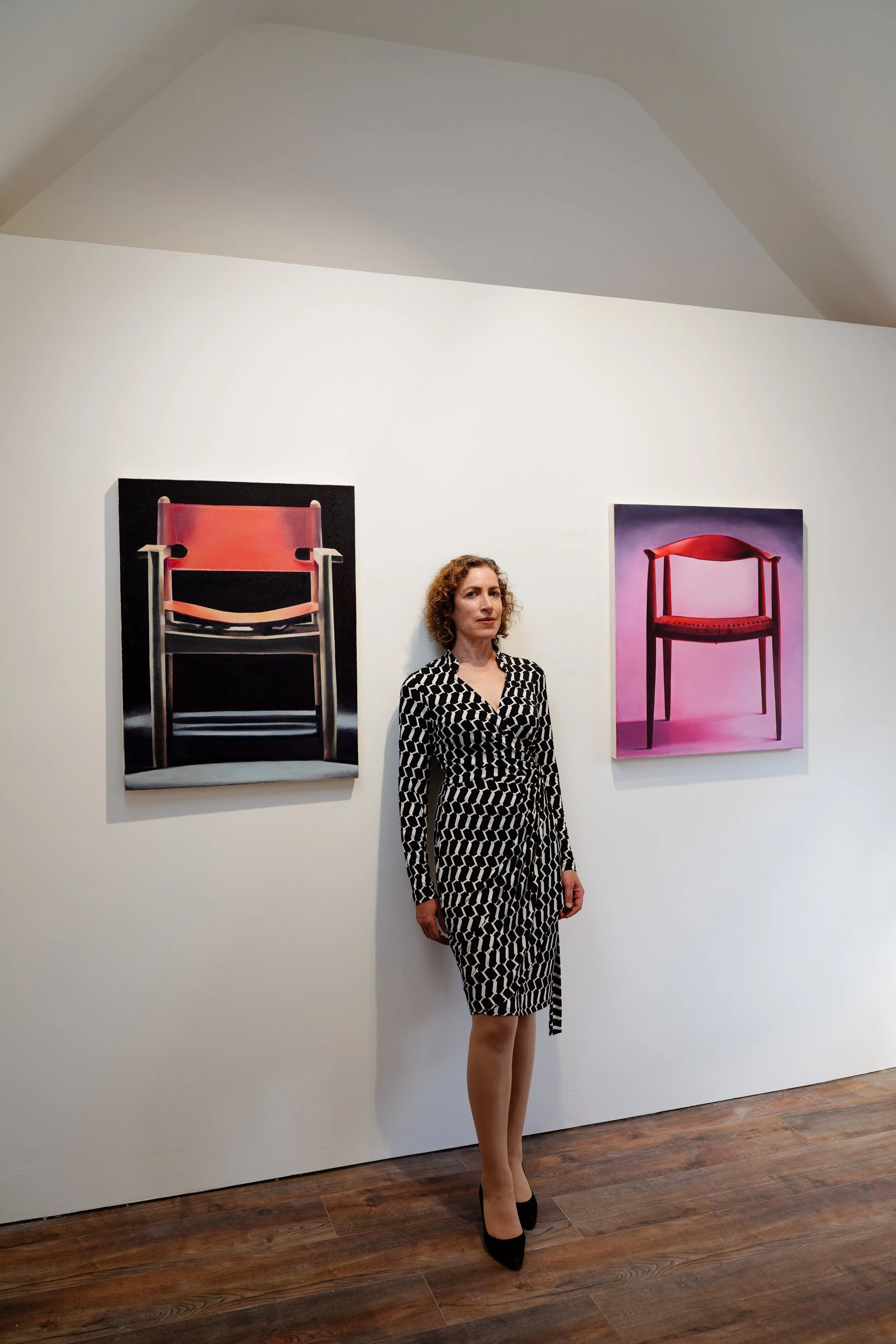
Installation view of I Just Gotta Do it with Alexandra Baraitser. Courtesy of ZimplePlus Studio.
Alexandra Baraitser is an artist based between London and Cambridge. Her awards include the Abbey Scholarship in Painting at the British School at Rome (1996-1997), a British Council award for a residency at Design Tasmania (2005) and second prize in the Young Masters People’s Choice Award (2025), and she exhibited at the Royal Academy of Arts Summer Exhibition in 2024 and 2025. Baraitser focuses on twentieth-century design, from Bauhaus furniture to the 1960s interiors, drawing inspiration from domestic interiors and furniture catalogues. Her work also draws on the visual languages of Edward Hopper(1*) and Alex Katz(2*). Most importantly, the work of Mario Bellini, a renowned Milanese architect and designer, has a significant influence on Baraitser, especially his chair and typewriter, which play an important part in her practice. Most importantly, the work of Mario Bellini, a renowned Milanese architect and designer, has a significant influence on Baraitser, especially his chair and typewriter, which play an important part in her practice. The exquisite, highly detailed painting style echoes a consumerist culture preoccupied with perfection, desire and status, concerns that also found expression in American Pop art.
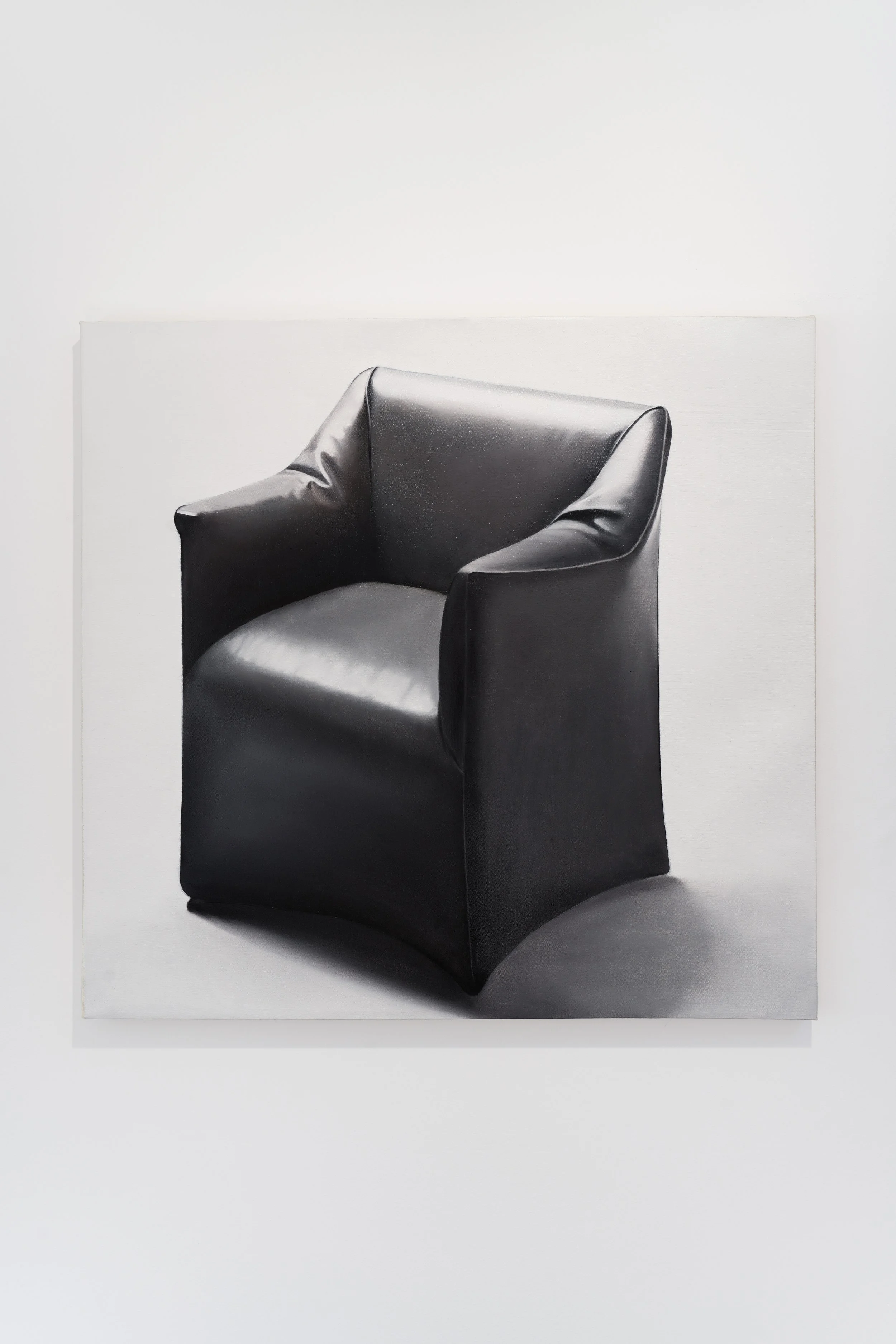
Alexandra Baraitser, Bellini Side Chair 1, 2006, Oil on canvas, 94 x 100cm. Courtesy of ZimplePlus Studio.
American Pop art gained prominence in the early and mid-1960s by taking images and objects from mass media such as television, magazines, comics and catalogues, and translating them into meticulous, photographic-like paintings. Such works often reflected a fascination with hedonistic lifestyles and of the possession of luxurious objects. For Baraitser, to depict interior furniture from designers like Mario Bellini is to come closest to describing the dream of desire for a luxurious lifestyle. Her early practice inherits the mainstream technique of the photorealists: thin transparent glazes built up on the surface, which give a glossy look. Bellini Side Chair 1 is an early work by Baraitser. In its textures, a perfect Tentazione chair comes alive on canvas: the perfectly recreated softness of the leather, with a layer of gloss on top, embodies both dedication and the portrayal of the phenomenon of indulgence at that time.
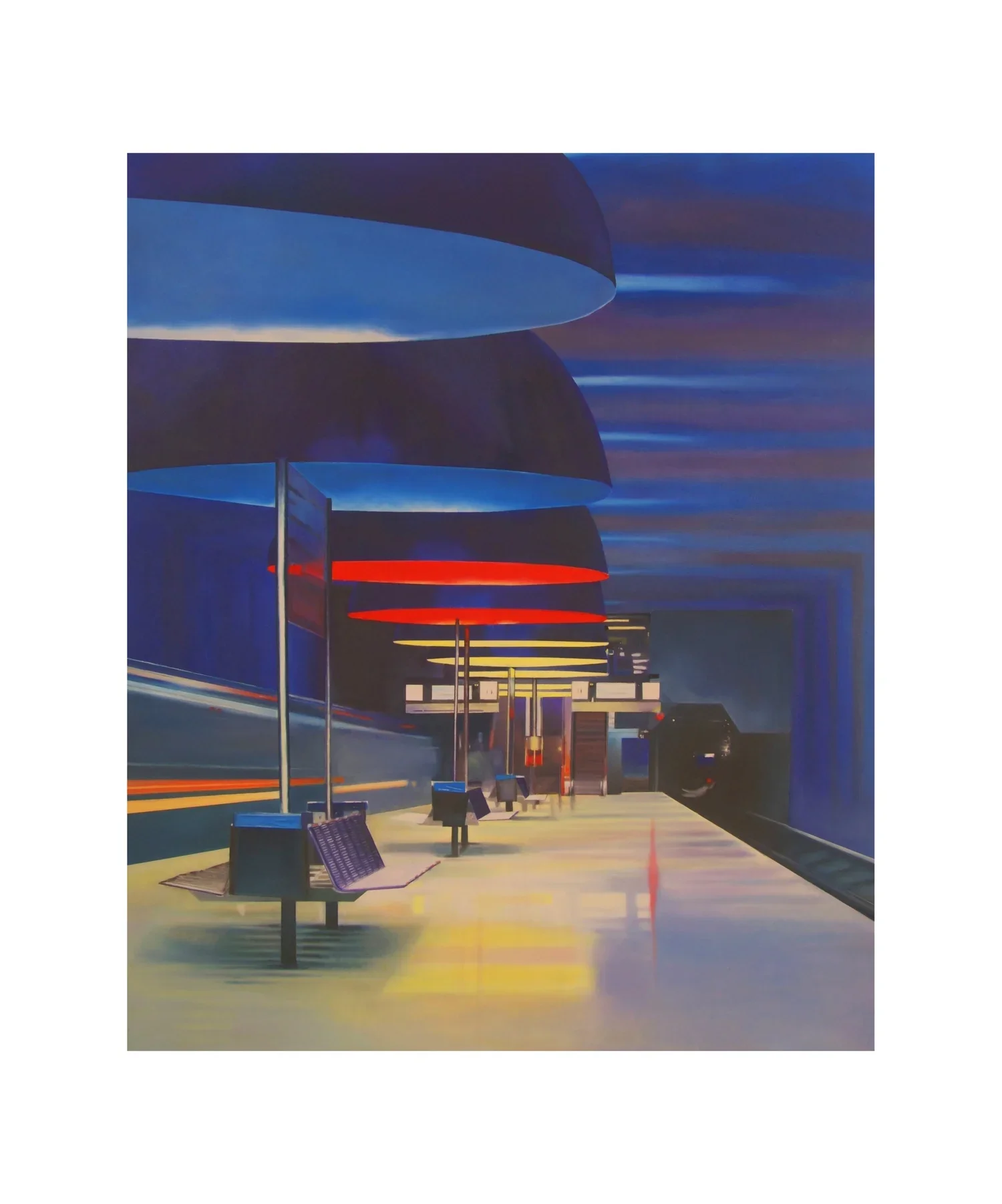
Alexandra Baraitser, The Future Starts Here / Maurer’s Station, 2019, Oil on canvas, 147 x 124cm. Courtesy of the artist.
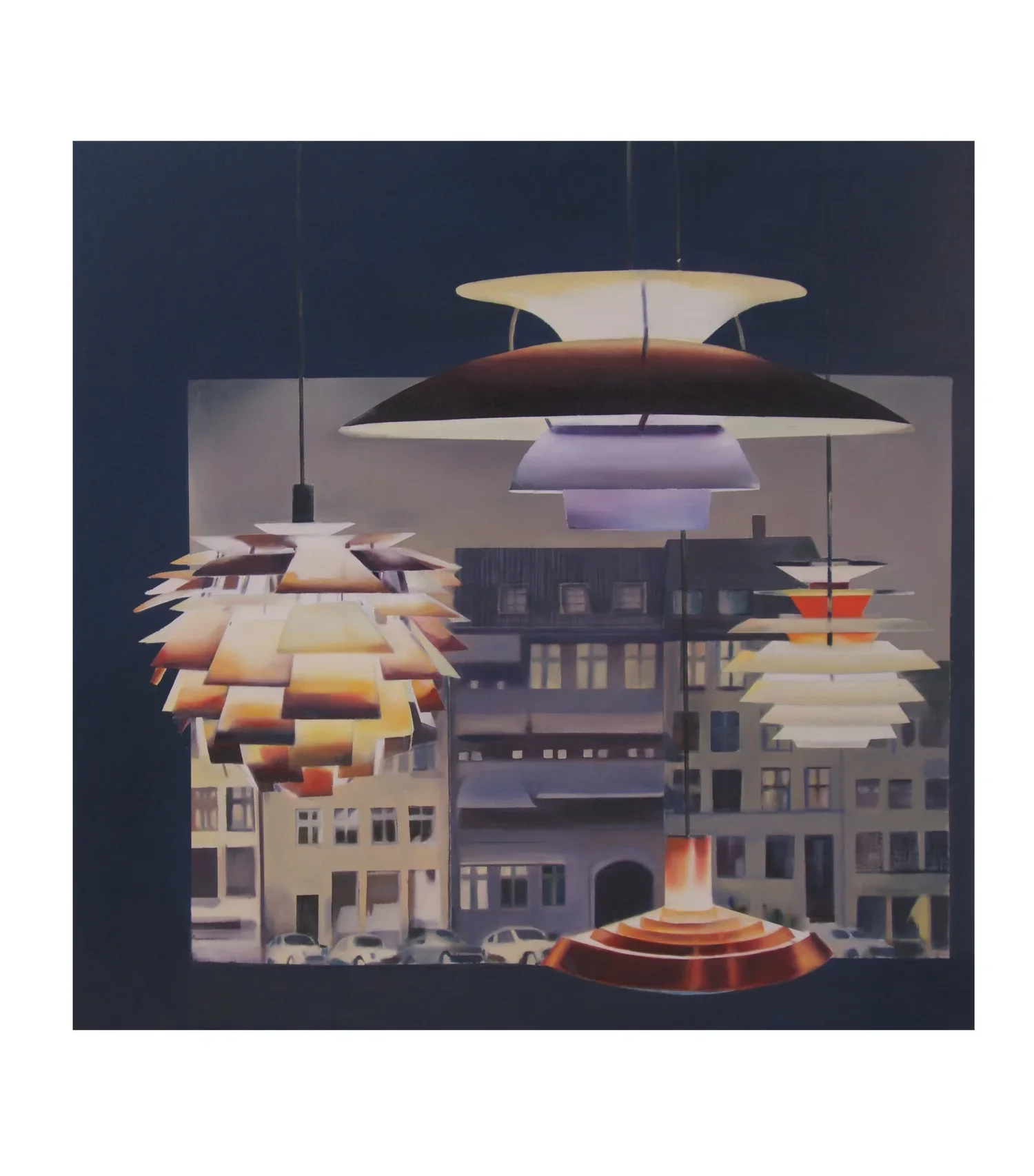
Alexandra Baraitser, A View Through, 2015, Oil on canvas, 88 x 88cm. Courtesy of the artist.
Baraitser repeatedly draws inspiration from, and spends many months collecting, scraps from interior design publications like Ottagono and newspaper articles before starting on paintings. She interprets, selects and magnifies. In I Just Gotta Do It, Baraitser’s philosophy shifts slightly away from photorealistic precision, leaning towards a more expressive figurative approach and reflecting an emphasis on memory, nostalgia, subconscious emotion and dreamlike narratives. This shift emerged naturally in her work around 2017: A View Through and The Future Starts Here / Maurer’s Station both bear witness to a changing technique and a growing sensitivity to dreamlike atmospheres and emotion.
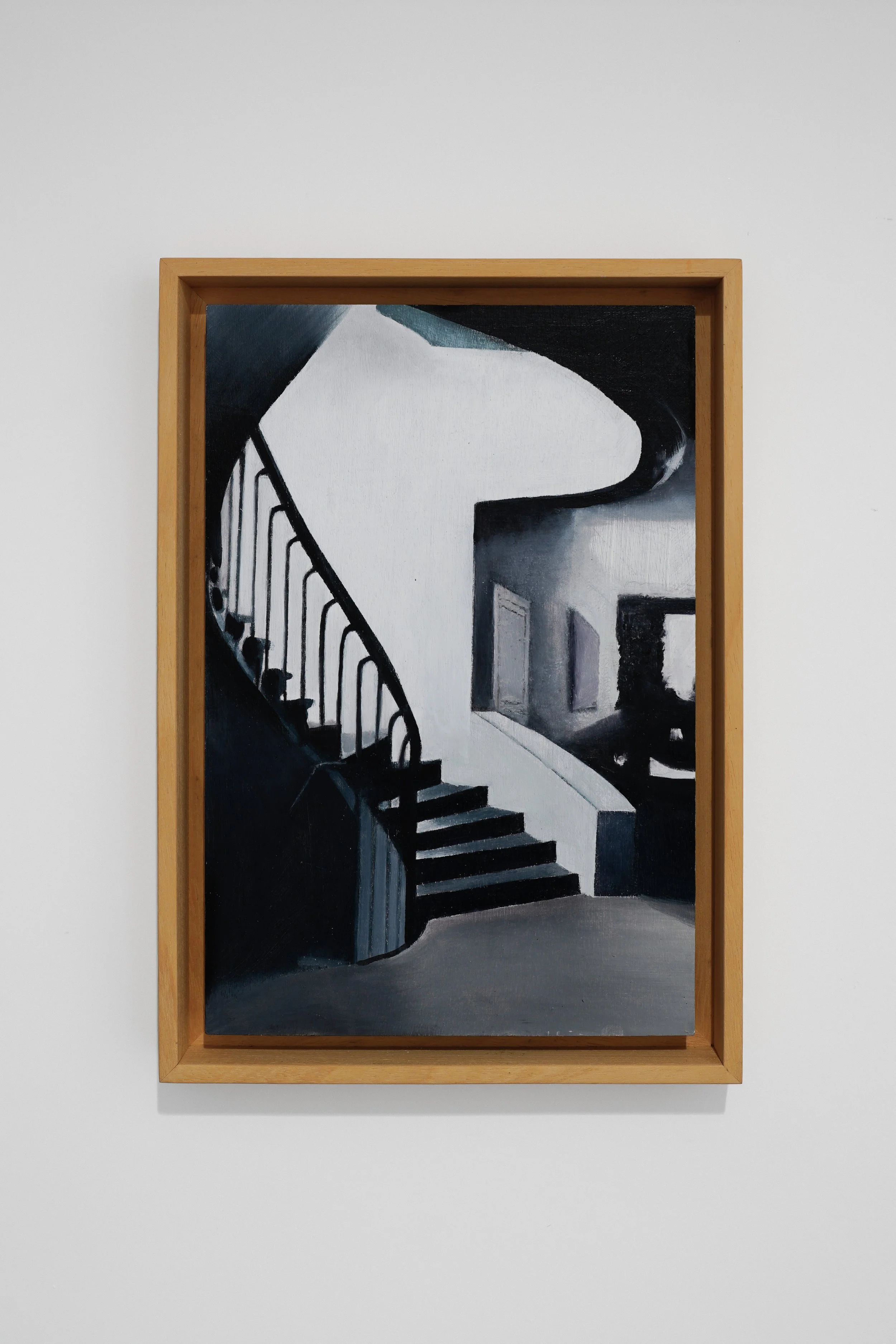
Alexandra Baraitser, Upstairs Downstairs, 2023, Oil on board, 34 x 24cm (framed). Courtesy of ZimplePlus Studio.
Her recent works Upstairs Downstairs and Eames and Co inherit a subtle trace of Edward Hopper, as the centre of the painting shifts from the chair or staircase itself to the light on the canvas, which speaks of solitude, of a dreamy in-between state of emotion. In Upstairs Downstairs in particular, the sheer layer of greyness echoes Walter Benjamin’s line: “The dream has grown grey. The grey coating of dust in things is its best part .”(3*)
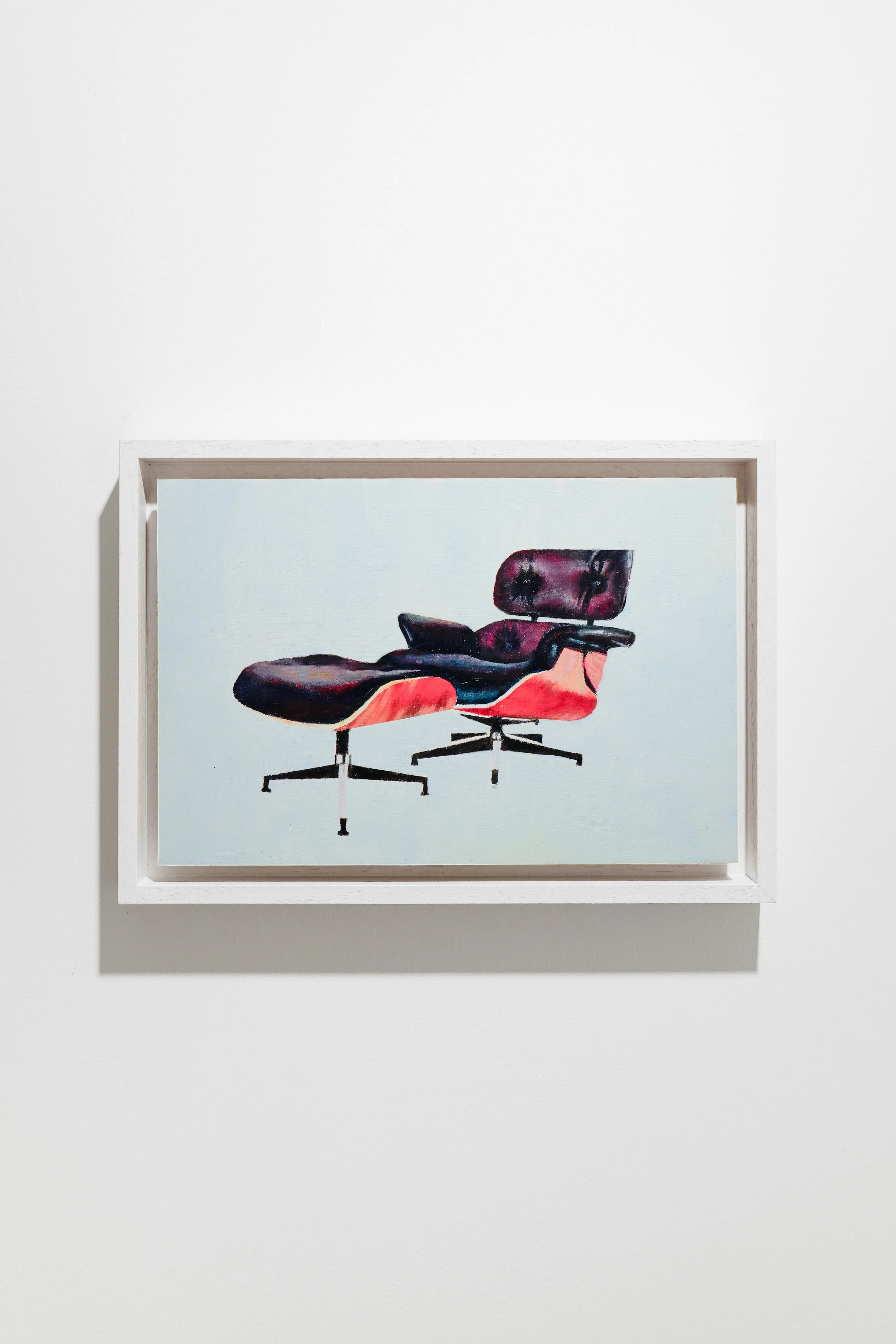
Alexandra Baraitser, Eames and Co, 2026, Oil on board, 24 x 34cm (framed). Courtesy of ZimplePlus Studio.
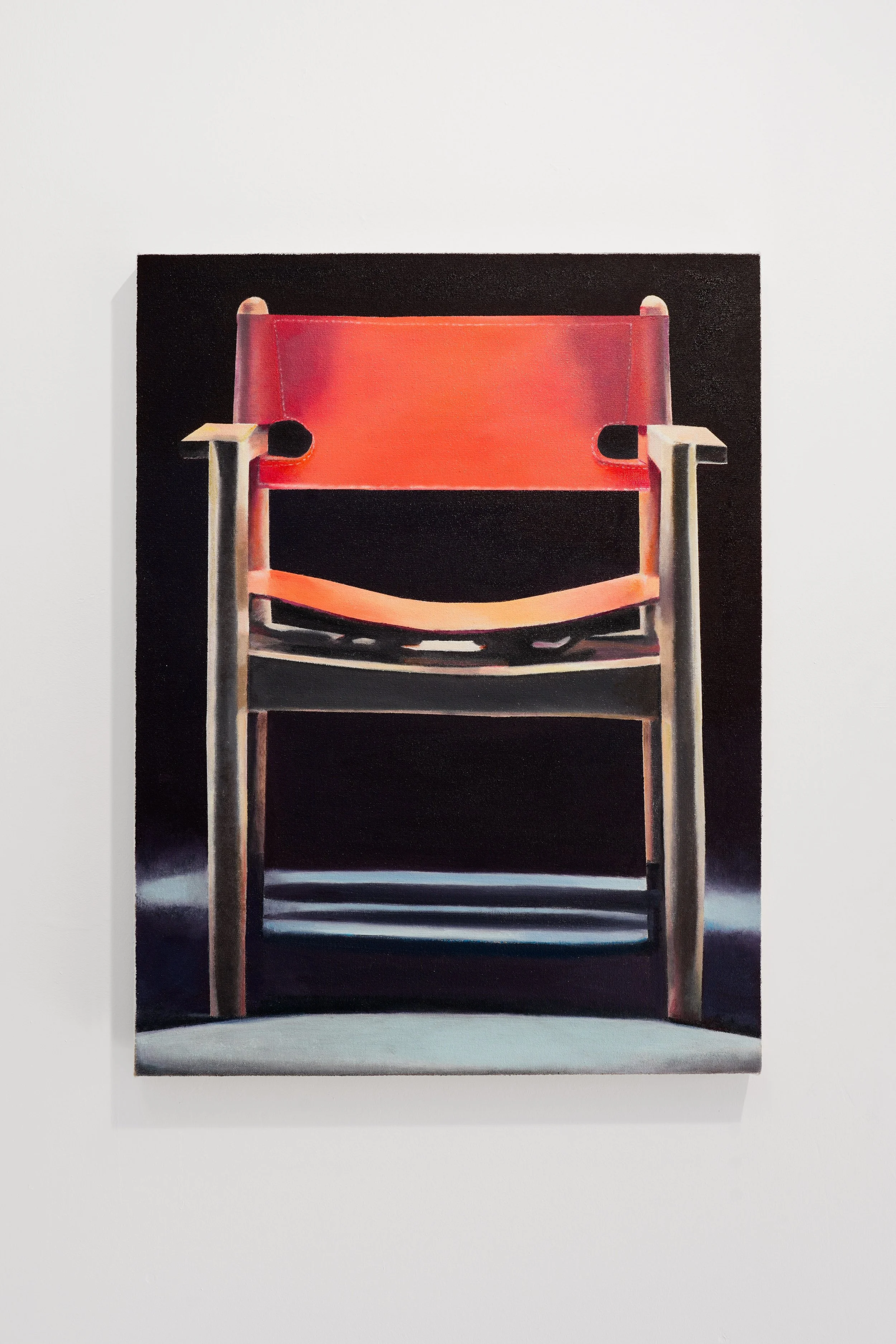
Alexandra Baraitser, The Evolution of the Chair, 2026, Oil on canvas, 77 x 60cm. Courtesy of ZimplePlus Studio.
Her latest work turns its focus once again to the chair. It answers that furniture is itself history and that the way of seeing it again is innovative: at this stage, Baraitser achieves a degree of smoothness that eliminates all traces of her hand, and perfects the blurry, pixelated effects of JPEG compression between the object and its background in The Evolution of the Chair.
Her works Vignette and New Orange further give witness to the incorporation of Photoshop techniques: she tries to capture the materiality of paint itself and experiments with colour inversion, which no camera can ever capture. She seems to have discovered new possibilities for harmony, lending each object a different presence through her experiments with colour. A striking, sunset-like orange, beautiful yet an unusual choice of palette, appears in New Orange, a kind of symphonic aura in Benjamin’s sense(4*). The perception of the colour on canvas is reconstructed, remembered, re-articulated. Just as Baraitser’s ongoing comprehension of colour seems to have fallen apart from the start and been rebuilt through an innovative approach, the canvas is always already enmeshed in contending practices, revisiting and hope.
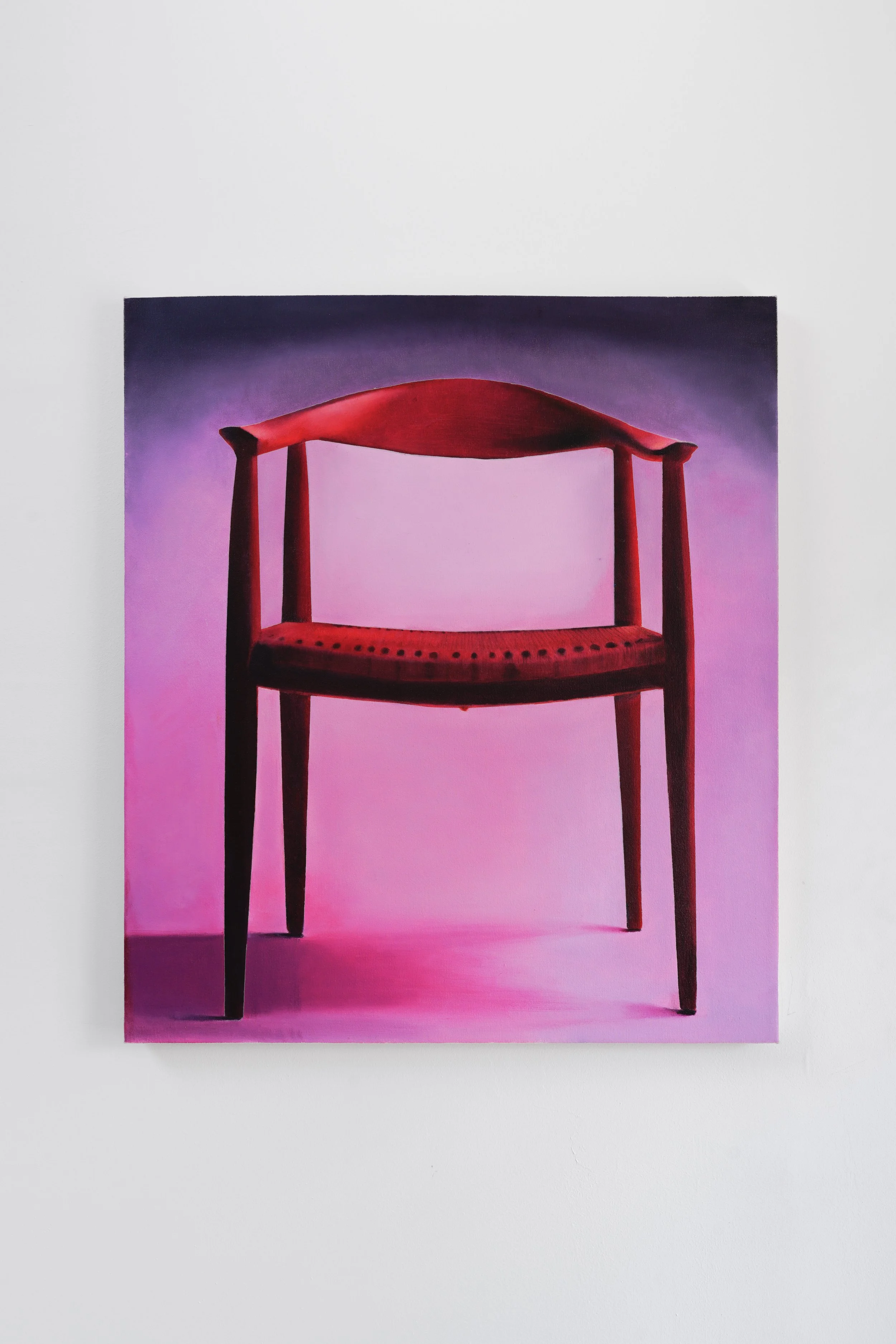
Alexandra Baraitser, Vignette, 2026, Oil on canvas, 73.5 x 65cm. Courtesy of ZimplePlus Studio.
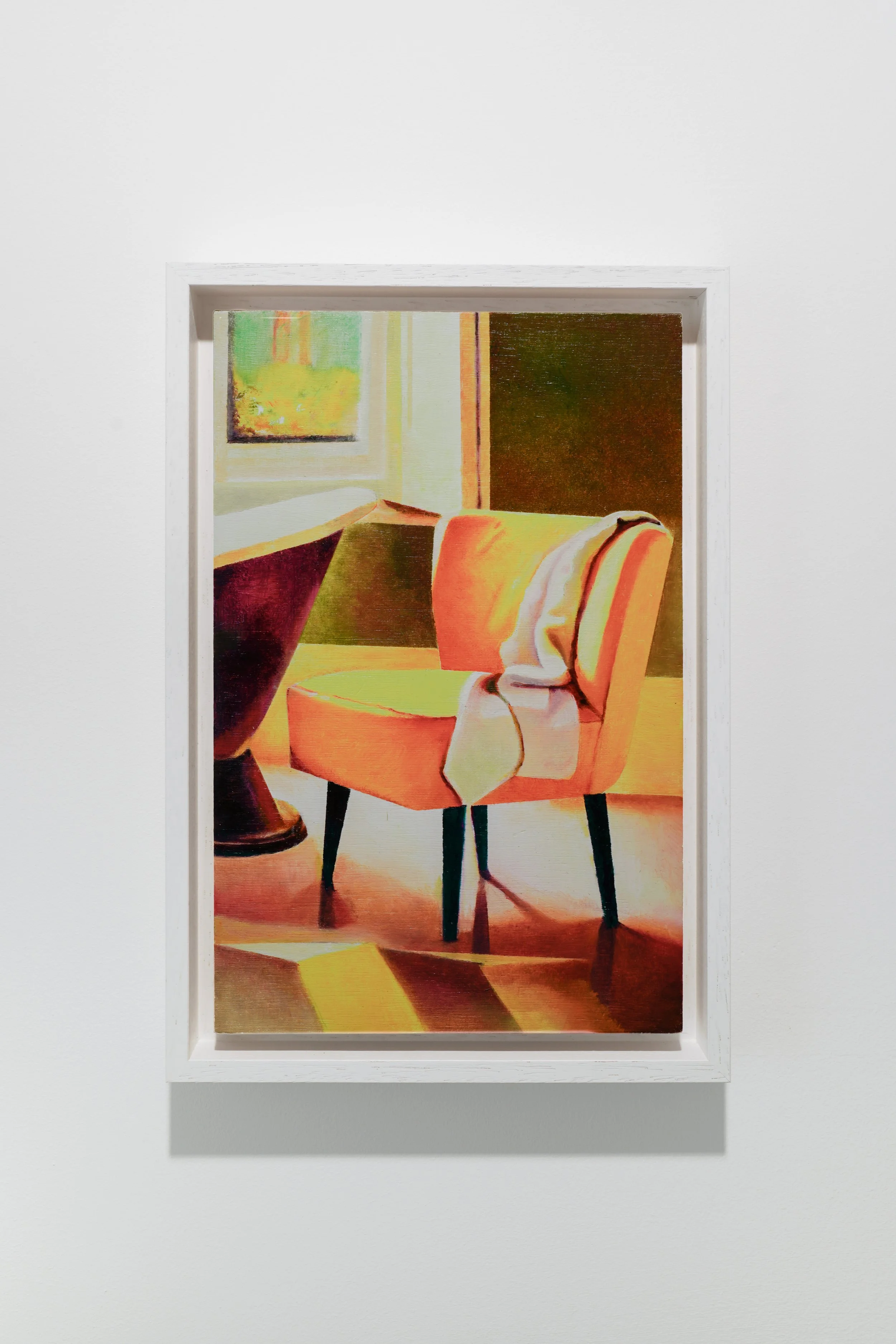
Alexandra Baraitser, New Orange, 2026, Oil on board, 35 x 24cm (framed). Courtesy of ZimplePlus Studio.
There is also an undercurrent in the typewriters that take up an important place in Baraitser’s work. They are traces of change and transition; they carry many of her memories of her early twenties. She cannot really overlook the time spent practising on them at school, getting acquainted with them; now hardly any trace of them remains. They become dwelling places of emotions and memories that might otherwise have been lost. Returning to them, Baraitser comes again to the memory of a once essential part of her life and frames them in layers of paint with an infatuated heart. Stereotype is an enlarged rendering that matches no typewriter in real life: bigger and bigger, focused, potent, gigantic. If only the object could come closer to her, she would see that it was bigger still. In Typeface, on several keyboards already gone blurry, which word, or which recipient’s name, is entered again and again? The keyboard is struck over and over. She offers a way of coming close, and of sustaining ourselves, by returning to the objecthood that lodges long in memory, touched and used until it has been smudged into a blur and its edge caressed into a familiar shape by heartfelt grace.
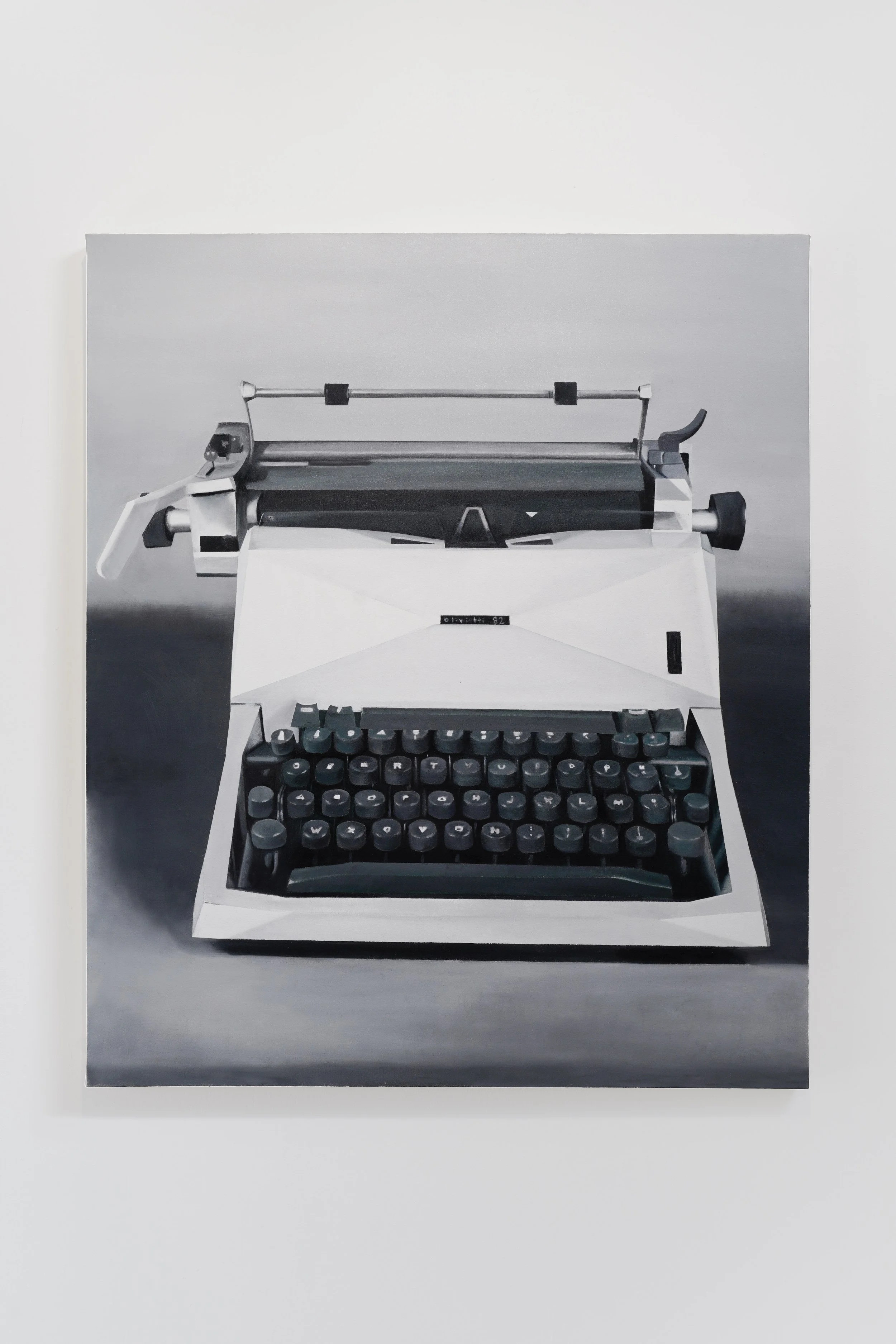
Alexandra Baraitser, Typeface, 2026, Oil on board, 118 x 101cm. Courtesy of ZimplePlus Studio.
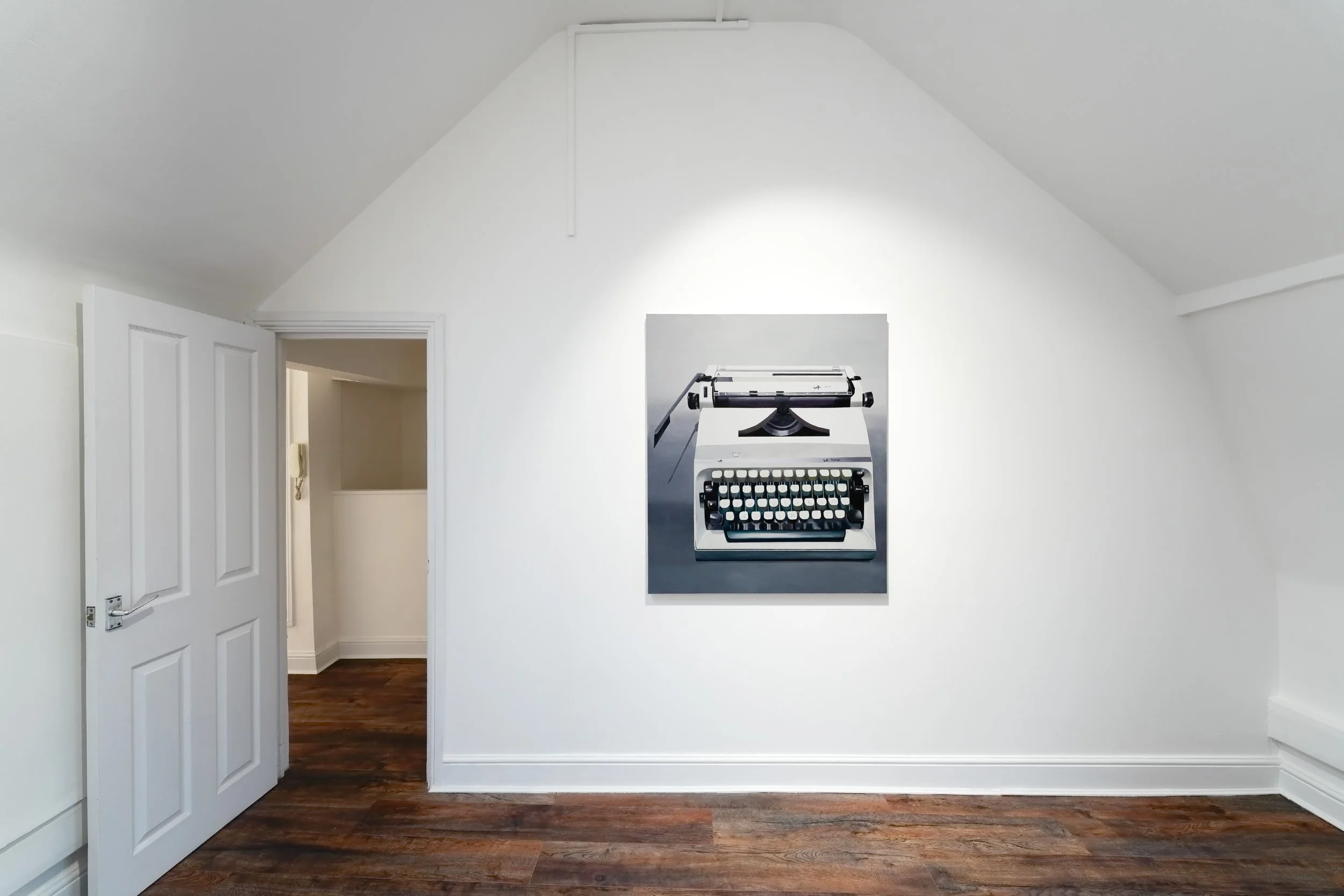
Alexandra Baraitser, Stereotype, 2026, Oil on canvas, 119 x 101.5cm. Courtesy of ZimplePlus Studio
If we trace the relationship between objects and art, we cannot neglect the philosophical metaphor at its root. Thinking through Heidegger and the object-oriented ontology that grew out of his work, we deal with things as equipment, meaning that we take them for granted, unconsciously, rather than encountering them sensually or intellectually. In Baraitser’s work, the common object becomes an object of infatuation and the impalpable emotions become palpable; what she inherits here is the abstraction of certain features from objects that exist in their full and unexhausted plenitude, quite apart from our practical encounters with them. As she has said, there is always the extraordinary in the ordinary, and she seeks to uncover the narrative resonating within objects that people typically take for granted. Her revisiting of Pop art’s idea of perfection leads us to ask what figurative painting can mean in the contemporary world. Her practice moves beyond the conventional opposition between figuration and abstraction. To draw the extraordinary out of the ordinary, through intense practice, experiment and detail, is what her work holds. Baraitser’s approach leads us to think about what constitutes daily objects in reality. In her work, the response to that question hinges upon another: what is considered real? The intricate relation between reality, realness and the mediating objects complicates this line of thought.
Condemned by reality, we find ourselves almost obsessively looking back, again and again, toward nostalgia, toward that fluid, living experience: the objects added to what comes later, layer upon layer, sustaining us through banality and a malicious reality. Again, seeing the chair or typewriter as separate is a way of seeing ourselves as separate, and the solid objects are a mirror of human singularity(5*). Gerhard Richter marks a discovery that shifts the relation between the representation of reality and art: “A radical discovery that the only important thing about reality, which contradicts the view of the world image, is reality (that it produces itself). Since then, painting no longer represents reality, but reality itself (the reality it produces).” Even if what we perceive as reality were universal and fixed, the passage of time allows new forms of truth to emerge. The role of the artist, as Adolph Gottlieb(6*) put it, has always been that of image-maker, and different times require different images; certain so-called abstraction, he argued, is not abstraction at all but the realism of our time. There is only one reality, nothing is unreal in art, and whatever art touches becomes real. Artists just gotta do it.
1*: Edward Hopper (1882–1967) was an American realist painter, best known for his images of urban solitude, such as Nighthawks (1942).
2*: Alex Katz (b. 1927) is an American painter based in New York, known for flat, broadly coloured figurative work that emerged before Pop art and developed independently of it.
3*: Walter Benjamin, “Dream Kitsch,” in The Work of Art in the Age of Its Technological Reproducibility, and Other Writings on Media, ed. Michael W. Jennings, Brigid Doherty, and Thomas Y. Levin, trans. (Cambridge, MA: Belknap Press of Harvard University Press, 2008).
4*: Benjamin defines aura as a work’s unique presence in time and space, a sense of distance however near it stands, which technological reproduction erodes.
5*: Patrizia Cavalli, “Chair, stop being such a chair!,” in My Poems Won’t Change the World, ed. Gini Alhadeff, trans. Jonathan Galassi (New York: Farrar, Straus and Giroux, 2013)
6*: Adolph Gottlieb (1903–74) was an American Abstract Expressionist painter and sculptor, known for his “Pictographs,” compartmentalised canvases of symbol-like images.
