
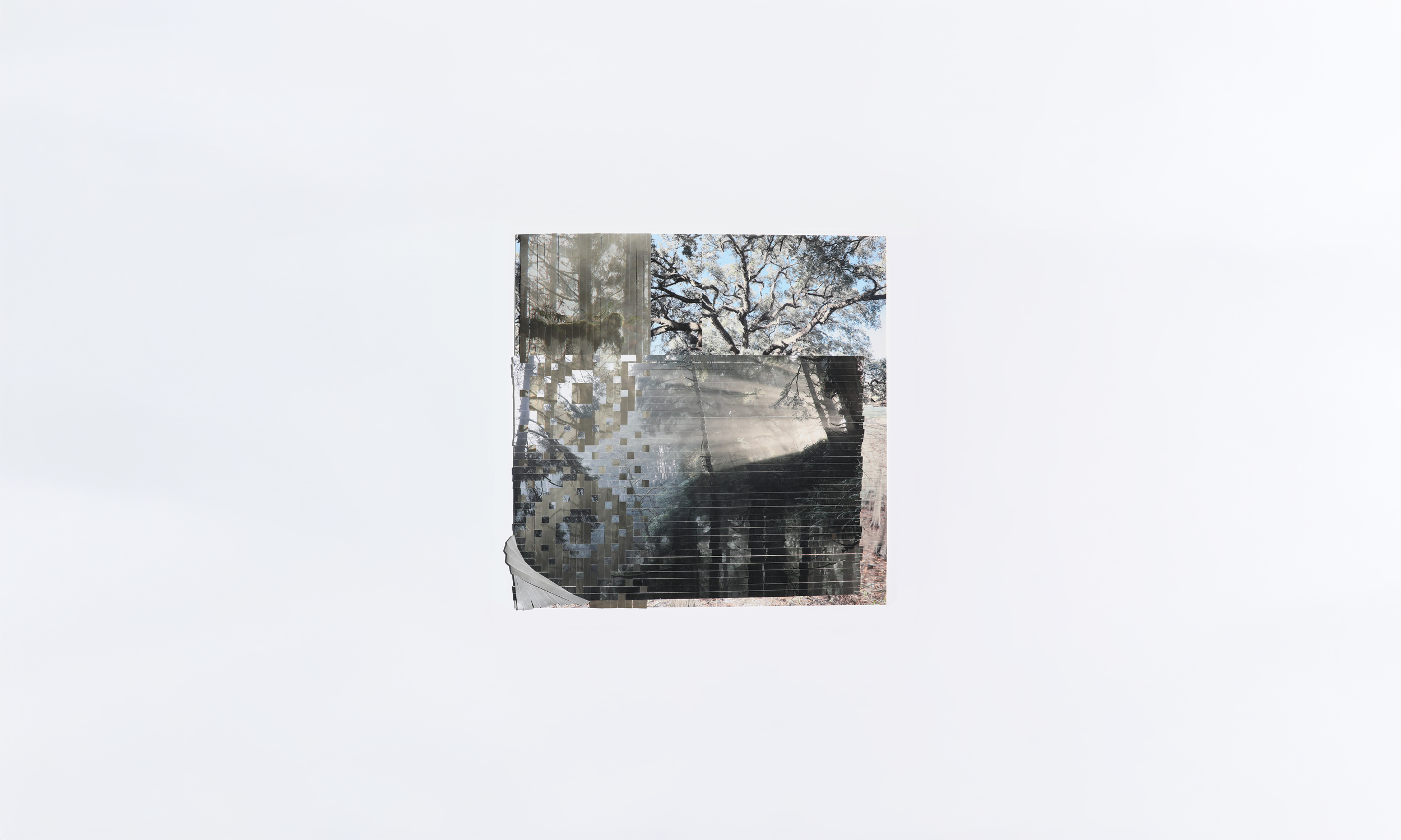
I Want to Hold You Longer by Sarah Sense
Weaving February 6 2026

Intro
I Want to Hold You Longer is a series of photo-weavings by Sarah Sense that brings together Chitimacha and Choctaw basket traditions, archival materials, and landscape photography. The work draws from family-held baskets and museum collections, alongside colonial maps, government documents, and allotment records from the late nineteenth and early twentieth centuries.
Across the series, Sense weaves traditional basket patterns through materials sourced from institutions such as the British Library, the American Antiquarian Society, and the Choctaw Cultural Center. Landscapes from Louisiana, Oklahoma, and California intersect with historical documents, tracing Indigenous movement, land loss, and survival across generations.
Grounded in ancestral weaving practices, I Want to Hold You Longer frames the basket as both a cultural form and a historical record—one shaped by care, labor, and continuity, and situated within broader histories of collection, displacement, and colonial mapping.
I Want to Hold You Longer

Brooklyn Alligator Study, 23.75 x 23.75’
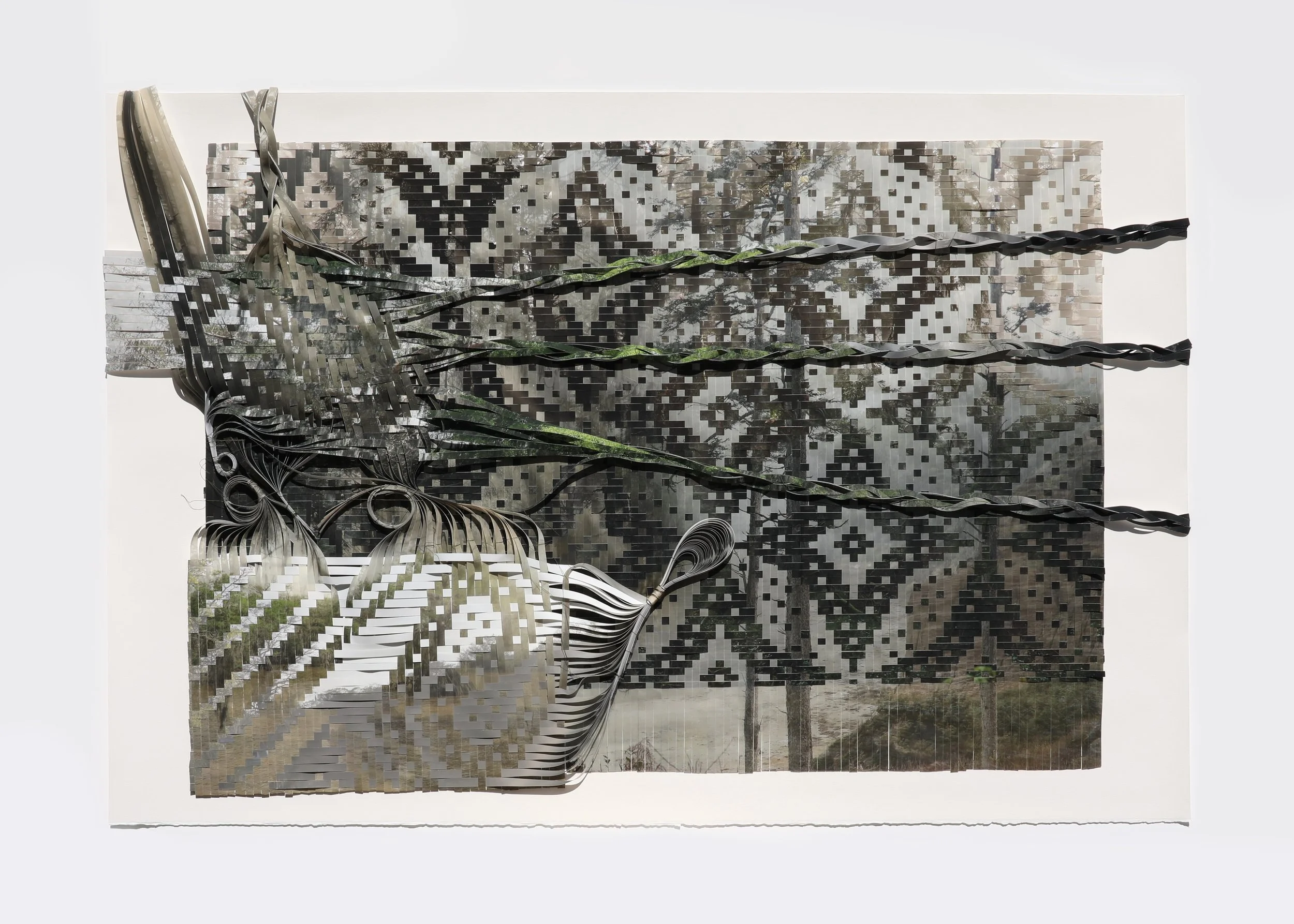
Brooklyn Alligator, 40 x 60’
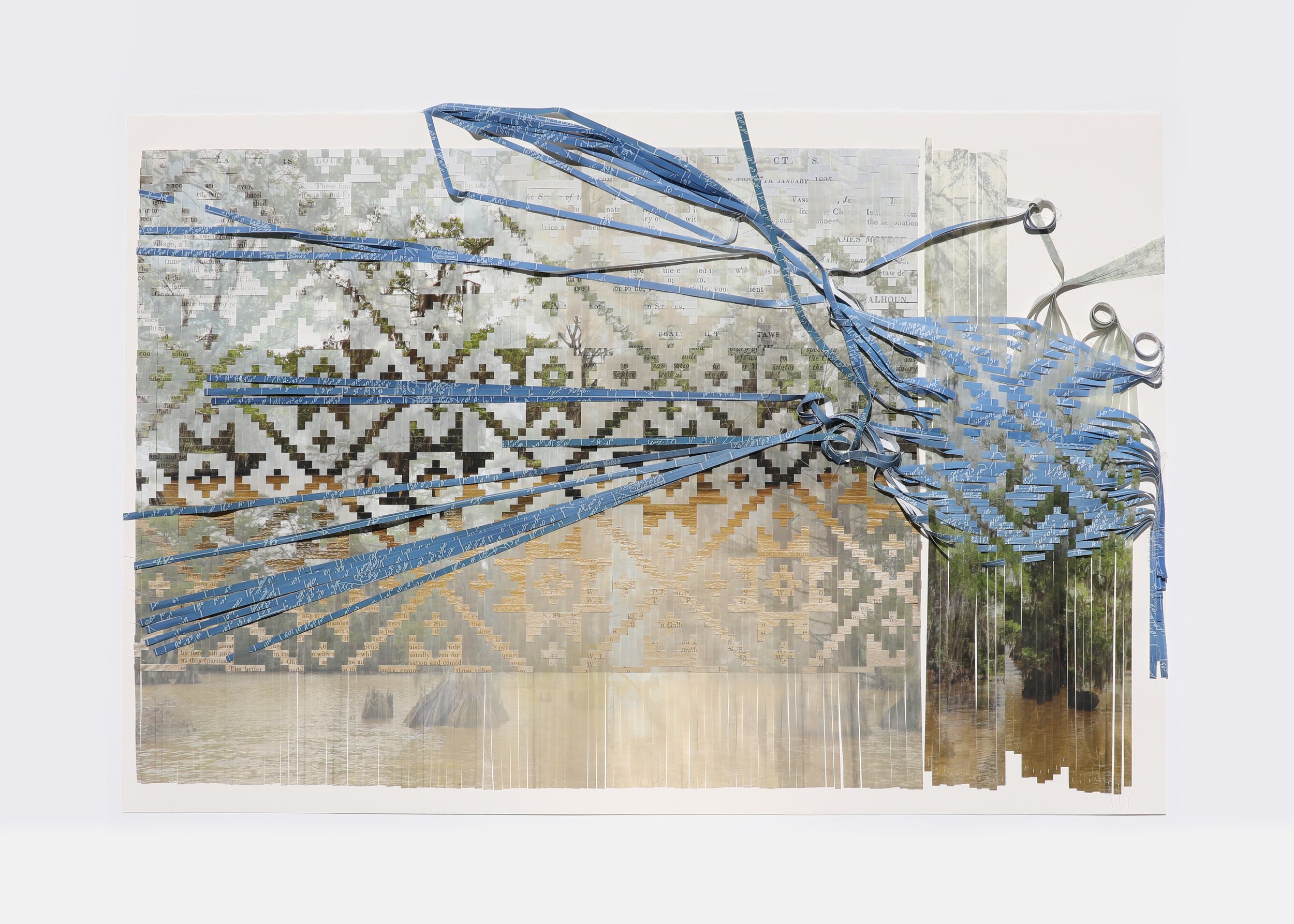
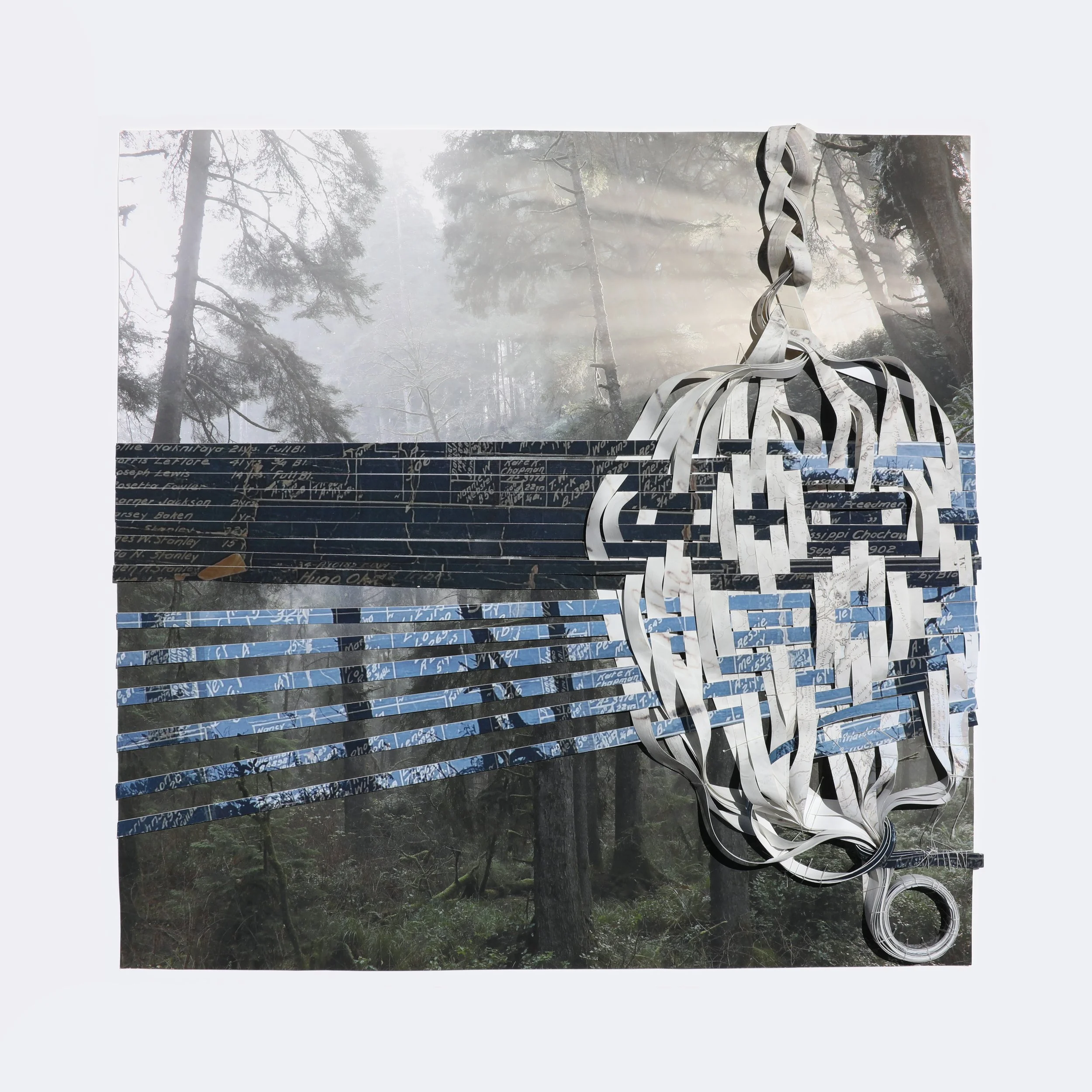
Montclair Broken Plait, 40 x 60’
Montclair Blackbird Study, 23.75 x 23.75’
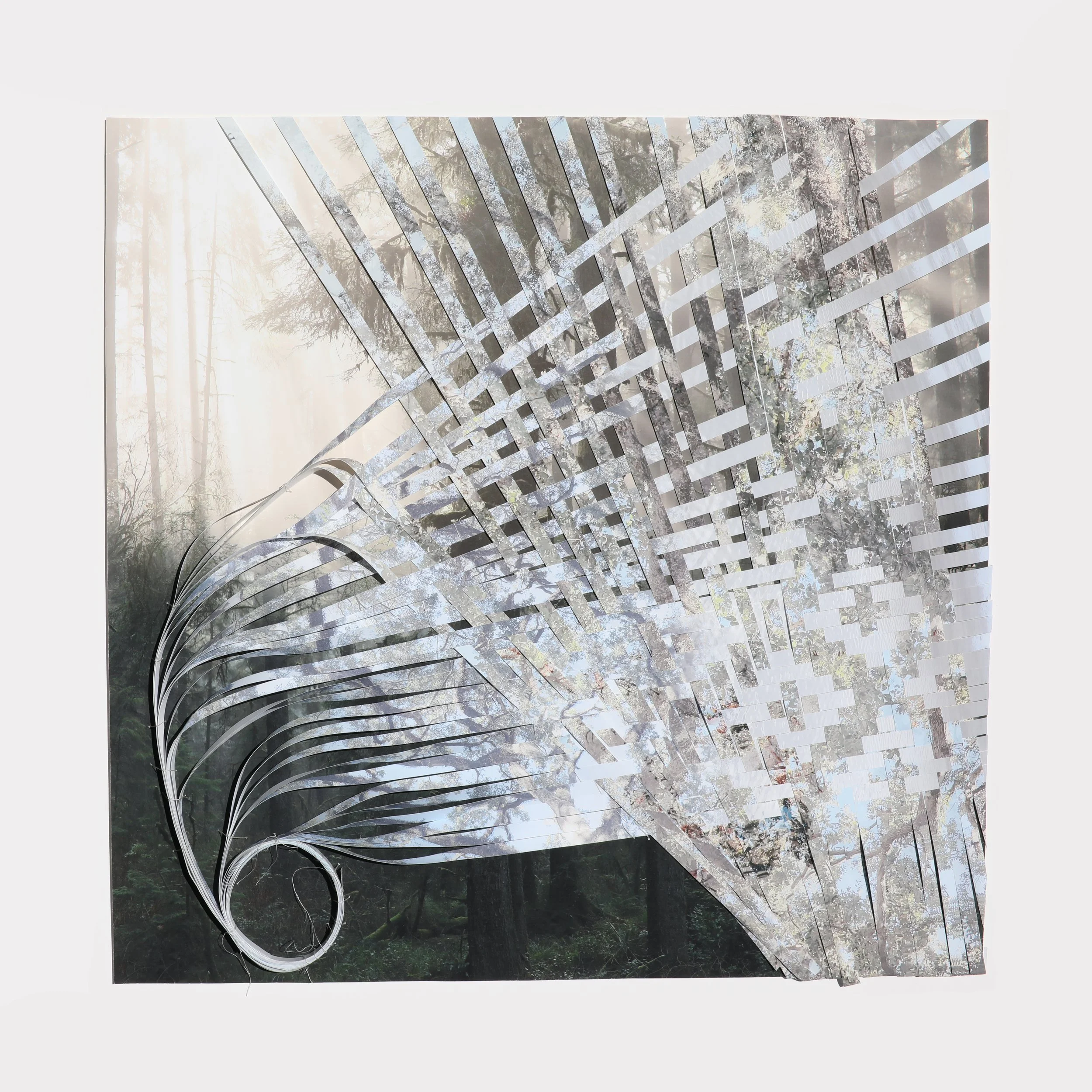
Brooklyn Blackbird Study, 23.75 x 23.75’
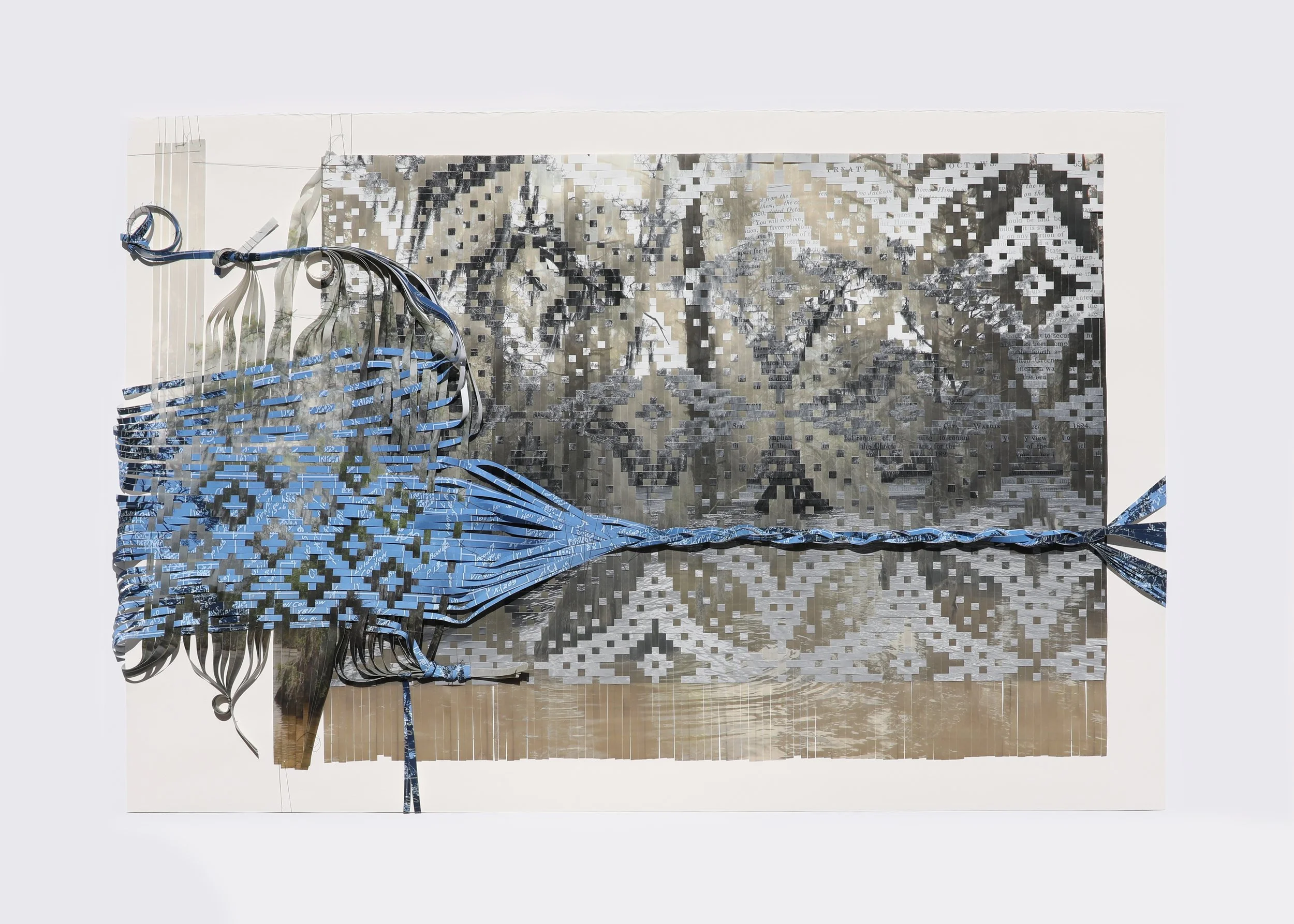
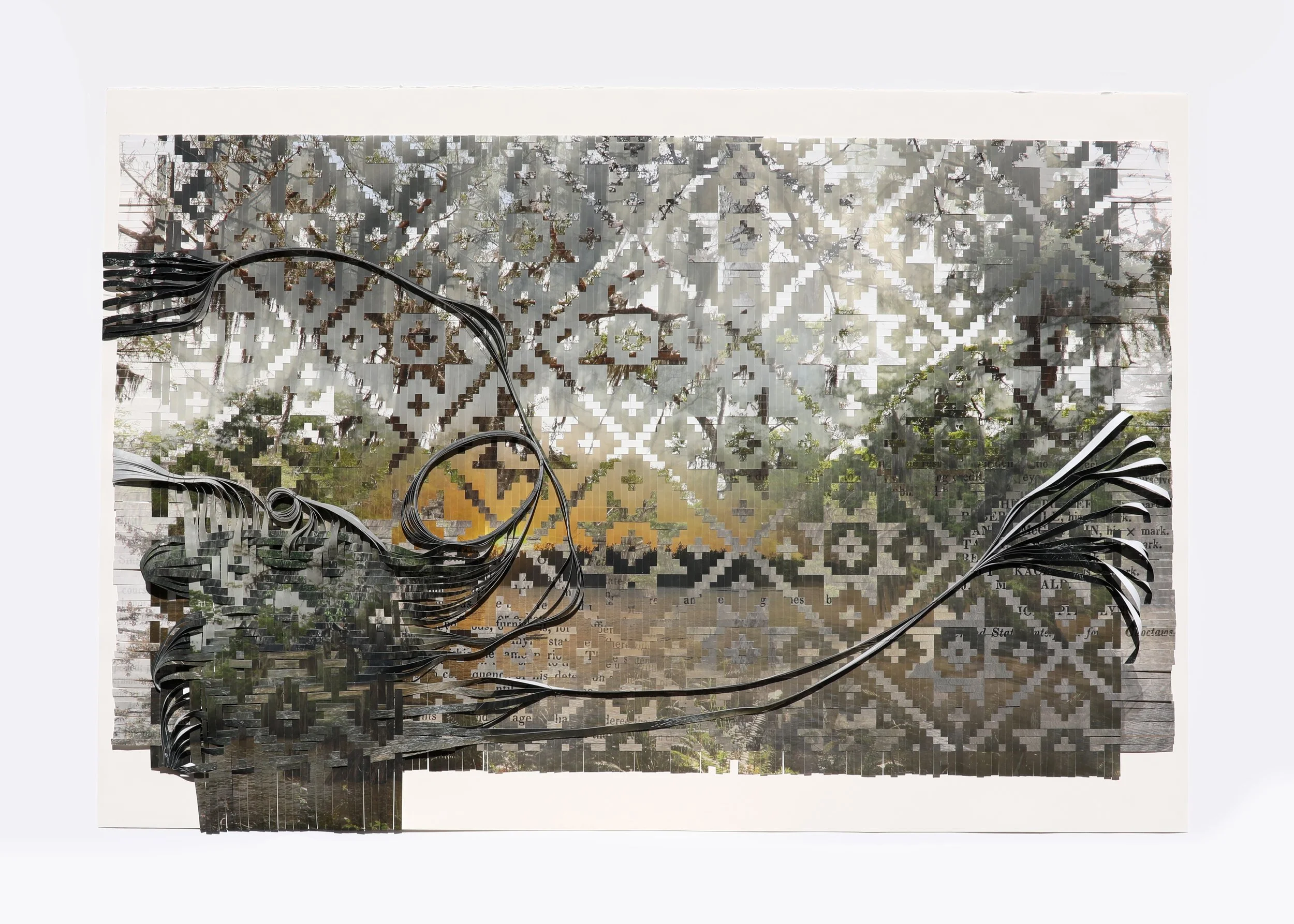
Brooklyn Blackbird, 40 x 60’
Montclair Blackbird, 40 x 60’
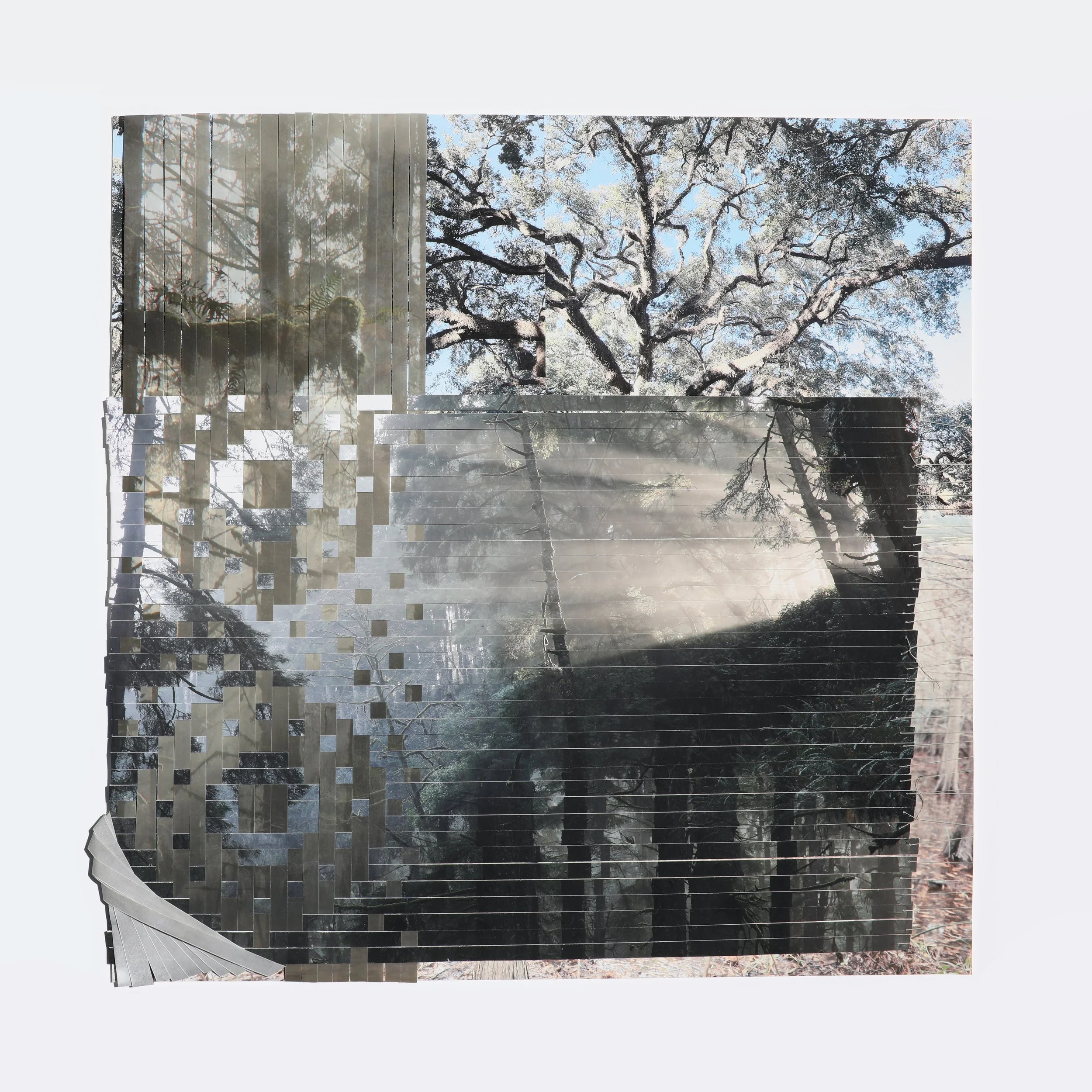
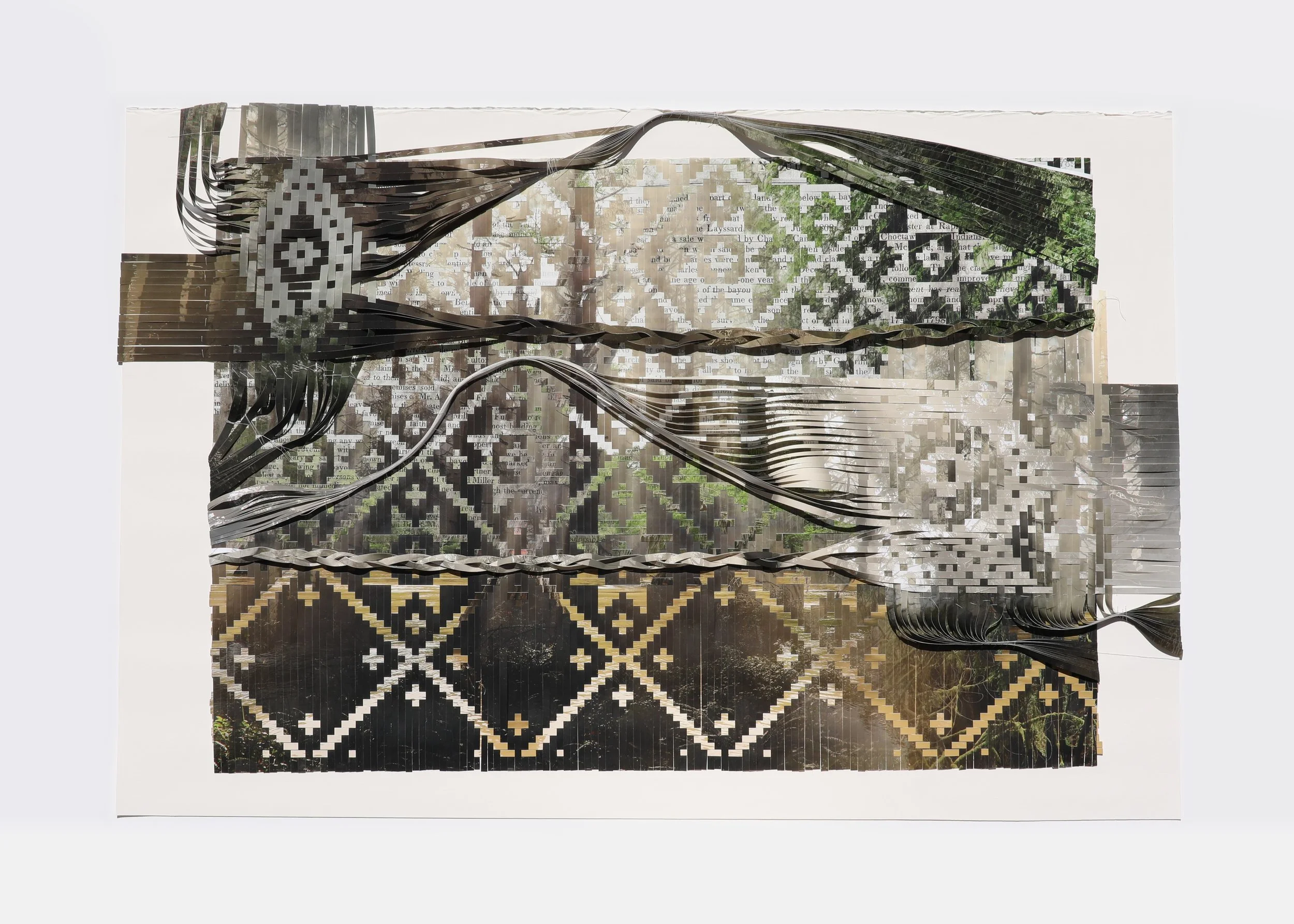
Montclair Eye Study, 23.75 x 23.75’
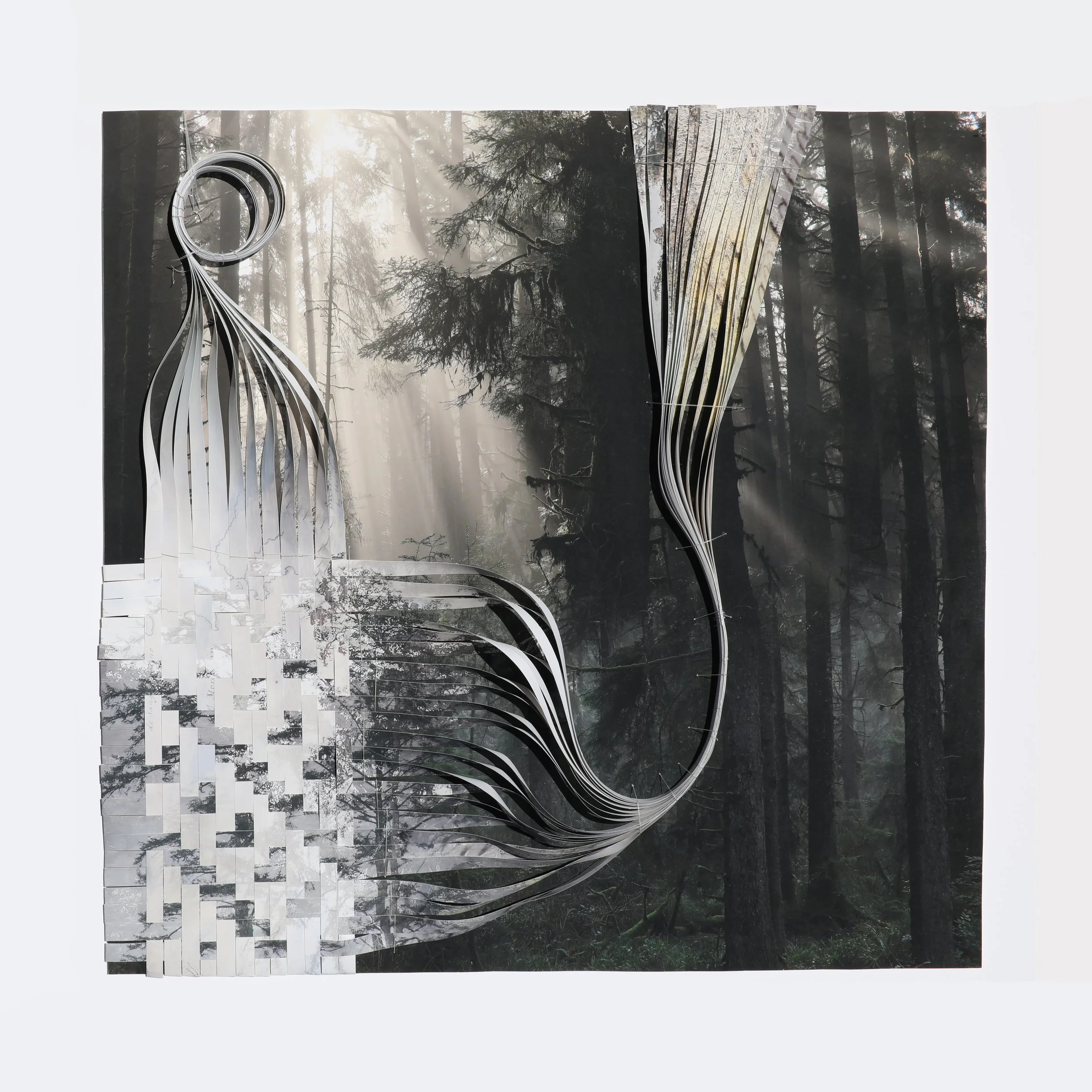
Montclair Eye, 40 x 60’
Montclair Mouse Study, 23.75 x 23.75’
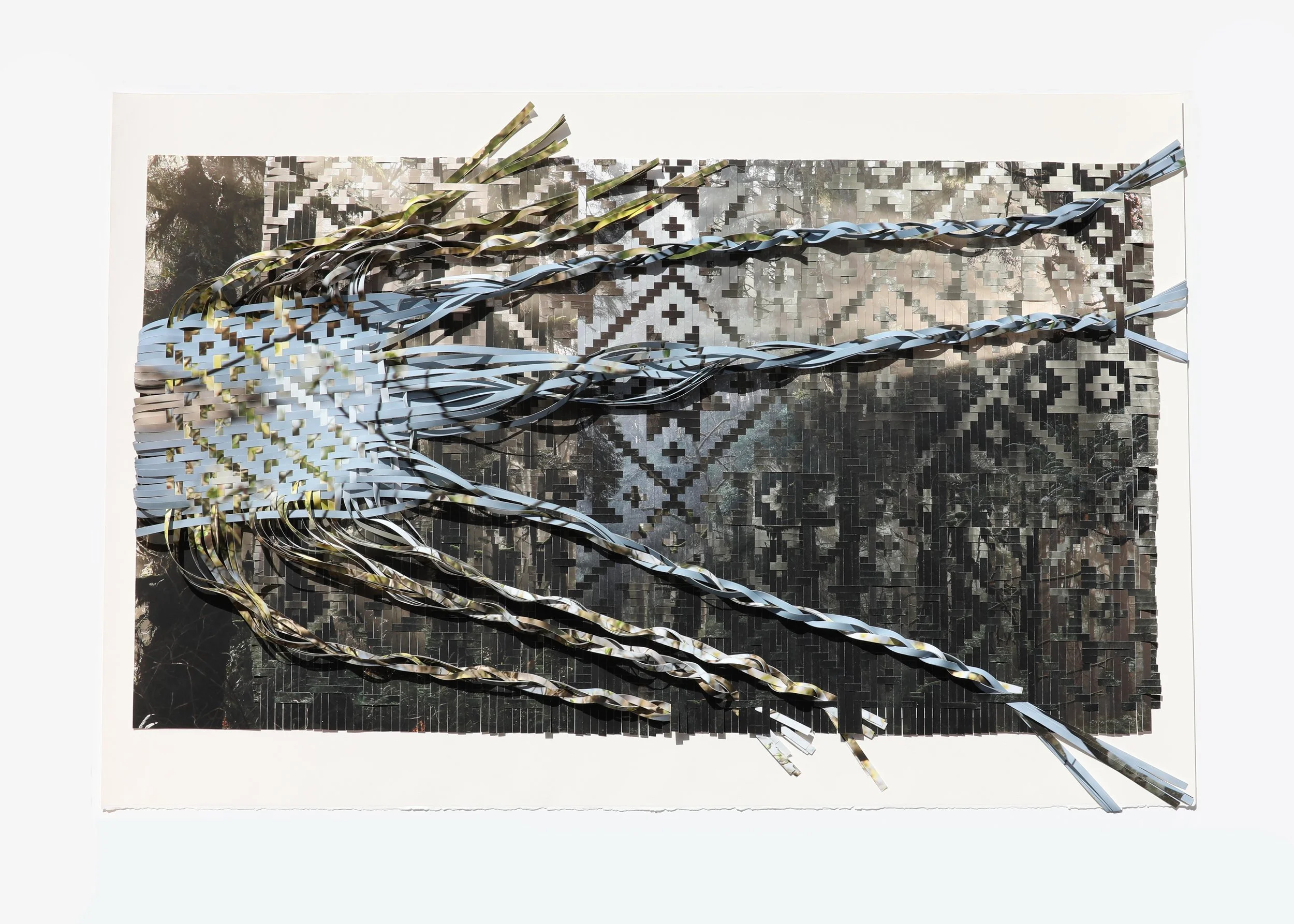
Montclair Mouse, 40 x 60’
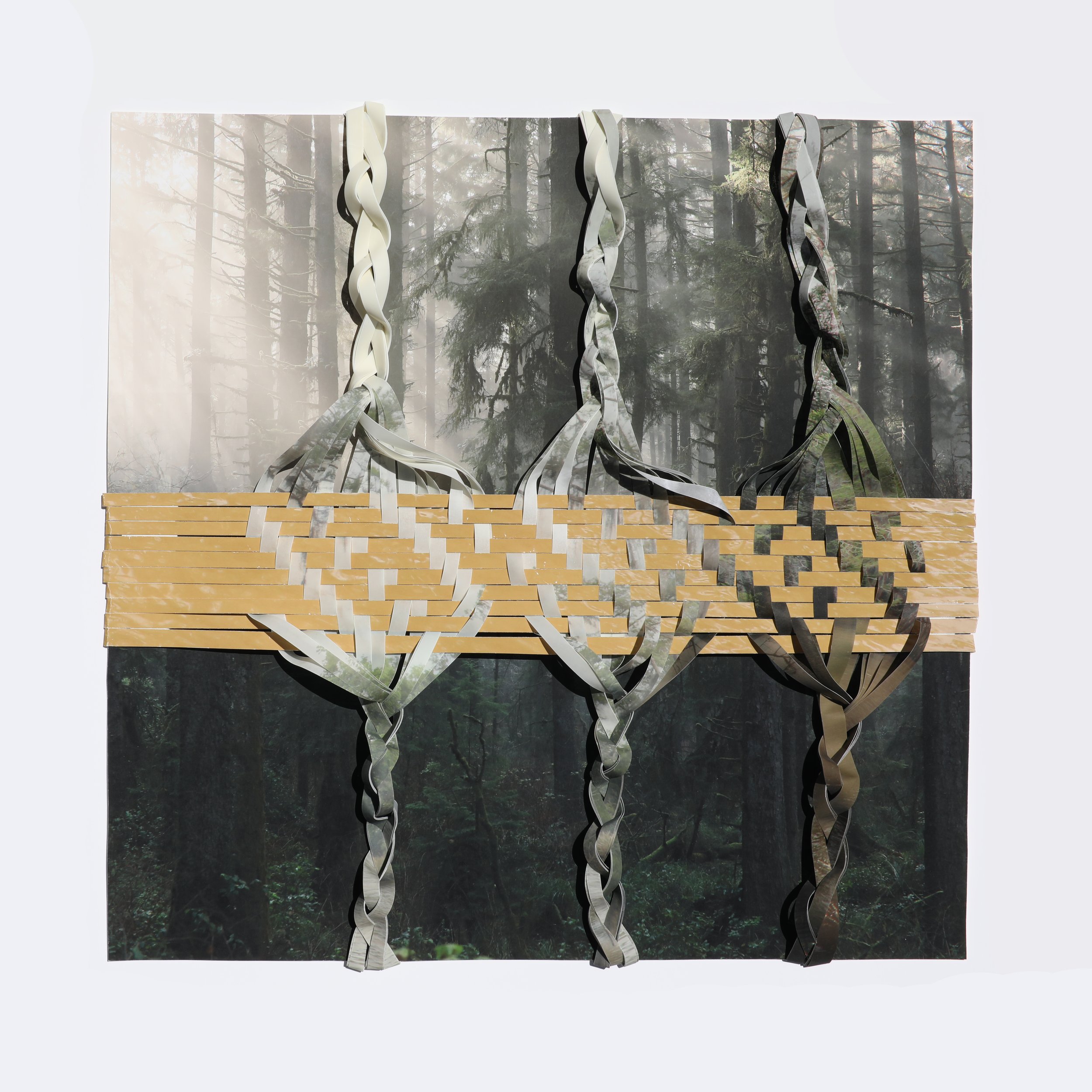
Montclair Broken Plaits Study, 23.75 x 23.75’
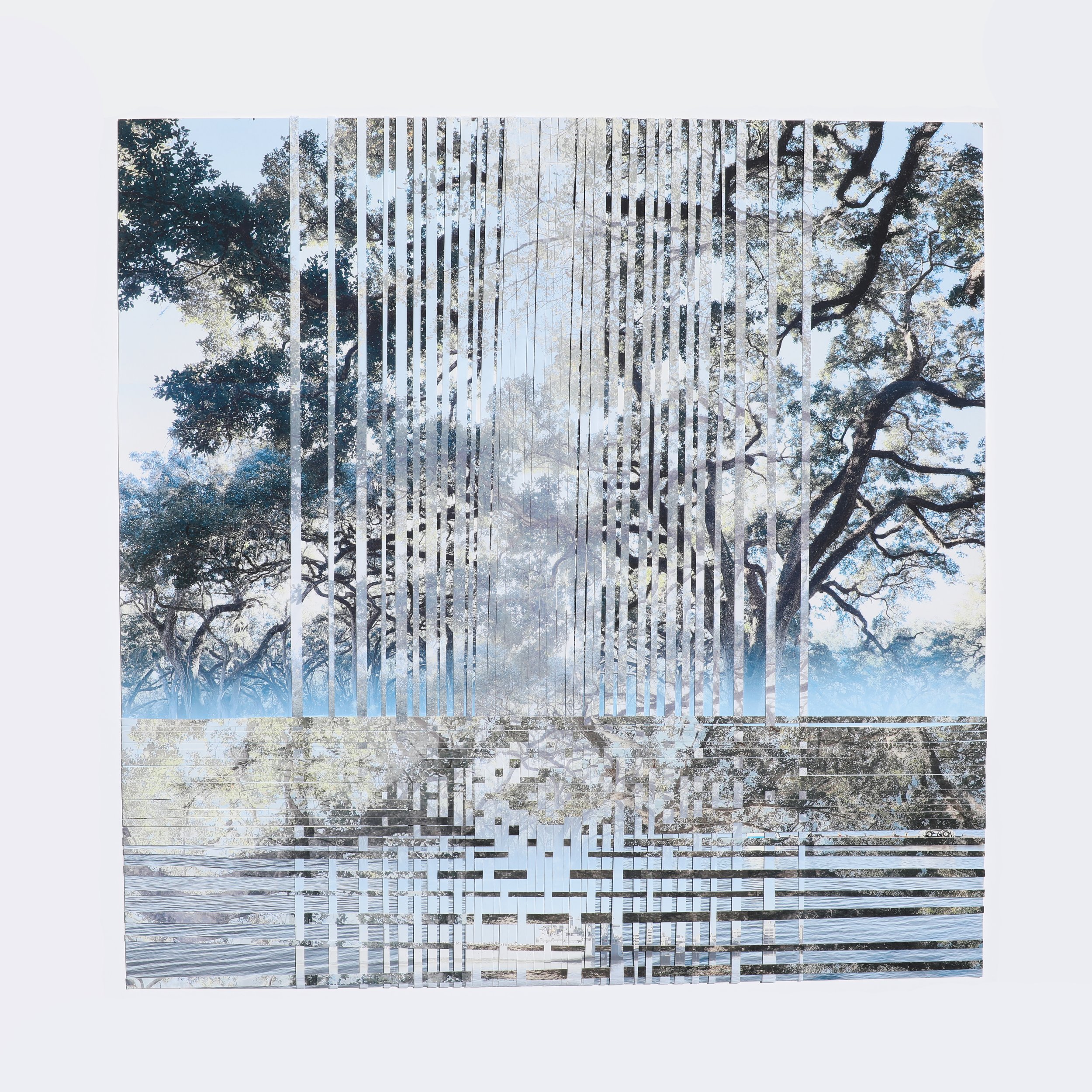
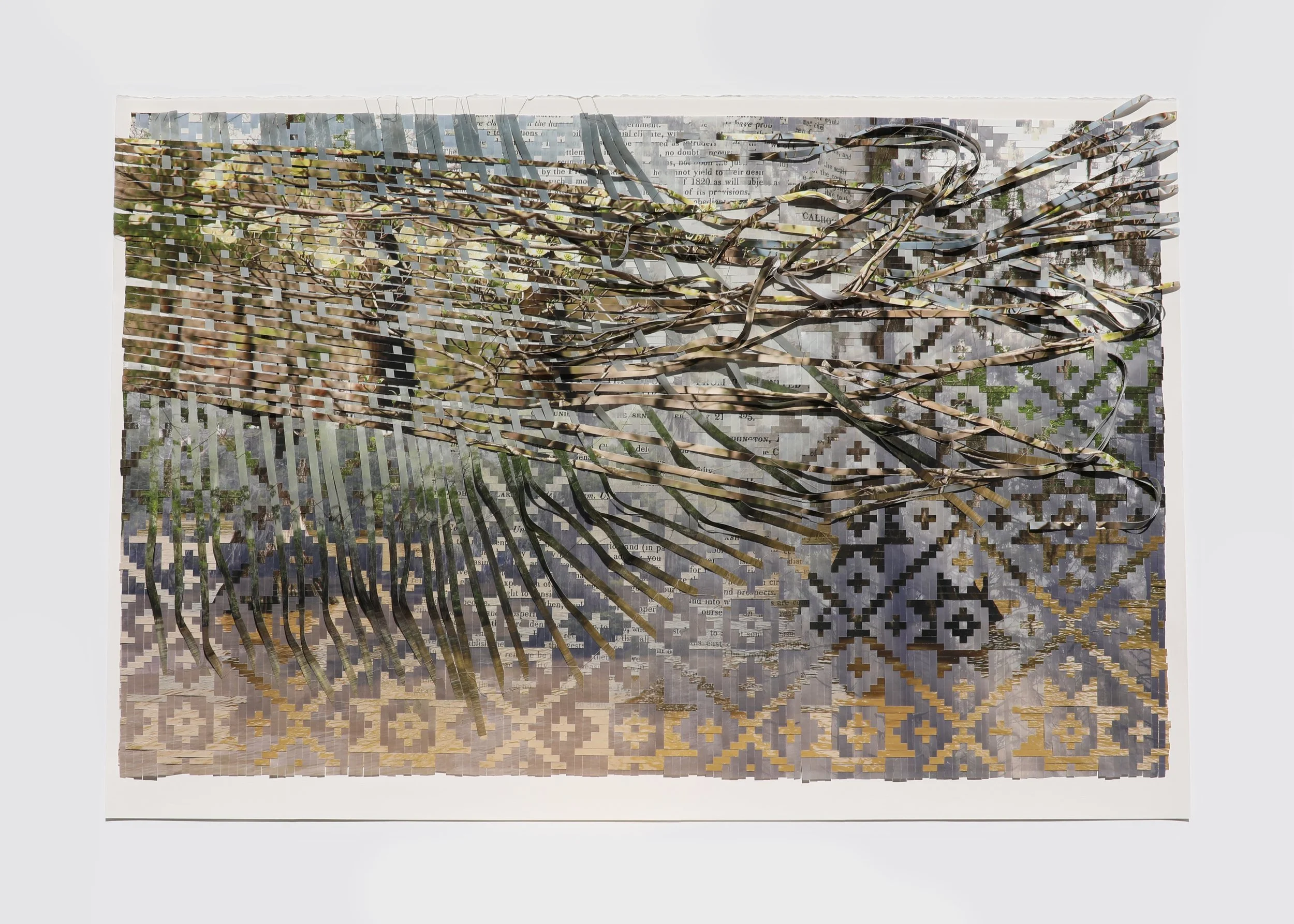
Montclair Dots Study, 23.75 x 23.75’
Montclair Dots, 40 x 60’
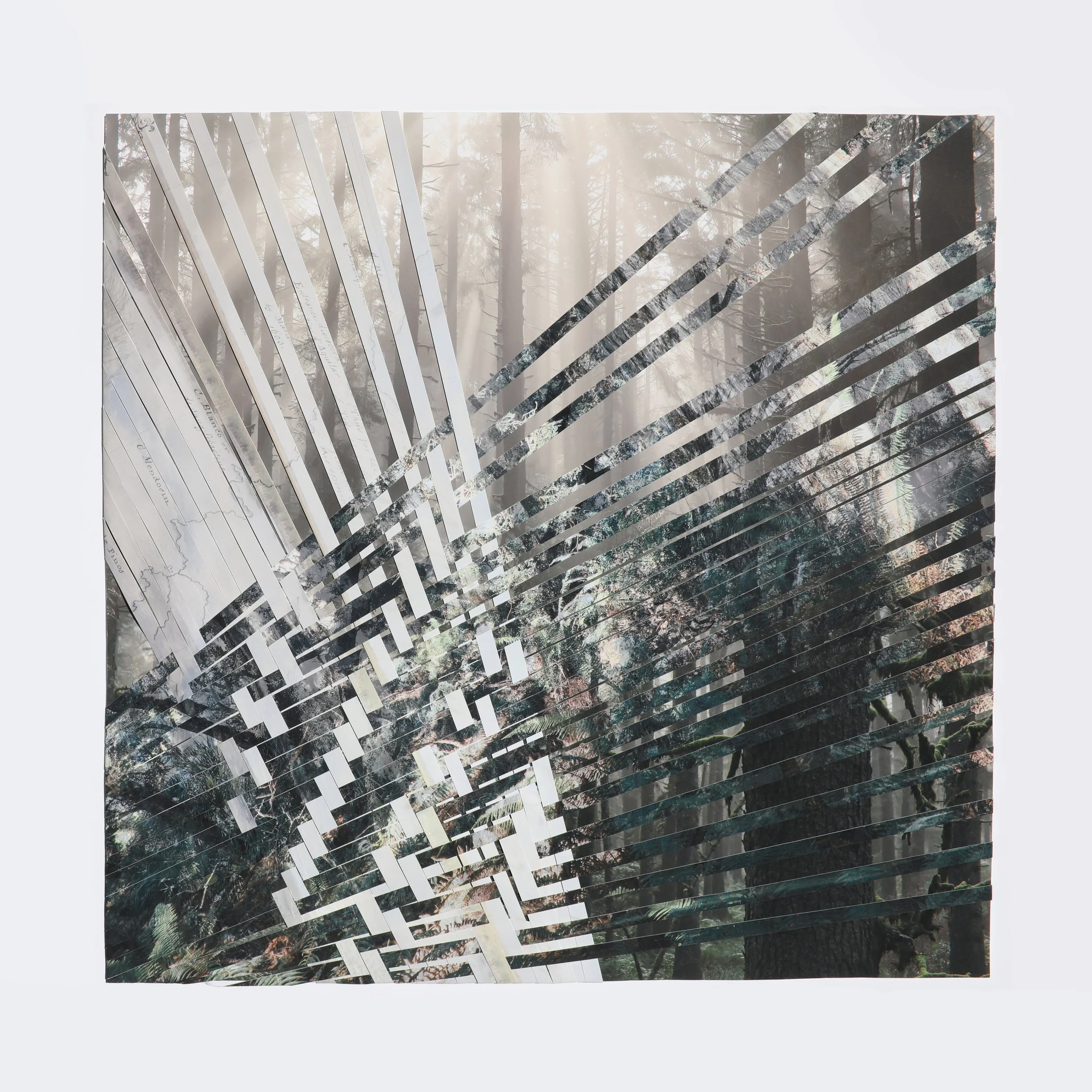
Montclair Rabbit Study, 23.75 x 23.75’
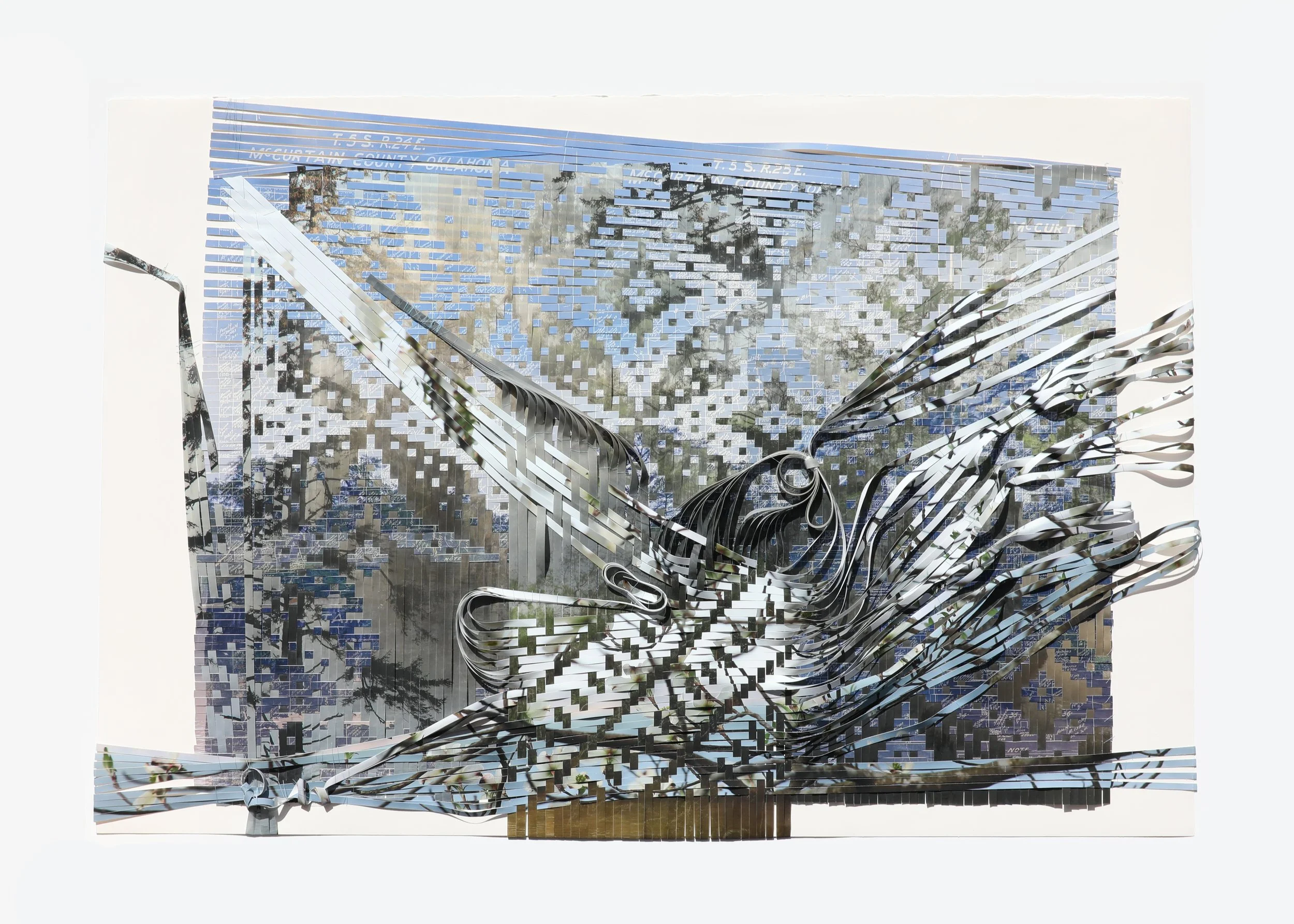
Montclair Rabbit, 40 x 60’
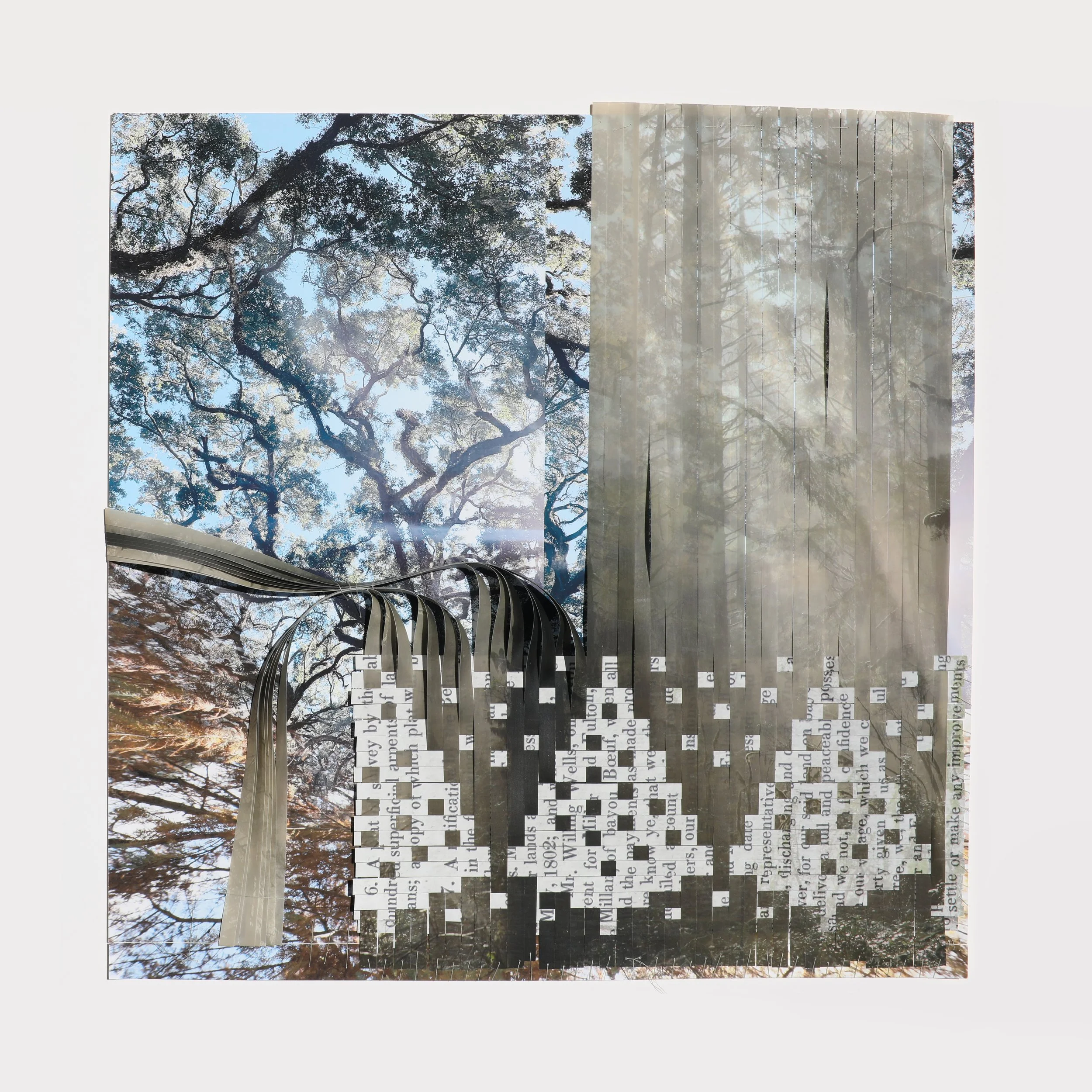
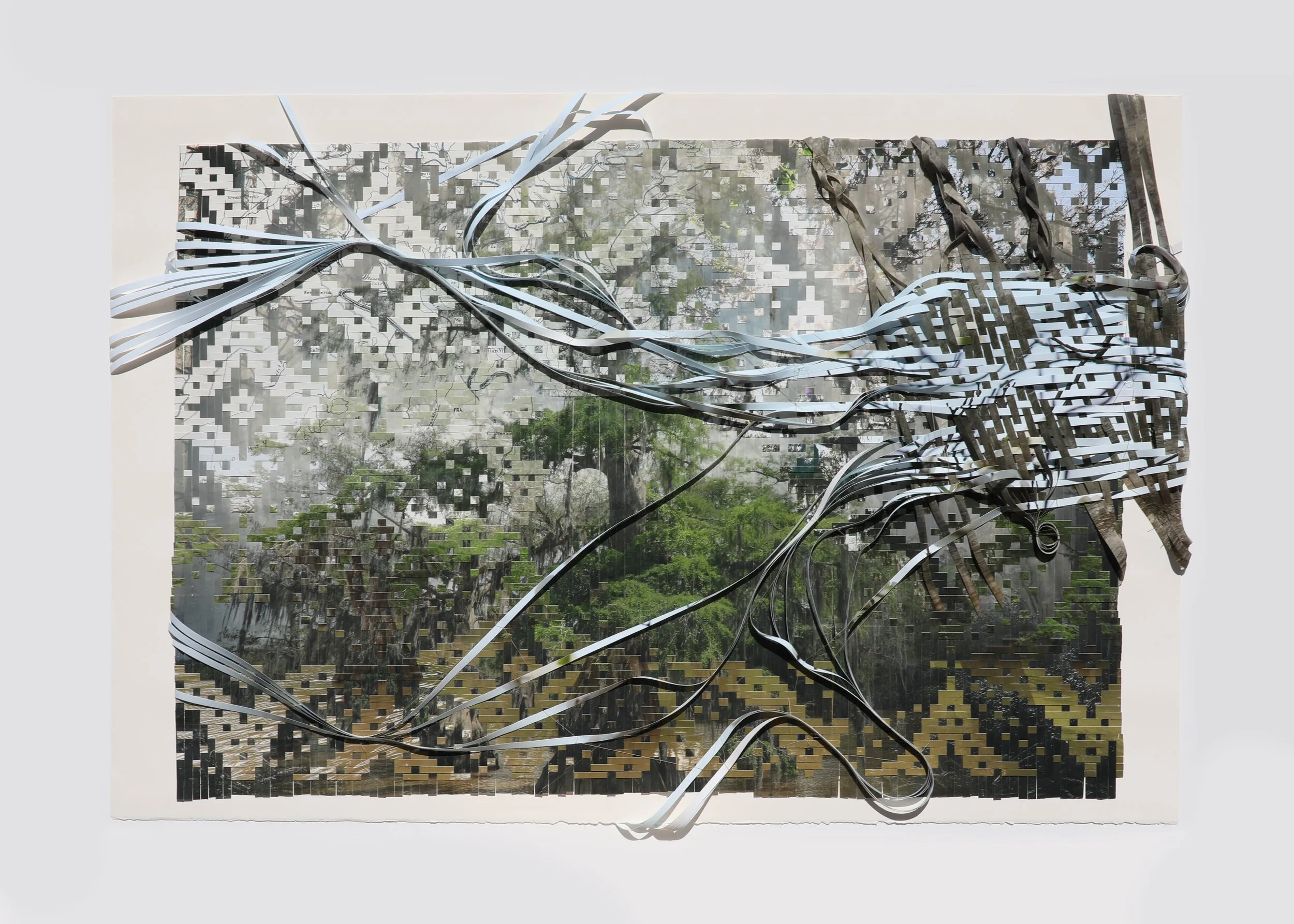
Worcester Bear Study, 23.75 x 23.75’
Worcester Bear, 40 x 60’
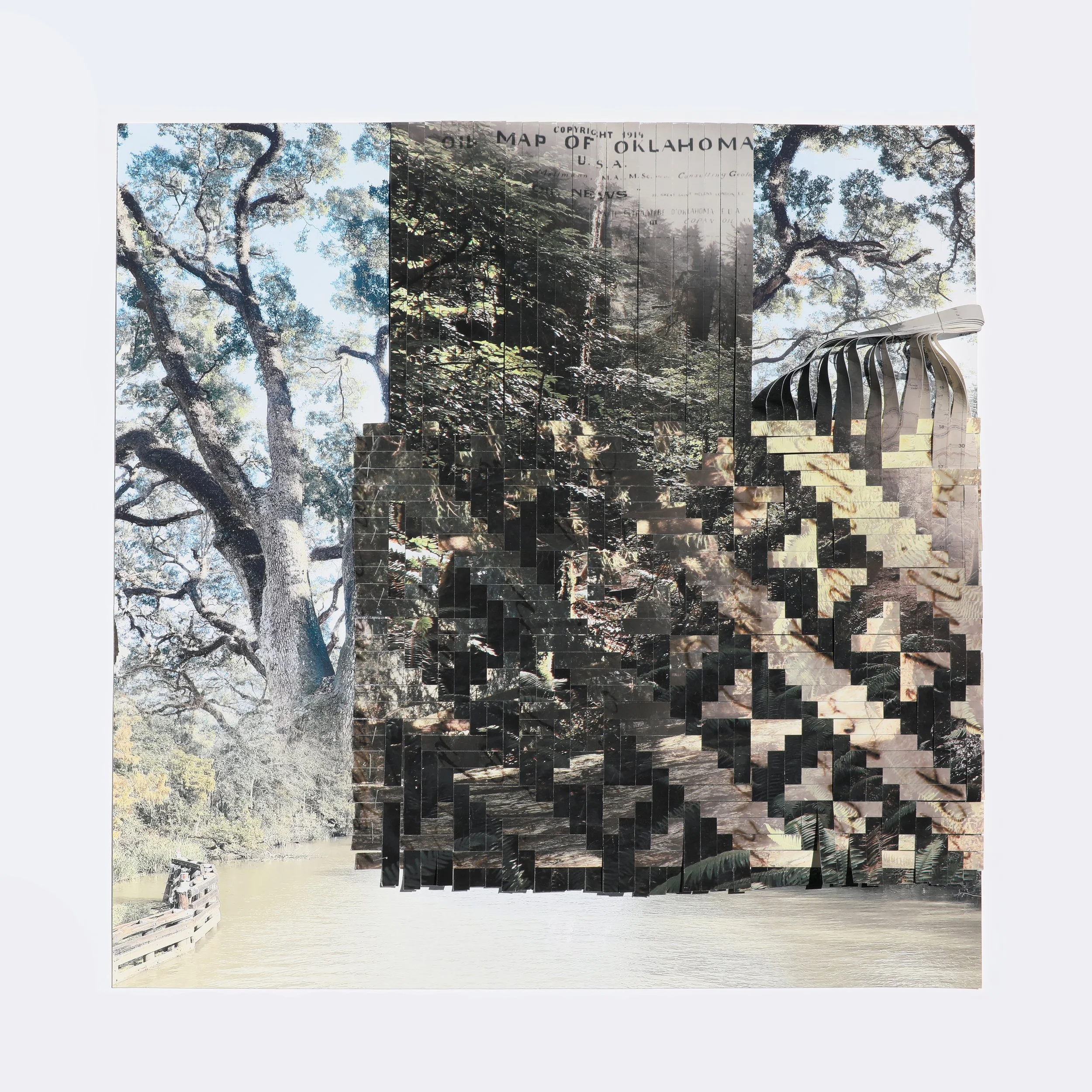
Worcester Bowtie Study, 23.75 x 23.75’
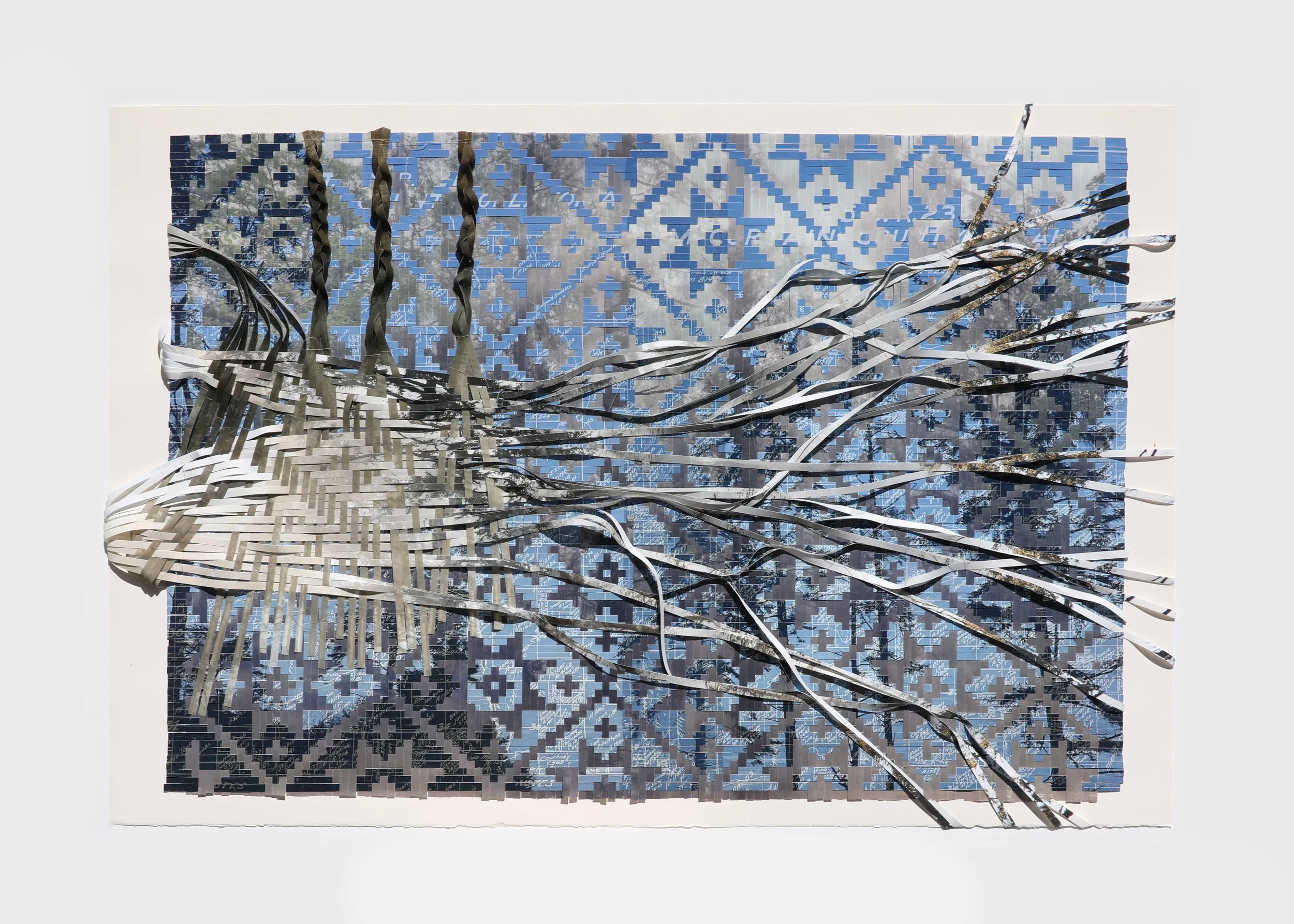
Worcester Bowtie, 40 x 60’
Interpretation
Sarah Sense’s photo-weavings move from the intimacy of the hand to the scale of land and history, tracing how care, survival, and responsibility are embedded within Chitimacha and Choctaw basket traditions.
The work begins with a simple, repeated gesture: the artist holding ancestral baskets, both from her family and from museum archives. These moments are quiet but charged. Instead of nostalgia, it is an awareness of contact across time: hands meeting hands through rivercane, pattern, and pressure. The basket is not treated as an artifact, but as something animate, something that remembers. Holding it longer becomes a response to absence, to rupture, and to the unfulfilled promise of continuity.
Sense extends this tactile encounter into the structure of the work itself. Colonial maps, American State Papers, and allotment documents are woven together with contemporary landscape photographs and traditional basket patterns. These materials are evidence of systems that reordered land and life through extraction, ownership, and removal. The same period in which Chitimacha baskets entered colonial collections as commodities coincided with the systematic dismantling of Choctaw land sovereignty under U.S. policy.
Rather than illustrating history, the work interrupts it. Indigenous weaving patterns cut through cartographic lines, unsettling the authority of maps designed to fix, divide, and control.
What becomes clear is the tension between weaving as necessity and weaving as preservation. Many of the baskets referenced in this series were made under economic pressure, for collectors and institutions that rarely recorded the conditions of their making. Sense’s re-weaving does not attempt to resolve this tension, but holds it in place. By engaging with archival baskets across multiple museums, the work asks us to consider not only what is displayed, but what remains unspoken—whose labor is acknowledged, whose intentions are erased, and what forms of care were required to ensure survival.
I Want to Hold You Longer ultimately reads as an act of responsibility rather than recovery. It honors the weavers before, alongside, and after Sense, recognizing tradition as something continuously carried, not preserved in stasis. In holding these baskets, wanting to hold them longer, the work insists on time as cyclical, on memory as embodied, and on weaving as a living practice that resists closure.
About the Artist
Sarah Sense (b. 1980, Sacramento, California) is an artist whose practice centers on photo-weaving using traditional basket techniques from her Chitimacha and Choctaw family. She received a BFA from California State University, Chico (2003) and an MFA from Parsons The New School for Design, New York (2005).
Since 2004, Sense has combined weaving with photography, maps, and archival materials to tell stories about Indigenous land, history, and survival. Her work has grown through extensive research and travel across the Americas, Southeast Asia, and the Caribbean, and has been exhibited internationally. She is a British Library Eccles Centre Fellow, and her recent large-scale commissions rework colonial maps through Indigenous weaving patterns to address land, climate, and decolonization.