

I SEE by Fliiip Design
Animation Film November 14 2025
Intro
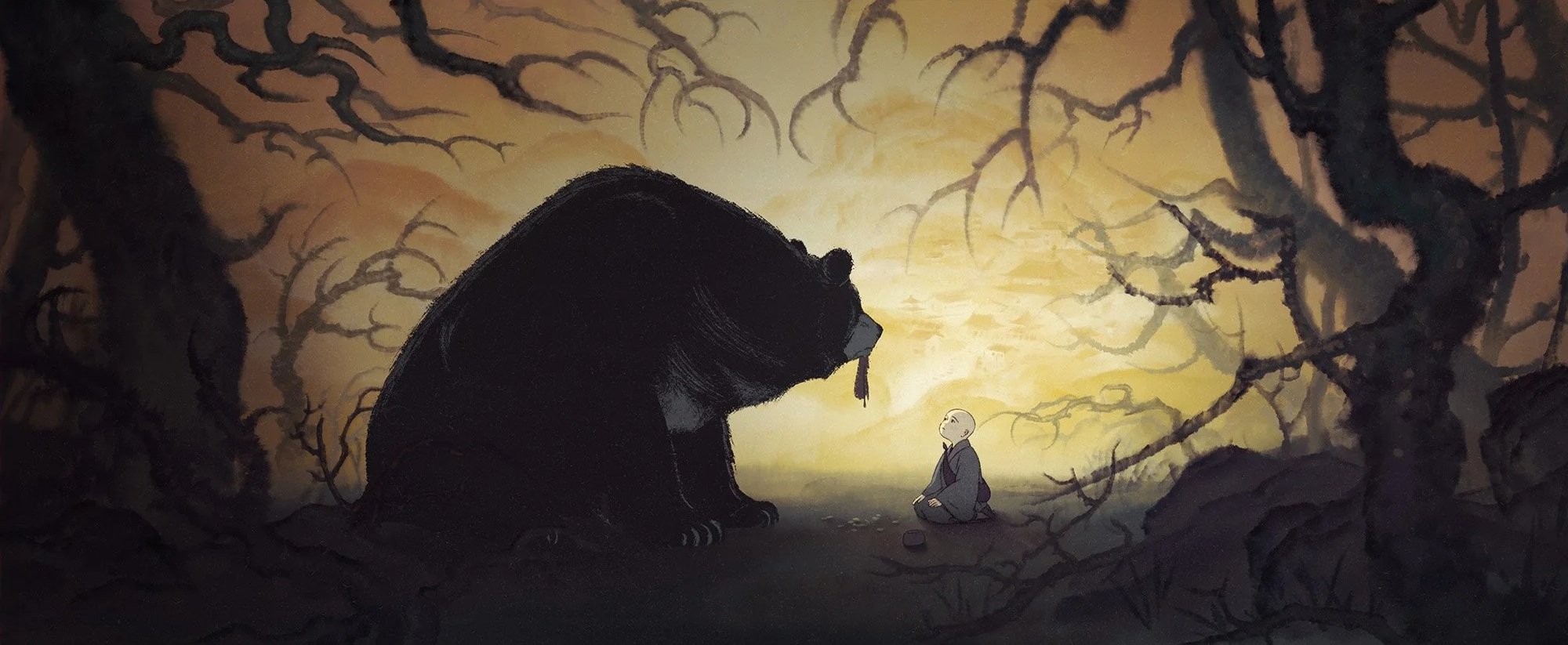
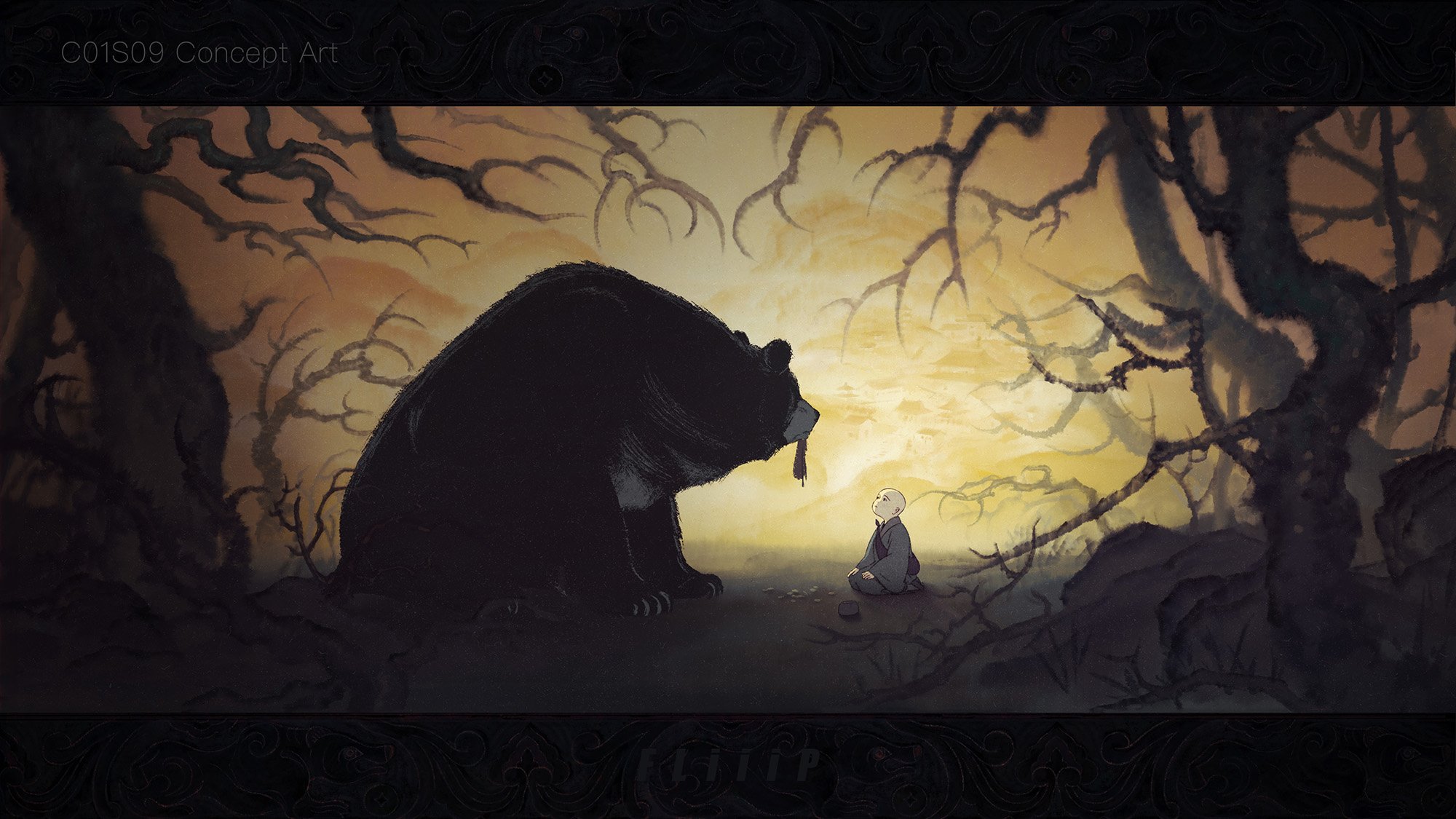
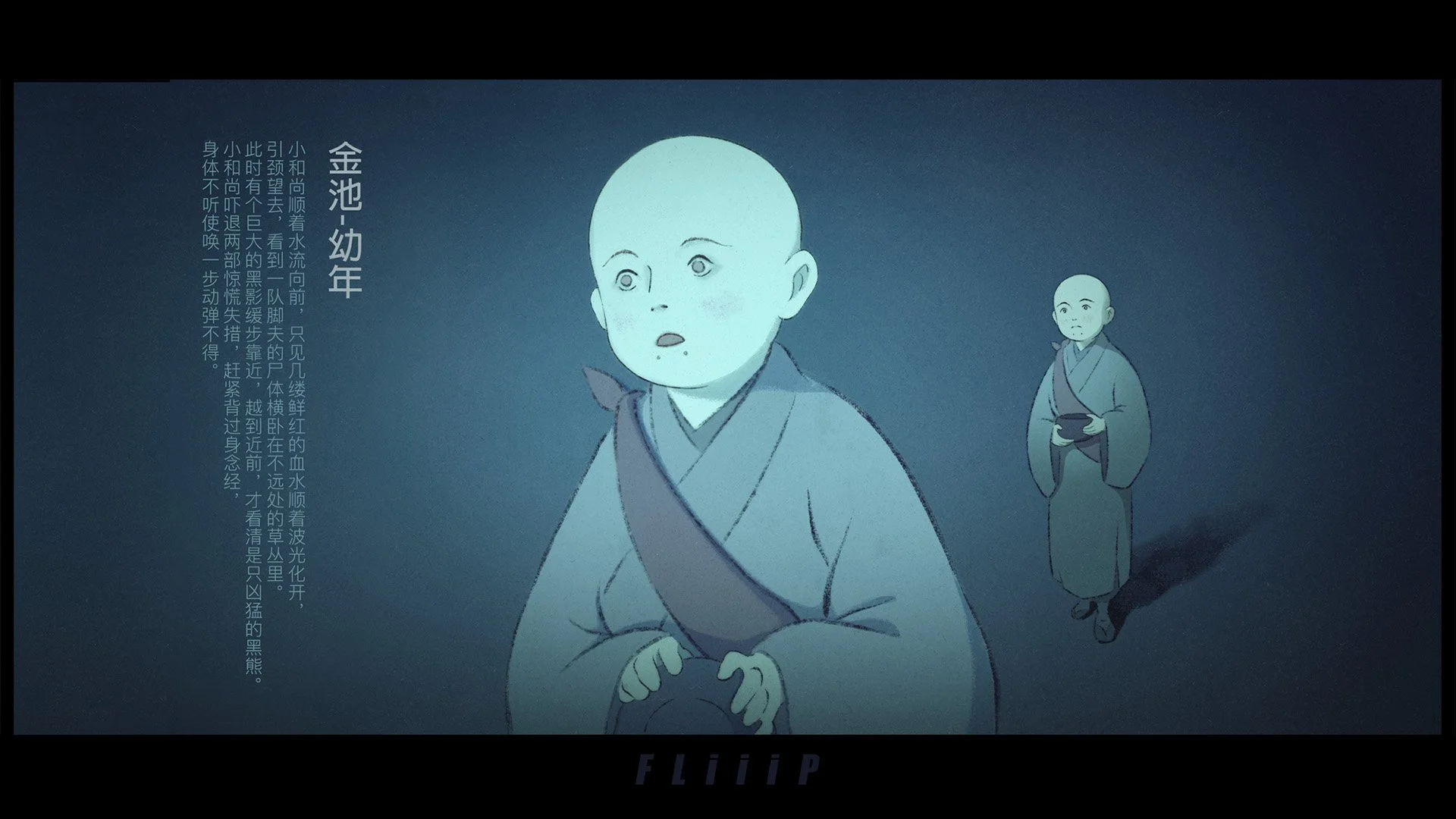
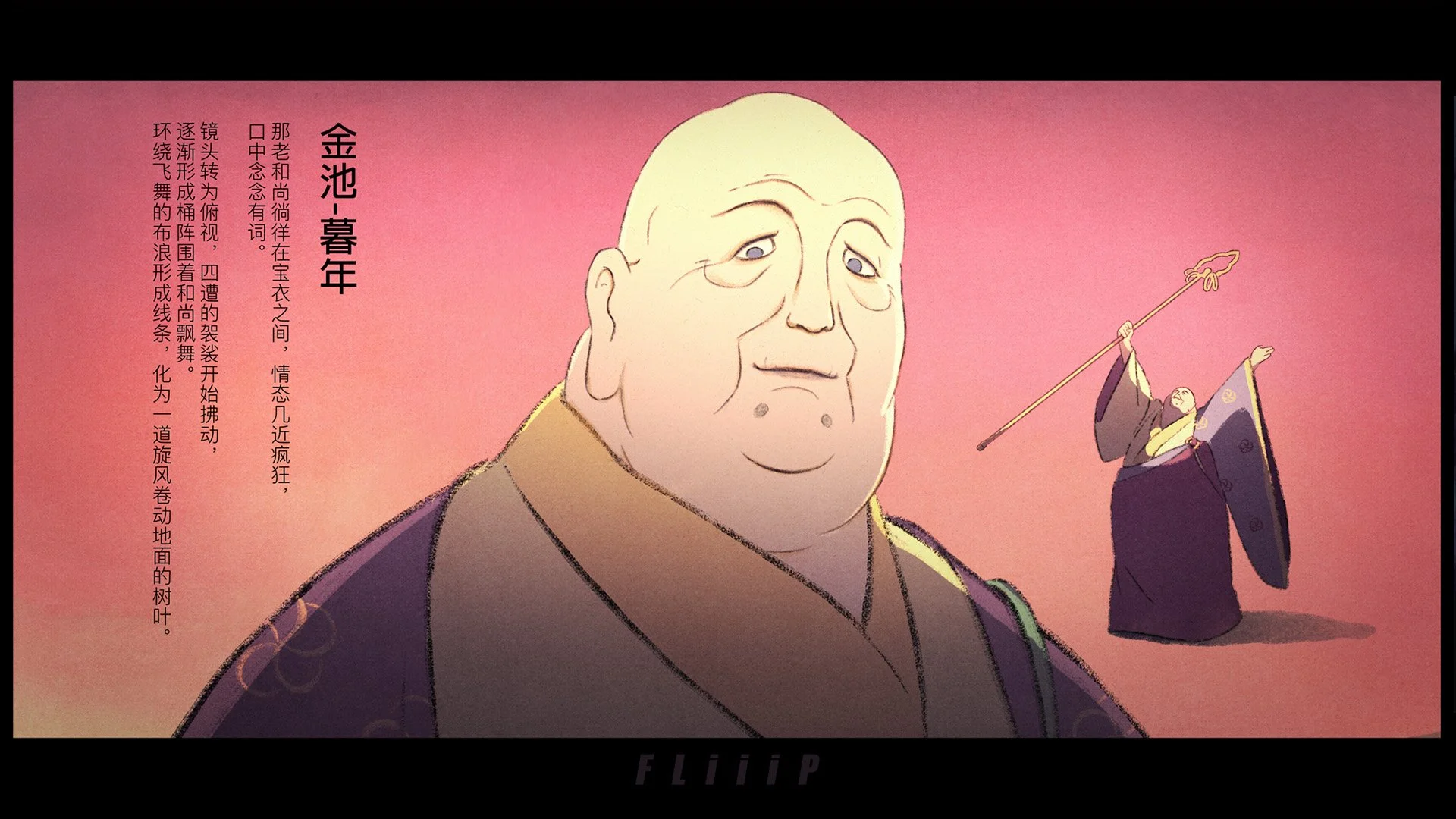
As a child, Jinchi rose to power with the help of the Black Bear Spirit. But as his status grew, so did his obsession with an ornate kasaya, a monk's robe that came to symbolize his unending desire for power and wealth.
When Tang Sanzang passed by Jinchi Temple wearing a magnificent embroidered kasaya, Jinchi was consumed by greed and attempted to claim the robe for himself…
“I see” is an animated chapter created for the game Black Myth: Wukong, centered around the theme of greed. It tells the tragic story of Elder Jinchi.
About the Studio
FLiiiP Design was founded in 2020 in Shanghai as a studio dedicated to visual and animation content creation. The name “FLiiiP” reflects the studio’s philosophy: to constantly discover new perspectives, maintain a sense of freshness in creative work, push beyond boundaries, and continue producing original and innovative projects.
I SEE
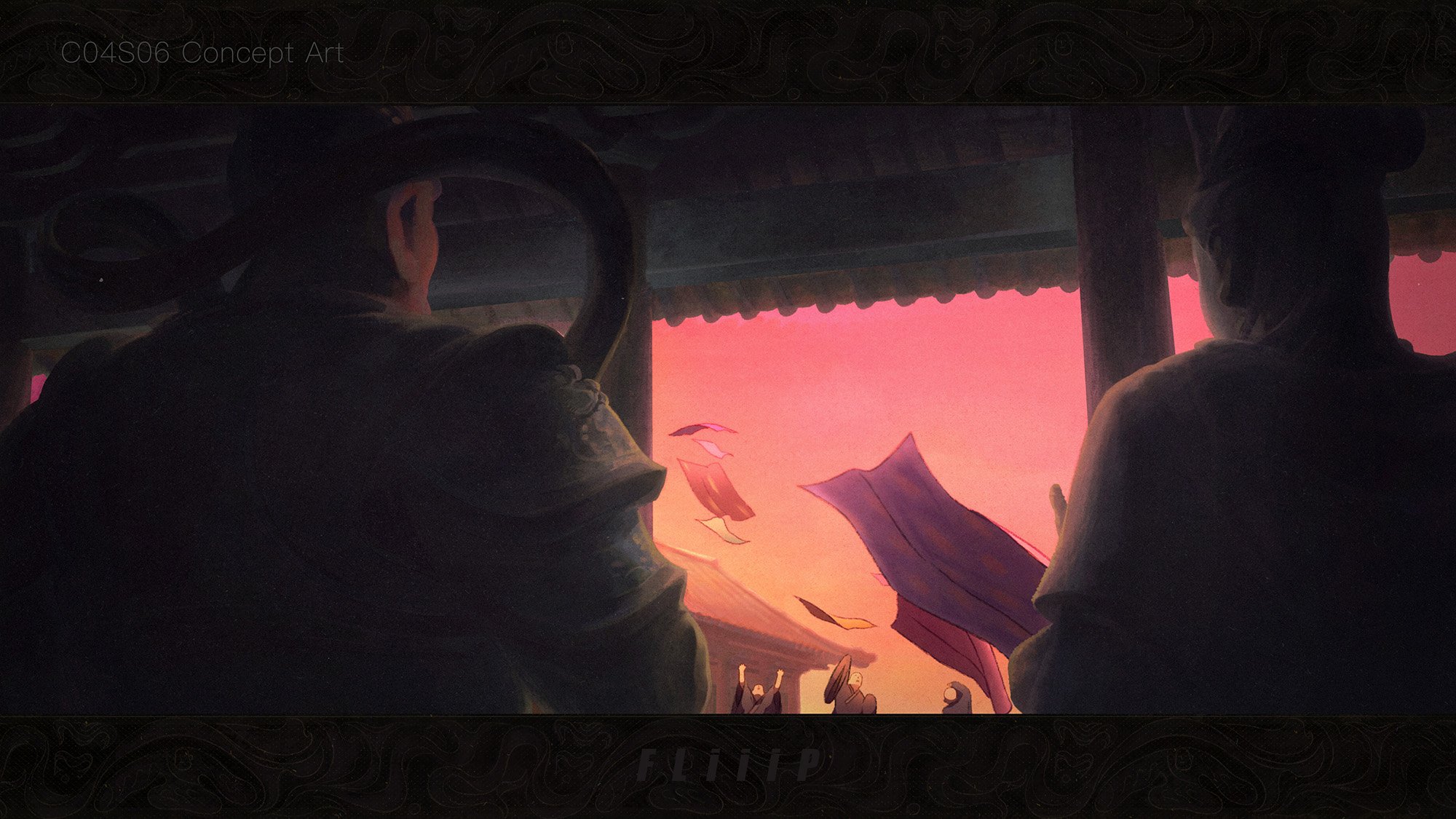
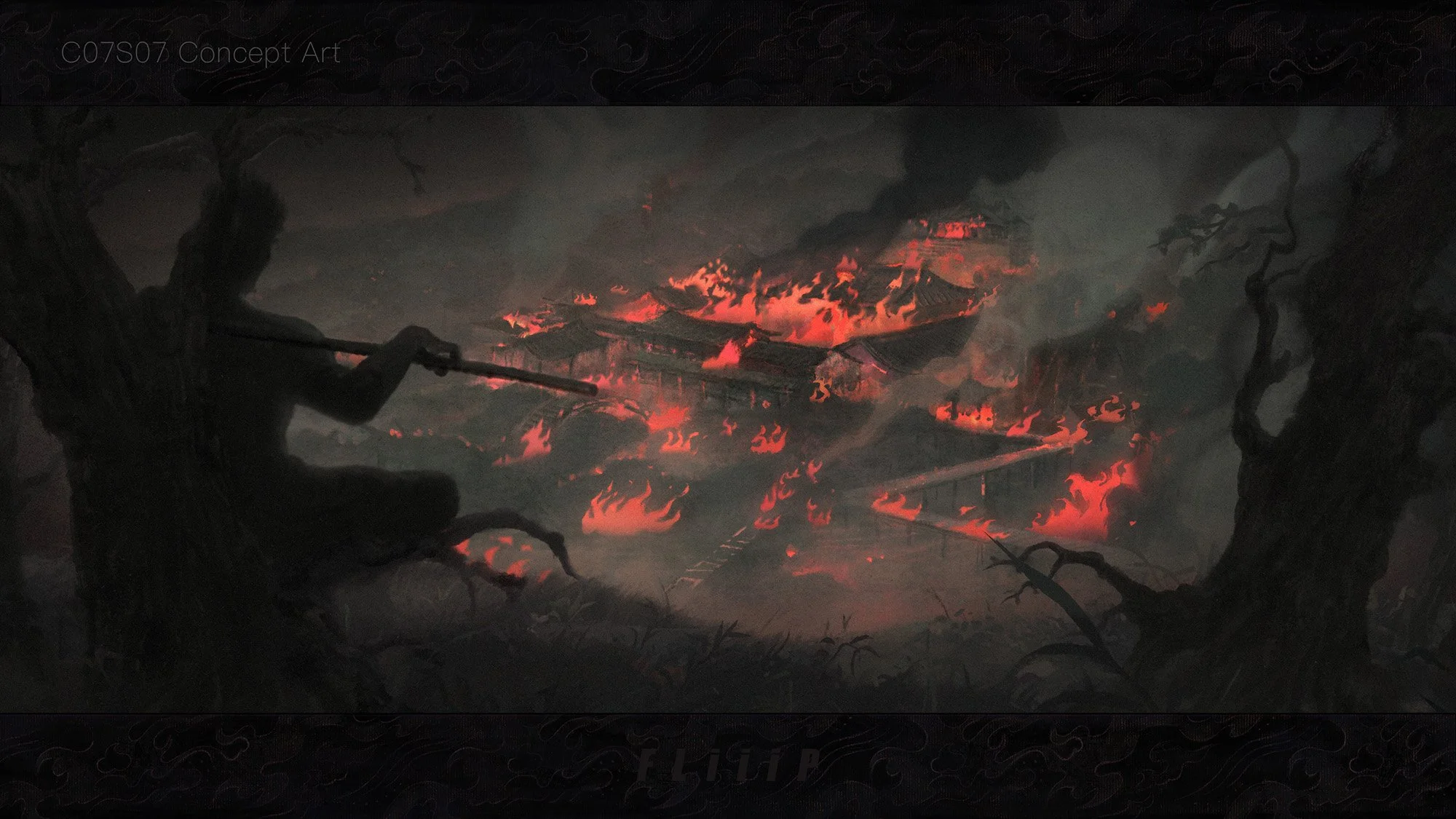
Background
Raised in poverty, Jinchi grew up fearful of scarcity. Over time, his hunger for security twisted into ambition. He eventually became Elder Jinchi: a revered monk, respected and powerful. On the surface, he had severed worldly ties, while in truth, he had merely learned to suppress his desires, not erase them.
Black Wind Mountain was ruled by three demons: the Black Bear Spirit, Lingxuzi, and the White Flower Snake Spirit.
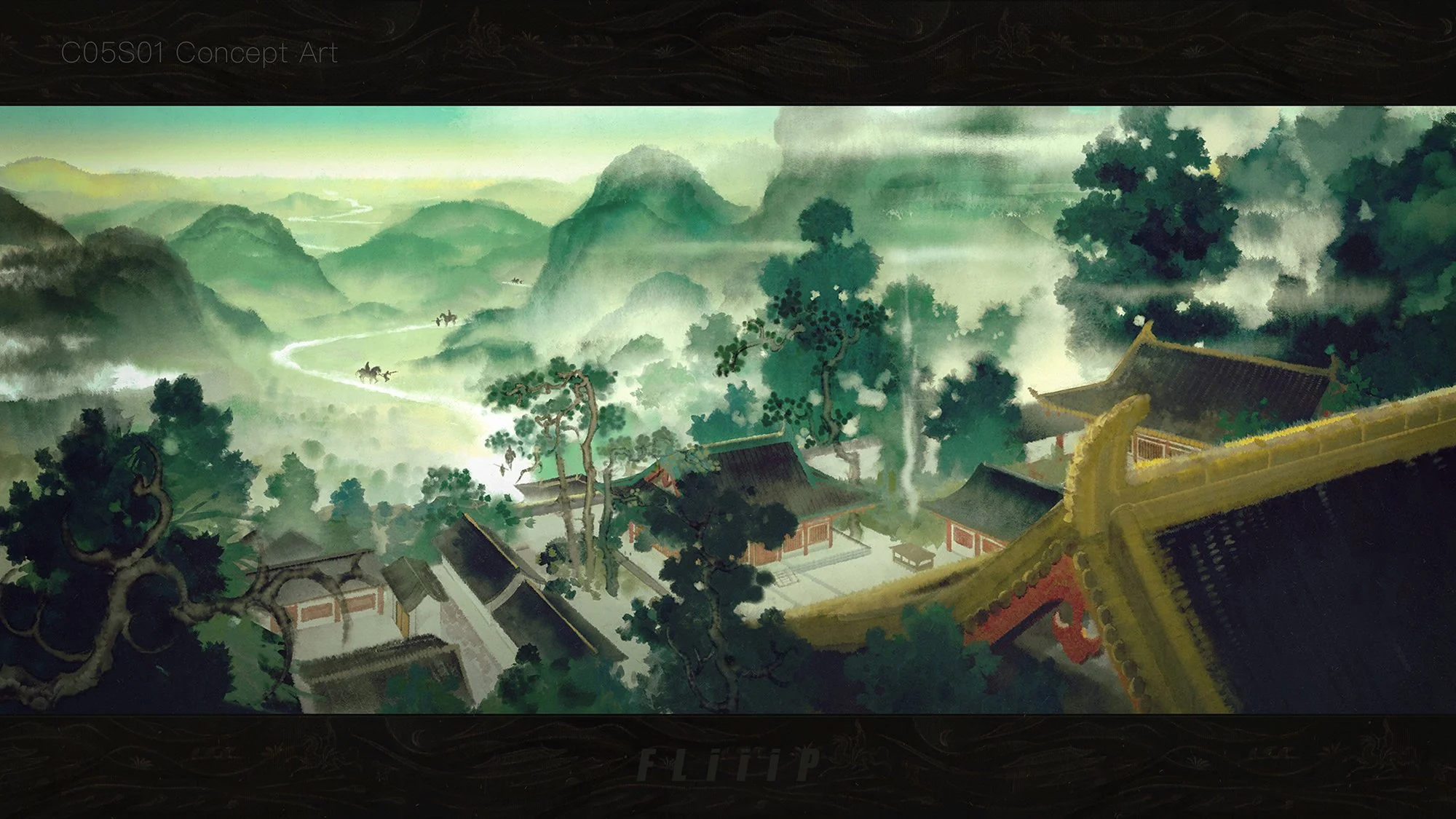
Tang Sanzang and his disciple Wukong stopped by the Guanyin Zen Temple on their journey to the west. They presented a kasaya (a sacred monastic robe) bestowed by Guanyin herself, Jinchi's eyes gleamed with longing.
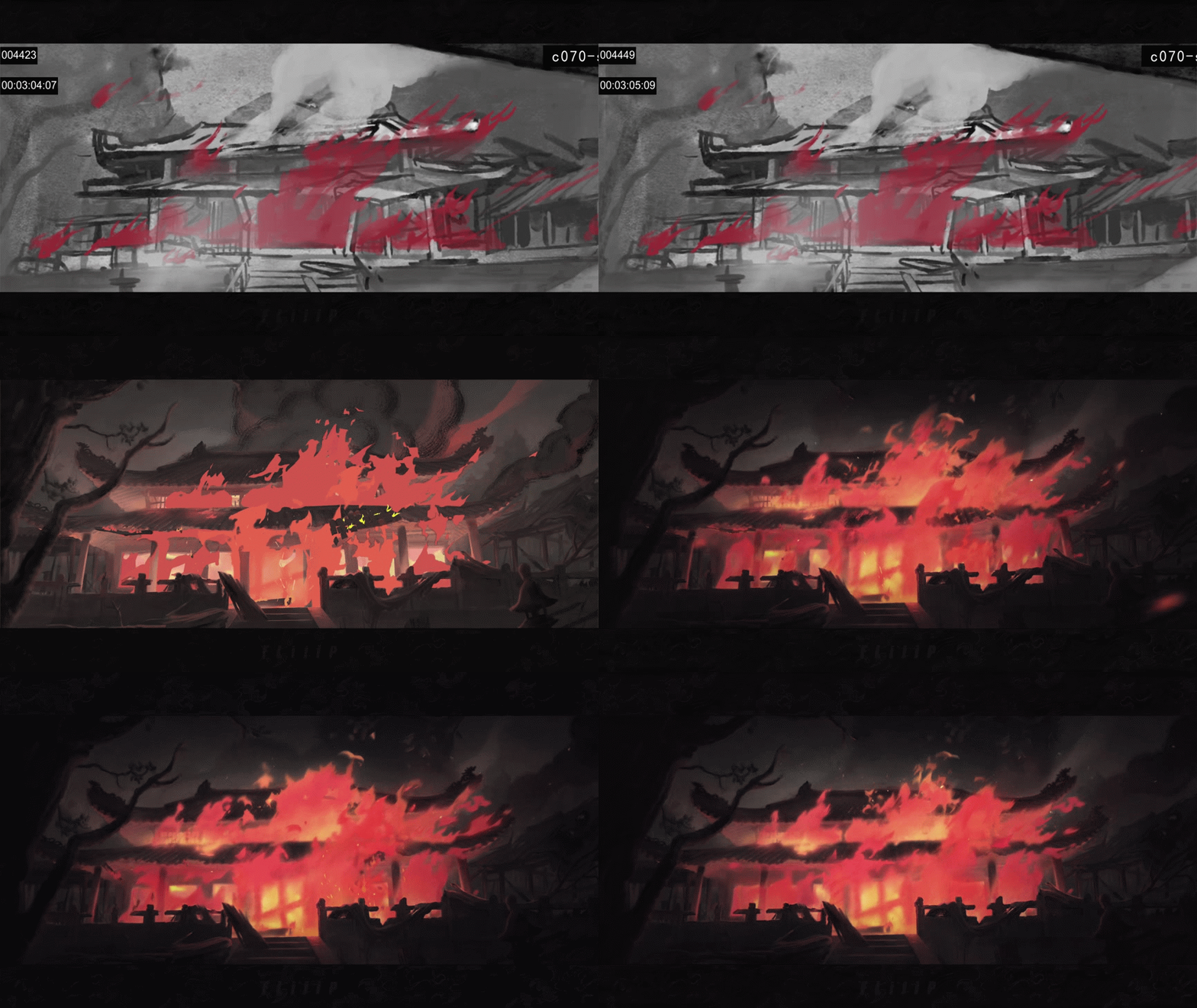
Moved by gratitude, Guangzhi, a former disciple of Jinchi, conspired to burn the temple and steal the kasaya. Guangmou, though skeptical, he played along. Their plot backfired, Wukong turned the flames against them, and the entire temple was engulfed in fire. The Black Bear Spirit arrived, not to save anyone or the fire, but to steal the kasaya.
With the kasaya lost, Elder Jinchi fell into despair and took his own life. Seeking revenge and restoration, Wukong later killed Lingxuzi and the White Snake Spirit, The Black Bear Spirit was captured and sent to serve Guanyin in the Southern Sea…
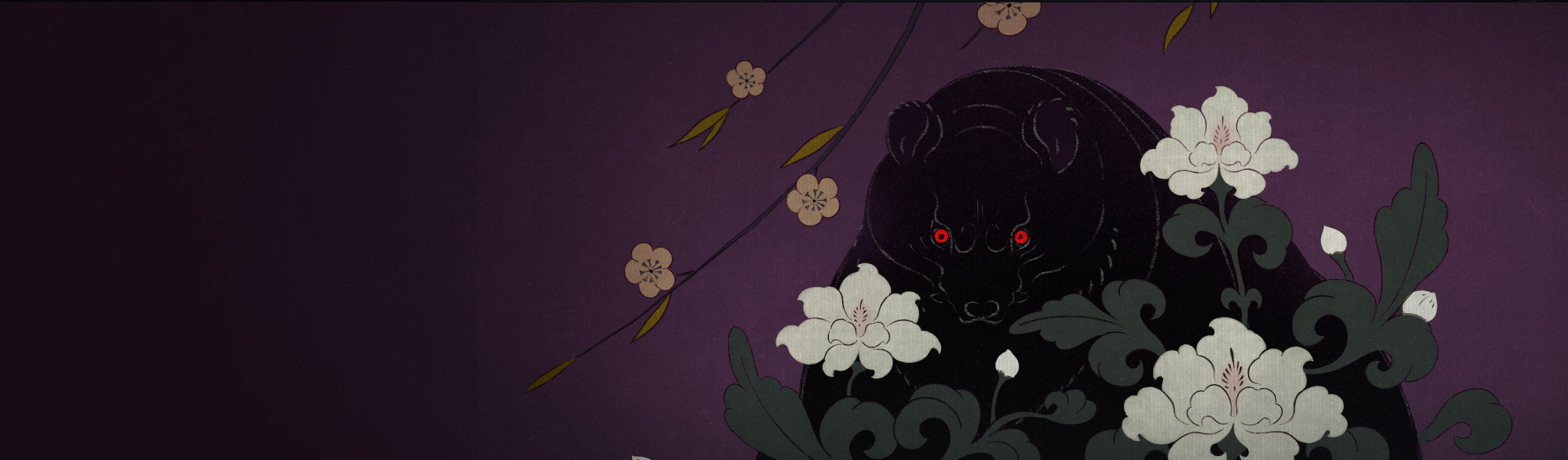
Years passed. After the fall of the Monkey King, Guanyin commanded the Black Bear Spirit to return to Black Wind Mountain and rebuild the temple from 500 years ago. He resurrected the dead demons, including Lingxuzi, using a forbidden ritual he had learned in the Southern Sea.
But the price of resurrection was grim. It wasn’t true revival, it required the essence of the Monkey King and the blood of their own kin. Lingxuzi, unable to bear the burden, hanged himself.
His corpse fades into smoke after the player in the game Black Myth: Wukong defeats the soul of Elder Jinchi.
With Lingxuzi gone, the remaining wolves crowned a new leader: a fierce demon from Lion Camel Ridge, now known as Lingxuzi.
The Black Bear Spirit also attempted to resurrect Elder Jinchi, but his soul was incomplete. What emerged was a mindless monster, a broken fragment of the monk he once was.
Behind the Scenes
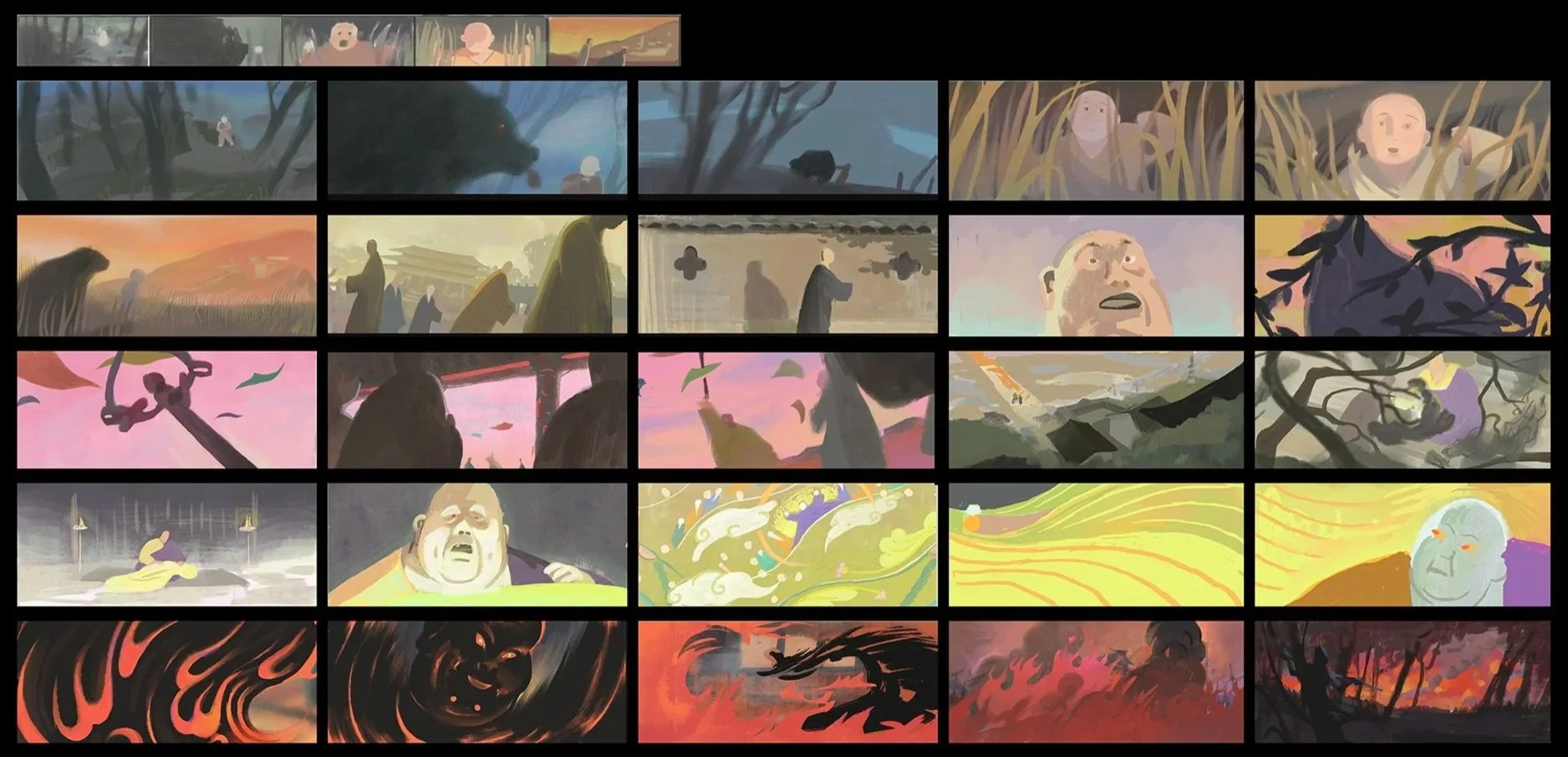

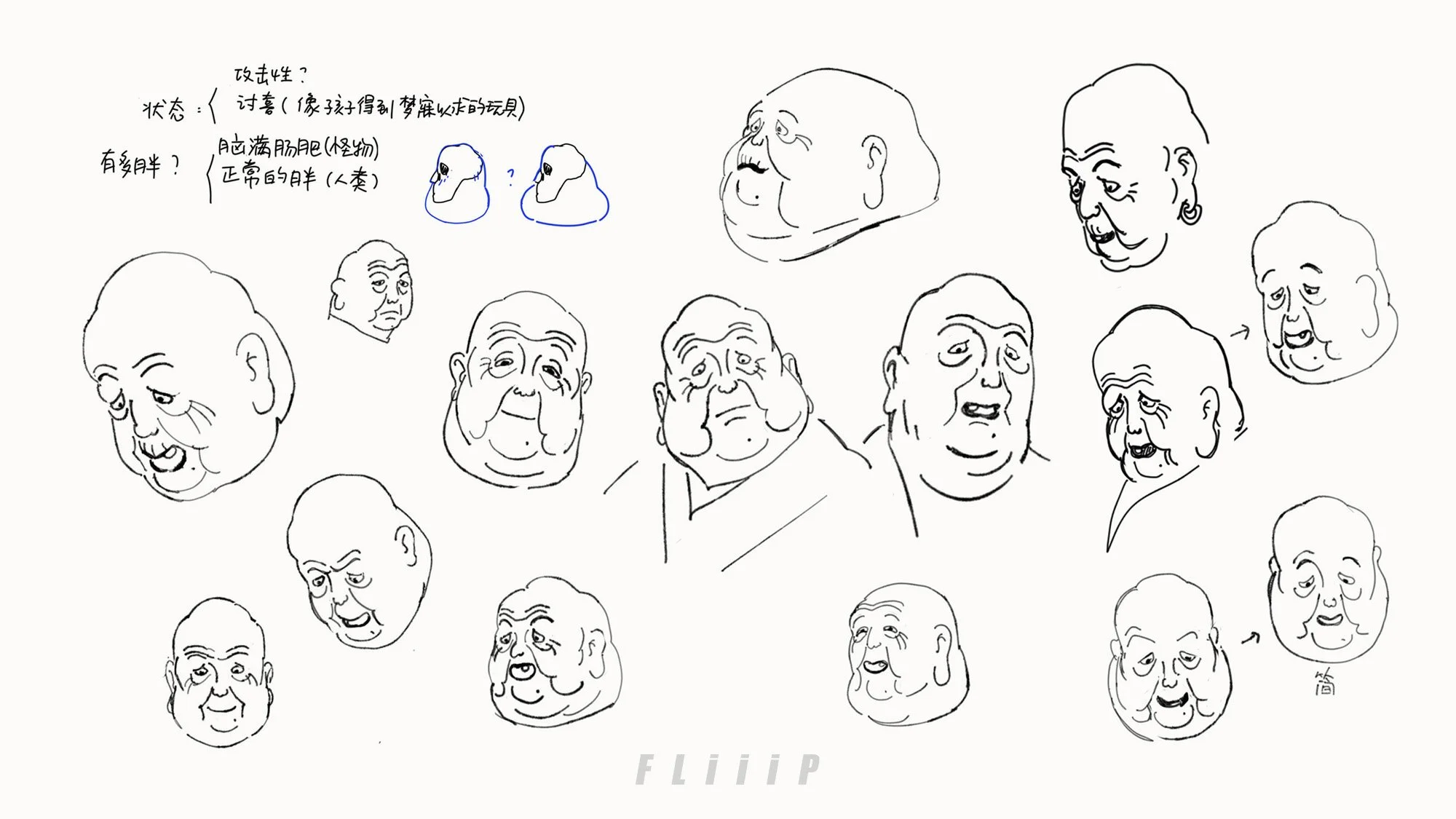
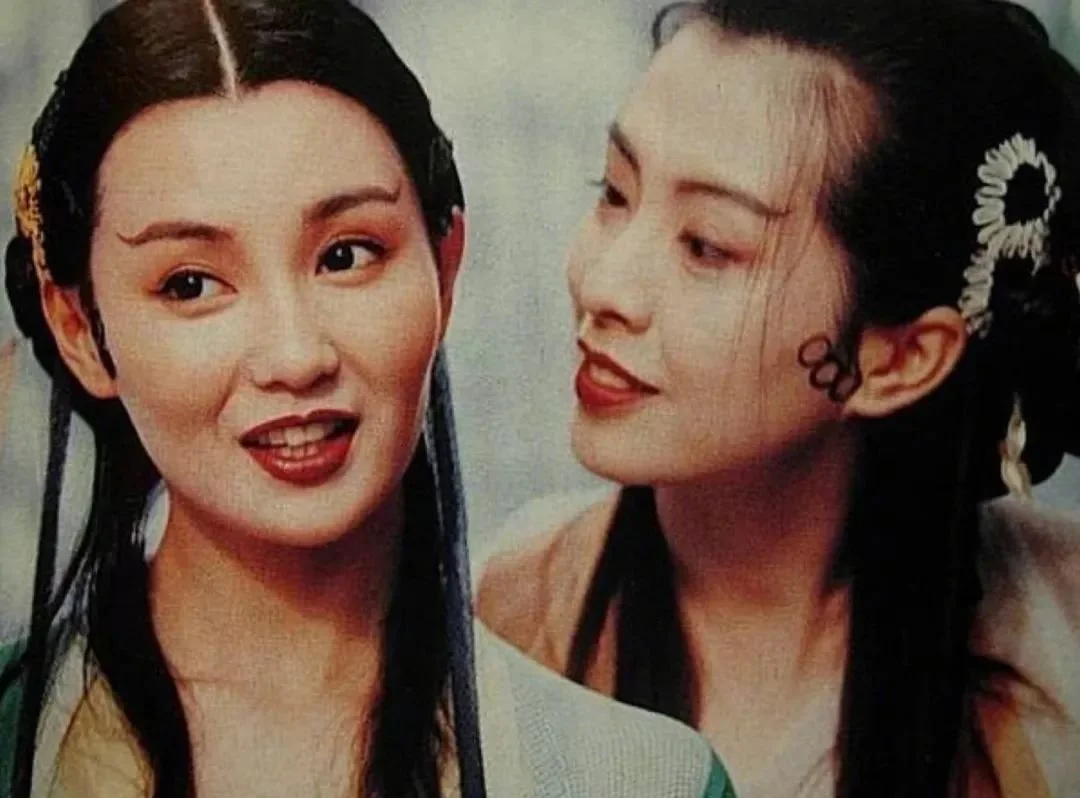
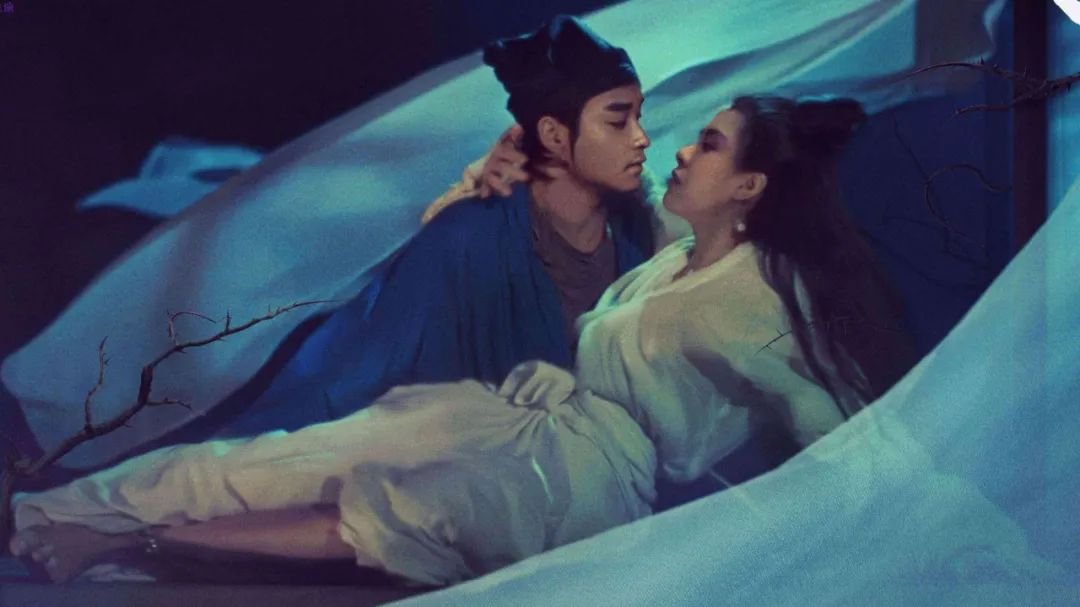
Green Snake (1993), source: https://j.eastday.com/m/1599155481022025
A Chinese Ghost Story (1987), source: https://www.lifeweek.com.cn/h5/article/detail.do?artId=243250
“在风格探索上,FLiiiP已经尝试过一些不同的中国风作品,像水墨、皮影,美影厂的九色鹿风格等,这次希望能尝试一些新的方向。考虑后决定试试带有电影感的中国风,希望能还原出一些八九十年代《青蛇》《倩女幽魂》这类老胶片电影中的中国风感受。 与游戏《黑神话:悟空》写实硬核的视觉方向不同,FLiiiP的风格更偏向风格化和设计感。因此,在制作中我们一直在尝试找到一种平衡,使画面既不脱离游戏的写实风格,又能体现FLiiiP的独特性。”
“In terms of stylistic exploration, FLiiiP has previously experimented with various forms of Chinese aesthetics, including ink painting, shadow puppetry, and the visual style of classic animations like Nine-Colored Deer from the Shanghai Animation Film Studio. This time, we wanted to venture into a new direction—one that blends Chinese aesthetics with a cinematic feel. After careful consideration, we decided to evoke the atmosphere of old film reels from the 1980s and 1990s, like Green Snake and A Chinese Ghost Story, aiming to recreate that distinct, nostalgic Chinese cinematic mood.
Unlike the realistic and gritty visual style of the game Black Myth: Wukong, FLiiiP’s approach leans more toward stylization and design. Throughout production, we’ve been working to strike a balance—creating visuals that resonate with the game’s realism while still expressing FLiiiP’s unique artistic voice.”
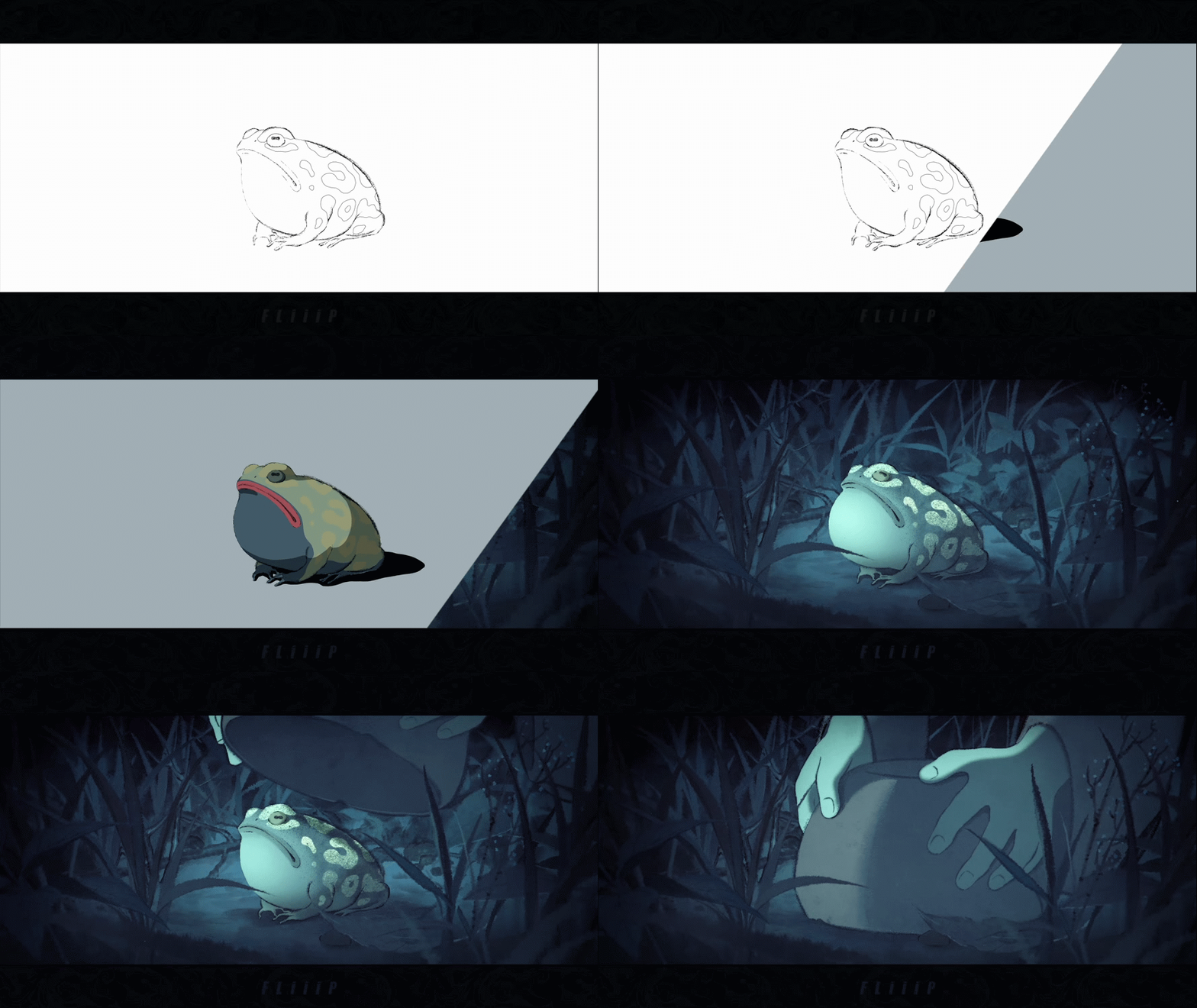
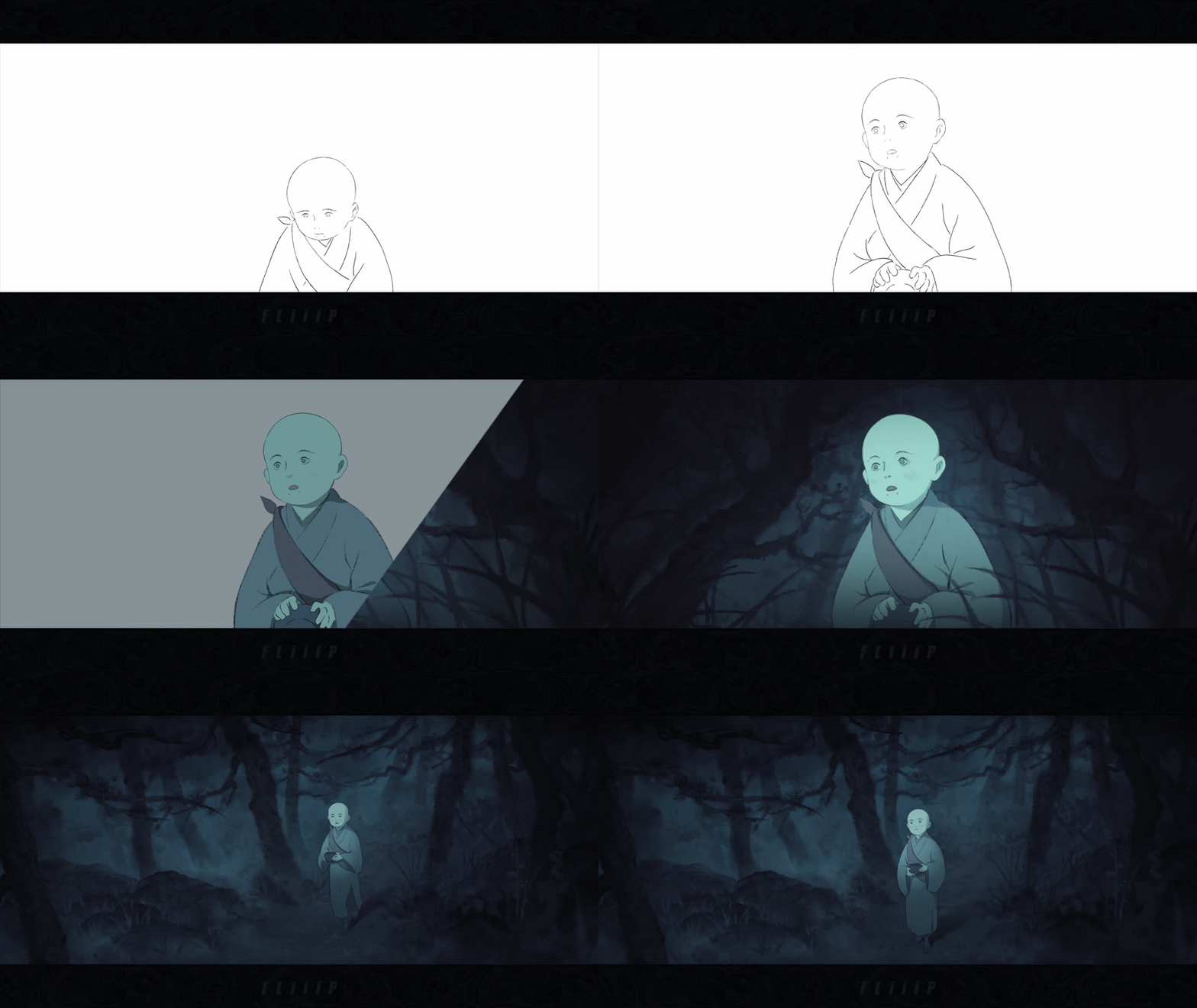
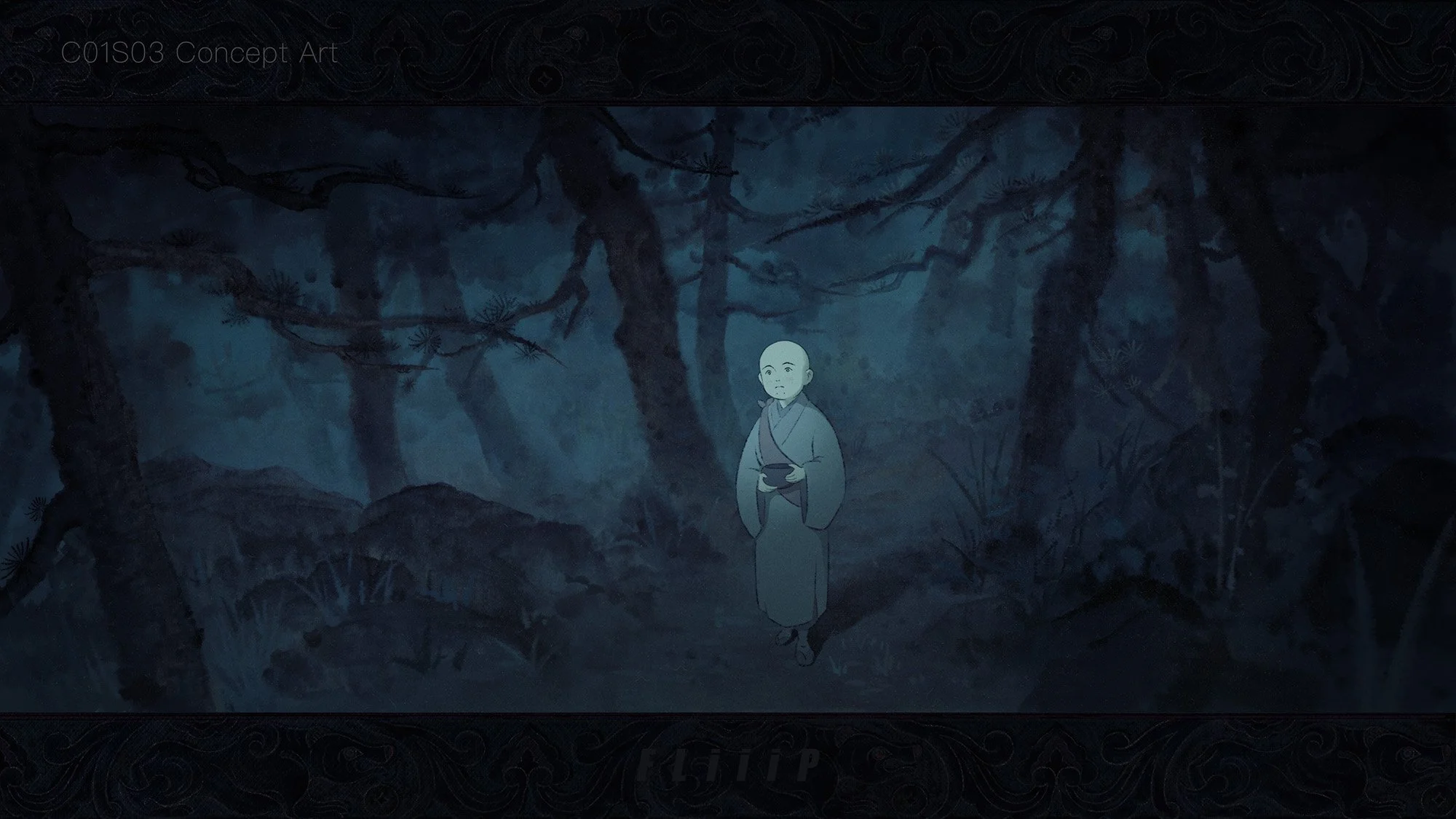
开场森林的氛围应该是有一丝诡异的氛围但和那种欧洲的夜晚黑森林风格有所不同。我们希望它有一些更东方表达的内敛。
“The opening forest scene should carry a faint sense of eeriness, but distinct from the European ‘dark forest at night’ style. We want it to convey a more restrained expression rooted in Eastern aesthetics.”

“动画的部分在这一场想加入一些形式感,所以小金池的一些表演的节奏会有一点像舞台剧。黑熊精是另一个重点,熊的表演部分包括所有的毛发都是在2D动画中制作的”
“For this scene, some of young Jinchi’s performance rhythms will resemble those of a stage play. Another key focus is the Black Bear Spirit‘s performance, including all of the fur, is created in 2D animation.”
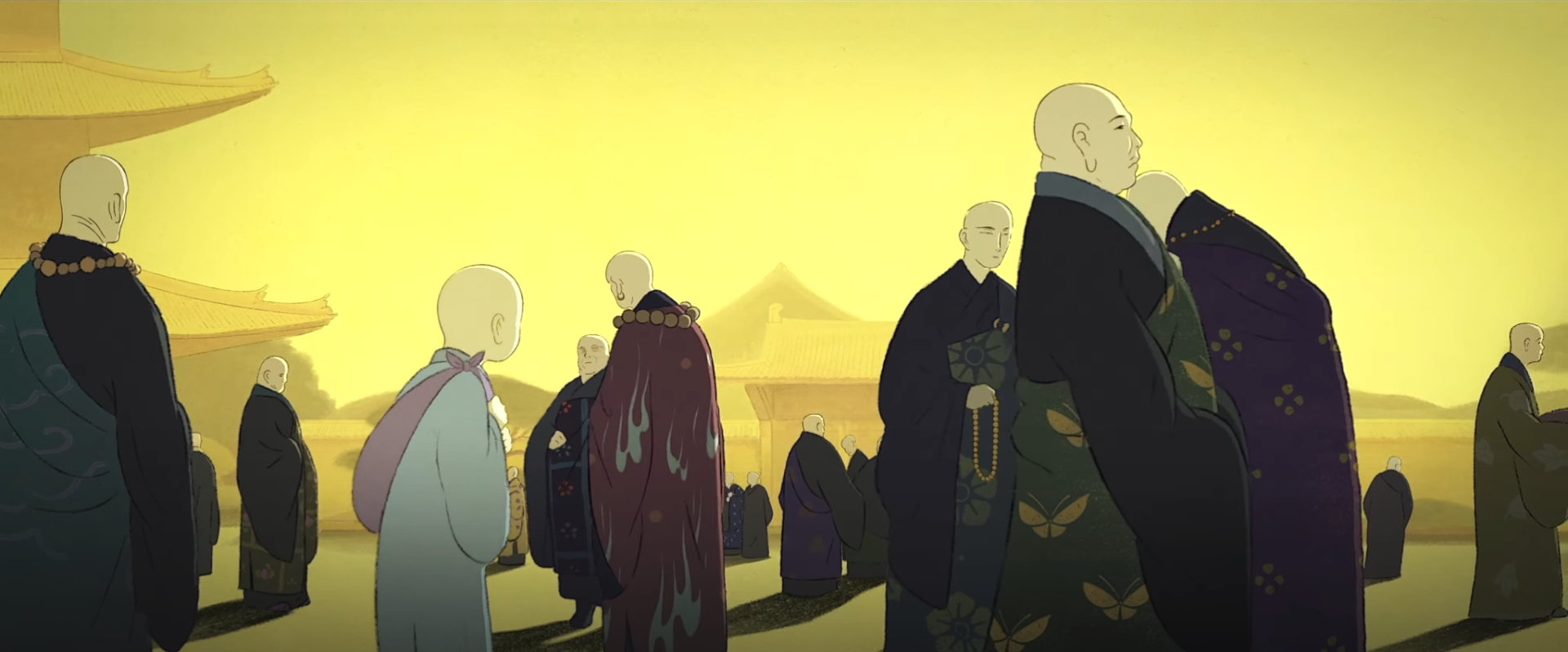
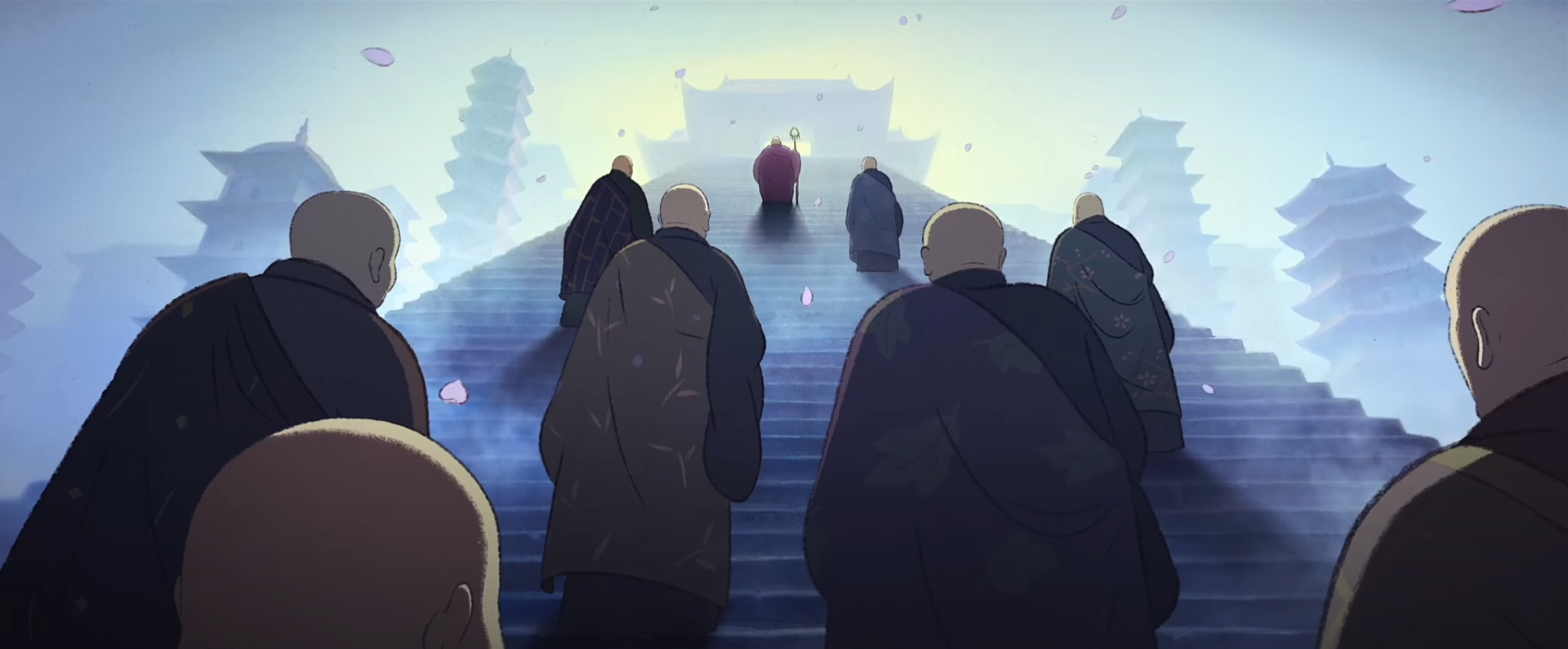
“二三场在短片中承担着金池人生的叙事作用。我们在这个部分将背景弱化了一些,镜头运用的方式也尽量保持简单,是希望让观众在这段人生缩影中更专注于角色和叙事。这部分的节奏也会更平缓,为接下来达到金池人生顶峰的法衣大会做一个情绪铺垫。”
“Act Two and Three in the short film carry the narrative weight of Jinchi’s life story. In this section, we have deliberately softened the background and kept the camera work as simple as possible, aiming to draw the audience’s attention to the characters and the storytelling within this life’s vignette. The pacing here is intentionally more measured, setting an emotional foundation for the upcoming Robe Ceremony, which marks Jinchi’s peak.”
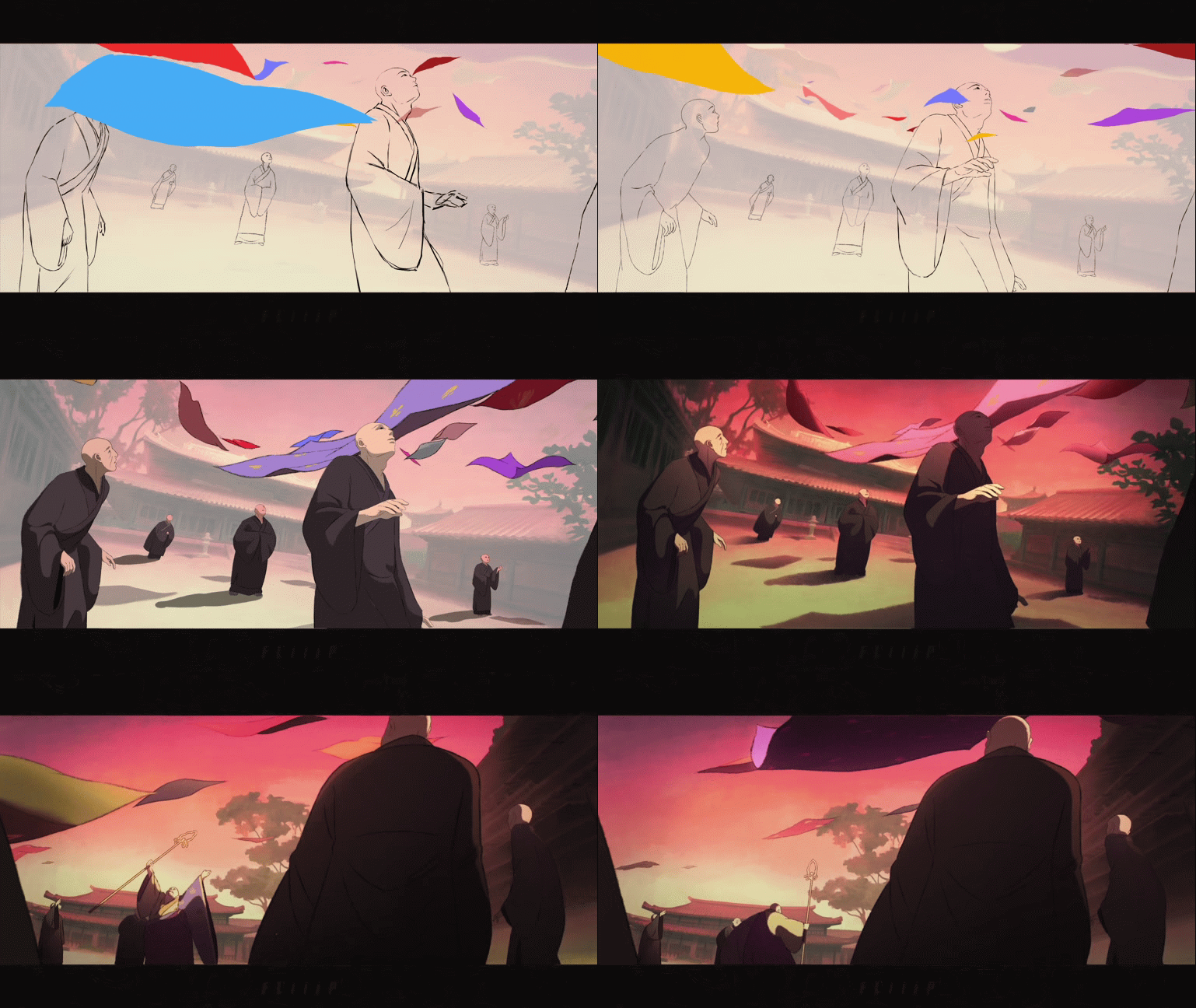
“关于袈裟在是否符合现实宗教中的袈裟上的格纹。
一是技术与工作量:在逐帧动画中,格纹图案的透视变化需要巨大的工作量。考虑到动画中法衣大会和金池与欲望纠缠的部分,我在花纹的复杂程度和动态的表现力间选了后者,这是为什么片中只有少量袈裟保持了格纹。二是在这个故事中袈裟并不是一个写实的表达,金池的变化与欲望相关,对观音禅院想表现的氛围也非一心虔诚向佛,所以意向的表达会更重要一些。
我们脑海中僧众们的袈裟其实会更浮华色彩丰富,但实际做这部分的时候有诸多顾虑,包括工作量还有不同场次袈裟的复杂度对比”
Regarding whether the kasaya in the film matches the grid patterns found in real-life religious kasaya:
First, there is the matter of technique and workload. In frame-by-frame animation, rendering the perspective shifts of checkered patterns requires an enormous amount of work. Considering both the Robe Ceremony and the sequences where Jinchi is entangled with desire, we chose to prioritize dynamic expressiveness over the complexity of the patterns. This is why only a few kasaya in the film retain the grid pattern design.
Second, in this story the kasaya is not meant as a realistic depiction. Jinchi’s transformation is tied to desire, and the atmosphere we wanted to convey for Guanyin Monastery is far from one of pure, devout Buddhism, so more symbolic expression takes precedence.
In our mind, the monks’ kasaya would actually be more flamboyant and richly colored, but when it came to making this part, we had many compromise, like the workload and the visual contrast in complexity between the kasaya in different scenes.
Outro
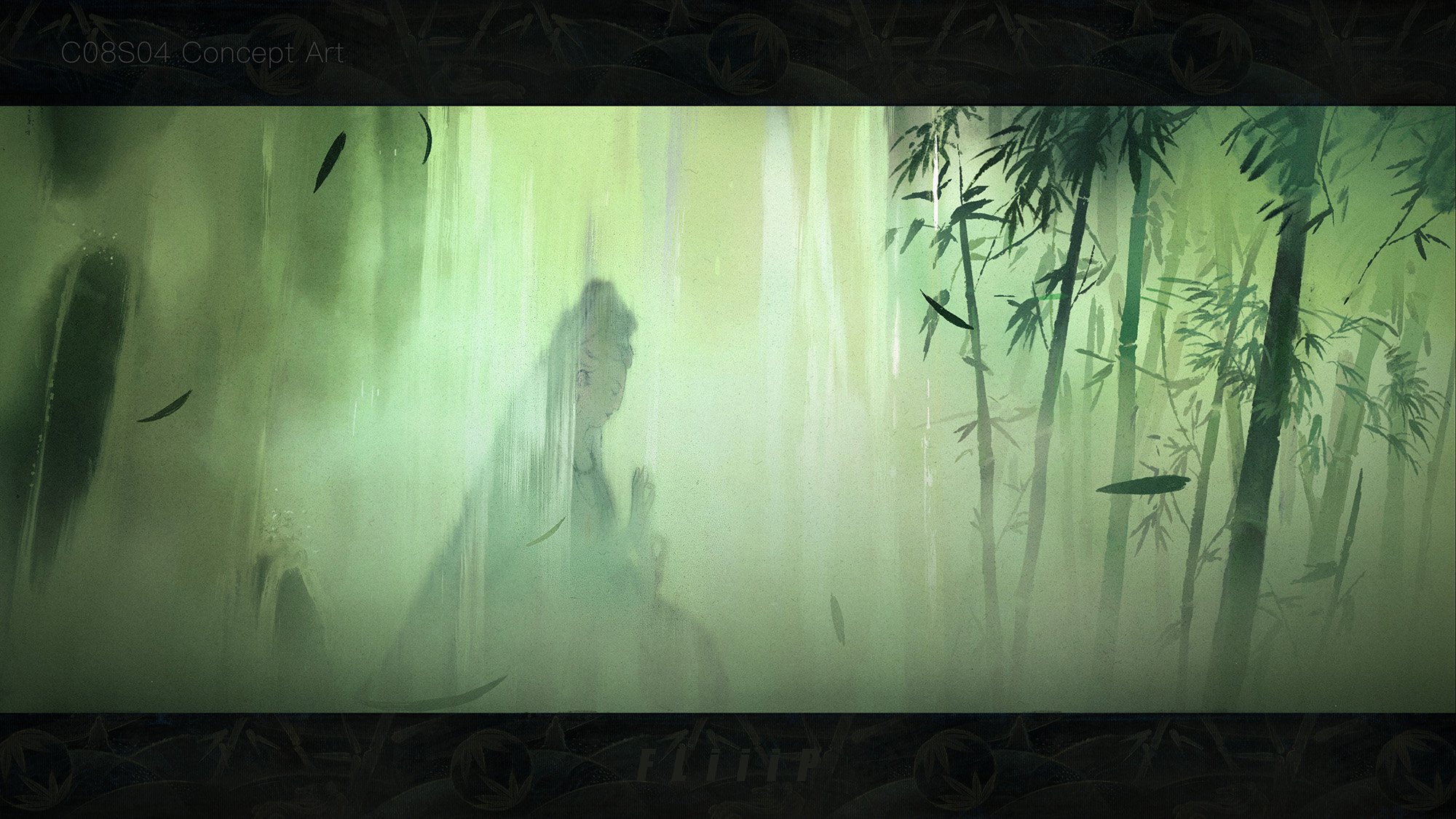
“若不披上这件衣裳,众生又怎知我尘缘已断,金海尽干?”
“Bereft of that kasaya, how shall they show the world their ties are cut, and their lust is quelled?”
The line is a paradox. The robe is meant to symbolize freedom from desire, yet his desire to possess it betrays his failure to transcend.
Jinchi wants the symbol of detachment more than detachment itself.
This is what Buddhist philosophy might call grasping at form instead of essence. Jinchi craves the appearance of enlightenment—he wants others to see him as holy—not necessarily to be holy.
If we don’t show it, did we ever really possess it?
Credits
Client
Production Team
Script Director
Yang Qi
Director
Lin Zhe
Producer
Herbie Han, Bella Jiang
Story
Feng Ji
Character Design
Ruitao She, Lin Zhe, Janelle Feng, Yuanhua Luo
Art Director
Lin Zhe
BACKGROUND ART
Zhuan Peng, Rere Zheng, Yi Liu, Shang Zhang
MOODBOARD
Lin Zhe, Rere Zheng
Art Team
Lin Zhe, Rere Zheng, Zhuan Peng, Shanshan Zou, Yi Liu, Ruitao She, Janelle Feng,
Kerui Zhang, Yuanhua Luo, Zaizai, Yuan Fang, Ruixi Liu, Yixuan Jin
Storyboard
Yuanyuan Zhao, Zheping Xu, Shanshan Zou, Rere Zheng, Lin Zhe
Animation Director
Dorian Lee,Wen Fan
2D Animation
Yuanyuan Zhao, Wen Fan, Shanshan Zou, Yan Li, Janne Lehtonen,
Haiqing Qi, Dorian Lee, Yi Liu, Wang Yu, Jiaxin Huang
Cleanup/Coloring
Wen Fan, Yuanyuan Zhao, Shanshan Zou, Yan Li, Janne Lehtonen, Yi Liu
Kerui Zhang, Yuanhua Luo, Wang Yu, Lin Zhe, Lan Zhou, Ruitao She, Yulin Yue
Character Refinement
Lin Zhe, Kerui Zhang
Letterbox Design
Rere Zheng, CBTD, Lin Zhe, Kipozz
3D Art
Paul Wang Jr., Wingy-T, Siwei Wang
Editing
Fumao Li
Compositing
王猪霸|Paul Wang Jr., 李福毛|Fumao Li, 林哲|Lin Zhe,Stephane Coedel