Ashraf by Martha Ashraf
Visual Design May 11 2026
From the Artist
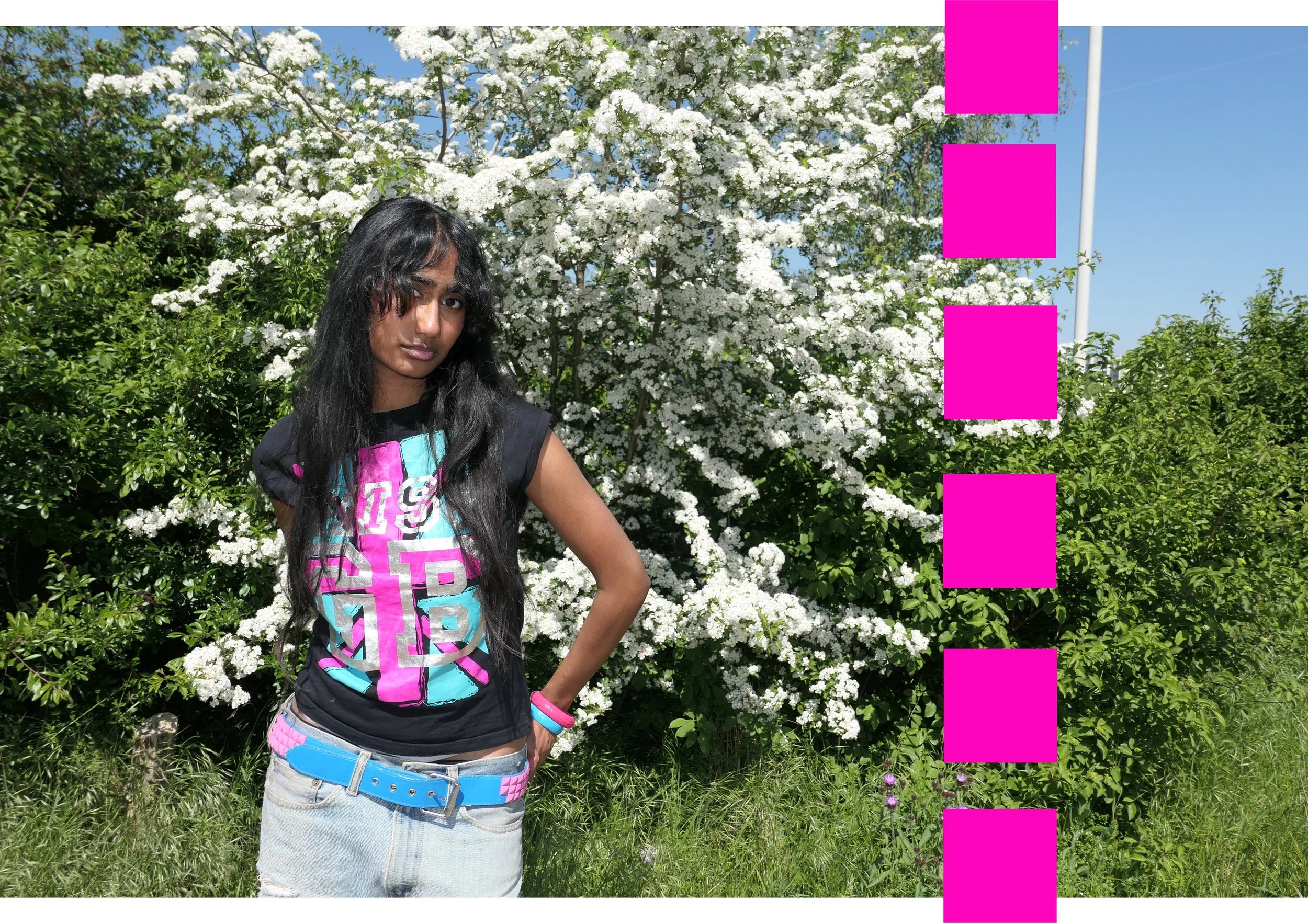
“Ashraf is an exploration of the role my Pakistani heritage had in the shaping of my identity while being raised in England, in a mixed race background. Despite growing up in a predominantly white area, surrounded by a lack of cultural diversity, I always felt a closer connection to Pakistani culture. I seek comfort in the food, accessories, music and aesthetics, yet I consumed these outside of their original context, creating my own understanding and relation to them. Through photography, styling and graphic experimentations, I create a personal visual language that playfully navigates the cultural complexities of the dual heritage experience.”
Ashraf





Interpretataion
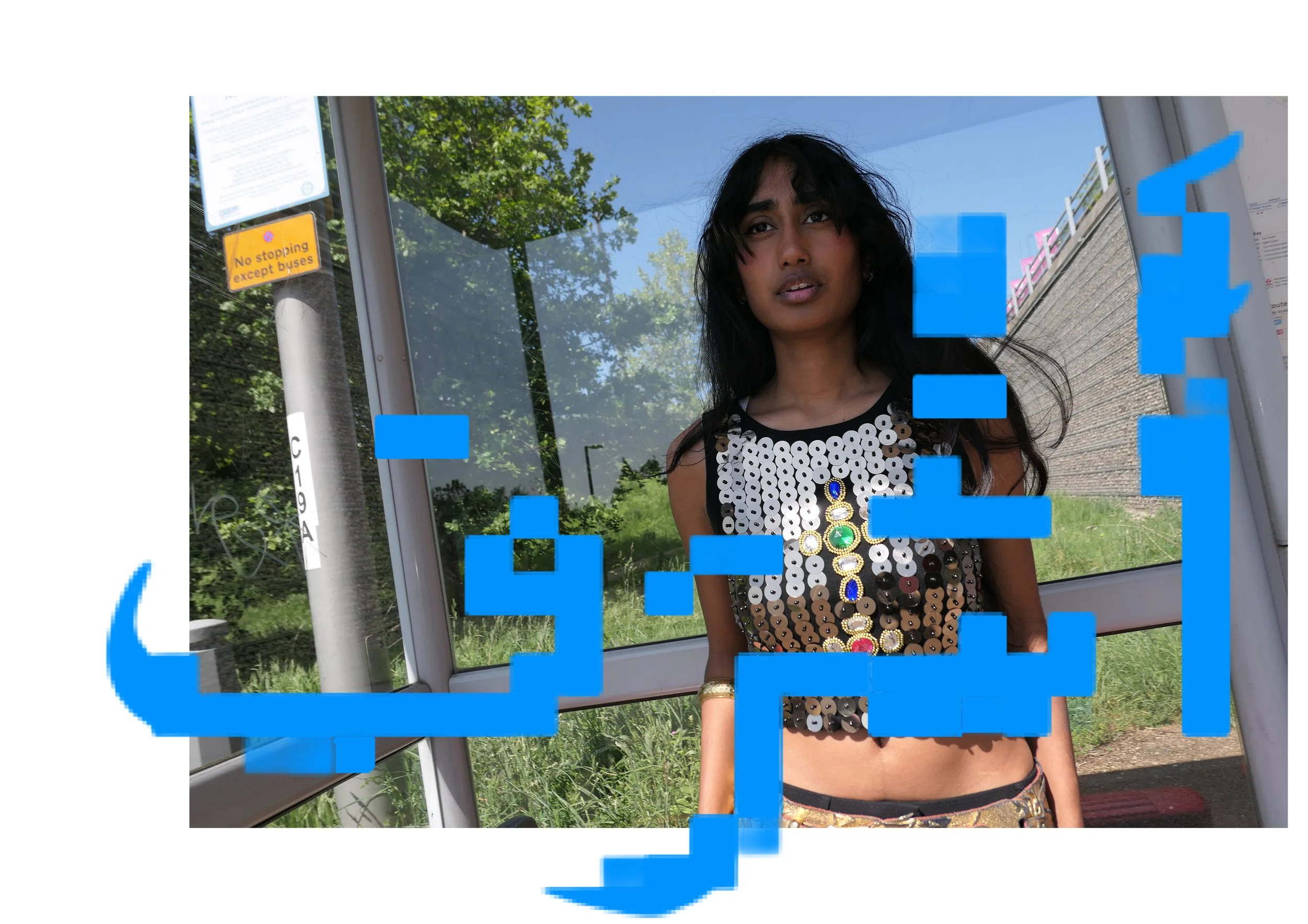
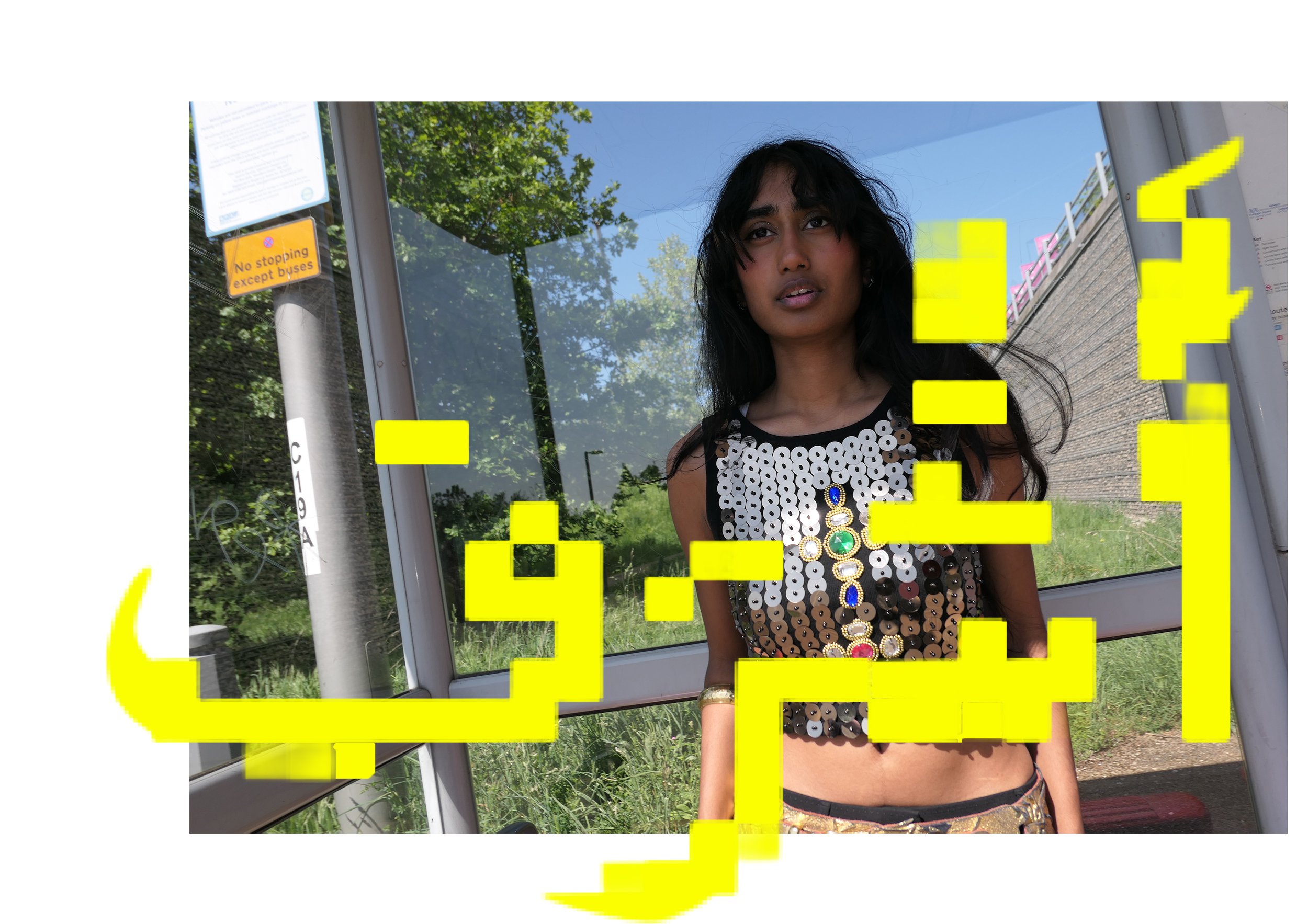
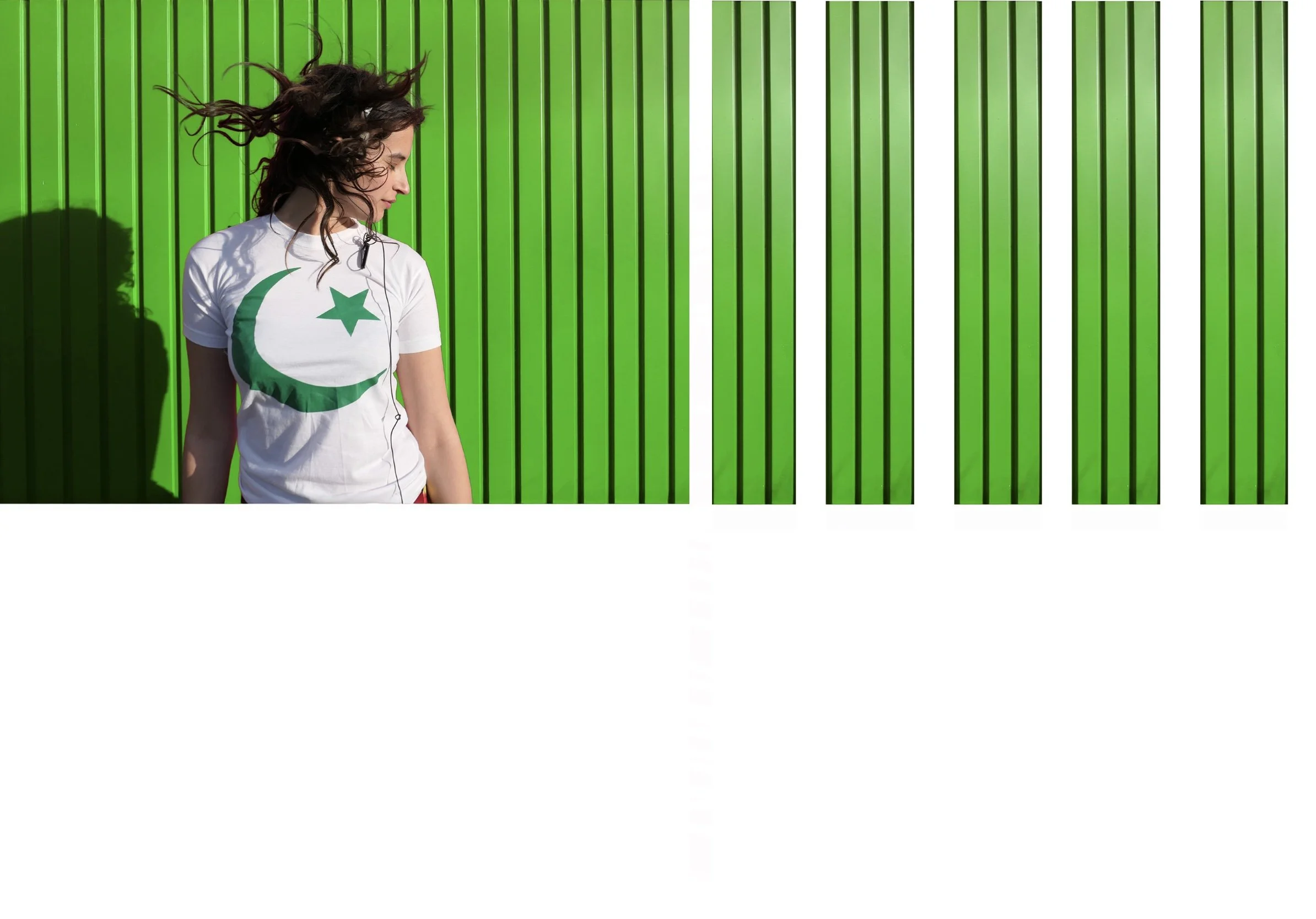
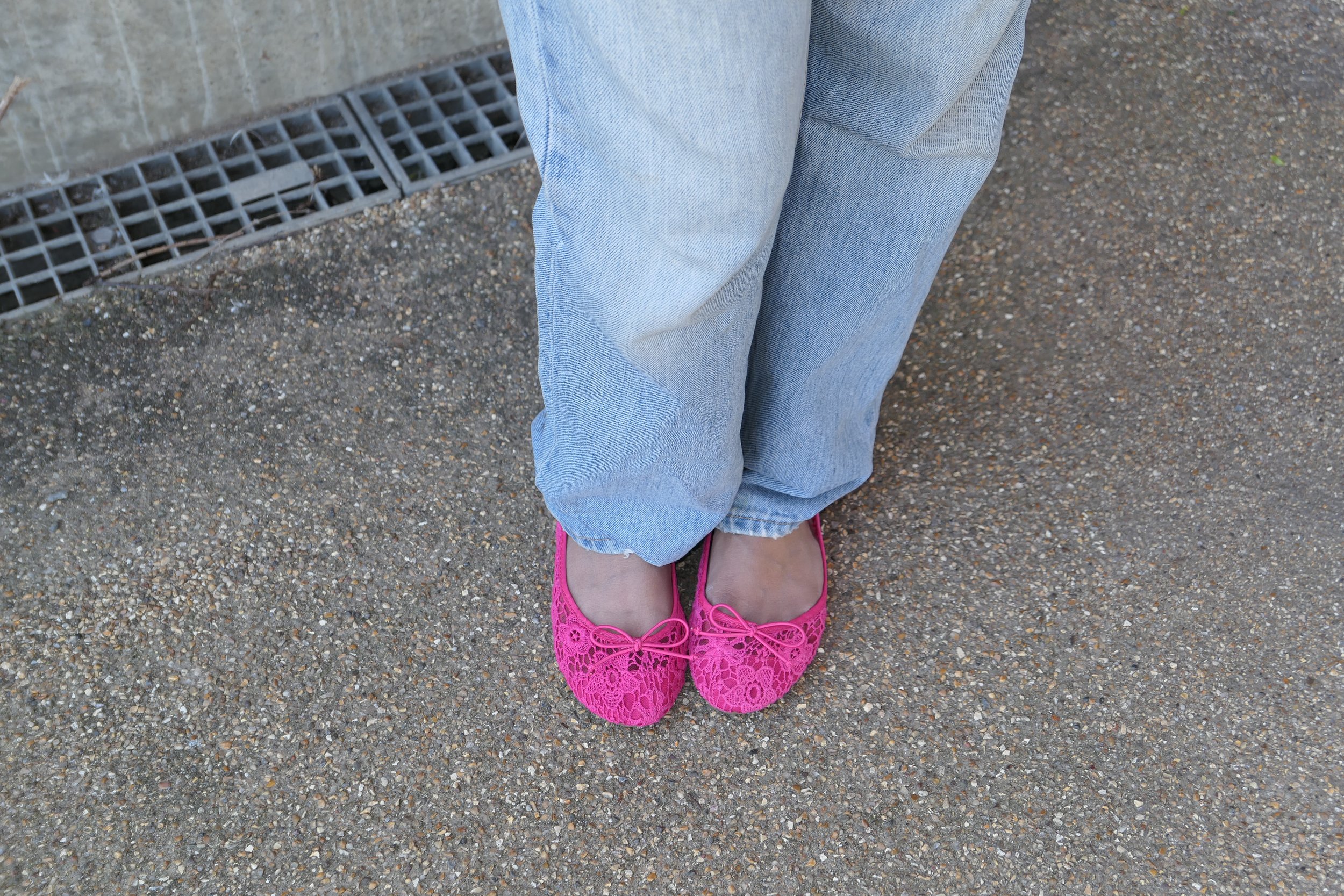
There is a particular kind of cultural fluency that only distance can produce. Ashraf does not document belonging, she documents the act of constructing it. Where her statement describes the experience of consuming Pakistani culture outside its original context, the work itself shows what that consumption looks like when turned into form: loud, pixelated, repetitive, playful, and entirely self-possessed.
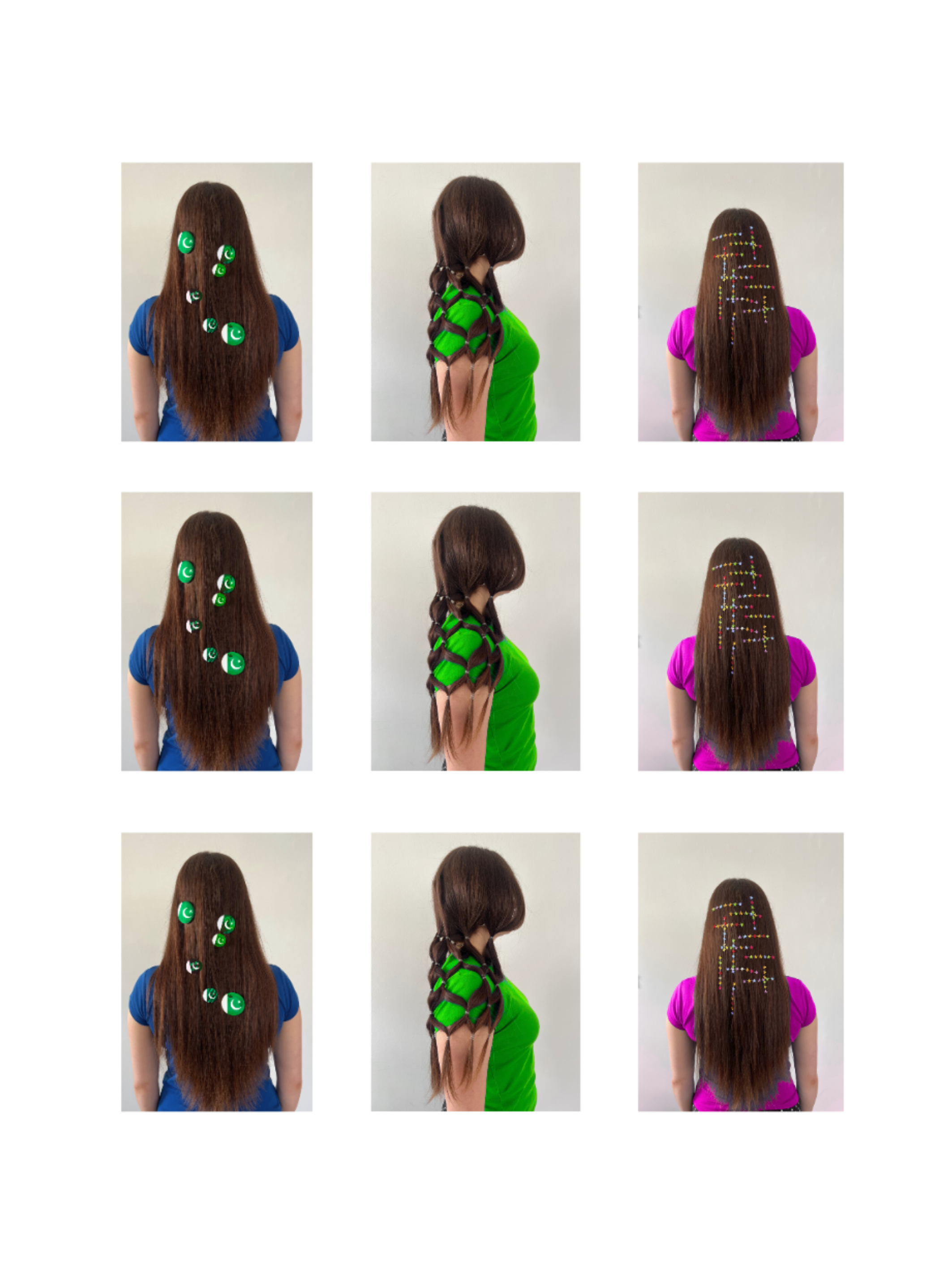
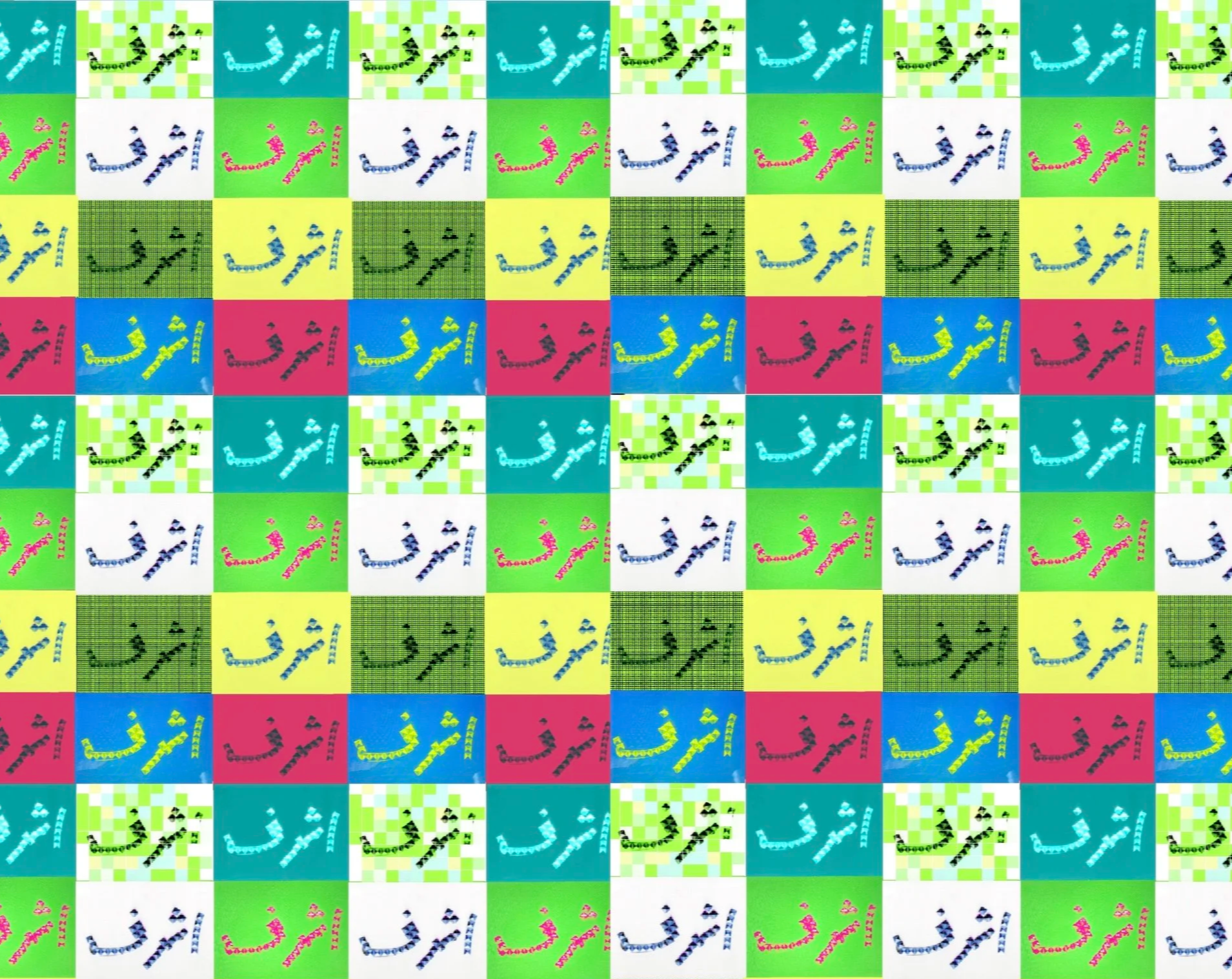
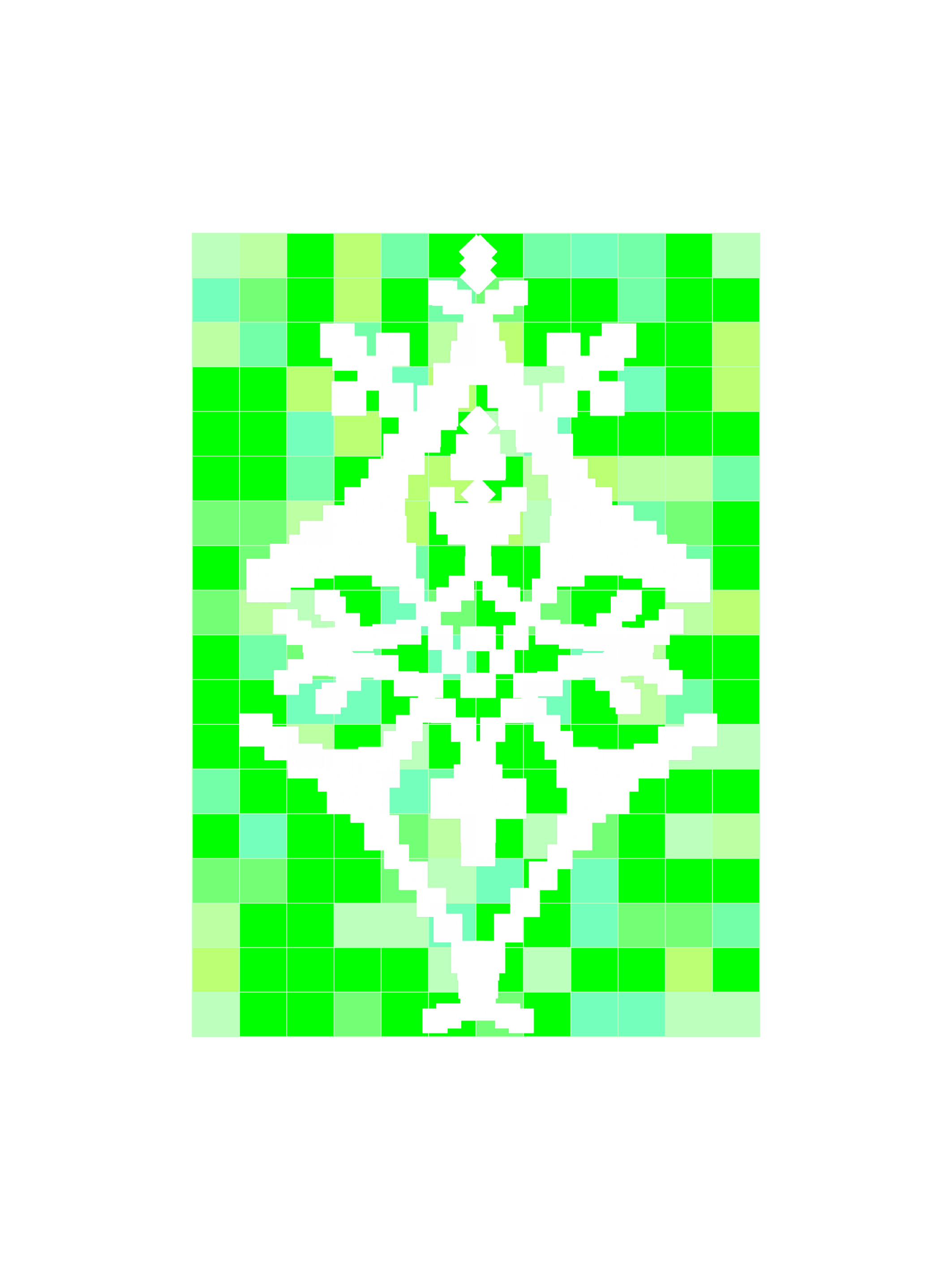
The pixelated textile motifs are the work's sharpest formal gesture, traditional embroidery rendered in digital lo-res, where craft and screen culture meet on equal ground. Each object carries enough cultural familiarity to mean something, while feeling just displaced enough to show that the connection to it was self-made.
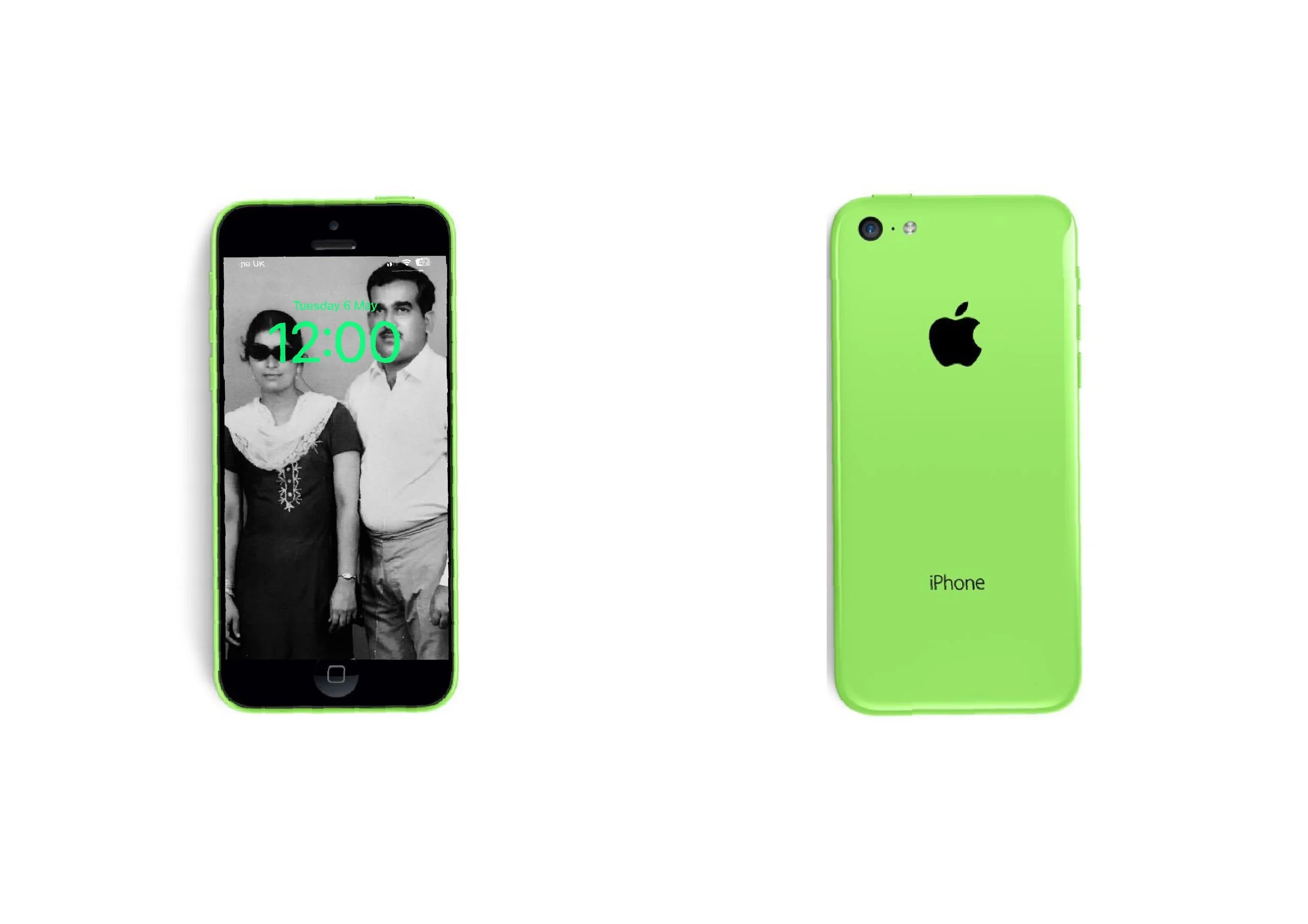
And then there is the iPhone 5C. The plastic one, in green, that came in a box that felt like candy. The one your parents maybe bought because it was cheaper, the one that got laughed at a little, the one that a whole generation carried anyway and loved anyway. Here it holds a formal black-and-white family portrait on its lock screen — Pakistani, from another era — glowing through that unmistakable green shell.
It is a small, perfect image of what it means to be Gen Z and diasporic: the old world framed by the object that defined your childhood, slightly embarrassing, entirely yours.
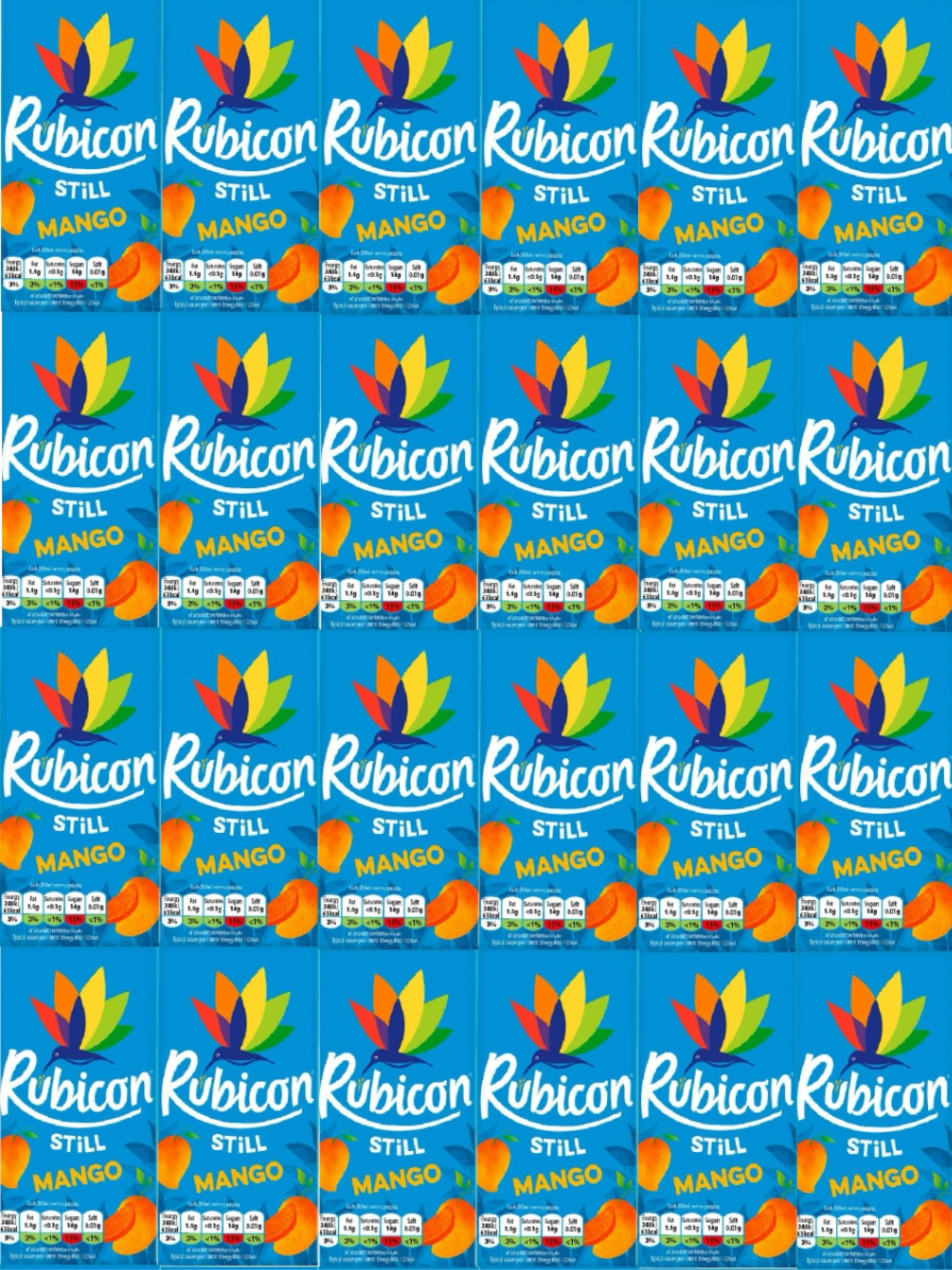
Step back and the whole work coheres around that feeling. The neon grids, the pixelated embroidery, the Rubicon tiles, the candy-colored shutter shades, individually they read as graphic experiments, but together they form something closer to a generational memory. Personal enough to be hers. Familiar enough to be mine, or everyone's.
Ashraf found a visual language for an experience her generation largely lived without words for. That is no small thing.