Memoir
Ji Young Lee draws her way home
Guest Ji Young LeeWriter Edgar Zhang
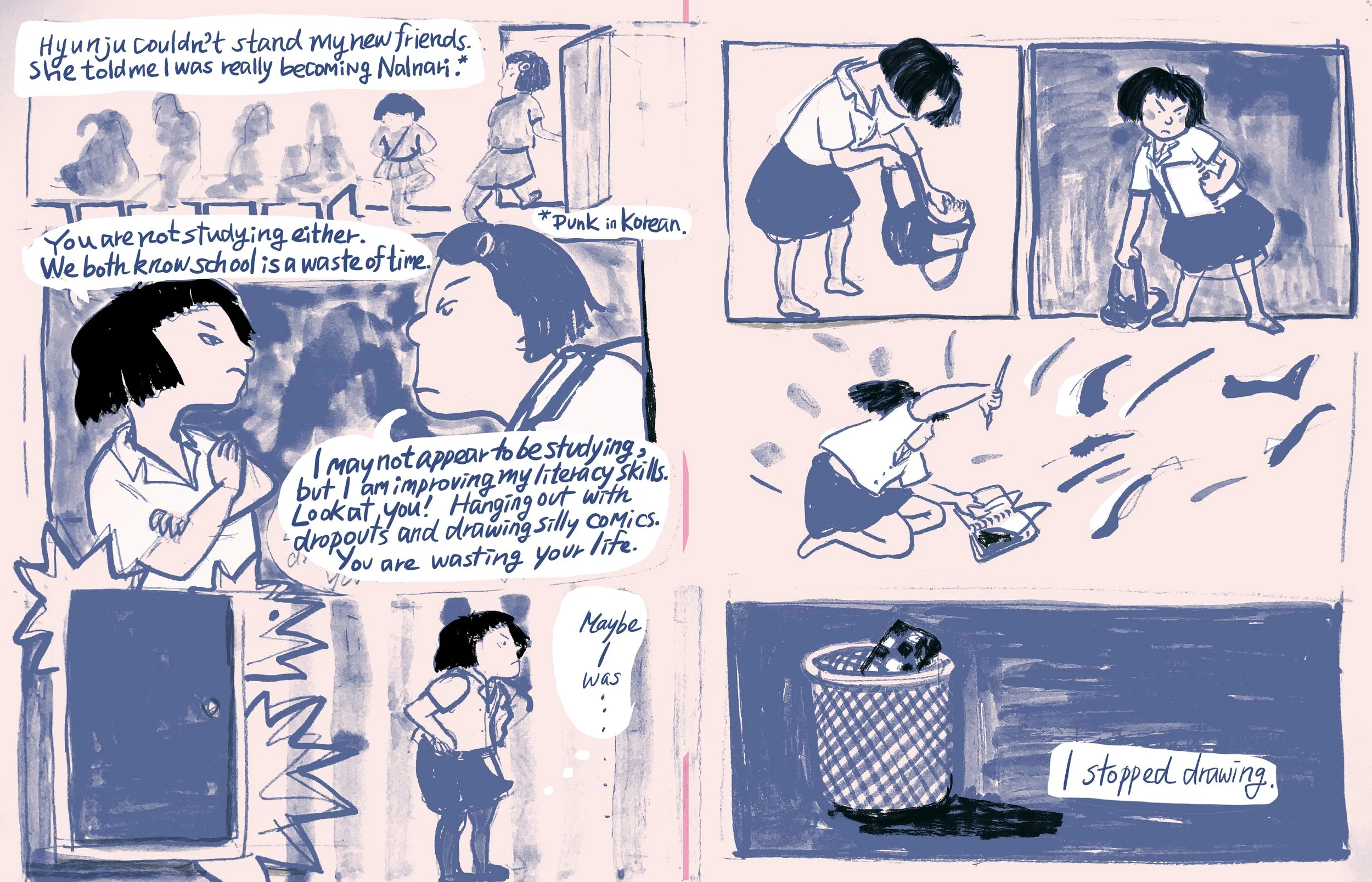
Ji Young Lee told DART:
“This graphic novel, My Haphazard Life, is part of a sixteen-chapter graphic memoir about growing up in Seoul, Korea. It originally began as a simple 32-page picture book, but during the pandemic it kept spiraling outward into something much larger. The process was emotionally exhausting and exhilarating at the same time.
A great deal was happening in my personal life then as well. My sister and my father died within the span of a year. At the same time, the pandemic stripped away many of the distractions, obligations, and social noise of everyday life. That simplicity gave me the space to focus intensely on this project.
I think the reason I began creating this memoir was to reflect on my identity.
At the time, I was deeply focused on raising my child and had almost forgotten who I was outside of motherhood.
I became afraid that one day my child might ask me, “What kind of person are you, Mom? Why are you different from my friend’s moms?” As someone who looked different, spoke in broken English, and often struggled socially, I worried about how my child might see me and what that might mean for developing their own sense of who they are.
When I took my child back to Korea, I realized I could no longer show them where I came from. The country was changing so quickly that I was getting lost in the city where I grew up. I was as a stranger in my motherland as in my adopted country. At that point, preserving that disappearing memory of home as I remembered became a mission.”
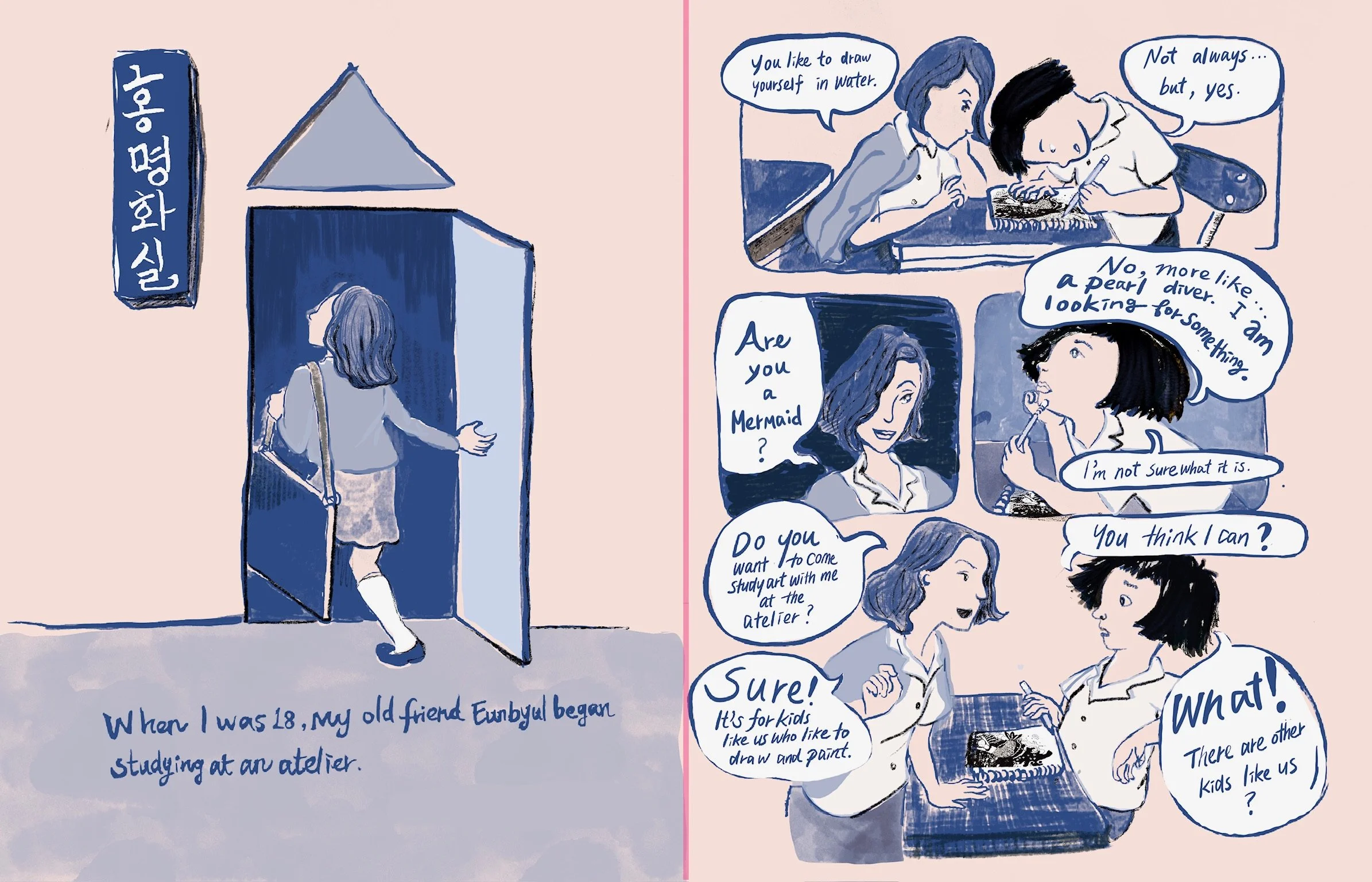
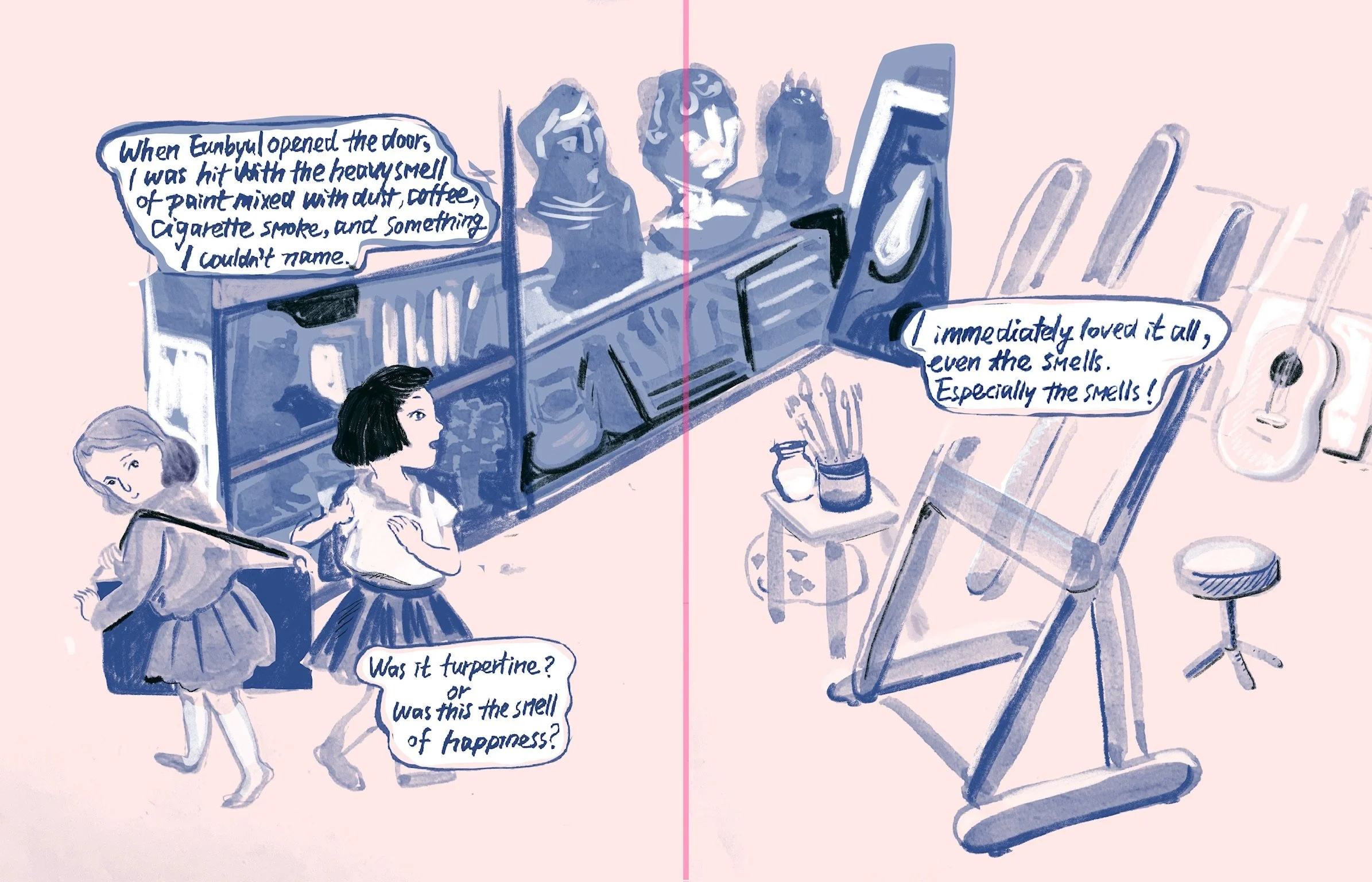
There is a particular kind of person who finds their place in the world early, it’s a feeling. For Ji Young Lee, that feeling arrived at eighteen, the moment she stepped through the door of an atelier and was hit by the smell of paint.
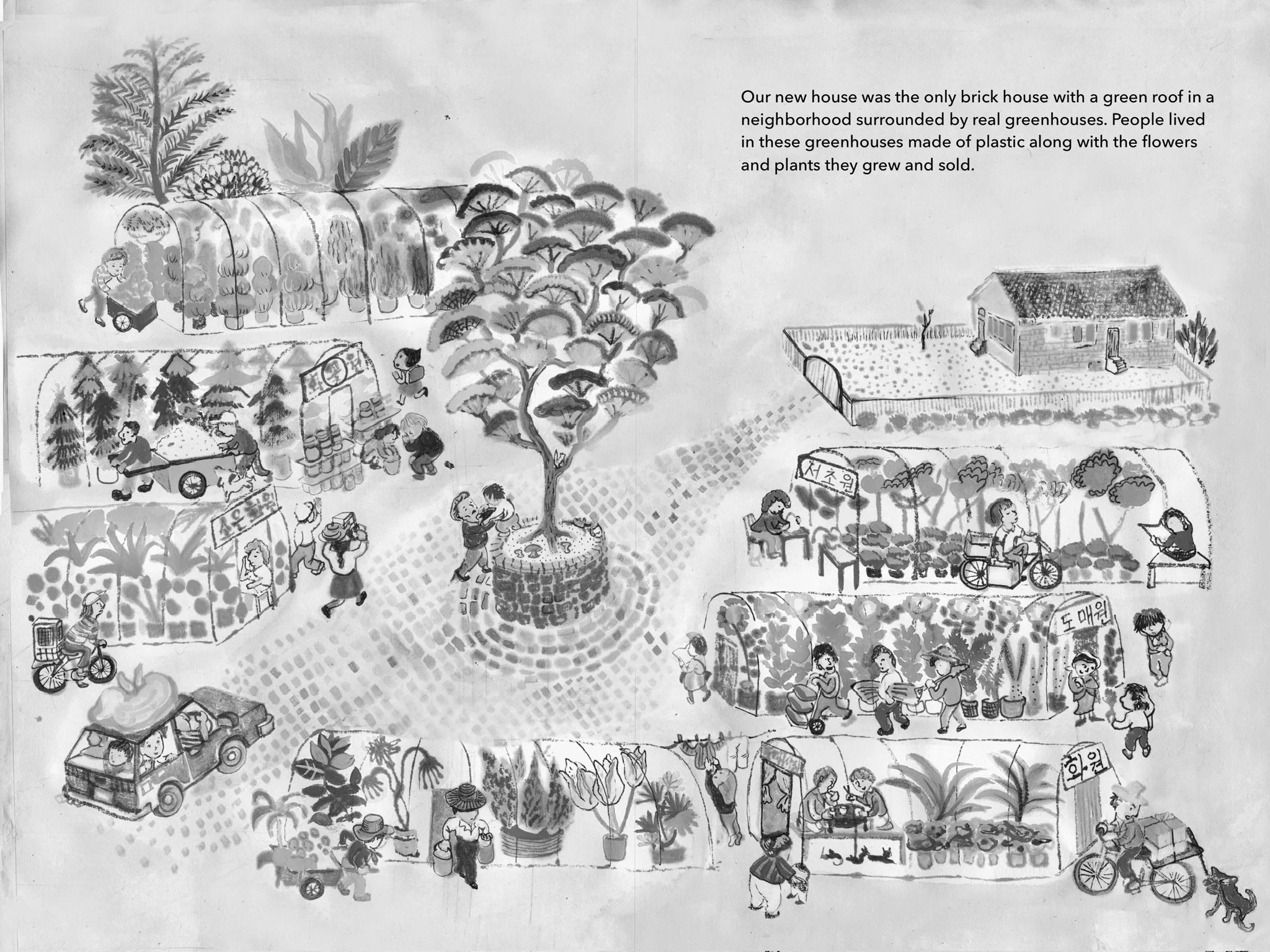
Courtesy of Ji Young Lee
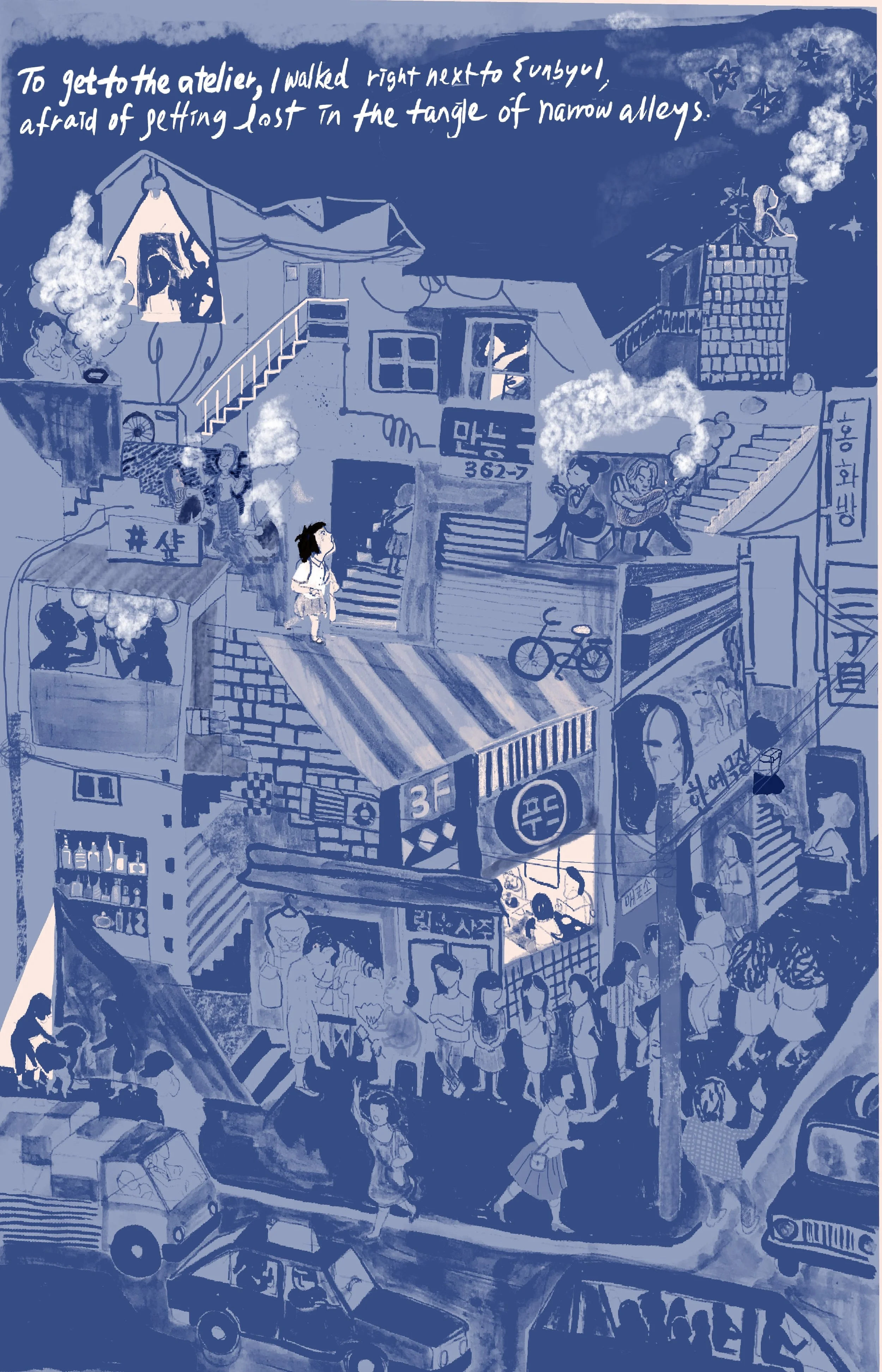
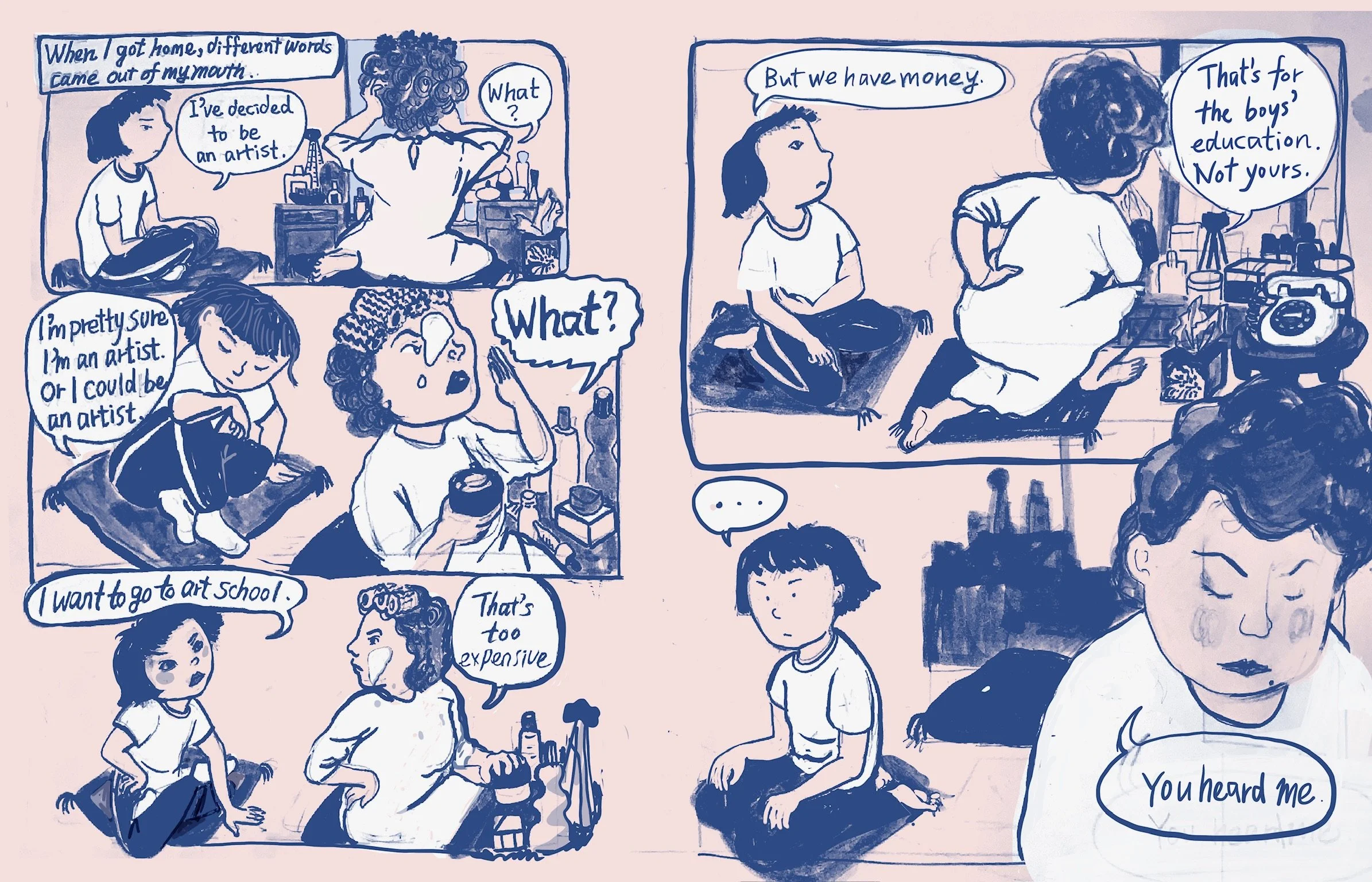
That discovery is the heart of Chapter 10. But Lee is not interested in easy epiphanies, she knows that finding yourself and being allowed to become yourself are two very different things. The city she moves through on the way to the atelier is dense and alive and completely indifferent to her, a girl in a tangle of narrow alleys, staying close to her friend so she doesn’t get lost.
The world was rarely arranged around her comfort.
Years later, Lee stepped away from the memoir entirely — “after taking nearly two years away to focus on an abstract painting series about being in the water, I returned to it with more distance and clarity.” She has since joined ARTogether, a residency for immigrant, refugee, and diaspora artists, “hoping to gain a new perspective on my immigrant identity and this project itself.” The memoir is still finding its final form. “I have not aggressively pursued the submission process as I felt it was important to step back and allow the work to evolve further before its final form.”
That patience makes sense when you understand what the project means to her. “As an immigrant, I often felt myself living within a small emotional boundary of home which eventually confined me like an island. This work feels like a small attempt to cross beyond it.” Through it, she began “redefining the meaning of home not as a physical place, but as an emotional and internal landscape.” In some quiet, almost magical way, she says, “I was cured from the terrible homesickness.”